
Green Healthcare Market
Green Healthcare Market Forecasts to 2034 - Global Analysis By Offering (Solutions, and Services), Solution Type (Green Healthcare Infrastructure, Energy Management Systems, Water Management Systems, Healthcare Waste Management Solutions, and Sustainable Medical Equipment), Sustainability Area, Facility Type, Technology, Certification & Standards, End User, and By Geography

According to Stratistics MRC, the Global Green Healthcare Market is accounted for $60.6 billion in 2026 and is expected to reach $154.4 billion by 2034 growing at a CAGR of 12.4% during the forecast period. Green healthcare encompasses sustainable practices, technologies, and infrastructure designed to reduce the environmental footprint of medical facilities while maintaining or improving patient care quality. This market addresses the healthcare sector's substantial contribution to global carbon emissions, waste generation, and resource consumption through innovative solutions that optimize energy usage, manage water resources responsibly, treat medical waste effectively, and deploy sustainable medical equipment. The transition toward environmentally responsible healthcare operations is driven by regulatory pressures, cost reduction imperatives, and growing recognition of the link between environmental health and patient outcomes.
Market Dynamics:
Driver:
Rising regulatory pressure on healthcare emissions
Governments and international bodies are implementing increasingly stringent environmental regulations specifically targeting healthcare facilities, which are among the most energy-intensive commercial buildings. Hospitals operate continuously, requiring constant heating, cooling, lighting, and power for life-saving equipment, resulting in carbon footprints significantly larger than comparable commercial structures. Regulatory frameworks including carbon pricing mechanisms, emissions reporting requirements, and green building certifications are compelling healthcare administrators to invest in sustainable infrastructure. Non-compliance increasingly carries financial penalties and reputational risks, transforming environmental responsibility from a voluntary initiative into an operational necessity for healthcare providers across developed and emerging economies.
Restraint:
High upfront capital costs for green retrofitting
The substantial initial investment required for sustainable infrastructure upgrades presents a significant barrier for healthcare facilities operating on tight margins. Retrofitting existing hospitals with energy management systems, water recycling technologies, or waste reduction solutions demands capital that many administrators prefer to allocate toward patient care equipment and clinical staffing. Extended payback periods, typically ranging from three to seven years for green investments, conflict with healthcare budgeting cycles that prioritize shorter-term returns. Public healthcare systems facing funding constraints and private operators balancing investor expectations often defer sustainability projects despite their long-term operational cost benefits, slowing overall market adoption across the sector.
Opportunity:
Integration of AI-powered energy optimization
Artificial intelligence is creating unprecedented opportunities for healthcare facilities to reduce energy consumption without compromising clinical operations. AI algorithms analyze real-time data from building sensors, patient census information, and weather forecasts to automatically adjust heating, cooling, and lighting systems across different hospital zones based on actual occupancy patterns. Machine learning models identify inefficiencies in medical equipment usage, eliminating unnecessary power consumption from devices left in standby mode overnight. These intelligent systems deliver measurable energy savings within months rather than years, dramatically improving return on investment calculations and making green solutions financially attractive even for capital-constrained healthcare providers.
Threat:
Patient safety concerns limiting sustainable changes
Rigorous infection control requirements and patient safety protocols can directly conflict with certain green healthcare initiatives, creating significant implementation barriers. Reusable medical equipment programs, while reducing waste, raise sterilization and cross-contamination concerns that many hospitals deem unacceptable for critical applications. Water conservation measures may potentially impact sterilization processes or reduce water pressure for emergency showers and eye wash stations. The healthcare industry's fundamentally risk-averse culture, shaped by life-or-death consequences, means that sustainability innovations face higher scrutiny and slower adoption than in other commercial sectors. Safety regulations must be carefully navigated, potentially limiting the market for certain green solutions.
Covid-19 Impact:
The COVID-19 pandemic created unprecedented challenges for green healthcare initiatives while simultaneously highlighting critical sustainability vulnerabilities. Surges in personal protective equipment usage generated massive increases in medical waste, overwhelming existing waste management systems and pushing sustainability priorities aside for infection control urgency. However, the crisis also demonstrated the value of robust energy and water management as facilities faced extended operating hours and increased ventilation requirements. Supply chain disruptions emphasized the importance of locally manufactured sustainable alternatives. Post-pandemic, healthcare administrators are increasingly viewing green infrastructure as resilience investments, recognizing that sustainable systems contribute to facilities' ability to handle crisis conditions while reducing operational costs.
The Solutions segment is expected to be the largest during the forecast period
The Solutions segment is expected to account for the largest market share during the forecast period, encompassing the comprehensive technology platforms and physical systems that enable sustainable healthcare operations. This category includes integrated software for energy and water monitoring, specialized waste treatment equipment, sustainable building materials, and certified green medical devices. Healthcare providers increasingly prefer complete solution packages over point products because complex facilities require coordinated approaches across multiple sustainability dimensions. The substantial upfront investment in solutions, combined with multi-year implementation timelines and integration with existing hospital infrastructure, ensures this segment maintains its dominant position as healthcare systems undertake comprehensive green transformation programs rather than isolated sustainability initiatives.
The Healthcare Waste Management Solutions segment is expected to have the highest CAGR during the forecast period
Over the forecast period, the Healthcare Waste Management Solutions segment is predicted to witness the highest growth rate, driven by escalating volumes of medical waste and tightening regulations governing its disposal. The pandemic dramatically increased awareness of waste handling challenges, while single-use medical device proliferation continues in infection-sensitive environments. Advanced solutions including autoclave-based treatment systems, microwave disinfection technologies, and chemical encapsulation processes are replacing traditional incineration methods, which face increasing environmental restrictions. Segregation optimization software and RFID tracking systems enable facilities to reduce regulated medical waste volumes by diverting non-hazardous materials to conventional waste streams. These innovations deliver both environmental benefits and substantial cost reductions, accelerating adoption across healthcare facilities of all sizes.
Region with largest share:
During the forecast period, the North America region is expected to hold the largest market share, supported by stringent environmental regulations, aging healthcare infrastructure requiring replacement, and strong financial incentives for energy efficiency. The United States healthcare sector's significant carbon footprint has attracted regulatory attention, with several states implementing mandatory emissions reporting and green building requirements for medical facilities. Established frameworks including LEED certification for hospitals and ENERGY STAR medical equipment ratings provide clear adoption pathways. Major healthcare systems have made public commitments to carbon neutrality, driving substantial investment in green solutions. The region's concentrated healthcare spending, combined with mature markets for waste management and energy services, reinforces North America's market leadership throughout the forecast period.
Region with highest CAGR:
Over the forecast period, the Asia Pacific region is anticipated to exhibit the highest CAGR, fueled by massive healthcare infrastructure expansion and growing environmental awareness across rapidly developing economies. Countries including China, India, and Indonesia are constructing thousands of new hospitals to serve expanding populations, presenting opportunities to integrate green solutions from initial design rather than through costly retrofitting. Severe air pollution and water scarcity in major cities have created acute environmental consciousness among regulators and citizens, translating into green building mandates. International development funding increasingly requires sustainability components for healthcare projects. As regional governments prioritize both healthcare access improvements and environmental protection, Asia Pacific emerges as the fastest-growing market for green healthcare solutions.
Key players in the market
Some of the key players in Green Healthcare Market include Siemens Healthineers AG, GE HealthCare Technologies Inc., Philips N.V., Medtronic plc, Johnson & Johnson, Stryker Corporation, Becton Dickinson and Company, 3M Company, Cardinal Health Inc., Steris plc, Getinge AB, Fresenius SE & Co. KGaA, Danaher Corporation, Hologic Inc., Abbott Laboratories, and Boston Scientific Corporation.
Key Developments:
In March 2026, At the Barclays 28th Annual Global Healthcare Conference, BD announced the completion of its BD 2025 strategy, which included significant divestitures to focus on "Advanced Patient Monitoring" technologies that enable more efficient hospital resource use.
In June 2025, Medtronic plc scaled its Nellcor™ pulse oximetry recycling program to over 1,000 U.S. hospitals, diverting 474,000 pounds of medical waste from landfills and producing 4 million reprocessed sensors.
In April 2025, GE HealthCare Technologies Inc. entered a strategic collaboration with Probo Medical for the distribution of refurbished imaging systems in the U.S., a core "green" strategy to extend the lifecycle of expensive medical hardware.
Offerings Covered:
• Solutions
• Services
Solutions Types Covered:
• Green Healthcare Infrastructure
• Energy Management Systems
• Water Management Systems
• Healthcare Waste Management Solutions
• Sustainable Medical Equipment
Sustainability Areas Covered:
• Energy Efficiency & Decarbonization
• Waste Reduction & Circularity
• Water Conservation
• Sustainable Procurement & Supply Chain
Facility Types Covered:
• Hospitals
• Clinics
• Diagnostic & Imaging Centers
• Long-Term Care Facilities
• Pharmaceutical & Life Sciences Facilities
Technologies Covered:
• Renewable Energy Technologies
• Smart Healthcare Systems (IoT-enabled optimization)
• Green Building Technologies
• Waste Treatment Technologies
• Water Treatment & Recycling Technologies
Certification & Standards Covered:
• LEED Certification
• Energy Star Certification
• Green Building Certifications
End Users Covered:
• Healthcare Providers
• Pharmaceutical & Biotechnology Companies
• Medical Device Manufacturers
• Healthcare Technology Providers
Regions Covered:
• North America
o United States
o Canada
o Mexico
• Europe
o United Kingdom
o Germany
o France
o Italy
o Spain
o Netherlands
o Belgium
o Sweden
o Switzerland
o Poland
o Rest of Europe
• Asia Pacific
o China
o Japan
o India
o South Korea
o Australia
o Indonesia
o Thailand
o Malaysia
o Singapore
o Vietnam
o Rest of Asia Pacific
• South America
o Brazil
o Argentina
o Colombia
o Chile
o Peru
o Rest of South America
• Rest of the World (RoW)
o Middle East
§ Saudi Arabia
§ United Arab Emirates
§ Qatar
§ Israel
§ Rest of Middle East
o Africa
§ South Africa
§ Egypt
§ Morocco
§ Rest of Africa
What our report offers:
- Market share assessments for the regional and country-level segments
- Strategic recommendations for the new entrants
- Covers Market data for the years 2023, 2024, 2025, 2026, 2027, 2028, 2030, 2032 and 2034
- Market Trends (Drivers, Constraints, Opportunities, Threats, Challenges, Investment Opportunities, and recommendations)
- Strategic recommendations in key business segments based on the market estimations
- Competitive landscaping mapping the key common trends
- Company profiling with detailed strategies, financials, and recent developments
- Supply chain trends mapping the latest technological advancements
Free Customization Offerings:
All the customers of this report will be entitled to receive one of the following free customization options:
• Company Profiling
o Comprehensive profiling of additional market players (up to 3)
o SWOT Analysis of key players (up to 3)
• Regional Segmentation
o Market estimations, Forecasts and CAGR of any prominent country as per the client's interest (Note: Depends on feasibility check)
• Competitive Benchmarking
o Benchmarking of key players based on product portfolio, geographical presence, and strategic alliances
Table of Contents
1 Executive Summary
1.1 Market Snapshot and Key Highlights
1.2 Growth Drivers, Challenges, and Opportunities
1.3 Competitive Landscape Overview
1.4 Strategic Insights and Recommendations
2 Research Framework
2.1 Study Objectives and Scope
2.2 Stakeholder Analysis
2.3 Research Assumptions and Limitations
2.4 Research Methodology
2.4.1 Data Collection (Primary and Secondary)
2.4.2 Data Modeling and Estimation Techniques
2.4.3 Data Validation and Triangulation
2.4.4 Analytical and Forecasting Approach
3 Market Dynamics and Trend Analysis
3.1 Market Definition and Structure
3.2 Key Market Drivers
3.3 Market Restraints and Challenges
3.4 Growth Opportunities and Investment Hotspots
3.5 Industry Threats and Risk Assessment
3.6 Technology and Innovation Landscape
3.7 Emerging and High-Growth Markets
3.8 Regulatory and Policy Environment
3.9 Impact of COVID-19 and Recovery Outlook
4 Competitive and Strategic Assessment
4.1 Porter's Five Forces Analysis
4.1.1 Supplier Bargaining Power
4.1.2 Buyer Bargaining Power
4.1.3 Threat of Substitutes
4.1.4 Threat of New Entrants
4.1.5 Competitive Rivalry
4.2 Market Share Analysis of Key Players
4.3 Product Benchmarking and Performance Comparison
5 Global Green Healthcare Market, By Offering
5.1 Solutions
5.2 Services
6 Global Green Healthcare Market, By Solution Type
6.1 Green Healthcare Infrastructure
6.2 Energy Management Systems
6.3 Water Management Systems
6.4 Healthcare Waste Management Solutions
6.5 Sustainable Medical Equipment
7 Global Green Healthcare Market, By Sustainability Area
7.1 Energy Efficiency & Decarbonization
7.2 Waste Reduction & Circularity
7.3 Water Conservation
7.4 Sustainable Procurement & Supply Chain
8 Global Green Healthcare Market, By Facility Type
8.1 Hospitals
8.2 Clinics
8.3 Diagnostic & Imaging Centers
8.4 Long-Term Care Facilities
8.5 Pharmaceutical & Life Sciences Facilities
9 Global Green Healthcare Market, By Technology
9.1 Renewable Energy Technologies
9.2 Smart Healthcare Systems (IoT-enabled optimization)
9.3 Green Building Technologies
9.4 Waste Treatment Technologies
9.5 Water Treatment & Recycling Technologies
10 Global Green Healthcare Market, By Certification & Standards
10.1 LEED Certification
10.2 Energy Star Certification
10.3 Green Building Certifications
11 Global Green Healthcare Market, By End User
11.1 Healthcare Providers
11.2 Pharmaceutical & Biotechnology Companies
11.3 Medical Device Manufacturers
11.4 Healthcare Technology Providers
12 Global Green Healthcare Market, By Geography
12.1 North America
12.1.1 United States
12.1.2 Canada
12.1.3 Mexico
12.2 Europe
12.2.1 United Kingdom
12.2.2 Germany
12.2.3 France
12.2.4 Italy
12.2.5 Spain
12.2.6 Netherlands
12.2.7 Belgium
12.2.8 Sweden
12.2.9 Switzerland
12.2.10 Poland
12.2.11 Rest of Europe
12.3 Asia Pacific
12.3.1 China
12.3.2 Japan
12.3.3 India
12.3.4 South Korea
12.3.5 Australia
12.3.6 Indonesia
12.3.7 Thailand
12.3.8 Malaysia
12.3.9 Singapore
12.3.10 Vietnam
12.3.11 Rest of Asia Pacific
12.4 South America
12.4.1 Brazil
12.4.2 Argentina
12.4.3 Colombia
12.4.4 Chile
12.4.5 Peru
12.4.6 Rest of South America
12.5 Rest of the World (RoW)
12.5.1 Middle East
12.5.1.1 Saudi Arabia
12.5.1.2 United Arab Emirates
12.5.1.3 Qatar
12.5.1.4 Israel
12.5.1.5 Rest of Middle East
12.5.2 Africa
12.5.2.1 South Africa
12.5.2.2 Egypt
12.5.2.3 Morocco
12.5.2.4 Rest of Africa
13 Strategic Market Intelligence
13.1 Industry Value Network and Supply Chain Assessment
13.2 White-Space and Opportunity Mapping
13.3 Product Evolution and Market Life Cycle Analysis
13.4 Channel, Distributor, and Go-to-Market Assessment
14 Industry Developments and Strategic Initiatives
14.1 Mergers and Acquisitions
14.2 Partnerships, Alliances, and Joint Ventures
14.3 New Product Launches and Certifications
14.4 Capacity Expansion and Investments
14.5 Other Strategic Initiatives
15 Company Profiles
15.1 Siemens Healthineers AG
15.2 GE HealthCare Technologies Inc.
15.3 Philips N.V.
15.4 Medtronic plc
15.5 Johnson & Johnson
15.6 Stryker Corporation
15.7 Becton Dickinson and Company
15.8 3M Company
15.9 Cardinal Health Inc.
15.10 Steris plc
15.11 Getinge AB
15.12 Fresenius SE & Co. KGaA
15.13 Danaher Corporation
15.14 Hologic Inc.
15.15 Abbott Laboratories
15.16 Boston Scientific Corporation
List of Tables
1 Global Green Healthcare Market Outlook, By Region (2023–2034) ($MN)
2 Global Green Healthcare Market Outlook, By Offering (2023–2034) ($MN)
3 Global Green Healthcare Market Outlook, By Solutions (2023–2034) ($MN)
4 Global Green Healthcare Market Outlook, By Services (2023–2034) ($MN)
5 Global Green Healthcare Market Outlook, By Solution Type (2023–2034) ($MN)
6 Global Green Healthcare Market Outlook, By Green Healthcare Infrastructure (2023–2034) ($MN)
7 Global Green Healthcare Market Outlook, By Energy Management Systems (2023–2034) ($MN)
8 Global Green Healthcare Market Outlook, By Water Management Systems (2023–2034) ($MN)
9 Global Green Healthcare Market Outlook, By Healthcare Waste Management Solutions (2023–2034) ($MN)
10 Global Green Healthcare Market Outlook, By Sustainable Medical Equipment (2023–2034) ($MN)
11 Global Green Healthcare Market Outlook, By Sustainability Area (2023–2034) ($MN)
12 Global Green Healthcare Market Outlook, By Energy Efficiency & Decarbonization (2023–2034) ($MN)
13 Global Green Healthcare Market Outlook, By Waste Reduction & Circularity (2023–2034) ($MN)
14 Global Green Healthcare Market Outlook, By Water Conservation (2023–2034) ($MN)
15 Global Green Healthcare Market Outlook, By Sustainable Procurement & Supply Chain (2023–2034) ($MN)
16 Global Green Healthcare Market Outlook, By Facility Type (2023–2034) ($MN)
17 Global Green Healthcare Market Outlook, By Hospitals (2023–2034) ($MN)
18 Global Green Healthcare Market Outlook, By Clinics (2023–2034) ($MN)
19 Global Green Healthcare Market Outlook, By Diagnostic & Imaging Centers (2023–2034) ($MN)
20 Global Green Healthcare Market Outlook, By Long-Term Care Facilities (2023–2034) ($MN)
21 Global Green Healthcare Market Outlook, By Pharmaceutical & Life Sciences Facilities (2023–2034) ($MN)
22 Global Green Healthcare Market Outlook, By Technology (2023–2034) ($MN)
23 Global Green Healthcare Market Outlook, By Renewable Energy Technologies (2023–2034) ($MN)
24 Global Green Healthcare Market Outlook, By Smart Healthcare Systems (IoT-enabled optimization) (2023–2034) ($MN)
25 Global Green Healthcare Market Outlook, By Green Building Technologies (2023–2034) ($MN)
26 Global Green Healthcare Market Outlook, By Waste Treatment Technologies (2023–2034) ($MN)
27 Global Green Healthcare Market Outlook, By Water Treatment & Recycling Technologies (2023–2034) ($MN)
28 Global Green Healthcare Market Outlook, By Certification & Standards (2023–2034) ($MN)
29 Global Green Healthcare Market Outlook, By LEED Certification (2023–2034) ($MN)
30 Global Green Healthcare Market Outlook, By Energy Star Certification (2023–2034) ($MN)
31 Global Green Healthcare Market Outlook, By Green Building Certifications (2023–2034) ($MN)
32 Global Green Healthcare Market Outlook, By End User (2023–2034) ($MN)
33 Global Green Healthcare Market Outlook, By Healthcare Providers (2023–2034) ($MN)
34 Global Green Healthcare Market Outlook, By Pharmaceutical & Biotechnology Companies (2023–2034) ($MN)
35 Global Green Healthcare Market Outlook, By Medical Device Manufacturers (2023–2034) ($MN)
36 Global Green Healthcare Market Outlook, By Healthcare Technology Providers (2023–2034) ($MN)
Note: Tables for North America, Europe, APAC, South America, and Rest of the World (RoW) Regions are also represented in the same manner as above.
List of Figures
RESEARCH METHODOLOGY
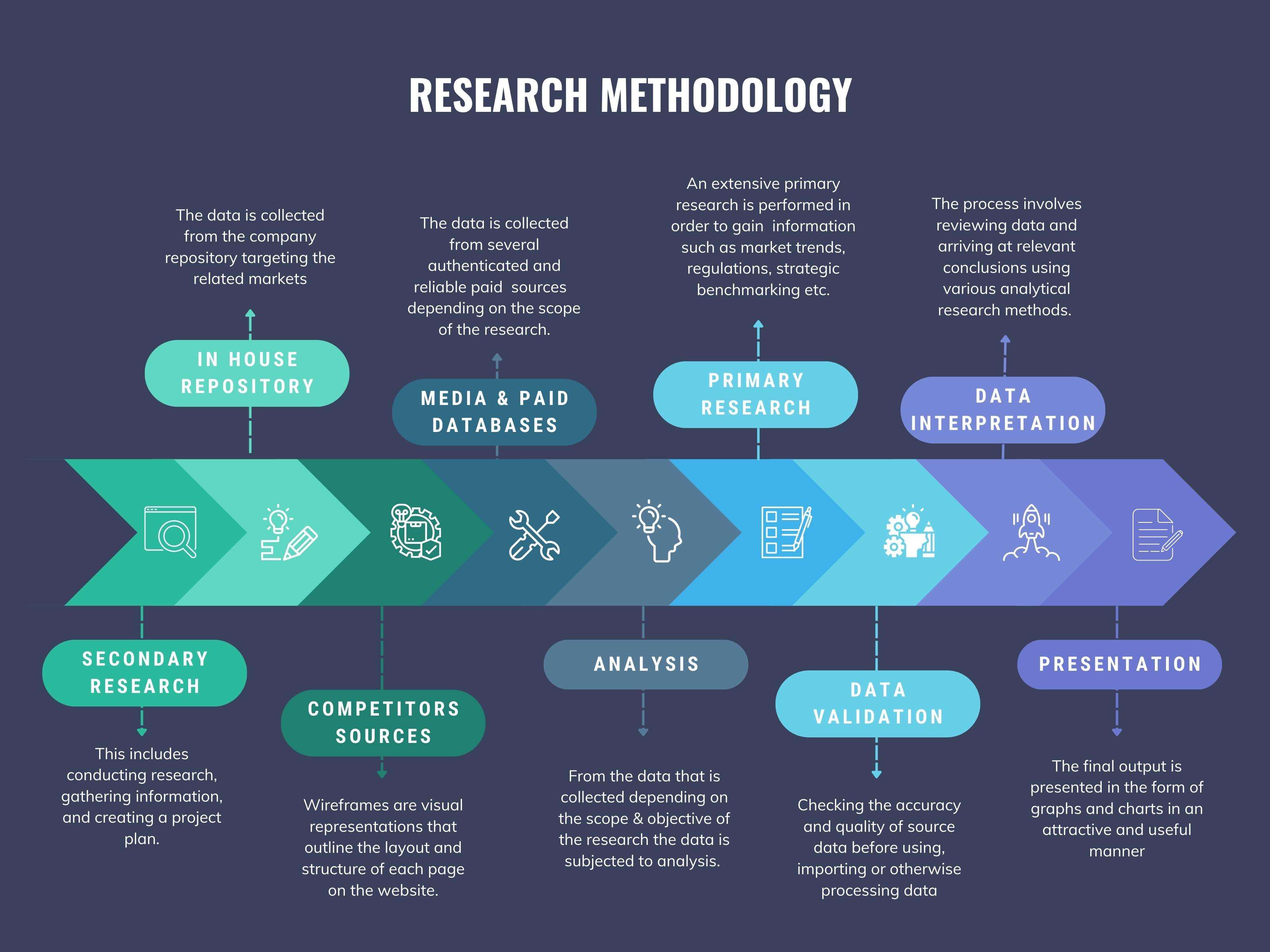
We at ‘Stratistics’ opt for an extensive research approach which involves data mining, data validation, and data analysis. The various research sources include in-house repository, secondary research, competitor’s sources, social media research, client internal data, and primary research.
Our team of analysts prefers the most reliable and authenticated data sources in order to perform the comprehensive literature search. With access to most of the authenticated data bases our team highly considers the best mix of information through various sources to obtain extensive and accurate analysis.
Each report takes an average time of a month and a team of 4 industry analysts. The time may vary depending on the scope and data availability of the desired market report. The various parameters used in the market assessment are standardized in order to enhance the data accuracy.
Data Mining
The data is collected from several authenticated, reliable, paid and unpaid sources and is filtered depending on the scope & objective of the research. Our reports repository acts as an added advantage in this procedure. Data gathering from the raw material suppliers, distributors and the manufacturers is performed on a regular basis, this helps in the comprehensive understanding of the products value chain. Apart from the above mentioned sources the data is also collected from the industry consultants to ensure the objective of the study is in the right direction.
Market trends such as technological advancements, regulatory affairs, market dynamics (Drivers, Restraints, Opportunities and Challenges) are obtained from scientific journals, market related national & international associations and organizations.
Data Analysis
From the data that is collected depending on the scope & objective of the research the data is subjected for the analysis. The critical steps that we follow for the data analysis include:
- Product Lifecycle Analysis
- Competitor analysis
- Risk analysis
- Porters Analysis
- PESTEL Analysis
- SWOT Analysis
The data engineering is performed by the core industry experts considering both the Marketing Mix Modeling and the Demand Forecasting. The marketing mix modeling makes use of multiple-regression techniques to predict the optimal mix of marketing variables. Regression factor is based on a number of variables and how they relate to an outcome such as sales or profits.
Data Validation
The data validation is performed by the exhaustive primary research from the expert interviews. This includes telephonic interviews, focus groups, face to face interviews, and questionnaires to validate our research from all aspects. The industry experts we approach come from the leading firms, involved in the supply chain ranging from the suppliers, distributors to the manufacturers and consumers so as to ensure an unbiased analysis.
We are in touch with more than 15,000 industry experts with the right mix of consultants, CEO's, presidents, vice presidents, managers, experts from both supply side and demand side, executives and so on.
The data validation involves the primary research from the industry experts belonging to:
- Leading Companies
- Suppliers & Distributors
- Manufacturers
- Consumers
- Industry/Strategic Consultants
Apart from the data validation the primary research also helps in performing the fill gap research, i.e. providing solutions for the unmet needs of the research which helps in enhancing the reports quality.
For more details about research methodology, kindly write to us at info@strategymrc.com
Frequently Asked Questions
In case of any queries regarding this report, you can contact the customer service by filing the “Inquiry Before Buy” form available on the right hand side. You may also contact us through email: info@strategymrc.com or phone: +1-301-202-5929
Yes, the samples are available for all the published reports. You can request them by filling the “Request Sample” option available in this page.
Yes, you can request a sample with your specific requirements. All the customized samples will be provided as per the requirement with the real data masked.
All our reports are available in Digital PDF format. In case if you require them in any other formats, such as PPT, Excel etc you can submit a request through “Inquiry Before Buy” form available on the right hand side. You may also contact us through email: info@strategymrc.com or phone: +1-301-202-5929
We offer a free 15% customization with every purchase. This requirement can be fulfilled for both pre and post sale. You may send your customization requirements through email at info@strategymrc.com or call us on +1-301-202-5929.
We have 3 different licensing options available in electronic format.
- Single User Licence: Allows one person, typically the buyer, to have access to the ordered product. The ordered product cannot be distributed to anyone else.
- 2-5 User Licence: Allows the ordered product to be shared among a maximum of 5 people within your organisation.
- Corporate License: Allows the product to be shared among all employees of your organisation regardless of their geographical location.
All our reports are typically be emailed to you as an attachment.
To order any available report you need to register on our website. The payment can be made either through CCAvenue or PayPal payments gateways which accept all international cards.
We extend our support to 6 months post sale. A post sale customization is also provided to cover your unmet needs in the report.
Request Customization
We offer complimentary customization of up to 15% with every purchase. To share your customization requirements, feel free to email us at info@strategymrc.com or call us on +1-301-202-5929. .
Please Note: Customization within the 15% threshold is entirely free of charge. If your request exceeds this limit, we will conduct a feasibility assessment. Following that, a detailed quote and timeline will be provided.
WHY CHOOSE US ?

Assured Quality
Best in class reports with high standard of research integrity

24X7 Research Support
Continuous support to ensure the best customer experience.

Free Customization
Adding more values to your product of interest.

Safe & Secure Access
Providing a secured environment for all online transactions.

Trusted by 600+ Brands
Serving the most reputed brands across the world.