Lithium Sulfur Battery Market
Lithium-Sulfur Battery Market Forecasts to 2034 – Global Analysis By Cell Type (Primary Lithium-Sulfur Batteries, Rechargeable Lithium-Sulfur Batteries, and Lithium-Sulfur Solid-State and Semi-Solid Cells), Cathode Architecture, Capacity and Form Factor, Application, End User, and By Geography

Market Dynamics:
Driver:
Flight endurance makes battery weight commercially valuable
Drones, uncrewed systems and aerospace platforms have a strong incentive to reduce battery mass because every additional unit of stored energy competes with payload. Lithium-sulfur offers a route to improving that balance while avoiding several conventional cathode metals. Specialized customers can evaluate cells against well-defined mission profiles, making early qualification more focused than broad automotive deployment. Demand is also supported by interest in supply chains that can be established closer to end users. The commercial driver is the performance of a complete mission-ready pack, including power delivery and reliability, rather than theoretical material capacity.
Restraint:
Cycle stability and practical cell design remain tightly linked
Sulfur conversion can generate soluble intermediates that move between electrodes and cause unwanted reactions, while changes in active-material volume complicate cathode design. Lithium-metal interfaces introduce additional requirements for uniform operation and safety. Increasing sulfur loading or reducing electrolyte content can improve practical energy density but may make these problems harder to manage. A cell must also provide sufficient power throughout its useful life. These trade-offs create lengthy development and qualification cycles. Manufacturers need repeatable performance in commercially relevant formats before customers can rely on laboratory results when designing production equipment or vehicles.
Opportunity:
Cathode partnerships can use existing battery manufacturing assets
Materials developers have an opportunity to work with established cell manufacturers on sulfur cathodes compatible with practical coating, assembly and formation processes. Such partnerships can reduce the need to build every part of a new supply chain while providing access to quality systems and customer qualification facilities. Solid-state and semi-solid approaches create additional room to redesign interfaces and suppress unwanted transport of sulfur species. The strongest opportunities are likely to combine a clear application requirement with scalable manufacturing. Demonstrating consistent pouch-cell performance under customer duty cycles can provide a more useful commercialization milestone than isolated record-setting laboratory tests.
Threat:
Incumbent chemistries improve while new suppliers seek scale
Lithium-sulfur developers compete against established lithium-ion suppliers that continue improving energy density, safety and manufacturing yields. Customers may delay adopting a new chemistry if incremental improvements meet near-term requirements with less qualification risk. Emerging companies must also finance production scale-up and maintain quality across a much larger number of cells. Missed delivery milestones or weak lifetime performance can undermine confidence in the broader technology. Automotive and aviation qualification processes amplify these risks because design changes can have long-lasting consequences. A differentiated application and credible production plan are therefore essential to sustaining investment and customer commitment.
Covid-19 Impact:
Pandemic restrictions slowed lithium-sulfur research through reduced laboratory access, delayed specialist materials and interruptions to prototype manufacturing. Aerospace customers also faced changing program priorities, making some collaborative development schedules less predictable. At the same time, the importance of resilient logistics and unmanned platforms kept attention on lightweight energy sources. The sector's limited production base meant that delayed validation and financing were often more significant than immediate lost sales. As activity resumed, developers placed greater emphasis on application-level testing, localized material sourcing and partnerships capable of moving promising cathode technology into repeatable manufacturing processes.
The Rechargeable Lithium-Sulfur Batteries segment is expected to be the largest during the forecast period
Rechargeable Lithium-Sulfur Batteries are expected to form the largest segment because most development programs seek repeated use in mobility, aerospace and other high-value applications. Rechargeability allows customers to spread pack costs across multiple missions, making cycle durability a direct commercial requirement. The segment also attracts work on electrolytes, conductive cathode structures and lithium-metal protection, bringing several parts of the value chain into the same qualification process. Its position depends on balancing energy density with reliable power and life. Successful products must preserve useful performance in practical formats rather than rely on material-level advantages alone.
The Drones and Uncrewed Systems segment is expected to have the highest CAGR during the forecast period
Drones and Uncrewed Systems are anticipated to exhibit the highest CAGR as operators seek longer missions and greater payload capacity without substantially increasing platform size. These applications offer specific flight profiles against which cells can be tested, including repeated bursts of power during take-off and landing. Selected programs may also value localized sourcing and adaptable production volumes. Adoption can therefore proceed through targeted customer qualification before mass-market automotive requirements are met. Growth will depend on consistent pack-level performance, safe integration and the ability to deliver cells at the quantities required for sustained field operations.
Region with largest share:
North America is expected to command the largest share, supported by lithium-sulfur development companies, aerospace customers and interest in domestic battery materials. Uncrewed systems and specialized defense applications provide routes to early commercialization where weight and mission endurance can justify intensive qualification. Established research institutions and manufacturing partnerships support work on cathodes, interfaces and cell design. Regional scale-up remains dependent on production consistency and access to capital. The outlook is strongest for suppliers that can connect material innovation with a clearly defined end-use requirement and maintain dependable deliveries throughout the customer's qualification and deployment process.
Region with highest CAGR:
Asia Pacific is anticipated to register the highest CAGR as battery manufacturers and materials suppliers evaluate sulfur-based technology within an extensive cell-production ecosystem. The region combines expertise in coating, separators, electrolyte development and high-volume quality control, offering opportunities to accelerate manufacturing refinement. Partnerships with developers elsewhere can bring new cathode concepts into practical formats. Aerospace, electronics and emerging mobility applications provide potential demand beyond conventional electric vehicles. Growth will be determined by whether these industrial capabilities resolve the chemistry's remaining performance trade-offs and create reproducible cells that customers can qualify with confidence.
Key players in the market
Some of the key players in the Lithium-Sulfur Battery Market include Lyten, Inc., Zeta Energy LLC, Li-S Energy Limited, Theion GmbH, Gelion plc, NexTech Batteries Inc., Sion Power Corporation, Solidion Technology, Inc., Conamix Inc., Alteva, PolyPlus Battery Company, Giner, Inc., GS Yuasa Corporation, LG Energy Solution, Ltd., and Samsung SDI Co., Ltd.
Key Developments:
In August 2026, Gelion announced completion of its APC-funded drone mission-testing program with QinetiQ. Lithium-sulfur pouch cells incorporating its sulfur cathode material were independently evaluated under representative flight duty cycles, including high-power events. The work provided application-relevant validation rather than an announcement of mass-market deployment.
In June 2026, Gelion announced a collaboration with Nissan Technical Centre Europe and the University of Oxford on the CoRe-SoLiS project. The program combines sulfur cathode development with solid-state battery expertise, aiming to advance safer, longer-lasting and more affordable cells for future electric-vehicle applications.
In February 2026, Lyten completed its acquisition of Northvolt's Swedish battery assets. Northvolt Labs was designated to collaborate with Lyten's Silicon Valley team on industrializing lithium-sulfur technology, while the Ett plant's planned restart initially focused on lithium-ion NMC cells. The distinction separates future chemistry development from immediate factory output.
Cell Types Covered:
• Primary Lithium-Sulfur Batteries
• Rechargeable Lithium-Sulfur Batteries
• Lithium-Sulfur Solid-State and Semi-Solid Cells
Cathode Architectures Covered:
• Sulfur-Carbon Composite Cathodes
• Sulfurized Polymer Cathodes
• Sulfurized Carbon and Graphene Cathodes
Capacities and Form Factors Covered:
• Coin and Microcells
• Pouch Cells
• Prismatic Cells
• Large-Format and Packaged Systems
Applications Covered:
• Electric Vehicles
• Aerospace and Aviation
• Drones and Uncrewed Systems
• Defense and Space
• Stationary Energy Storage
• Consumer and Industrial Electronics
End Users Covered:
• Automotive OEMs
• Aerospace and Defense
• Battery and Electronics Manufacturers
• Utilities and Energy Storage Integrators
Regions Covered:
• North America
o United States
o Canada
o Mexico
• Europe
o United Kingdom
o Germany
o France
o Italy
o Spain
o Netherlands
o Belgium
o Sweden
o Switzerland
o Poland
o Rest of Europe
• Asia Pacific
o China
o Japan
o India
o South Korea
o Australia
o Indonesia
o Thailand
o Malaysia
o Singapore
o Vietnam
o Rest of Asia Pacific
• South America
o Brazil
o Argentina
o Colombia
o Chile
o Peru
o Rest of South America
• Rest of the World (RoW)
o Middle East
Saudi Arabia
United Arab Emirates
Qatar
Israel
Rest of Middle East
o Africa
South Africa
Egypt
Morocco
Rest of Africa
What our report offers:
- Market share assessments for the regional and country-level segments
- Strategic recommendations for the new entrants
- Covers Market data for the years 2023, 2024, 2025, 2026, 2027, 2028, 2030, 2032 and 2034
- Market Trends (Drivers, Constraints, Opportunities, Threats, Challenges, Investment Opportunities, and recommendations)
- Strategic recommendations in key business segments based on the market estimations
- Competitive landscaping mapping the key common trends
- Company profiling with detailed strategies, financials, and recent developments
- Supply chain trends mapping the latest technological advancements
Free Customization Offerings:
All the customers of this report will be entitled to receive one of the following free customization options:
• Company Profiling
o Comprehensive profiling of additional market players (up to 3)
o SWOT Analysis of key players (up to 3)
• Regional Segmentation
o Market estimations, Forecasts and CAGR of any prominent country as per the client's interest (Note: Depends on feasibility check)
• Competitive Benchmarking
o Benchmarking of key players based on product portfolio, geographical presence, and strategic alliances
Table of Contents
1 Executive Summary1.1 Market Snapshot and Key Highlights
1.2 Growth Drivers, Challenges, and Opportunities
1.3 Competitive Landscape Overview
1.4 Strategic Insights and Recommendations
2 Research Framework
2.1 Study Objectives and Scope
2.2 Stakeholder Analysis
2.3 Research Assumptions and Limitations
2.4 Research Methodology
2.4.1 Data Collection (Primary and Secondary)
2.4.2 Data Modeling and Estimation Techniques
2.4.3 Data Validation and Triangulation
2.4.4 Analytical and Forecasting Approach
3 Market Dynamics and Trend Analysis
3.1 Market Definition and Structure
3.2 Key Market Drivers
3.3 Market Restraints and Challenges
3.4 Growth Opportunities and Investment Hotspots
3.5 Industry Threats and Risk Assessment
3.6 Technology and Innovation Landscape
3.7 Emerging and High-Growth Markets
3.8 Regulatory and Policy Environment
3.9 Impact of COVID-19 and Recovery Outlook
4 Competitive and Strategic Assessment
4.1 Porter's Five Forces Analysis
4.1.1 Supplier Bargaining Power
4.1.2 Buyer Bargaining Power
4.1.3 Threat of Substitutes
4.1.4 Threat of New Entrants
4.1.5 Competitive Rivalry
4.2 Market Share Analysis of Key Players
4.3 Product Benchmarking and Performance Comparison
5 Global Lithium-Sulfur Battery Market, By Cell Type
5.1 Primary Lithium-Sulfur Batteries
5.2 Rechargeable Lithium-Sulfur Batteries
5.3 Lithium-Sulfur Solid-State and Semi-Solid Cells
6 Global Lithium-Sulfur Battery Market, By Cathode Architecture
6.1 Sulfur-Carbon Composite Cathodes
6.2 Sulfurized Polymer Cathodes
6.3 Sulfurized Carbon and Graphene Cathodes
7 Global Lithium-Sulfur Battery Market, By Capacity and Form Factor
7.1 Coin and Microcells
7.2 Pouch Cells
7.3 Prismatic Cells
7.4 Large-Format and Packaged Systems
8 Global Lithium-Sulfur Battery Market, By Application
8.1 Electric Vehicles
8.2 Aerospace and Aviation
8.3 Drones and Uncrewed Systems
8.4 Defense and Space
8.5 Stationary Energy Storage
8.6 Consumer and Industrial Electronics
9 Global Lithium-Sulfur Battery Market, By End User
9.1 Automotive OEMs
9.2 Aerospace and Defense
9.3 Battery and Electronics Manufacturers
9.4 Utilities and Energy Storage Integrators
10 Global Lithium-Sulfur Battery Market, By Geography
10.1 North America
10.1.1 United States
10.1.2 Canada
10.1.3 Mexico
10.2 Europe
10.2.1 United Kingdom
10.2.2 Germany
10.2.3 France
10.2.4 Italy
10.2.5 Spain
10.2.6 Netherlands
10.2.7 Belgium
10.2.8 Sweden
10.2.9 Switzerland
10.2.10 Poland
10.2.11 Rest of Europe
10.3 Asia Pacific
10.3.1 China
10.3.2 Japan
10.3.3 India
10.3.4 South Korea
10.3.5 Australia
10.3.6 Indonesia
10.3.7 Thailand
10.3.8 Malaysia
10.3.9 Singapore
10.3.10 Vietnam
10.3.11 Rest of Asia Pacific
10.4 South America
10.4.1 Brazil
10.4.2 Argentina
10.4.3 Colombia
10.4.4 Chile
10.4.5 Peru
10.4.6 Rest of South America
10.5 Rest of the World (RoW)
10.5.1 Middle East
10.5.1.1 Saudi Arabia
10.5.1.2 United Arab Emirates
10.5.1.3 Qatar
10.5.1.4 Israel
10.5.1.5 Rest of Middle East
10.5.2 Africa
10.5.2.1 South Africa
10.5.2.2 Egypt
10.5.2.3 Morocco
10.5.2.4 Rest of Africa
11 Strategic Market Intelligence
11.1 Industry Value Network and Supply Chain Assessment
11.2 White-Space and Opportunity Mapping
11.3 Product Evolution and Market Life Cycle Analysis
11.4 Channel, Distributor, and Go-to-Market Assessment
12 Industry Developments and Strategic Initiatives
12.1 Mergers and Acquisitions
12.2 Partnerships, Alliances, and Joint Ventures
12.3 New Product Launches and Certifications
12.4 Capacity Expansion and Investments
12.5 Other Strategic Initiatives
13 Company Profiles
13.1 Lyten, Inc.
13.2 Zeta Energy LLC
13.3 Li-S Energy Limited
13.4 Theion GmbH
13.5 Gelion plc
13.6 NexTech Batteries Inc.
13.7 Sion Power Corporation
13.8 Solidion Technology, Inc.
13.9 Conamix Inc.
13.10 Alteva
13.11 PolyPlus Battery Company
13.12 Giner, Inc.
13.13 GS Yuasa Corporation
13.14 LG Energy Solution, Ltd.
13.15 Samsung SDI Co., Ltd.
List of Tables
1 Global Lithium-Sulfur Battery Market Outlook, By Region (2023–2034) ($MN)
2 Global Lithium-Sulfur Battery Market Outlook, By Cell Type (2023–2034) ($MN)
3 Global Lithium-Sulfur Battery Market Outlook, By Primary Lithium-Sulfur Batteries (2023–2034) ($MN)
4 Global Lithium-Sulfur Battery Market Outlook, By Rechargeable Lithium-Sulfur Batteries (2023–2034) ($MN)
5 Global Lithium-Sulfur Battery Market Outlook, By Lithium-Sulfur Solid-State and Semi-Solid Cells (2023–2034) ($MN)
6 Global Lithium-Sulfur Battery Market Outlook, By Cathode Architecture (2023–2034) ($MN)
7 Global Lithium-Sulfur Battery Market Outlook, By Sulfur-Carbon Composite Cathodes (2023–2034) ($MN)
8 Global Lithium-Sulfur Battery Market Outlook, By Sulfurized Polymer Cathodes (2023–2034) ($MN)
9 Global Lithium-Sulfur Battery Market Outlook, By Sulfurized Carbon and Graphene Cathodes (2023–2034) ($MN)
10 Global Lithium-Sulfur Battery Market Outlook, By Capacity and Form Factor (2023–2034) ($MN)
11 Global Lithium-Sulfur Battery Market Outlook, By Coin and Microcells (2023–2034) ($MN)
12 Global Lithium-Sulfur Battery Market Outlook, By Pouch Cells (2023–2034) ($MN)
13 Global Lithium-Sulfur Battery Market Outlook, By Prismatic Cells (2023–2034) ($MN)
14 Global Lithium-Sulfur Battery Market Outlook, By Large-Format and Packaged Systems (2023–2034) ($MN)
15 Global Lithium-Sulfur Battery Market Outlook, By Application (2023–2034) ($MN)
16 Global Lithium-Sulfur Battery Market Outlook, By Electric Vehicles (2023–2034) ($MN)
17 Global Lithium-Sulfur Battery Market Outlook, By Aerospace and Aviation (2023–2034) ($MN)
18 Global Lithium-Sulfur Battery Market Outlook, By Drones and Uncrewed Systems (2023–2034) ($MN)
19 Global Lithium-Sulfur Battery Market Outlook, By Defense and Space (2023–2034) ($MN)
20 Global Lithium-Sulfur Battery Market Outlook, By Stationary Energy Storage (2023–2034) ($MN)
21 Global Lithium-Sulfur Battery Market Outlook, By Consumer and Industrial Electronics (2023–2034) ($MN)
22 Global Lithium-Sulfur Battery Market Outlook, By End User (2023–2034) ($MN)
23 Global Lithium-Sulfur Battery Market Outlook, By Automotive OEMs (2023–2034) ($MN)
24 Global Lithium-Sulfur Battery Market Outlook, By Aerospace and Defense (2023–2034) ($MN)
25 Global Lithium-Sulfur Battery Market Outlook, By Battery and Electronics Manufacturers (2023–2034) ($MN)
26 Global Lithium-Sulfur Battery Market Outlook, By Utilities and Energy Storage Integrators (2023–2034) ($MN)
Note: Tables for North America, Europe, APAC, South America, and Rest of the World (RoW) Regions are also represented in the same manner as above.
List of Figures
RESEARCH METHODOLOGY
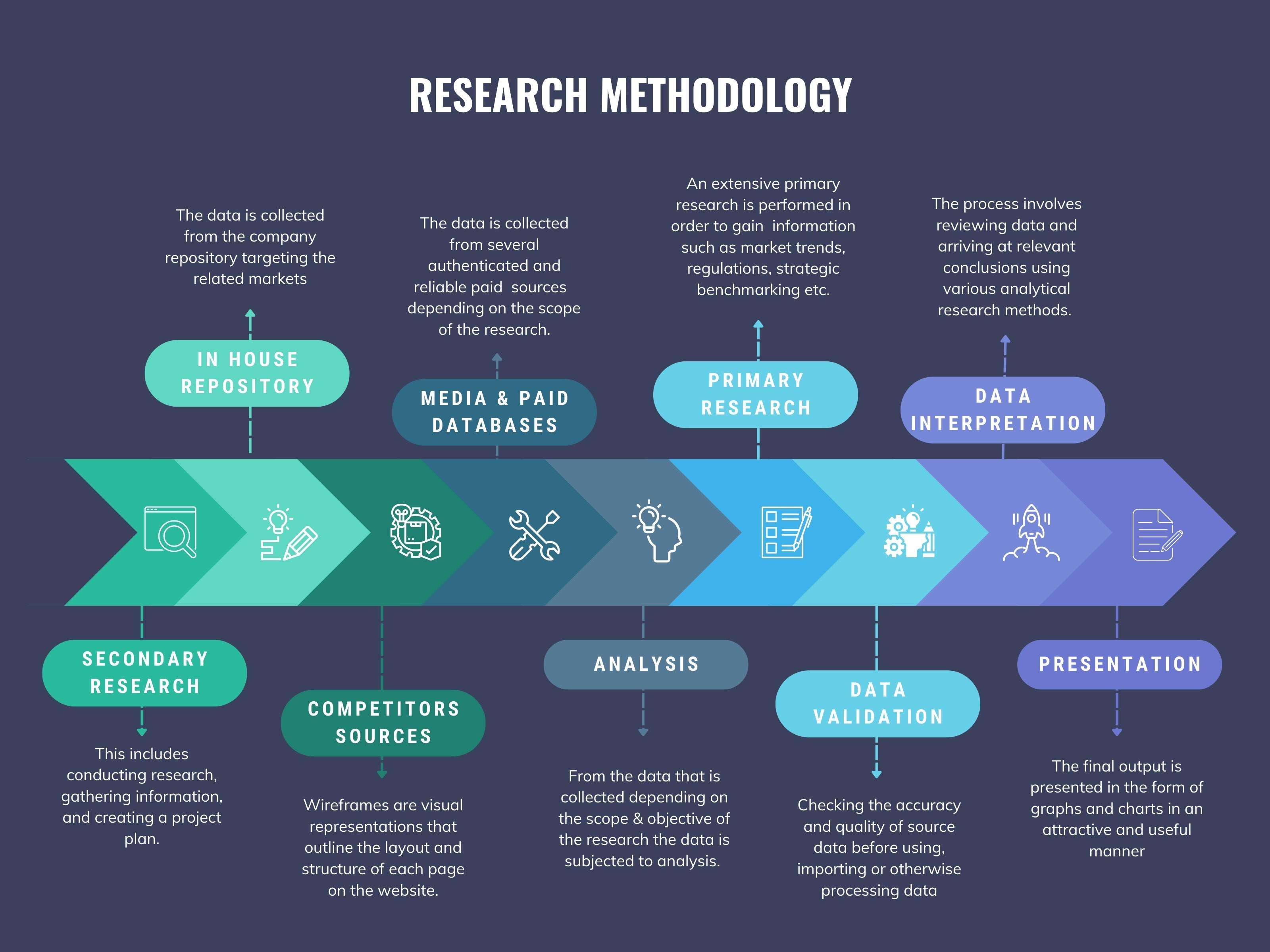
We at ‘Stratistics’ opt for an extensive research approach which involves data mining, data validation, and data analysis. The various research sources include in-house repository, secondary research, competitor’s sources, social media research, client internal data, and primary research.
Our team of analysts prefers the most reliable and authenticated data sources in order to perform the comprehensive literature search. With access to most of the authenticated data bases our team highly considers the best mix of information through various sources to obtain extensive and accurate analysis.
Each report takes an average time of a month and a team of 4 industry analysts. The time may vary depending on the scope and data availability of the desired market report. The various parameters used in the market assessment are standardized in order to enhance the data accuracy.
Data Mining
The data is collected from several authenticated, reliable, paid and unpaid sources and is filtered depending on the scope & objective of the research. Our reports repository acts as an added advantage in this procedure. Data gathering from the raw material suppliers, distributors and the manufacturers is performed on a regular basis, this helps in the comprehensive understanding of the products value chain. Apart from the above mentioned sources the data is also collected from the industry consultants to ensure the objective of the study is in the right direction.
Market trends such as technological advancements, regulatory affairs, market dynamics (Drivers, Restraints, Opportunities and Challenges) are obtained from scientific journals, market related national & international associations and organizations.
Data Analysis
From the data that is collected depending on the scope & objective of the research the data is subjected for the analysis. The critical steps that we follow for the data analysis include:
- Product Lifecycle Analysis
- Competitor analysis
- Risk analysis
- Porters Analysis
- PESTEL Analysis
- SWOT Analysis
The data engineering is performed by the core industry experts considering both the Marketing Mix Modeling and the Demand Forecasting. The marketing mix modeling makes use of multiple-regression techniques to predict the optimal mix of marketing variables. Regression factor is based on a number of variables and how they relate to an outcome such as sales or profits.
Data Validation
The data validation is performed by the exhaustive primary research from the expert interviews. This includes telephonic interviews, focus groups, face to face interviews, and questionnaires to validate our research from all aspects. The industry experts we approach come from the leading firms, involved in the supply chain ranging from the suppliers, distributors to the manufacturers and consumers so as to ensure an unbiased analysis.
We are in touch with more than 15,000 industry experts with the right mix of consultants, CEO's, presidents, vice presidents, managers, experts from both supply side and demand side, executives and so on.
The data validation involves the primary research from the industry experts belonging to:
- Leading Companies
- Suppliers & Distributors
- Manufacturers
- Consumers
- Industry/Strategic Consultants
Apart from the data validation the primary research also helps in performing the fill gap research, i.e. providing solutions for the unmet needs of the research which helps in enhancing the reports quality.
For more details about research methodology, kindly write to us at info@strategymrc.com
Frequently Asked Questions
In case of any queries regarding this report, you can contact the customer service by filing the “Inquiry Before Buy” form available on the right hand side. You may also contact us through email: info@strategymrc.com or phone: +1-301-202-5929
Yes, the samples are available for all the published reports. You can request them by filling the “Request Sample” option available in this page.
Yes, you can request a sample with your specific requirements. All the customized samples will be provided as per the requirement with the real data masked.
All our reports are available in Digital PDF format. In case if you require them in any other formats, such as PPT, Excel etc you can submit a request through “Inquiry Before Buy” form available on the right hand side. You may also contact us through email: info@strategymrc.com or phone: +1-301-202-5929
We offer a free 15% customization with every purchase. This requirement can be fulfilled for both pre and post sale. You may send your customization requirements through email at info@strategymrc.com or call us on +1-301-202-5929.
We have 3 different licensing options available in electronic format.
- Single User Licence: Allows one person, typically the buyer, to have access to the ordered product. The ordered product cannot be distributed to anyone else.
- 2-5 User Licence: Allows the ordered product to be shared among a maximum of 5 people within your organisation.
- Corporate License: Allows the product to be shared among all employees of your organisation regardless of their geographical location.
All our reports are typically be emailed to you as an attachment.
To order any available report you need to register on our website. The payment can be made either through CCAvenue or PayPal payments gateways which accept all international cards.
We extend our support to 6 months post sale. A post sale customization is also provided to cover your unmet needs in the report.
Request Customization
We offer complimentary customization of up to 15% with every purchase. To share your customization requirements, feel free to email us at info@strategymrc.com or call us on +1-301-202-5929. .
Please Note: Customization within the 15% threshold is entirely free of charge. If your request exceeds this limit, we will conduct a feasibility assessment. Following that, a detailed quote and timeline will be provided.
WHY CHOOSE US ?

Assured Quality
Best in class reports with high standard of research integrity

24X7 Research Support
Continuous support to ensure the best customer experience.

Free Customization
Adding more values to your product of interest.

Safe & Secure Access
Providing a secured environment for all online transactions.

Trusted by 600+ Brands
Serving the most reputed brands across the world.