
Robotic Drilling Market
Robotic Drilling Market Forecasts to 2034 – Global Analysis By System Type (Robotic Pipe and Tubular Handling, Robotic Drill-Floor Systems, Automated Rig Control Systems, and Robotic Inspection and Maintenance Systems), Drilling Operation, Rig Environment, Automation Level, Deployment Type, and By Geography

Market Dynamics:
Driver:
Removing personnel from hazardous repetitive rig tasks
Handling heavy tubulars and coordinating equipment around the drill floor create a strong incentive to automate predictable operations. Robotic systems can position pipe and execute repeated sequences while personnel supervise from a safer location. The associated process consistency can reduce variations between crews and shifts, helping contractors plan well delivery more accurately. Operators also value recorded operating data that support investigation of delays and refinement of drilling procedures. These benefits encourage investment where equipment utilization is sufficient to justify upgrades. Demand is strongest when automation addresses a defined operational bottleneck and fits the contractor's training, maintenance, and safety management practices.
Restraint:
Retrofitting heterogeneous rigs and validating safe control
Existing drilling fleets contain equipment from different suppliers, with varied mechanical layouts, communication interfaces, and maintenance histories. Adding robotic arms or automated controls therefore requires more than installing a standard software package. Engineers must establish reliable handoffs between machines, verify sensor performance, and define safe responses to abnormal conditions. Rig downtime for installation and acceptance testing can also interrupt contracted work. These integration costs make a fleet-wide rollout difficult when rigs differ substantially or customers change operating requirements frequently. Contractors may consequently introduce individual functions first, limiting initial market penetration until operating confidence and a repeatable upgrade process have been established.
Opportunity:
Modular upgrades linked to rig operating platforms
Retrofit modules provide a path to automation without replacing an otherwise productive rig. Combining pipe-handling equipment with a common control platform can enable contractors to add functions as experience develops and customer contracts justify further investment. Edge computing offers another opportunity by processing equipment and safety data locally, including at sites with limited connectivity. Service providers can support these installations through remote diagnostics, operating-sequence optimization, and specialist training. A clear interface between supervisory software and physical machinery is particularly valuable. Suppliers that demonstrate reliable mixed-equipment operation can address a wider installed base and create recurring demand for support and subsequent upgrades.
Threat:
Drilling-cycle volatility and operational confidence failures
Demand for robotic drilling remains exposed to changes in exploration and development budgets. When commodity prices weaken or drilling programs contract, contractors can defer modernization even if automation promises attractive operating benefits. A serious malfunction or poorly managed transition from manual operation could also damage confidence across a customer's fleet. Connected controls add exposure to unauthorized access and software faults, making robust fallback procedures essential. Competitive pressure compounds these risks if customers judge upgrades solely by short-term day rates. Vendors must therefore show dependable performance across changing well conditions while sustaining support throughout the equipment's working life.
Covid-19 Impact:
COVID-19 created a difficult investment environment as reduced oil demand disrupted drilling schedules and contractors reassessed fleet spending. Travel restrictions complicated specialist support, equipment installation, and crew changes, particularly offshore. At the same time, restrictions on personnel movement made remote supervision and fewer close-contact activities more attractive operating concepts. These competing effects meant interest in automation did not always translate immediately into orders. Subsequent deployment has depended on renewed drilling activity and demonstrable value from specific tasks. The pandemic reinforced the importance of remote support capability while highlighting that robotic hardware still needs local inspection, maintenance, and competent human supervision.
The Robotic Pipe and Tubular Handling segment is expected to be the largest during the forecast period
Robotic Pipe and Tubular Handling is expected to be the largest system-type segment because moving, positioning, and connecting tubulars are recurring requirements across drilling environments. These operations expose personnel to suspended loads and moving machinery, giving contractors a clearly identifiable automation use case. The segment includes both dedicated pipe-handling systems and supporting equipment such as automated catwalks and iron roughnecks. Physical equipment requirements also represent substantial project expenditure compared with individual software functions. Its anticipated leadership reflects broad applicability to established drilling workflows, while modular installation can make adoption practical on selected existing rigs as well as purpose-designed new facilities.
The Autonomous and Closed-Loop Control segment is expected to have the highest CAGR during the forecast period
Autonomous and Closed-Loop Control is projected to deliver the highest automation-level CAGR as suppliers connect equipment execution with real-time measurements and drilling objectives. Closed feedback loops can adjust operating parameters and coordinate sequences without requiring a separate manual instruction for every step. The commercial opportunity grows as rig instrumentation improves and contractors gain experience with assisted automation. Expansion is expected to be gradual because complex formations, equipment limitations, and abnormal events still demand clear supervisory authority. Systems that demonstrate repeatable results and transparent intervention rules should gain adoption, particularly where integrated surface and downhole workflows offer measurable improvements in well construction.
Region with largest share:
North America is expected to hold the largest share, supported by an established land-drilling industry, repeated multiwell operations, and a concentration of rig technology suppliers. Contractors can evaluate automation across comparable drilling campaigns, making task consistency and equipment utilization visible to customers. The United States and Canada also offer a substantial installed rig base for targeted upgrades. Commercial pressure to shorten unproductive time supports demand for pipe handling and rig control solutions. Regional leadership nevertheless depends on contractors maintaining investment discipline through changing drilling cycles and securing customer recognition of the operational value delivered by more automated equipment.
Region with highest CAGR:
Rest of the World (RoW) is forecast to post the highest CAGR, principally through Middle Eastern drilling programs and selected offshore opportunities in Africa. Long-duration contracts and fleet development can create conditions for standardized equipment packages and structured automation training. National oil companies and drilling contractors may incorporate digital controls when procuring new rigs or modernizing strategic assets. Offshore operations add incentives to improve coordination and reduce personnel exposure on constrained drill floors. Growth will vary with project schedules and local support capability, making supplier partnerships, spare-parts access, and demonstrated integration performance important determinants of regional adoption.
Key players in the market
Some of the key players in the Robotic Drilling Market include Nabors Industries Ltd., NOV Inc., SLB, Halliburton Company, Weatherford International plc, Helmerich & Payne, Inc., Precision Drilling Corporation, Ensign Energy Services Inc., Huisman Equipment B.V., Drillmec S.p.A., Pason Systems Inc., Automated Rig Technologies Ltd., Sekal AS, Rigarm Inc., Transocean Ltd., and Noble Corporation plc.
Key Developments:
In February 2026, NOV reported the first offshore deployment of its surface automation package for a Middle Eastern national oil company. The package combined NOVOS, Kaizen, and SoftSpeed technologies, providing a direct example of coordinated drilling control moving into offshore operations under actual field conditions.
In November 2025, NOV and Armada announced their collaboration on Beacon, an on-site edge device integrated with Armada's platform. Its applications include local processing of sensor and control data for drilling optimization and equipment monitoring, strengthening the computing layer that supports progressively more automated rigs.
In June 2025, SLB announced a collaboration with Cactus Drilling to expand automated and autonomous drilling solutions. The agreement covered integration of DrillSync with existing Precise controls and enabled deployment of DrillOps and Neuro capabilities, linking rig control and directional drilling within a broader automation strategy.
System Types Covered:
• Robotic Pipe and Tubular Handling
o Robotic Pipe-Handling Systems
o Automated Catwalks and Iron Roughnecks
• Robotic Drill-Floor Systems
• Automated Rig Control Systems
• Robotic Inspection and Maintenance Systems
Drilling Operations Covered:
• Tripping and Pipe Connections
• Drilling and Directional Control
• Tubular and Casing Running
• Riser and Blowout Preventer Handling
• Inspection and Maintenance
Rig Environments Covered:
• Onshore Land Rigs
• Offshore Jack-Up Rigs
• Offshore Floaters
Automation Levels Covered:
• Remote-Operated and Assisted
• Semi-Autonomous
• Autonomous and Closed-Loop Control
Deployment Types Covered:
• New-Build Rigs
• Retrofit and Upgrade Installations
Regions Covered:
• North America
o United States
o Canada
o Mexico
• Europe
o United Kingdom
o Germany
o France
o Italy
o Spain
o Netherlands
o Belgium
o Sweden
o Switzerland
o Poland
o Rest of Europe
• Asia Pacific
o China
o Japan
o India
o South Korea
o Australia
o Indonesia
o Thailand
o Malaysia
o Singapore
o Vietnam
o Rest of Asia Pacific
• South America
o Brazil
o Argentina
o Colombia
o Chile
o Peru
o Rest of South America
• Rest of the World (RoW)
o Middle East
Saudi Arabia
United Arab Emirates
Qatar
Israel
Rest of Middle East
o Africa
South Africa
Egypt
Morocco
Rest of Africa
What our report offers:
- Share assessments at regional and country levels for robotic drilling systems
- Recommendations for entrants selecting rig types, integration partners, and service models
- Historical and forecast market data covering 2023, 2024, 2025, 2026, 2027, 2028, 2030, 2032 and 2034
- Evaluation of market drivers, constraints, opportunities, threats, challenges, investment opportunities, and recommendations
- Segment-specific strategic recommendations supported by the market estimates
- Competitive mapping of shared developments in robotic handling and drilling controls
- Profiles of participating companies, including strategies, financials, and recent initiatives
- Supply-chain trends and current technological advances affecting rig automation
Free Customization Offerings:
One complimentary customization may be chosen to align the robotic drilling report with a purchaser's priorities:
• Company Profiling
o Expanded profiles for additional companies selected for the study (up to 3)
o SWOT assessments of key competitors (up to 3)
• Regional Segmentation
o Country-specific market estimations, forecasts, and CAGR for a prominent requested market (Note: Depends on feasibility check)
• Competitive Benchmarking
o Assessment of leading participants across product portfolios, geographic presence, and strategic alliances
Table of Contents
1 Executive Summary1.1 Market Snapshot and Key Highlights
1.2 Growth Drivers, Challenges, and Opportunities
1.3 Competitive Landscape Overview
1.4 Strategic Insights and Recommendations
2 Research Framework
2.1 Study Objectives and Scope
2.2 Stakeholder Analysis
2.3 Research Assumptions and Limitations
2.4 Research Methodology
2.4.1 Data Collection (Primary and Secondary)
2.4.2 Data Modeling and Estimation Techniques
2.4.3 Data Validation and Triangulation
2.4.4 Analytical and Forecasting Approach
3 Market Dynamics and Trend Analysis
3.1 Market Definition and Structure
3.2 Key Market Drivers
3.3 Market Restraints and Challenges
3.4 Growth Opportunities and Investment Hotspots
3.5 Industry Threats and Risk Assessment
3.6 Technology and Innovation Landscape
3.7 Emerging and High-Growth Markets
3.8 Regulatory and Policy Environment
3.9 Impact of COVID-19 and Recovery Outlook
4 Competitive and Strategic Assessment
4.1 Porter's Five Forces Analysis
4.1.1 Supplier Bargaining Power
4.1.2 Buyer Bargaining Power
4.1.3 Threat of Substitutes
4.1.4 Threat of New Entrants
4.1.5 Competitive Rivalry
4.2 Market Share Analysis of Key Players
4.3 Product Benchmarking and Performance Comparison
5 Global Robotic Drilling Market, By System Type
5.1 Robotic Pipe and Tubular Handling
5.1.1 Robotic Pipe-Handling Systems
5.1.2 Automated Catwalks and Iron Roughnecks
5.2 Robotic Drill-Floor Systems
5.3 Automated Rig Control Systems
5.4 Robotic Inspection and Maintenance Systems
6 Global Robotic Drilling Market, By Drilling Operation
6.1 Tripping and Pipe Connections
6.2 Drilling and Directional Control
6.3 Tubular and Casing Running
6.4 Riser and Blowout Preventer Handling
6.5 Inspection and Maintenance
7 Global Robotic Drilling Market, By Rig Environment
7.1 Onshore Land Rigs
7.2 Offshore Jack-Up Rigs
7.3 Offshore Floaters
8 Global Robotic Drilling Market, By Automation Level
8.1 Remote-Operated and Assisted
8.2 Semi-Autonomous
8.3 Autonomous and Closed-Loop Control
9 Global Robotic Drilling Market, By Deployment Type
9.1 New-Build Rigs
9.2 Retrofit and Upgrade Installations
10 Global Robotic Drilling Market, By Geography
10.1 North America
10.1.1 United States
10.1.2 Canada
10.1.3 Mexico
10.2 Europe
10.2.1 United Kingdom
10.2.2 Germany
10.2.3 France
10.2.4 Italy
10.2.5 Spain
10.2.6 Netherlands
10.2.7 Belgium
10.2.8 Sweden
10.2.9 Switzerland
10.2.10 Poland
10.2.11 Rest of Europe
10.3 Asia Pacific
10.3.1 China
10.3.2 Japan
10.3.3 India
10.3.4 South Korea
10.3.5 Australia
10.3.6 Indonesia
10.3.7 Thailand
10.3.8 Malaysia
10.3.9 Singapore
10.3.10 Vietnam
10.3.11 Rest of Asia Pacific
10.4 South America
10.4.1 Brazil
10.4.2 Argentina
10.4.3 Colombia
10.4.4 Chile
10.4.5 Peru
10.4.6 Rest of South America
10.5 Rest of the World (RoW)
10.5.1 Middle East
10.5.1.1 Saudi Arabia
10.5.1.2 United Arab Emirates
10.5.1.3 Qatar
10.5.1.4 Israel
10.5.1.5 Rest of Middle East
10.5.2 Africa
10.5.2.1 South Africa
10.5.2.2 Egypt
10.5.2.3 Morocco
10.5.2.4 Rest of Africa
11 Strategic Market Intelligence
11.1 Industry Value Network and Supply Chain Assessment
11.2 White-Space and Opportunity Mapping
11.3 Product Evolution and Market Life Cycle Analysis
11.4 Channel, Distributor, and Go-to-Market Assessment
12 Industry Developments and Strategic Initiatives
12.1 Mergers and Acquisitions
12.2 Partnerships, Alliances, and Joint Ventures
12.3 New Product Launches and Certifications
12.4 Capacity Expansion and Investments
12.5 Other Strategic Initiatives
13 Company Profiles
13.1 Nabors Industries Ltd.
13.2 NOV Inc.
13.3 SLB
13.4 Halliburton Company
13.5 Weatherford International plc
13.6 Helmerich & Payne, Inc.
13.7 Precision Drilling Corporation
13.8 Ensign Energy Services Inc.
13.9 Huisman Equipment B.V.
13.10 Drillmec S.p.A.
13.11 Pason Systems Inc.
13.12 Automated Rig Technologies Ltd.
13.13 Sekal AS
13.14 Rigarm Inc.
13.15 Transocean Ltd.
13.16 Noble Corporation plc
List of Tables
1 Global Robotic Drilling Market Outlook, By Region (2023–2034) ($MN)
2 Global Robotic Drilling Market Outlook, By System Type (2023–2034) ($MN)
3 Global Robotic Drilling Market Outlook, By Robotic Pipe and Tubular Handling (2023–2034) ($MN)
4 Global Robotic Drilling Market Outlook, By Robotic Pipe-Handling Systems (2023–2034) ($MN)
5 Global Robotic Drilling Market Outlook, By Automated Catwalks and Iron Roughnecks (2023–2034) ($MN)
6 Global Robotic Drilling Market Outlook, By Robotic Drill-Floor Systems (2023–2034) ($MN)
7 Global Robotic Drilling Market Outlook, By Automated Rig Control Systems (2023–2034) ($MN)
8 Global Robotic Drilling Market Outlook, By Robotic Inspection and Maintenance Systems (2023–2034) ($MN)
9 Global Robotic Drilling Market Outlook, By Drilling Operation (2023–2034) ($MN)
10 Global Robotic Drilling Market Outlook, By Tripping and Pipe Connections (2023–2034) ($MN)
11 Global Robotic Drilling Market Outlook, By Drilling and Directional Control (2023–2034) ($MN)
12 Global Robotic Drilling Market Outlook, By Tubular and Casing Running (2023–2034) ($MN)
13 Global Robotic Drilling Market Outlook, By Riser and Blowout Preventer Handling (2023–2034) ($MN)
14 Global Robotic Drilling Market Outlook, By Inspection and Maintenance (2023–2034) ($MN)
15 Global Robotic Drilling Market Outlook, By Rig Environment (2023–2034) ($MN)
16 Global Robotic Drilling Market Outlook, By Onshore Land Rigs (2023–2034) ($MN)
17 Global Robotic Drilling Market Outlook, By Offshore Jack-Up Rigs (2023–2034) ($MN)
18 Global Robotic Drilling Market Outlook, By Offshore Floaters (2023–2034) ($MN)
19 Global Robotic Drilling Market Outlook, By Automation Level (2023–2034) ($MN)
20 Global Robotic Drilling Market Outlook, By Remote-Operated and Assisted (2023–2034) ($MN)
21 Global Robotic Drilling Market Outlook, By Semi-Autonomous (2023–2034) ($MN)
22 Global Robotic Drilling Market Outlook, By Autonomous and Closed-Loop Control (2023–2034) ($MN)
23 Global Robotic Drilling Market Outlook, By Deployment Type (2023–2034) ($MN)
24 Global Robotic Drilling Market Outlook, By New-Build Rigs (2023–2034) ($MN)
25 Global Robotic Drilling Market Outlook, By Retrofit and Upgrade Installations (2023–2034) ($MN)
Note: Tables for North America, Europe, APAC, South America, and Rest of the World (RoW) Regions are also represented in the same manner as above.
List of Figures
RESEARCH METHODOLOGY
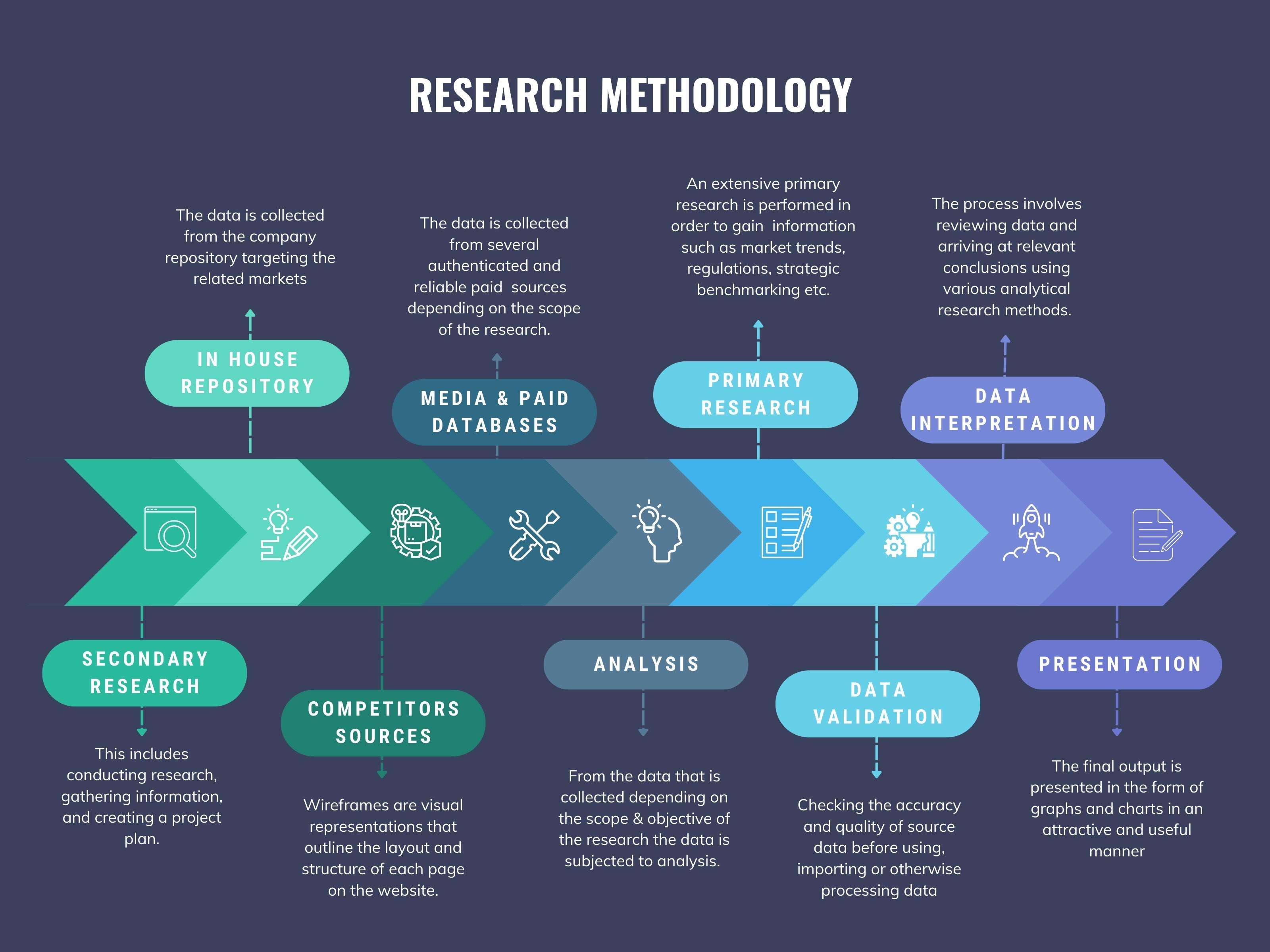
We at ‘Stratistics’ opt for an extensive research approach which involves data mining, data validation, and data analysis. The various research sources include in-house repository, secondary research, competitor’s sources, social media research, client internal data, and primary research.
Our team of analysts prefers the most reliable and authenticated data sources in order to perform the comprehensive literature search. With access to most of the authenticated data bases our team highly considers the best mix of information through various sources to obtain extensive and accurate analysis.
Each report takes an average time of a month and a team of 4 industry analysts. The time may vary depending on the scope and data availability of the desired market report. The various parameters used in the market assessment are standardized in order to enhance the data accuracy.
Data Mining
The data is collected from several authenticated, reliable, paid and unpaid sources and is filtered depending on the scope & objective of the research. Our reports repository acts as an added advantage in this procedure. Data gathering from the raw material suppliers, distributors and the manufacturers is performed on a regular basis, this helps in the comprehensive understanding of the products value chain. Apart from the above mentioned sources the data is also collected from the industry consultants to ensure the objective of the study is in the right direction.
Market trends such as technological advancements, regulatory affairs, market dynamics (Drivers, Restraints, Opportunities and Challenges) are obtained from scientific journals, market related national & international associations and organizations.
Data Analysis
From the data that is collected depending on the scope & objective of the research the data is subjected for the analysis. The critical steps that we follow for the data analysis include:
- Product Lifecycle Analysis
- Competitor analysis
- Risk analysis
- Porters Analysis
- PESTEL Analysis
- SWOT Analysis
The data engineering is performed by the core industry experts considering both the Marketing Mix Modeling and the Demand Forecasting. The marketing mix modeling makes use of multiple-regression techniques to predict the optimal mix of marketing variables. Regression factor is based on a number of variables and how they relate to an outcome such as sales or profits.
Data Validation
The data validation is performed by the exhaustive primary research from the expert interviews. This includes telephonic interviews, focus groups, face to face interviews, and questionnaires to validate our research from all aspects. The industry experts we approach come from the leading firms, involved in the supply chain ranging from the suppliers, distributors to the manufacturers and consumers so as to ensure an unbiased analysis.
We are in touch with more than 15,000 industry experts with the right mix of consultants, CEO's, presidents, vice presidents, managers, experts from both supply side and demand side, executives and so on.
The data validation involves the primary research from the industry experts belonging to:
- Leading Companies
- Suppliers & Distributors
- Manufacturers
- Consumers
- Industry/Strategic Consultants
Apart from the data validation the primary research also helps in performing the fill gap research, i.e. providing solutions for the unmet needs of the research which helps in enhancing the reports quality.
For more details about research methodology, kindly write to us at info@strategymrc.com
Frequently Asked Questions
In case of any queries regarding this report, you can contact the customer service by filing the “Inquiry Before Buy” form available on the right hand side. You may also contact us through email: info@strategymrc.com or phone: +1-301-202-5929
Yes, the samples are available for all the published reports. You can request them by filling the “Request Sample” option available in this page.
Yes, you can request a sample with your specific requirements. All the customized samples will be provided as per the requirement with the real data masked.
All our reports are available in Digital PDF format. In case if you require them in any other formats, such as PPT, Excel etc you can submit a request through “Inquiry Before Buy” form available on the right hand side. You may also contact us through email: info@strategymrc.com or phone: +1-301-202-5929
We offer a free 15% customization with every purchase. This requirement can be fulfilled for both pre and post sale. You may send your customization requirements through email at info@strategymrc.com or call us on +1-301-202-5929.
We have 3 different licensing options available in electronic format.
- Single User Licence: Allows one person, typically the buyer, to have access to the ordered product. The ordered product cannot be distributed to anyone else.
- 2-5 User Licence: Allows the ordered product to be shared among a maximum of 5 people within your organisation.
- Corporate License: Allows the product to be shared among all employees of your organisation regardless of their geographical location.
All our reports are typically be emailed to you as an attachment.
To order any available report you need to register on our website. The payment can be made either through CCAvenue or PayPal payments gateways which accept all international cards.
We extend our support to 6 months post sale. A post sale customization is also provided to cover your unmet needs in the report.
Request Customization
We offer complimentary customization of up to 15% with every purchase. To share your customization requirements, feel free to email us at info@strategymrc.com or call us on +1-301-202-5929. .
Please Note: Customization within the 15% threshold is entirely free of charge. If your request exceeds this limit, we will conduct a feasibility assessment. Following that, a detailed quote and timeline will be provided.
WHY CHOOSE US ?

Assured Quality
Best in class reports with high standard of research integrity

24X7 Research Support
Continuous support to ensure the best customer experience.

Free Customization
Adding more values to your product of interest.

Safe & Secure Access
Providing a secured environment for all online transactions.

Trusted by 600+ Brands
Serving the most reputed brands across the world.