
Self Sovereign Identityssi Market
Self-Sovereign Identity (SSI) Market Forecasts to 2032 – Global Analysis By Offering (Solution and Service), Network Type (Permissioned Networks, Permissionless Networks and Federated / Consortium Identity Networks), Deployment Type, Organization Size, Technology, Application, End User and By Geography

According to Stratistics MRC, the Global Self-Sovereign Identity (SSI) Market is accounted for $2.99 billion in 2025 and is expected to reach $94.83 billion by 2032 growing at a CAGR of 63.8% during the forecast period. Self-Sovereign Identity (SSI) is a digital identity model that gives people the ability to manage, own, and control their personal information independently of centralized authorities. In contrast to traditional identity systems, which store and validate identity information through third parties like governments or businesses, SSI allows users to directly create and share verifiable credentials. This method lowers the risk of identity theft and minimizes data exposure, improving privacy, security, and user autonomy. As a promising solution for digital identity management in a world growing more interconnected by the day, SSI frequently uses blockchain or decentralized ledger technologies to offer a transparent, impenetrable method of identity authentication.
According to the World Economic Forum (WEF), Self-Sovereign Identity (SSI) is positioned as a key innovation for enhancing digital trust and privacy, with the WEF highlighting that over 1 billion people worldwide currently lack a formal digital identity, which hampers access to essential services.
Market Dynamics:
Driver:
Growing fraud and identity theft
Fraud and identity theft have increased significantly in recent years, costing consumers and companies billions of dollars every year. Conventional identity verification techniques frequently rely on centralized databases, which hackers find appealing. By enabling users to authenticate themselves without disclosing needless personal information, decentralizing identity management, and storing only cryptographically verifiable credentials on distributed ledgers, SSI reduces these risks. Additionally, this makes online interactions safer by drastically reducing the likelihood of identity theft and data breaches.
Restraint:
Insufficient interoperability and standardization
The lack of widely recognized standards and protocols is one of the main obstacles preventing SSI from being widely used. Decentralized identity systems are developed by various organizations and technology providers, and these versions are frequently incompatible with one another. It is challenging for SSI solutions to work together seamlessly across different platforms, services, and jurisdictions because of this fragmentation. Furthermore, users and businesses encounter difficulties integrating SSI into current infrastructure in the absence of standardized frameworks, which hinders adoption and restricts the systems' global scalability.
Opportunity:
Growth in the credential market and digital identity wallets
Digital identity wallets—applications that store and manage verifiable credentials—are a key component of SSI's architecture. For these wallets, which can act as entry points for users to safely manage and share their identities, the growing popularity of smart phones and mobile technology offers substantial growth potential. As more organizations realize the benefits of decentralized verification, the credential market—where organizations, employers, and service providers issue digital certificates or licenses—can also grow quickly. Moreover, this expansion stimulates innovation in credential issuance and wallet design while also generating new revenue streams.
Threat:
Challenges in key management and cyber security risks
Although decentralizing identity data through SSI improves security, it also presents new difficulties, particularly with regard to managing cryptographic keys. Users are in charge of protecting their private keys, which serve as the entry point to their online persona. These keys may be lost, stolen, or compromised, which could lead to identity theft or permanent loss of access. Cybercriminals are constantly developing more complex attack techniques, such as malware and phishing, to target key holders. Additionally, the trust and adoption of SSI systems may be jeopardized in the absence of strong, intuitive key recovery and protection mechanisms.
Covid-19 Impact:
The COVID-19 pandemic significantly accelerated the adoption of Self-Sovereign Identity (SSI) solutions as lockdowns and social distancing measures heightened the demand for secure, remote digital identity verification. In order to facilitate access to vital services like telehealth, remote banking, and digital vaccinations, organizations in the healthcare, financial, and governmental sectors looked for contactless identity systems that preserve privacy because face-to-face interactions are becoming less common. Furthermore, the pandemic highlighted the necessity of digital credentials that users could safely control and share, such as test results and vaccine passports. By increasing awareness and investment in SSI technologies, this spike in demand helped establish them as essential instruments for the ongoing digital transformation and post-pandemic recovery.
The cloud-based segment is expected to be the largest during the forecast period
The cloud-based segment is expected to account for the largest market share during the forecast period. This is due to the fact that cloud-based SSI solutions are more easily deployable, flexible, and scalable than on-premises systems. Cloud-based models are preferred by organizations because they enable faster integration with a variety of digital services, lower upfront infrastructure costs, and support remote access. Moreover, cloud platforms frequently offer greater assistance with interoperability and ongoing updates, both of which are essential given how quickly SSI technologies are developing. The market is thus dominated by cloud-based SSI deployments, which facilitate broad adoption in a variety of sectors and regions.
The zero-knowledge proofs (ZKPs) segment is expected to have the highest CAGR during the forecast period
Over the forecast period, the zero-knowledge proofs (ZKPs) segment is predicted to witness the highest growth rate. Zero-knowledge proofs allow one party to demonstrate to another that a claim is accurate without disclosing any further details beyond the veracity of the claim. Because it improves security and privacy by enabling users to authenticate their identity or credentials without disclosing sensitive information, this technology is becoming increasingly popular in SSI solutions. Additionally, ZKPs offer a potent way to accomplish reliable and privacy-preserving identity verification, which is fueling the SSI market's quick adoption and expansion in light of growing global concerns about data breaches and privacy laws.
Region with largest share:
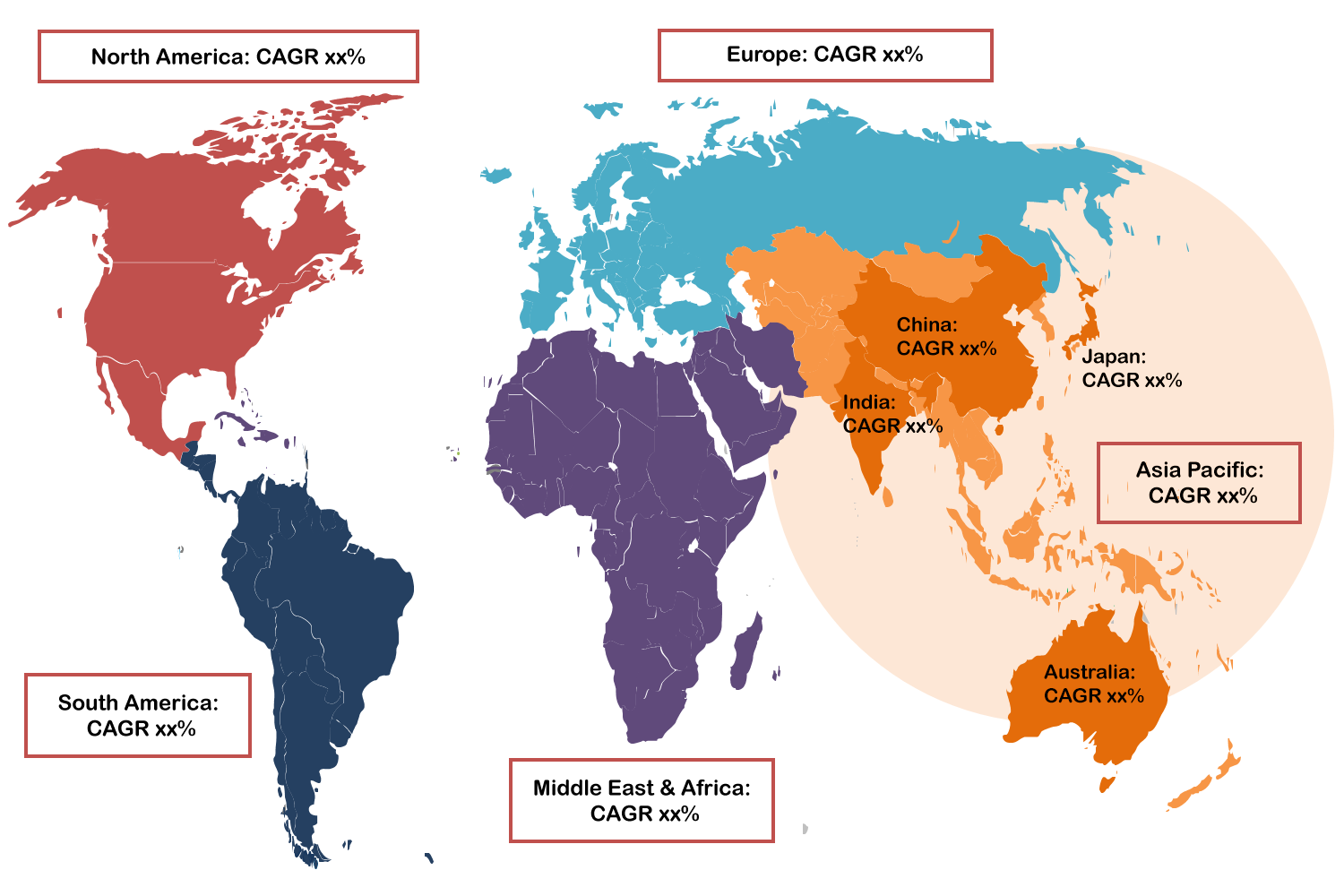
During the forecast period, the North America region is expected to hold the largest market share. Advanced technology infrastructure, early blockchain and decentralized identity solution adoption, and significant private and public sector investments in the US and Canada are the main drivers of this dominance. Furthermore, the market has grown as a result of strict data privacy laws like those influenced by the GDPR and rising demand for safe digital identity verification in the government, healthcare, and banking industries. North America's leadership in the global SSI market is cemented by the region's thriving ecosystem of technology providers, startups, and research institutions, which further accelerates innovation and deployment of SSI solutions.
Region with highest CAGR:
Over the forecast period, the Asia Pacific region is anticipated to exhibit the highest CAGR. This quick expansion is being driven by more digital transformation projects, more people using the internet, and more governments in nations like China, Japan, Australia, and India supporting safe and private identity management systems. The growing fintech and e-commerce industries in the area are fueling the need for trustworthy and user-friendly identity verification systems. Moreover, APAC is now the world's fastest-growing market for SSI technologies due to its rapid adoption, which is also influenced by the pressing need to combat identity fraud and improve data security in a digitally changing environment.
Key players in the market
Some of the key players in Self-Sovereign Identity (SSI) Market include IBM Corporation, Microsoft Corporation, Cognizant, SecureKey Technologies, Wipro, Accenture, Civic Technologies, Mastercard Inc, Imageware, ConsenSys, Evernym, IDEX Biometrics, NEC Corporation, Vodafone and Infosys.
Key Developments:
In July 2025, Accenture has acquired Aristal, a Malaysia-based consulting and digital transformation firm with deep expertise in financial services—marking Accenture’s first banking-focused acquisition in the country. The acquisition strengthens Accenture’s talent and capabilities to help banks in Malaysia upgrade their core systems, improve operations, and manage large-scale changes like mergers and system transitions.
In June 2025, Wipro Limited has signed a multi-year agreement with Entrust to boost the global security leader’s technology operations and growth. As part of the collaboration, Wipro will aid in product development, infrastructure, and application upgrades, along with leveraging generative AI to enhance user experiences and response times.
In April 2025, IBM and Tokyo Electron (TEL) announced an extension of their agreement for the joint research and development of advanced semiconductor technologies. The new 5-year agreement will focus on the continued advancement of technology for next-generation semiconductor nodes and architectures to power the age of generative AI.
Offerings Covered:
• Solution
• Service
Network Types Covered:
• Permissioned Networks
• Permissionless Networks
• Federated / Consortium Identity Networks
Deployment Types Covered:
• On-Premises
• Cloud-Based
• Hybrid
• Edge Computing
Organization Sizes Covered:
• Large Enterprise
• Small and Medium Size Enterprise
Technologies Covered:
• Blockchain / Distributed Ledger Technology (DLT)
• Decentralized Identity Protocols
• Public Key Infrastructure (PKI)
• Zero-Knowledge Proofs (ZKPs)
• Biometric Authentication Technologies
Applications Covered:
• Digital Identity Verification & Authentication
• Identity Lifecycle Management
• Access Control & Authorization
• Consent-Based Data Sharing
• KYC (Know Your Customer) / AML (Anti-Money Laundering) Compliance
• Credential Issuance & Revocation
End Users Covered:
• Banking, Financial Services & Insurance (BFSI)
• Government & e-Governance
• Healthcare & Life Sciences
• Education & Academia
• Travel & Hospitality
• Real Estate & Construction
• Media & Entertainment
• IT & Telecommunications
• Retail & E-Commerce
• Other End Users
Regions Covered:
• North America
o US
o Canada
o Mexico
• Europe
o Germany
o UK
o Italy
o France
o Spain
o Rest of Europe
• Asia Pacific
o Japan
o China
o India
o Australia
o New Zealand
o South Korea
o Rest of Asia Pacific
• South America
o Argentina
o Brazil
o Chile
o Rest of South America
• Middle East & Africa
o Saudi Arabia
o UAE
o Qatar
o South Africa
o Rest of Middle East & Africa
What our report offers:
- Market share assessments for the regional and country-level segments
- Strategic recommendations for the new entrants
- Covers Market data for the years 2024, 2025, 2026, 2028, and 2032
- Market Trends (Drivers, Constraints, Opportunities, Threats, Challenges, Investment Opportunities, and recommendations)
- Strategic recommendations in key business segments based on the market estimations
- Competitive landscaping mapping the key common trends
- Company profiling with detailed strategies, financials, and recent developments
- Supply chain trends mapping the latest technological advancements
Free Customization Offerings:
All the customers of this report will be entitled to receive one of the following free customization options:
• Company Profiling
o Comprehensive profiling of additional market players (up to 3)
o SWOT Analysis of key players (up to 3)
• Regional Segmentation
o Market estimations, Forecasts and CAGR of any prominent country as per the client's interest (Note: Depends on feasibility check)
• Competitive Benchmarking
o Benchmarking of key players based on product portfolio, geographical presence, and strategic alliances
Table of Contents
1 Executive Summary
2 Preface
2.1 Abstract
2.2 Stake Holders
2.3 Research Scope
2.4 Research Methodology
2.4.1 Data Mining
2.4.2 Data Analysis
2.4.3 Data Validation
2.4.4 Research Approach
2.5 Research Sources
2.5.1 Primary Research Sources
2.5.2 Secondary Research Sources
2.5.3 Assumptions
3 Market Trend Analysis
3.1 Introduction
3.2 Drivers
3.3 Restraints
3.4 Opportunities
3.5 Threats
3.6 Technology Analysis
3.7 Application Analysis
3.8 End User Analysis
3.9 Emerging Markets
3.10 Impact of Covid-19
4 Porters Five Force Analysis
4.1 Bargaining power of suppliers
4.2 Bargaining power of buyers
4.3 Threat of substitutes
4.4 Threat of new entrants
4.5 Competitive rivalry
5 Global Self-Sovereign Identity (SSI) Market, By Offering
5.1 Introduction
5.2 Solution
5.2.1 Identity Wallets
5.2.2 Verifiable Credential Platforms
5.2.3 Decentralized Identifiers (DIDs)
5.2.4 Trust Registries & Governance Frameworks
5.3 Service
5.3.1 Consulting
5.3.2 Integration
5.3.3 Support & Maintenance
5.3.4 Governance & Compliance Advisory
6 Global Self-Sovereign Identity (SSI) Market, By Network Type
6.1 Introduction
6.2 Permissioned Networks
6.3 Permissionless Networks
6.4 Federated / Consortium Identity Networks
7 Global Self-Sovereign Identity (SSI) Market, By Deployment Type
7.1 Introduction
7.2 On-Premises
7.3 Cloud-Based
7.4 Hybrid
7.5 Edge Computing
8 Global Self-Sovereign Identity (SSI) Market, By Organization Size
8.1 Introduction
8.2 Large Enterprise
8.3 Small and Medium Size Enterprise
9 Global Self-Sovereign Identity (SSI) Market, By Technology
9.1 Introduction
9.2 Blockchain / Distributed Ledger Technology (DLT)
9.3 Decentralized Identity Protocols
9.4 Public Key Infrastructure (PKI)
9.5 Zero-Knowledge Proofs (ZKPs)
9.6 Biometric Authentication Technologies
10 Global Self-Sovereign Identity (SSI) Market, By Application
10.1 Introduction
10.2 Digital Identity Verification & Authentication
10.3 Identity Lifecycle Management
10.4 Access Control & Authorization
10.5 Consent-Based Data Sharing
10.6 KYC (Know Your Customer) / AML (Anti-Money Laundering) Compliance
10.7 Credential Issuance & Revocation
11 Global Self-Sovereign Identity (SSI) Market, By End User
11.1 Introduction
11.2 Banking, Financial Services & Insurance (BFSI)
11.3 Government & e-Governance
11.4 Healthcare & Life Sciences
11.5 Education & Academia
11.6 Travel & Hospitality
11.7 Real Estate & Construction
11.8 Media & Entertainment
11.9 IT & Telecommunications
11.10 Retail & E-Commerce
11.11 Other End Users
12 Global Self-Sovereign Identity (SSI) Market, By Geography
12.1 Introduction
12.2 North America
12.2.1 US
12.2.2 Canada
12.2.3 Mexico
12.3 Europe
12.3.1 Germany
12.3.2 UK
12.3.3 Italy
12.3.4 France
12.3.5 Spain
12.3.6 Rest of Europe
12.4 Asia Pacific
12.4.1 Japan
12.4.2 China
12.4.3 India
12.4.4 Australia
12.4.5 New Zealand
12.4.6 South Korea
12.4.7 Rest of Asia Pacific
12.5 South America
12.5.1 Argentina
12.5.2 Brazil
12.5.3 Chile
12.5.4 Rest of South America
12.6 Middle East & Africa
12.6.1 Saudi Arabia
12.6.2 UAE
12.6.3 Qatar
12.6.4 South Africa
12.6.5 Rest of Middle East & Africa
13 Key Developments
13.1 Agreements, Partnerships, Collaborations and Joint Ventures
13.2 Acquisitions & Mergers
13.3 New Product Launch
13.4 Expansions
13.5 Other Key Strategies
14 Company Profiling
14.1 IBM Corporation
14.2 Microsoft Corporation
14.3 Cognizant
14.4 SecureKey Technologies
14.5 Wipro
14.6 Accenture
14.7 Civic Technologies
14.8 Mastercard Inc
14.9 Imageware
14.10 ConsenSys
14.11 Evernym
14.12 IDEX Biometrics
14.13 NEC Corporation
14.14 Vodafone
14.15 Infosys
List of Tables
1 Global Self-Sovereign Identity (SSI) Market Outlook, By Region (2024-2032) ($MN)
2 Global Self-Sovereign Identity (SSI) Market Outlook, By Offering (2024-2032) ($MN)
3 Global Self-Sovereign Identity (SSI) Market Outlook, By Solution (2024-2032) ($MN)
4 Global Self-Sovereign Identity (SSI) Market Outlook, By Identity Wallets (2024-2032) ($MN)
5 Global Self-Sovereign Identity (SSI) Market Outlook, By Verifiable Credential Platforms (2024-2032) ($MN)
6 Global Self-Sovereign Identity (SSI) Market Outlook, By Decentralized Identifiers (DIDs) (2024-2032) ($MN)
7 Global Self-Sovereign Identity (SSI) Market Outlook, By Trust Registries & Governance Frameworks (2024-2032) ($MN)
8 Global Self-Sovereign Identity (SSI) Market Outlook, By Service (2024-2032) ($MN)
9 Global Self-Sovereign Identity (SSI) Market Outlook, By Consulting (2024-2032) ($MN)
10 Global Self-Sovereign Identity (SSI) Market Outlook, By Integration (2024-2032) ($MN)
11 Global Self-Sovereign Identity (SSI) Market Outlook, By Support & Maintenance (2024-2032) ($MN)
12 Global Self-Sovereign Identity (SSI) Market Outlook, By Governance & Compliance Advisory (2024-2032) ($MN)
13 Global Self-Sovereign Identity (SSI) Market Outlook, By Network Type (2024-2032) ($MN)
14 Global Self-Sovereign Identity (SSI) Market Outlook, By Permissioned Networks (2024-2032) ($MN)
15 Global Self-Sovereign Identity (SSI) Market Outlook, By Permissionless Networks (2024-2032) ($MN)
16 Global Self-Sovereign Identity (SSI) Market Outlook, By Federated / Consortium Identity Networks (2024-2032) ($MN)
17 Global Self-Sovereign Identity (SSI) Market Outlook, By Deployment Type (2024-2032) ($MN)
18 Global Self-Sovereign Identity (SSI) Market Outlook, By On-Premises (2024-2032) ($MN)
19 Global Self-Sovereign Identity (SSI) Market Outlook, By Cloud-Based (2024-2032) ($MN)
20 Global Self-Sovereign Identity (SSI) Market Outlook, By Hybrid (2024-2032) ($MN)
21 Global Self-Sovereign Identity (SSI) Market Outlook, By Edge Computing (2024-2032) ($MN)
22 Global Self-Sovereign Identity (SSI) Market Outlook, By Organization Size (2024-2032) ($MN)
23 Global Self-Sovereign Identity (SSI) Market Outlook, By Large Enterprise (2024-2032) ($MN)
24 Global Self-Sovereign Identity (SSI) Market Outlook, By Small and Medium Size Enterprise (2024-2032) ($MN)
25 Global Self-Sovereign Identity (SSI) Market Outlook, By Technology (2024-2032) ($MN)
26 Global Self-Sovereign Identity (SSI) Market Outlook, By Blockchain / Distributed Ledger Technology (DLT) (2024-2032) ($MN)
27 Global Self-Sovereign Identity (SSI) Market Outlook, By Decentralized Identity Protocols (2024-2032) ($MN)
28 Global Self-Sovereign Identity (SSI) Market Outlook, By Public Key Infrastructure (PKI) (2024-2032) ($MN)
29 Global Self-Sovereign Identity (SSI) Market Outlook, By Zero-Knowledge Proofs (ZKPs) (2024-2032) ($MN)
30 Global Self-Sovereign Identity (SSI) Market Outlook, By Biometric Authentication Technologies (2024-2032) ($MN)
31 Global Self-Sovereign Identity (SSI) Market Outlook, By Application (2024-2032) ($MN)
32 Global Self-Sovereign Identity (SSI) Market Outlook, By Digital Identity Verification & Authentication (2024-2032) ($MN)
33 Global Self-Sovereign Identity (SSI) Market Outlook, By Identity Lifecycle Management (2024-2032) ($MN)
34 Global Self-Sovereign Identity (SSI) Market Outlook, By Access Control & Authorization (2024-2032) ($MN)
35 Global Self-Sovereign Identity (SSI) Market Outlook, By Consent-Based Data Sharing (2024-2032) ($MN)
36 Global Self-Sovereign Identity (SSI) Market Outlook, By KYC (Know Your Customer) / AML (Anti-Money Laundering) Compliance (2024-2032) ($MN)
37 Global Self-Sovereign Identity (SSI) Market Outlook, By Credential Issuance & Revocation (2024-2032) ($MN)
38 Global Self-Sovereign Identity (SSI) Market Outlook, By End User (2024-2032) ($MN)
39 Global Self-Sovereign Identity (SSI) Market Outlook, By Banking, Financial Services & Insurance (BFSI) (2024-2032) ($MN)
40 Global Self-Sovereign Identity (SSI) Market Outlook, By Government & e-Governance (2024-2032) ($MN)
41 Global Self-Sovereign Identity (SSI) Market Outlook, By Healthcare & Life Sciences (2024-2032) ($MN)
42 Global Self-Sovereign Identity (SSI) Market Outlook, By Education & Academia (2024-2032) ($MN)
43 Global Self-Sovereign Identity (SSI) Market Outlook, By Travel & Hospitality (2024-2032) ($MN)
44 Global Self-Sovereign Identity (SSI) Market Outlook, By Real Estate & Construction (2024-2032) ($MN)
45 Global Self-Sovereign Identity (SSI) Market Outlook, By Media & Entertainment (2024-2032) ($MN)
46 Global Self-Sovereign Identity (SSI) Market Outlook, By IT & Telecommunications (2024-2032) ($MN)
47 Global Self-Sovereign Identity (SSI) Market Outlook, By Retail & E-Commerce (2024-2032) ($MN)
48 Global Self-Sovereign Identity (SSI) Market Outlook, By Other End Users (2024-2032) ($MN)
Note: Tables for North America, Europe, APAC, South America, and Middle East & Africa Regions are also represented in the same manner as above.
List of Figures
RESEARCH METHODOLOGY

We at ‘Stratistics’ opt for an extensive research approach which involves data mining, data validation, and data analysis. The various research sources include in-house repository, secondary research, competitor’s sources, social media research, client internal data, and primary research.
Our team of analysts prefers the most reliable and authenticated data sources in order to perform the comprehensive literature search. With access to most of the authenticated data bases our team highly considers the best mix of information through various sources to obtain extensive and accurate analysis.
Each report takes an average time of a month and a team of 4 industry analysts. The time may vary depending on the scope and data availability of the desired market report. The various parameters used in the market assessment are standardized in order to enhance the data accuracy.
Data Mining
The data is collected from several authenticated, reliable, paid and unpaid sources and is filtered depending on the scope & objective of the research. Our reports repository acts as an added advantage in this procedure. Data gathering from the raw material suppliers, distributors and the manufacturers is performed on a regular basis, this helps in the comprehensive understanding of the products value chain. Apart from the above mentioned sources the data is also collected from the industry consultants to ensure the objective of the study is in the right direction.
Market trends such as technological advancements, regulatory affairs, market dynamics (Drivers, Restraints, Opportunities and Challenges) are obtained from scientific journals, market related national & international associations and organizations.
Data Analysis
From the data that is collected depending on the scope & objective of the research the data is subjected for the analysis. The critical steps that we follow for the data analysis include:
- Product Lifecycle Analysis
- Competitor analysis
- Risk analysis
- Porters Analysis
- PESTEL Analysis
- SWOT Analysis
The data engineering is performed by the core industry experts considering both the Marketing Mix Modeling and the Demand Forecasting. The marketing mix modeling makes use of multiple-regression techniques to predict the optimal mix of marketing variables. Regression factor is based on a number of variables and how they relate to an outcome such as sales or profits.
Data Validation
The data validation is performed by the exhaustive primary research from the expert interviews. This includes telephonic interviews, focus groups, face to face interviews, and questionnaires to validate our research from all aspects. The industry experts we approach come from the leading firms, involved in the supply chain ranging from the suppliers, distributors to the manufacturers and consumers so as to ensure an unbiased analysis.
We are in touch with more than 15,000 industry experts with the right mix of consultants, CEO's, presidents, vice presidents, managers, experts from both supply side and demand side, executives and so on.
The data validation involves the primary research from the industry experts belonging to:
- Leading Companies
- Suppliers & Distributors
- Manufacturers
- Consumers
- Industry/Strategic Consultants
Apart from the data validation the primary research also helps in performing the fill gap research, i.e. providing solutions for the unmet needs of the research which helps in enhancing the reports quality.
For more details about research methodology, kindly write to us at info@strategymrc.com
Frequently Asked Questions
In case of any queries regarding this report, you can contact the customer service by filing the “Inquiry Before Buy” form available on the right hand side. You may also contact us through email: info@strategymrc.com or phone: +1-301-202-5929
Yes, the samples are available for all the published reports. You can request them by filling the “Request Sample” option available in this page.
Yes, you can request a sample with your specific requirements. All the customized samples will be provided as per the requirement with the real data masked.
All our reports are available in Digital PDF format. In case if you require them in any other formats, such as PPT, Excel etc you can submit a request through “Inquiry Before Buy” form available on the right hand side. You may also contact us through email: info@strategymrc.com or phone: +1-301-202-5929
We offer a free 15% customization with every purchase. This requirement can be fulfilled for both pre and post sale. You may send your customization requirements through email at info@strategymrc.com or call us on +1-301-202-5929.
We have 3 different licensing options available in electronic format.
- Single User Licence: Allows one person, typically the buyer, to have access to the ordered product. The ordered product cannot be distributed to anyone else.
- 2-5 User Licence: Allows the ordered product to be shared among a maximum of 5 people within your organisation.
- Corporate License: Allows the product to be shared among all employees of your organisation regardless of their geographical location.
All our reports are typically be emailed to you as an attachment.
To order any available report you need to register on our website. The payment can be made either through CCAvenue or PayPal payments gateways which accept all international cards.
We extend our support to 6 months post sale. A post sale customization is also provided to cover your unmet needs in the report.
Request Customization
We offer complimentary customization of up to 15% with every purchase. To share your customization requirements, feel free to email us at info@strategymrc.com or call us on +1-301-202-5929. .
Please Note: Customization within the 15% threshold is entirely free of charge. If your request exceeds this limit, we will conduct a feasibility assessment. Following that, a detailed quote and timeline will be provided.
WHY CHOOSE US ?

Assured Quality
Best in class reports with high standard of research integrity

24X7 Research Support
Continuous support to ensure the best customer experience.

Free Customization
Adding more values to your product of interest.

Safe & Secure Access
Providing a secured environment for all online transactions.

Trusted by 600+ Brands
Serving the most reputed brands across the world.
