
Soft Skills Development Market
Soft Skills Development Market Forecasts to 2034 – Global Analysis By Skill Type (Communication Skills, Leadership and Management Skills, Teamwork and Collaboration Skills, Problem-Solving and Critical Thinking Skills, Emotional Intelligence and Interpersonal Skills and Other Skill Types), Training Delivery Mode, Training Provider, Skill Level, Organization Size, Application, End User and By Geography

Market Dynamics:
Driver:
AI-Driven Human Skills Premium
The accelerating integration of artificial intelligence into workplace operations is elevating the value of distinctly human capabilities such as empathy, communication, collaboration, and adaptability, which algorithms cannot replicate. As generative AI assumes routine analytical and administrative tasks, organizations increasingly recognize that competitive advantage depends on interpersonal effectiveness and leadership quality, driving sustained investment in soft skills development. The shift toward skills-first hiring and objective behavioral assessment further reinforces demand for structured training that can verify and document capability acquisition, thereby expanding the addressable market beyond discretionary development budgets.
Restraint:
ROI Measurement and Budget Scrutiny
Organizations continue to struggle with demonstrating measurable return on soft skills training investments, as outcomes such as improved communication or enhanced leadership effectiveness resist simple quantification and attribution. Training budgets face scrutiny during periods of economic uncertainty, and the absence of reliable behavioral metrics makes it difficult to justify sustained spending on programs whose benefits manifest indirectly through team performance and retention. This measurement gap disproportionately affects discretionary soft skills spending, while compliance-driven technical training remains insulated, thereby constraining growth in price-sensitive segments and among smaller enterprises with limited training budgets.
Opportunity:
AI-Powered Personalization and Coaching
Artificial intelligence presents a substantial opportunity to transform soft skills development from standardized classroom instruction into personalized, continuous coaching experiences that adapt to individual learner needs and organizational contexts. AI-powered simulators can generate scenario-based feedback by analyzing tone, word choice, and response patterns, while generative AI enables hyper-personalized coaching at scale that was previously available only through expensive one-on-one executive programs. Vendors that embed AI-driven behavioral analytics and adaptive content delivery into their platforms are positioned to capture expanding enterprise budgets as organizations seek demonstrable improvement in interpersonal effectiveness.
Threat:
Content Commoditization and Price Pressure
The proliferation of free massive open online courses and low-cost digital content libraries threatens to commoditize entry-level soft skills training, compressing margins and increasing price sensitivity across developing regions and SME segments. Organizations increasingly question the premium commanded by branded leadership programs when comparable foundational content is freely accessible, while the fragmented competitive landscape encompassing corporate training firms, e-learning platforms, universities, and professional development organizations intensifies rivalry. Providers that fail to differentiate through measurable outcomes, specialized content, or integrated technology risk losing contracts to lower-cost alternatives.
Covid-19 Impact:
The pandemic fundamentally disrupted traditional classroom-based soft skills training as organizations abruptly transitioned to remote operations and canceled in-person development programs. Training providers accelerated investment in virtual delivery platforms and digital collaboration tools to maintain continuity, while the remote work environment itself heightened awareness of communication, empathy, and virtual team management as critical competencies. Post-pandemic, blended learning models have become standard practice, with organizations retaining digital components for scalability and accessibility while preserving in-person sessions for high-impact leadership development and experiential learning activities that benefit from immediate facilitator feedback.
The leadership and management skills segment is expected to be the largest during the forecast period
The leadership and management skills segment is expected to account for the largest market share during the forecast period, due to sustained executive attention to strategic direction and people oversight across organizations of all sizes. Published analyses indicate that leadership and management training held 28.91% of the soft skills training market share in 2025, reflecting the perennial priority organizations place on developing managers who can guide teams through change and maintain engagement. As organizations confront succession planning challenges and the demands of leading hybrid and AI-augmented workforces, investment in leadership development continues to anchor soft skills budgets, thereby reinforcing the segment‘s dominant revenue position.
The online training segment is expected to have the highest CAGR during the forecast period
Over the forecast period, the online training segment is predicted to witness the highest growth rate, driven by its scalability, cost efficiency, and compatibility with distributed workforce models that have become permanent features of modern employment. Self-paced e-learning is the fastest growing delivery channel at a 12.86% CAGR, supported by AI-driven engines that adapt pathways to learner proficiency, job role, and preferred format . As mobile accessibility improves and organizations seek to deliver consistent soft skills content across geographies without travel expenses, online delivery is expected to capture an expanding share of development investment, particularly for foundational communication and collaboration training.
Region with largest share:
During the forecast period, the North America region is expected to hold the largest market share, due to mature corporate learning ecosystems, large per-employee training budgets, and the presence of major soft skills training providers. North America retained 39.66% share of the soft skills training market in 2025, benefiting from established procurement practices and strong vendor infrastructure. The United States accounts for the predominant share of regional demand, supported by government workforce development grants and corporate investment in leadership and communication capabilities, while Canada‘s CAD 450 million in government funding further stimulates regional demand for certification-linked programs .
Region with highest CAGR:
Over the forecast period, the Asia Pacific region is anticipated to exhibit the highest CAGR, due to large labor pools, expanding corporate investment in workforce capability development, and government initiatives that prioritize human capital formation. Asia Pacific is forecast to record the fastest 10.55% CAGR during 2026-2031 as governments in China, India, Japan, and South Korea anchor economic policy on human-capital development . Singapore‘s Smart Nation program and corporate tax incentives have propelled local e-learning adoption, while the growing services and hospitality sectors across the region create demand for communication, customer service, and leadership training that supports accelerated market expansion.
Key players in the market
Some of the key players in Soft Skills Development Market include Skillsoft Corporation, Franklin Covey Co., Dale Carnegie & Associates, Inc., Coursera, Inc., Udemy, Inc., LinkedIn Learning (Microsoft Corporation), DDI (Development Dimensions International), Korn Ferry, GP Strategies Corporation, BTS Group AB, NIIT Limited, Simplilearn Solutions Pvt. Ltd., Wilson Learning Worldwide Inc., Blanchard, Cegos Group, Harvard Business Publishing Corporate Learning, and Center for Creative Leadership (CCL).
Key Developments:
In September 2026, Coursera, Inc. announced 16 new university and industry partners alongside 25 new Professional Certificates, expanding its catalog for AI-era skills development including communication, leadership, and interpersonal effectiveness training across its global learner community.
In July 2026, Skillsoft Corporation completed the sale of its Global Knowledge instructor-led training business to Enduring Ventures while maintaining a strategic partnership to preserve customer access to live leadership and soft skills workshops alongside its AI-native skills platform.
In May 2026, Coursera, Inc. and Udemy, Inc. completed their combination, forming an expanded enterprise learning entity with a combined learner base of 290 million and approximately 18,000 enterprise customers, creating a broader distribution channel for soft skills content and leadership development programs.
Skill Types Covered:
• Communication Skills
• Leadership and Management Skills
• Teamwork and Collaboration Skills
• Problem-Solving and Critical Thinking Skills
• Emotional Intelligence and Interpersonal Skills
• Other Skill Types
Training Delivery Modes Covered:
• Online Training
• Instructor-Led Classroom Training
• Blended Learning
• On-the-Job Training
• Other Training Delivery Modes
Training Providers Covered:
• In-House Training
• External Training Providers
Skill Levels Covered:
• Beginner-Level Training
• Intermediate-Level Training
• Advanced-Level Training
Organization Sizes Covered:
• Small and Medium Enterprises (SMEs)
• Large Enterprises
Applications Covered:
• Employee Training and Development
• Leadership and Management Development
• Career Advancement and Professional Growth
• Team Building and Collaboration
• Customer Service and Sales Training
• Other Applications
End Users Covered:
• Banking, Financial Services and Insurance (BFSI)
• Information Technology and Telecommunications
• Healthcare and Life Sciences
• Manufacturing
• Retail and E-Commerce
• Other End Users
Regions Covered:
• North America
o United States
o Canada
o Mexico
• Europe
o United Kingdom
o Germany
o France
o Italy
o Spain
o Netherlands
o Belgium
o Sweden
o Switzerland
o Poland
o Rest of Europe
• Asia Pacific
o China
o Japan
o India
o South Korea
o Australia
o Indonesia
o Thailand
o Malaysia
o Singapore
o Vietnam
o Rest of Asia Pacific
• South America
o Brazil
o Argentina
o Colombia
o Chile
o Peru
o Rest of South America
• Rest of the World (RoW)
o Middle East
§ Saudi Arabia
§ United Arab Emirates
§ Qatar
§ Israel
§ Rest of Middle East
o Africa
§ South Africa
§ Egypt
§ Morocco
§ Rest of Africa
What our report offers:
- Market share assessments for the regional and country-level segments
- Strategic recommendations for the new entrants
- Covers Market data for the years 2023, 2024, 2025, 2026, 2027, 2028, 2030, 2032 and 2034
- Market Trends (Drivers, Constraints, Opportunities, Threats, Challenges, Investment Opportunities, and recommendations)
- Strategic recommendations in key business segments based on the market estimations
- Competitive landscaping mapping the key common trends
- Company profiling with detailed strategies, financials, and recent developments
- Supply chain trends mapping the latest technological advancements
Free Customization Offerings:
All the customers of this report will be entitled to receive one of the following free customization options:
• Company Profiling
o Comprehensive profiling of additional market players (up to 3)
o SWOT Analysis of key players (up to 3)
• Regional Segmentation
o Market estimations, Forecasts and CAGR of any prominent country as per the client's interest (Note: Depends on feasibility check)
• Competitive Benchmarking
o Benchmarking of key players based on product portfolio, geographical presence, and strategic alliances
Table of Contents
1 Executive Summary1.1 Market Snapshot and Key Highlights
1.2 Growth Drivers, Challenges, and Opportunities
1.3 Competitive Landscape Overview
1.4 Strategic Insights and Recommendations
2 Research Framework
2.1 Study Objectives and Scope
2.2 Stakeholder Analysis
2.3 Research Assumptions and Limitations
2.4 Research Methodology
2.4.1 Data Collection (Primary and Secondary)
2.4.2 Data Modeling and Estimation Techniques
2.4.3 Data Validation and Triangulation
2.4.4 Analytical and Forecasting Approach
3 Market Dynamics and Trend Analysis
3.1 Market Definition and Structure
3.2 Key Market Drivers
3.3 Market Restraints and Challenges
3.4 Growth Opportunities and Investment Hotspots
3.5 Industry Threats and Risk Assessment
3.6 Technology and Innovation Landscape
3.7 Emerging and High-Growth Markets
3.8 Regulatory and Policy Environment
3.9 Impact of COVID-19 and Recovery Outlook
4 Competitive and Strategic Assessment
4.1 Porter's Five Forces Analysis
4.1.1 Supplier Bargaining Power
4.1.2 Buyer Bargaining Power
4.1.3 Threat of Substitutes
4.1.4 Threat of New Entrants
4.1.5 Competitive Rivalry
4.2 Market Share Analysis of Key Players
4.3 Product Benchmarking and Performance Comparison
5 Global Soft Skills Development Market, By Skill Type
5.1 Communication Skills
5.2 Leadership and Management Skills
5.3 Teamwork and Collaboration Skills
5.4 Problem-Solving and Critical Thinking Skills
5.5 Emotional Intelligence and Interpersonal Skills
5.6 Other Skill Types
6 Global Soft Skills Development Market, By Training Delivery Mode
6.1 Online Training
6.2 Instructor-Led Classroom Training
6.3 Blended Learning
6.4 On-the-Job Training
6.5 Other Training Delivery Modes
7 Global Soft Skills Development Market, By Training Provider
7.1 In-House Training
7.2 External Training Providers
7.2.1 Corporate Training Companies
7.2.2 Online Learning Platforms
7.2.3 Academic and Professional Institutions
8 Global Soft Skills Development Market, By Skill Level
8.1 Beginner-Level Training
8.2 Intermediate-Level Training
8.3 Advanced-Level Training
9 Global Soft Skills Development Market, By Organization Size
9.1 Small and Medium Enterprises (SMEs)
9.2 Large Enterprises
10 Global Soft Skills Development Market, By Application
10.1 Employee Training and Development
10.2 Leadership and Management Development
10.3 Career Advancement and Professional Growth
10.4 Team Building and Collaboration
10.5 Customer Service and Sales Training
10.6 Other Applications
11 Global Soft Skills Development Market, By End User
11.1 Banking, Financial Services and Insurance (BFSI)
11.2 Information Technology and Telecommunications
11.3 Healthcare and Life Sciences
11.4 Manufacturing
11.5 Retail and E-Commerce
11.6 Other End Users
12 Global Soft Skills Development Market, By Geography
12.1 North America
12.1.1 United States
12.1.2 Canada
12.1.3 Mexico
12.2 Europe
12.2.1 United Kingdom
12.2.2 Germany
12.2.3 France
12.2.4 Italy
12.2.5 Spain
12.2.6 Netherlands
12.2.7 Belgium
12.2.8 Sweden
12.2.9 Switzerland
12.2.10 Poland
12.2.11 Rest of Europe
12.3 Asia Pacific
12.3.1 China
12.3.2 Japan
12.3.3 India
12.3.4 South Korea
12.3.5 Australia
12.3.6 Indonesia
12.3.7 Thailand
12.3.8 Malaysia
12.3.9 Singapore
12.3.10 Vietnam
12.3.11 Rest of Asia Pacific
12.4 South America
12.4.1 Brazil
12.4.2 Argentina
12.4.3 Colombia
12.4.4 Chile
12.4.5 Peru
12.4.6 Rest of South America
12.5 Rest of the World (RoW)
12.5.1 Middle East
12.5.1.1 Saudi Arabia
12.5.1.2 United Arab Emirates
12.5.1.3 Qatar
12.5.1.4 Israel
12.5.1.5 Rest of Middle East
12.5.2 Africa
12.5.2.1 South Africa
12.5.2.2 Egypt
12.5.2.3 Morocco
12.5.2.4 Rest of Africa
13 Strategic Market Intelligence
13.1 Industry Value Network and Supply Chain Assessment
13.2 White-Space and Opportunity Mapping
13.3 Product Evolution and Market Life Cycle Analysis
13.4 Channel, Distributor, and Go-to-Market Assessment
14 Industry Developments and Strategic Initiatives
14.1 Mergers and Acquisitions
14.2 Partnerships, Alliances, and Joint Ventures
14.3 New Product Launches and Certifications
14.4 Capacity Expansion and Investments
14.5 Other Strategic Initiatives
15 Company Profiles
15.1 Skillsoft Corporation
15.2 Franklin Covey Co.
15.3 Dale Carnegie & Associates, Inc.
15.4 Coursera, Inc.
15.5 Udemy, Inc.
15.6 LinkedIn Learning (Microsoft Corporation)
15.7 DDI (Development Dimensions International)
15.8 Korn Ferry
15.9 GP Strategies Corporation
15.10 BTS Group AB
15.11 NIIT Limited
15.12 Simplilearn Solutions Pvt. Ltd.
15.13 Wilson Learning Worldwide Inc.
15.15 Blanchard
15.15 Cegos Group
15.16 Harvard Business Publishing Corporate Learning
15.17 Center for Creative Leadership (CCL)
List of Tables
1 Global Soft Skills Development Market Outlook, By Region (2023-2034) ($MN)
2 Global Soft Skills Development Market Outlook, By Skill Type (2023-2034) ($MN)
3 Global Soft Skills Development Market Outlook, By Communication Skills (2023-2034) ($MN)
4 Global Soft Skills Development Market Outlook, By Leadership and Management Skills (2023-2034) ($MN)
5 Global Soft Skills Development Market Outlook, By Teamwork and Collaboration Skills (2023-2034) ($MN)
6 Global Soft Skills Development Market Outlook, By Problem-Solving and Critical Thinking Skills (2023-2034) ($MN)
7 Global Soft Skills Development Market Outlook, By Emotional Intelligence and Interpersonal Skills (2023-2034) ($MN)
8 Global Soft Skills Development Market Outlook, By Other Skill Types (2023-2034) ($MN)
9 Global Soft Skills Development Market Outlook, By Training Delivery Mode (2023-2034) ($MN)
10 Global Soft Skills Development Market Outlook, By Online Training (2023-2034) ($MN)
11 Global Soft Skills Development Market Outlook, By Instructor-Led Classroom Training (2023-2034) ($MN)
12 Global Soft Skills Development Market Outlook, By Blended Learning (2023-2034) ($MN)
13 Global Soft Skills Development Market Outlook, By On-the-Job Training (2023-2034) ($MN)
14 Global Soft Skills Development Market Outlook, By Other Training Delivery Modes (2023-2034) ($MN)
15 Global Soft Skills Development Market Outlook, By Training Provider (2023-2034) ($MN)
16 Global Soft Skills Development Market Outlook, By In-House Training (2023-2034) ($MN)
17 Global Soft Skills Development Market Outlook, By External Training Providers (2023-2034) ($MN)
18 Global Soft Skills Development Market Outlook, By Corporate Training Companies (2023-2034) ($MN)
19 Global Soft Skills Development Market Outlook, By Online Learning Platforms (2023-2034) ($MN)
20 Global Soft Skills Development Market Outlook, By Academic and Professional Institutions (2023-2034) ($MN)
21 Global Soft Skills Development Market Outlook, By Skill Level (2023-2034) ($MN)
22 Global Soft Skills Development Market Outlook, By Beginner-Level Training (2023-2034) ($MN)
23 Global Soft Skills Development Market Outlook, By Intermediate-Level Training (2023-2034) ($MN)
24 Global Soft Skills Development Market Outlook, By Advanced-Level Training (2023-2034) ($MN)
25 Global Soft Skills Development Market Outlook, By Organization Size (2023-2034) ($MN)
26 Global Soft Skills Development Market Outlook, By Small and Medium Enterprises (SMEs) (2023-2034) ($MN)
27 Global Soft Skills Development Market Outlook, By Large Enterprises (2023-2034) ($MN)
28 Global Soft Skills Development Market Outlook, By Application (2023-2034) ($MN)
29 Global Soft Skills Development Market Outlook, By Employee Training and Development (2023-2034) ($MN)
30 Global Soft Skills Development Market Outlook, By Leadership and Management Development (2023-2034) ($MN)
31 Global Soft Skills Development Market Outlook, By Career Advancement and Professional Growth (2023-2034) ($MN)
32 Global Soft Skills Development Market Outlook, By Team Building and Collaboration (2023-2034) ($MN)
33 Global Soft Skills Development Market Outlook, By Customer Service and Sales Training (2023-2034) ($MN)
34 Global Soft Skills Development Market Outlook, By Other Applications (2023-2034) ($MN)
35 Global Soft Skills Development Market Outlook, By End User (2023-2034) ($MN)
36 Global Soft Skills Development Market Outlook, By Banking, Financial Services and Insurance (BFSI) (2023-2034) ($MN)
37 Global Soft Skills Development Market Outlook, By Information Technology and Telecommunications (2023-2034) ($MN)
38 Global Soft Skills Development Market Outlook, By Healthcare and Life Sciences (2023-2034) ($MN)
39 Global Soft Skills Development Market Outlook, By Manufacturing (2023-2034) ($MN)
40 Global Soft Skills Development Market Outlook, By Retail and E-Commerce (2023-2034) ($MN)
41 Global Soft Skills Development Market Outlook, By Other End Users (2023-2034) ($MN)
Note: Tables for North America, Europe, APAC, South America, and Rest of the World (RoW) Regions are also represented in the same manner as above.
List of Figures
RESEARCH METHODOLOGY
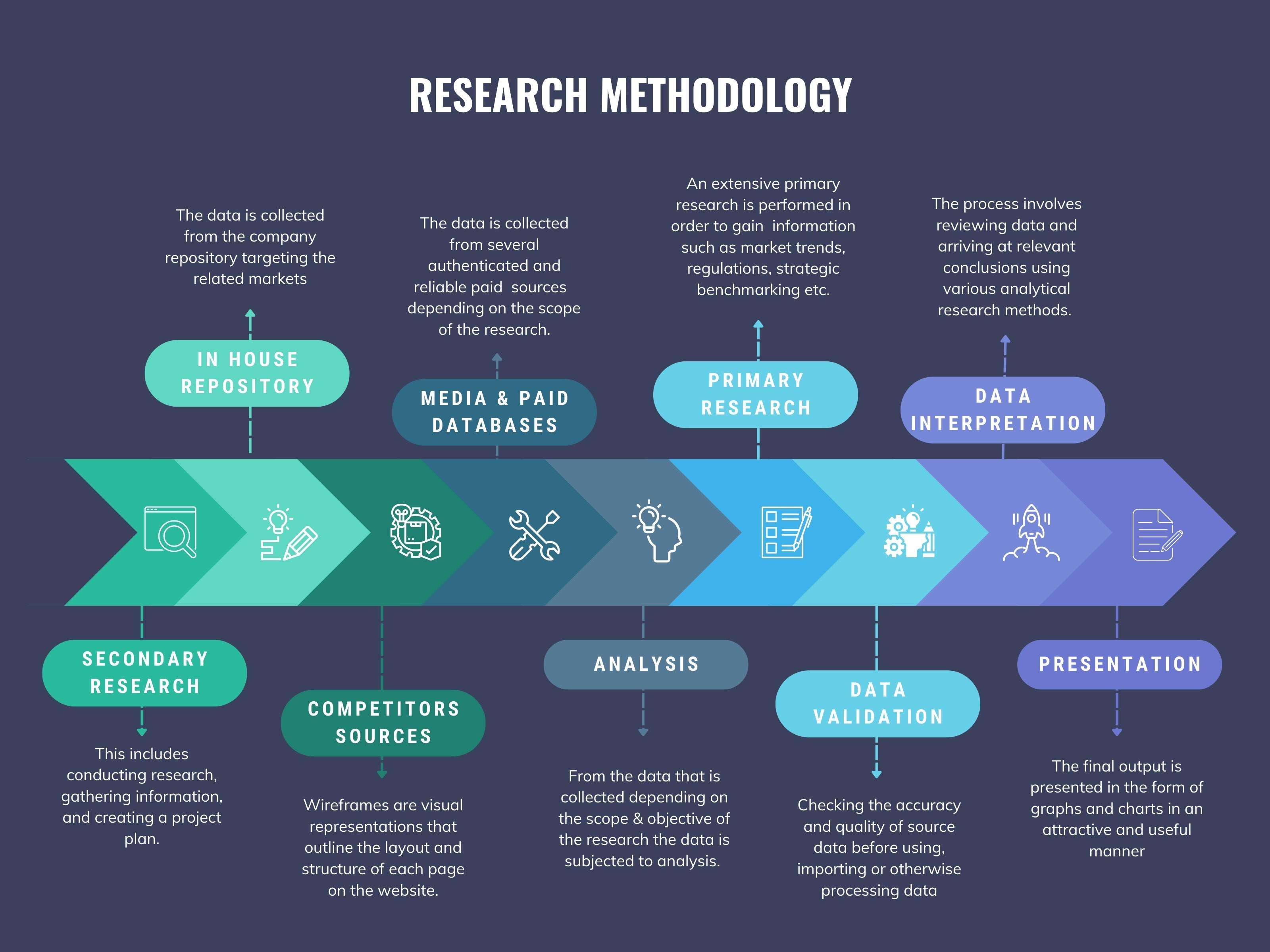
We at ‘Stratistics’ opt for an extensive research approach which involves data mining, data validation, and data analysis. The various research sources include in-house repository, secondary research, competitor’s sources, social media research, client internal data, and primary research.
Our team of analysts prefers the most reliable and authenticated data sources in order to perform the comprehensive literature search. With access to most of the authenticated data bases our team highly considers the best mix of information through various sources to obtain extensive and accurate analysis.
Each report takes an average time of a month and a team of 4 industry analysts. The time may vary depending on the scope and data availability of the desired market report. The various parameters used in the market assessment are standardized in order to enhance the data accuracy.
Data Mining
The data is collected from several authenticated, reliable, paid and unpaid sources and is filtered depending on the scope & objective of the research. Our reports repository acts as an added advantage in this procedure. Data gathering from the raw material suppliers, distributors and the manufacturers is performed on a regular basis, this helps in the comprehensive understanding of the products value chain. Apart from the above mentioned sources the data is also collected from the industry consultants to ensure the objective of the study is in the right direction.
Market trends such as technological advancements, regulatory affairs, market dynamics (Drivers, Restraints, Opportunities and Challenges) are obtained from scientific journals, market related national & international associations and organizations.
Data Analysis
From the data that is collected depending on the scope & objective of the research the data is subjected for the analysis. The critical steps that we follow for the data analysis include:
- Product Lifecycle Analysis
- Competitor analysis
- Risk analysis
- Porters Analysis
- PESTEL Analysis
- SWOT Analysis
The data engineering is performed by the core industry experts considering both the Marketing Mix Modeling and the Demand Forecasting. The marketing mix modeling makes use of multiple-regression techniques to predict the optimal mix of marketing variables. Regression factor is based on a number of variables and how they relate to an outcome such as sales or profits.
Data Validation
The data validation is performed by the exhaustive primary research from the expert interviews. This includes telephonic interviews, focus groups, face to face interviews, and questionnaires to validate our research from all aspects. The industry experts we approach come from the leading firms, involved in the supply chain ranging from the suppliers, distributors to the manufacturers and consumers so as to ensure an unbiased analysis.
We are in touch with more than 15,000 industry experts with the right mix of consultants, CEO's, presidents, vice presidents, managers, experts from both supply side and demand side, executives and so on.
The data validation involves the primary research from the industry experts belonging to:
- Leading Companies
- Suppliers & Distributors
- Manufacturers
- Consumers
- Industry/Strategic Consultants
Apart from the data validation the primary research also helps in performing the fill gap research, i.e. providing solutions for the unmet needs of the research which helps in enhancing the reports quality.
For more details about research methodology, kindly write to us at info@strategymrc.com
Frequently Asked Questions
In case of any queries regarding this report, you can contact the customer service by filing the “Inquiry Before Buy” form available on the right hand side. You may also contact us through email: info@strategymrc.com or phone: +1-301-202-5929
Yes, the samples are available for all the published reports. You can request them by filling the “Request Sample” option available in this page.
Yes, you can request a sample with your specific requirements. All the customized samples will be provided as per the requirement with the real data masked.
All our reports are available in Digital PDF format. In case if you require them in any other formats, such as PPT, Excel etc you can submit a request through “Inquiry Before Buy” form available on the right hand side. You may also contact us through email: info@strategymrc.com or phone: +1-301-202-5929
We offer a free 15% customization with every purchase. This requirement can be fulfilled for both pre and post sale. You may send your customization requirements through email at info@strategymrc.com or call us on +1-301-202-5929.
We have 3 different licensing options available in electronic format.
- Single User Licence: Allows one person, typically the buyer, to have access to the ordered product. The ordered product cannot be distributed to anyone else.
- 2-5 User Licence: Allows the ordered product to be shared among a maximum of 5 people within your organisation.
- Corporate License: Allows the product to be shared among all employees of your organisation regardless of their geographical location.
All our reports are typically be emailed to you as an attachment.
To order any available report you need to register on our website. The payment can be made either through CCAvenue or PayPal payments gateways which accept all international cards.
We extend our support to 6 months post sale. A post sale customization is also provided to cover your unmet needs in the report.
Request Customization
We offer complimentary customization of up to 15% with every purchase. To share your customization requirements, feel free to email us at info@strategymrc.com or call us on +1-301-202-5929. .
Please Note: Customization within the 15% threshold is entirely free of charge. If your request exceeds this limit, we will conduct a feasibility assessment. Following that, a detailed quote and timeline will be provided.
WHY CHOOSE US ?

Assured Quality
Best in class reports with high standard of research integrity

24X7 Research Support
Continuous support to ensure the best customer experience.

Free Customization
Adding more values to your product of interest.

Safe & Secure Access
Providing a secured environment for all online transactions.

Trusted by 600+ Brands
Serving the most reputed brands across the world.