
6g Terahertz Communications Market
6G Terahertz Communications Market Forecasts to 2034 – Global Analysis By Component (Hardware, Software and Services), Frequency Range, Technology, Communication Type, Application, End User and By Geography

Market Dynamics:
Driver:
Sub-Terahertz Transmission Breakthroughs Validating Commercial Viability
Demonstrated breakthroughs in sub-terahertz transmission performance are accelerating industry confidence in terahertz communications as a practical 6G enabler. NTT achieved world-record 2 Tbit/s wireless transmission over 100 meters in the 100–300 GHz sub-terahertz band in September 2026, employing OAM-MIMO multiplexing with 22 spatial streams and predominantly analog signal processing to achieve low latency and power efficiency comparable to next-generation optical standards. This milestone followed NTT’s earlier 1.4 Tbit/s demonstration at 1 meter in 2023, showing rapid progress toward practical link distances. As transmission distances extend and data rates climb, the technical feasibility of terahertz backhaul and data center interconnect applications strengthens, driving investment and development activity across the ecosystem.
Restraint:
Propagation Loss and Line-of-Sight Constraints
Terahertz signals suffer from severe free-space path loss and are highly susceptible to atmospheric absorption, rain attenuation, and blockage by physical obstacles, limiting practical transmission distances to hundreds of meters even with high-gain antennas. NTT’s 2 Tbit/s achievement required advances in antenna gain and beam alignment technologies to extend reach to 100 meters, a distance still far short of typical macrocell backhaul spans. These propagation constraints restrict terahertz deployment to dense urban environments, indoor settings, and short-range fixed links, limiting the addressable market compared to lower-frequency alternatives. Overcoming these physical limitations requires continued advances in beamforming, reconfigurable intelligent surfaces, and relay architectures that add complexity and cost to network deployments.
Opportunity:
Photonic Integration and Silicon-Based Terahertz Circuits
Advances in photonic integration and silicon-compatible terahertz circuits are creating pathways to compact, manufacturable terahertz systems that could reduce costs and accelerate adoption. Researchers at JNCASR demonstrated a silicon photonic crystal chip that guides terahertz waves through engineered barriers with only 1–2% loss while carrying data at 100 Gbit/s, using topological photonics to enable compact terahertz circuits compatible with established semiconductor manufacturing. A collaboration involving Peking University, City University of Hong Kong, and UC Santa Barbara developed a thin-film lithium niobate photonic system covering 0.5 to 115 GHz with a single chip, achieving 100 Gbps single-channel rates and demonstrating the potential of photonic integration to replace multiple frequency-specific electronic modules. These innovations address the size, cost, and complexity barriers that currently limit terahertz system deployment, creating opportunities for semiconductor companies and photonic integration specialists.
Threat:
Standards Immaturity and Fragmented Spectrum Allocation
6G terahertz standards remain undefined, with 3GPP’s 6G specifications not expected until the late 2020s and commercial deployment targeting the early 2030s. Spectrum allocation for terahertz bands varies across jurisdictions, with no globally harmonized framework for 100 GHz and above, creating uncertainty for equipment manufacturers investing in product development. The International Telecommunication Union’s 6G vision framework was finalized in 2026, but detailed technical specifications and spectrum decisions remain pending. This standards and regulatory uncertainty complicates investment decisions and risks fragmenting the market into incompatible regional implementations, slowing the pace of commercial deployment and favoring incumbents with resources to navigate diverse regulatory environments.
Covid-19 Impact:
The pandemic initially disrupted research collaboration and laboratory access, delaying terahertz prototype development and standards contributions as universities and research institutes operated under restrictions. Mid-pandemic, accelerated digital transformation and the demonstrated importance of high-capacity connectivity reinforced long-term investment in next-generation wireless technologies. Post-pandemic, terahertz research has accelerated with renewed government funding and industry collaboration, embedding 6G terahertz communications as a strategic technology priority despite the extended timeline to commercial maturity.
The hardware segment is expected to be the largest during the forecast period
The hardware segment is expected to account for the largest market share during the forecast period, due to the essential role of terahertz transceivers, antenna arrays, power amplifiers, and frequency converters in enabling terahertz communication links. The transition to sub-terahertz and terahertz frequencies requires new semiconductor materials, advanced packaging techniques, and high-gain antenna architectures that represent substantial capital investment and engineering effort. While software and services grow in importance as systems mature, the physical layer components remain the foundational technology upon which all terahertz capabilities depend, thereby maintaining their dominant revenue position within the market.
The photonic terahertz systems segment is expected to have the highest CAGR during the forecast period
Over the forecast period, the photonic terahertz systems segment is predicted to witness the highest growth rate, driven by the superior bandwidth and frequency agility of photonic approaches compared to purely electronic terahertz generation and detection. Thin-film lithium niobate photonic systems have demonstrated coverage from 0.5 to 115 GHz on a single chip with consistent noise performance across the spectrum, overcoming the noise accumulation problems that plague electronic frequency multiplier chains at higher frequencies. JNCASR’s silicon photonic crystal devices enable low-loss terahertz waveguiding compatible with semiconductor manufacturing, pointing toward compact, mass-producible photonic terahertz circuits. As the industry seeks solutions that combine high bandwidth with manufacturability and energy efficiency, photonic terahertz systems are attracting accelerating investment and development activity.
Region with largest share:
During the forecast period, the Asia Pacific region is expected to hold the largest market share, due to concentrated research leadership and government investment across Japan, China, South Korea, and India. NTT’s world-record 2 Tbit/s sub-terahertz transmission in Japan demonstrates the region’s advanced capabilities in terahertz system integration and OAM-MIMO multiplexing. China’s sustained investment in 6G research programs and terahertz device development, alongside South Korea’s Samsung 6G prototype activities, reinforces regional leadership. India’s JNCASR silicon photonic crystal breakthrough adds to the region’s contributions in topological photonics for terahertz circuits. This combination of academic excellence, corporate R&D investment, and government funding positions Asia Pacific at the forefront of terahertz communications development.
Region with highest CAGR:
Over the forecast period, the North America region is anticipated to exhibit the highest CAGR, driven by defense and aerospace applications, federal research funding, and the presence of leading semiconductor and test equipment companies. The U.S. Department of Defense and FCC have supported terahertz point-to-point link validation, and companies including Keysight, Rohde & Schwarz, and Analog Devices are developing test and measurement infrastructure essential for terahertz system commercialization. As defense organizations invest in secure high-bandwidth communications and as commercial interest in wireless data center links grows, North America is positioned for rapid adoption of terahertz technologies once standards and product maturity permit commercial deployment.
Key players in the market
Some of the key players in 6G Terahertz Communications Market include ZTE Corporation, Samsung Electronics Co., Ltd., Rohde & Schwarz GmbH & Co. KG, NEC Corporation, Skyworks Solutions, Inc., Intel Corporation, Ericsson, Cisco Systems, Inc., Hewlett Packard Enterprise Company, Mavenir Systems, Inc., Nokia Corporation, Qorvo, Inc., Fujitsu Limited, InterDigital, Inc., Keysight Technologies, Inc., NVIDIA Corporation, Analog Devices, Inc., and Ciena Corporation.
Key Developments:
In November 2026, Jawaharlal Nehru Centre for Advanced Scientific Research (JNCASR) researchers demonstrated a silicon photonic crystal chip enabling terahertz waves to cross engineered barriers with only 1–2% loss while carrying data at 100 Gbit/s using QAM-32 modulation, achieved through topological photonics and compatible with established semiconductor manufacturing processes.
In October 2026, Nanjing University of Posts and Telecommunications and Purple Mountain Laboratories researchers published a unified fiber-terahertz integrated sensing and communication system achieving 32 Gbps wireless and fiber data rates, 1.5 cm radar ranging accuracy, and 5 m spatial resolution over 25 km distributed fiber sensing, presented at an IEEE conference in Matsue, Japan.
In October 2026, Purple Mountain Laboratories released terahertz communication photoelectric conversion device optimization methods and practices at the 10th Future Network Development Conference in Nanjing, completing end-to-end validation from ultra-high-speed photoelectric conversion chip development to long-distance communication system transmission and establishing a full-chain R&D system for China’s terahertz photonic integration.
In September 2026, NTT achieved world-record 2 Tbit/s wireless transmission over 100 meters in the 100–300 GHz sub-terahertz band, employing OAM-MIMO multiplexing with 22 spatial streams and predominantly analog signal processing for low latency and power efficiency, with results presented at IEEE VTC-fall 2026.
Components Covered:
• Hardware
• Software
• Services
Frequency Ranges Covered:
• 100-300 GHz
• 300-500 GHz
• Above 500 GHz
Technologies Covered:
• Electronic Terahertz Systems
• Photonic Terahertz Systems
• Hybrid Electronic-Photonic Systems
Communication Types Covered:
• Point-to-Point Links
• Indoor Wireless Links
• Backhaul and Fronthaul Links
Applications Covered:
• Ultra-High-Speed Connectivity
• Wireless Data Center Links
• Integrated Sensing
• Industrial Communications
• Other Applications
End Users Covered:
• Telecom Equipment Manufacturers
• Semiconductor Companies
• Research Institutions
• Defense Organizations
• Other End Users
Regions Covered:
• North America
o United States
o Canada
o Mexico
• Europe
o United Kingdom
o Germany
o France
o Italy
o Spain
o Netherlands
o Belgium
o Sweden
o Switzerland
o Poland
o Rest of Europe
• Asia Pacific
o China
o Japan
o India
o South Korea
o Australia
o Indonesia
o Thailand
o Malaysia
o Singapore
o Vietnam
o Rest of Asia Pacific
• South America
o Brazil
o Argentina
o Colombia
o Chile
o Peru
o Rest of South America
• Rest of the World (RoW)
o Middle East
§ Saudi Arabia
§ United Arab Emirates
§ Qatar
§ Israel
§ Rest of Middle East
o Africa
§ South Africa
§ Egypt
§ Morocco
§ Rest of Africa
What our report offers:
- Market share assessments for the regional and country-level segments
- Strategic recommendations for the new entrants
- Covers Market data for the years 2023, 2024, 2025, 2026, 2027, 2028, 2030, 2032 and 2034
- Market Trends (Drivers, Constraints, Opportunities, Threats, Challenges, Investment Opportunities, and recommendations)
- Strategic recommendations in key business segments based on the market estimations
- Competitive landscaping mapping the key common trends
- Company profiling with detailed strategies, financials, and recent developments
- Supply chain trends mapping the latest technological advancements
Free Customization Offerings:
All the customers of this report will be entitled to receive one of the following free customization options:
• Company Profiling
o Comprehensive profiling of additional market players (up to 3)
o SWOT Analysis of key players (up to 3)
• Regional Segmentation
o Market estimations, Forecasts and CAGR of any prominent country as per the client's interest (Note: Depends on feasibility check)
• Competitive Benchmarking
o Benchmarking of key players based on product portfolio, geographical presence, and strategic alliances
Table of Contents
1 Executive Summary1.1 Market Snapshot and Key Highlights
1.2 Growth Drivers, Challenges, and Opportunities
1.3 Competitive Landscape Overview
1.4 Strategic Insights and Recommendations
2 Research Framework
2.1 Study Objectives and Scope
2.2 Stakeholder Analysis
2.3 Research Assumptions and Limitations
2.4 Research Methodology
2.4.1 Data Collection (Primary and Secondary)
2.4.2 Data Modeling and Estimation Techniques
2.4.3 Data Validation and Triangulation
2.4.4 Analytical and Forecasting Approach
3 Market Dynamics and Trend Analysis
3.1 Market Definition and Structure
3.2 Key Market Drivers
3.3 Market Restraints and Challenges
3.4 Growth Opportunities and Investment Hotspots
3.5 Industry Threats and Risk Assessment
3.6 Technology and Innovation Landscape
3.7 Emerging and High-Growth Markets
3.8 Regulatory and Policy Environment
3.9 Impact of COVID-19 and Recovery Outlook
4 Competitive and Strategic Assessment
4.1 Porter's Five Forces Analysis
4.1.1 Supplier Bargaining Power
4.1.2 Buyer Bargaining Power
4.1.3 Threat of Substitutes
4.1.4 Threat of New Entrants
4.1.5 Competitive Rivalry
4.2 Market Share Analysis of Key Players
4.3 Product Benchmarking and Performance Comparison
5 Global 6G Terahertz Communications Market, By Component
5.1 Hardware
5.1.1 Terahertz Transceivers
5.1.2 Antennas and Arrays
5.1.3 Power Amplifiers
5.1.4 Frequency Converters
5.2 Software
5.2.1 Channel Modeling
5.2.2 Beam Management Software
5.3 Services
5.3.1 Testing and Integration
5.3.2 Consulting Services
6 Global 6G Terahertz Communications Market, By Frequency Range
6.1 100-300 GHz
6.2 300-500 GHz
6.3 Above 500 GHz
7 Global 6G Terahertz Communications Market, By Technology
7.1 Electronic Terahertz Systems
7.2 Photonic Terahertz Systems
7.3 Hybrid Electronic-Photonic Systems
8 Global 6G Terahertz Communications Market, By Communication Type
8.1 Point-to-Point Links
8.2 Indoor Wireless Links
8.3 Backhaul and Fronthaul Links
9 Global 6G Terahertz Communications Market, By Application
9.1 Ultra-High-Speed Connectivity
9.2 Wireless Data Center Links
9.3 Integrated Sensing
9.4 Industrial Communications
9.5 Other Applications
10 Global 6G Terahertz Communications Market, By End User
10.1 Telecom Equipment Manufacturers
10.2 Semiconductor Companies
10.3 Research Institutions
10.4 Defense Organizations
10.5 Other End Users
11 Global 6G Terahertz Communications Market, By Geography
11.1 North America
11.1.1 United States
11.1.2 Canada
11.1.3 Mexico
11.2 Europe
11.2.1 United Kingdom
11.2.2 Germany
11.2.3 France
11.2.4 Italy
11.2.5 Spain
11.2.6 Netherlands
11.2.7 Belgium
11.2.8 Sweden
11.2.9 Switzerland
11.2.10 Poland
11.2.11 Rest of Europe
11.3 Asia Pacific
11.3.1 China
11.3.2 Japan
11.3.3 India
11.3.4 South Korea
11.3.5 Australia
11.3.6 Indonesia
11.3.7 Thailand
11.3.8 Malaysia
11.3.9 Singapore
11.3.10 Vietnam
11.3.11 Rest of Asia Pacific
11.4 South America
11.4.1 Brazil
11.4.2 Argentina
11.4.3 Colombia
11.4.4 Chile
11.4.5 Peru
11.4.6 Rest of South America
11.5 Rest of the World (RoW)
11.5.1 Middle East
11.5.1.1 Saudi Arabia
11.5.1.2 United Arab Emirates
11.5.1.3 Qatar
11.5.1.4 Israel
11.5.1.5 Rest of Middle East
11.5.2 Africa
11.5.2.1 South Africa
11.5.2.2 Egypt
11.5.2.3 Morocco
11.5.2.4 Rest of Africa
12 Strategic Market Intelligence
12.1 Industry Value Network and Supply Chain Assessment
12.2 White-Space and Opportunity Mapping
12.3 Product Evolution and Market Life Cycle Analysis
12.4 Channel, Distributor, and Go-to-Market Assessment
13 Industry Developments and Strategic Initiatives
13.1 Mergers and Acquisitions
13.2 Partnerships, Alliances, and Joint Ventures
13.3 New Product Launches and Certifications
13.4 Capacity Expansion and Investments
13.5 Other Strategic Initiatives
14 Company Profiles
14.1 ZTE Corporation
14.2 Samsung Electronics Co., Ltd.
14.3 Rohde & Schwarz GmbH & Co. KG
14.4 NEC Corporation
14.5 Skyworks Solutions, Inc.
14.6 Intel Corporation
14.7 Ericsson
14.8 Cisco Systems, Inc.
14.9 Hewlett Packard Enterprise Company
14.10 Mavenir Systems, Inc.
14.11 Nokia Corporation
14.12 Qorvo, Inc.
14.13 Fujitsu Limited
14.14 InterDigital, Inc.
14.15 Keysight Technologies, Inc.
14.16 NVIDIA Corporation
14.17 Analog Devices, Inc.
14.18 Ciena Corporation
List of Tables
1 Global 6G Terahertz Communications Market Outlook, By Region (2023-2034) ($MN)
2 Global 6G Terahertz Communications Market Outlook, By Component (2023-2034) ($MN)
3 Global 6G Terahertz Communications Market Outlook, By Hardware (2023-2034) ($MN)
4 Global 6G Terahertz Communications Market Outlook, By Terahertz Transceivers (2023-2034) ($MN)
5 Global 6G Terahertz Communications Market Outlook, By Antennas and Arrays (2023-2034) ($MN)
6 Global 6G Terahertz Communications Market Outlook, By Power Amplifiers (2023-2034) ($MN)
7 Global 6G Terahertz Communications Market Outlook, By Frequency Converters (2023-2034) ($MN)
8 Global 6G Terahertz Communications Market Outlook, By Software (2023-2034) ($MN)
9 Global 6G Terahertz Communications Market Outlook, By Channel Modeling (2023-2034) ($MN)
10 Global 6G Terahertz Communications Market Outlook, By Beam Management Software (2023-2034) ($MN)
11 Global 6G Terahertz Communications Market Outlook, By Services (2023-2034) ($MN)
12 Global 6G Terahertz Communications Market Outlook, By Testing and Integration (2023-2034) ($MN)
13 Global 6G Terahertz Communications Market Outlook, By Consulting Services (2023-2034) ($MN)
14 Global 6G Terahertz Communications Market Outlook, By Frequency Range (2023-2034) ($MN)
15 Global 6G Terahertz Communications Market Outlook, By 100-300 GHz (2023-2034) ($MN)
16 Global 6G Terahertz Communications Market Outlook, By 300-500 GHz (2023-2034) ($MN)
17 Global 6G Terahertz Communications Market Outlook, By Above 500 GHz (2023-2034) ($MN)
18 Global 6G Terahertz Communications Market Outlook, By Technology (2023-2034) ($MN)
19 Global 6G Terahertz Communications Market Outlook, By Electronic Terahertz Systems (2023-2034) ($MN)
20 Global 6G Terahertz Communications Market Outlook, By Photonic Terahertz Systems (2023-2034) ($MN)
21 Global 6G Terahertz Communications Market Outlook, By Hybrid Electronic-Photonic Systems (2023-2034) ($MN)
22 Global 6G Terahertz Communications Market Outlook, By Communication Type (2023-2034) ($MN)
23 Global 6G Terahertz Communications Market Outlook, By Point-to-Point Links (2023-2034) ($MN)
24 Global 6G Terahertz Communications Market Outlook, By Indoor Wireless Links (2023-2034) ($MN)
25 Global 6G Terahertz Communications Market Outlook, By Backhaul and Fronthaul Links (2023-2034) ($MN)
26 Global 6G Terahertz Communications Market Outlook, By Application (2023-2034) ($MN)
27 Global 6G Terahertz Communications Market Outlook, By Ultra-High-Speed Connectivity (2023-2034) ($MN)
28 Global 6G Terahertz Communications Market Outlook, By Wireless Data Center Links (2023-2034) ($MN)
29 Global 6G Terahertz Communications Market Outlook, By Integrated Sensing (2023-2034) ($MN)
30 Global 6G Terahertz Communications Market Outlook, By Industrial Communications (2023-2034) ($MN)
31 Global 6G Terahertz Communications Market Outlook, By Other Applications (2023-2034) ($MN)
32 Global 6G Terahertz Communications Market Outlook, By End User (2023-2034) ($MN)
33 Global 6G Terahertz Communications Market Outlook, By Telecom Equipment Manufacturers (2023-2034) ($MN)
34 Global 6G Terahertz Communications Market Outlook, By Semiconductor Companies (2023-2034) ($MN)
35 Global 6G Terahertz Communications Market Outlook, By Research Institutions (2023-2034) ($MN)
36 Global 6G Terahertz Communications Market Outlook, By Defense Organizations (2023-2034) ($MN)
37 Global 6G Terahertz Communications Market Outlook, By Other End Users (2023-2034) ($MN)
Note: Tables for North America, Europe, APAC, South America, and Rest of the World (RoW) Regions are also represented in the same manner as above.
List of Figures
RESEARCH METHODOLOGY
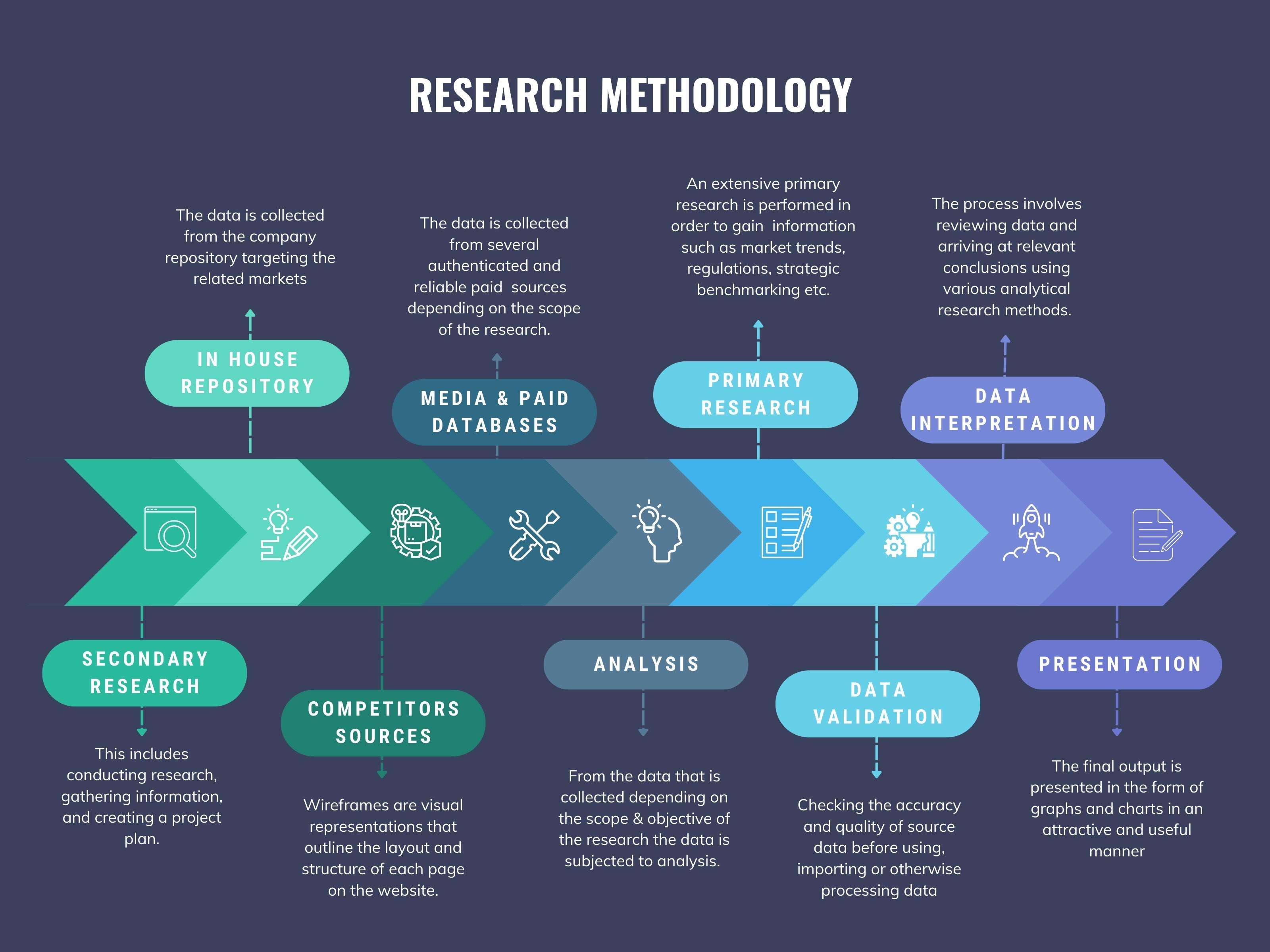
We at ‘Stratistics’ opt for an extensive research approach which involves data mining, data validation, and data analysis. The various research sources include in-house repository, secondary research, competitor’s sources, social media research, client internal data, and primary research.
Our team of analysts prefers the most reliable and authenticated data sources in order to perform the comprehensive literature search. With access to most of the authenticated data bases our team highly considers the best mix of information through various sources to obtain extensive and accurate analysis.
Each report takes an average time of a month and a team of 4 industry analysts. The time may vary depending on the scope and data availability of the desired market report. The various parameters used in the market assessment are standardized in order to enhance the data accuracy.
Data Mining
The data is collected from several authenticated, reliable, paid and unpaid sources and is filtered depending on the scope & objective of the research. Our reports repository acts as an added advantage in this procedure. Data gathering from the raw material suppliers, distributors and the manufacturers is performed on a regular basis, this helps in the comprehensive understanding of the products value chain. Apart from the above mentioned sources the data is also collected from the industry consultants to ensure the objective of the study is in the right direction.
Market trends such as technological advancements, regulatory affairs, market dynamics (Drivers, Restraints, Opportunities and Challenges) are obtained from scientific journals, market related national & international associations and organizations.
Data Analysis
From the data that is collected depending on the scope & objective of the research the data is subjected for the analysis. The critical steps that we follow for the data analysis include:
- Product Lifecycle Analysis
- Competitor analysis
- Risk analysis
- Porters Analysis
- PESTEL Analysis
- SWOT Analysis
The data engineering is performed by the core industry experts considering both the Marketing Mix Modeling and the Demand Forecasting. The marketing mix modeling makes use of multiple-regression techniques to predict the optimal mix of marketing variables. Regression factor is based on a number of variables and how they relate to an outcome such as sales or profits.
Data Validation
The data validation is performed by the exhaustive primary research from the expert interviews. This includes telephonic interviews, focus groups, face to face interviews, and questionnaires to validate our research from all aspects. The industry experts we approach come from the leading firms, involved in the supply chain ranging from the suppliers, distributors to the manufacturers and consumers so as to ensure an unbiased analysis.
We are in touch with more than 15,000 industry experts with the right mix of consultants, CEO's, presidents, vice presidents, managers, experts from both supply side and demand side, executives and so on.
The data validation involves the primary research from the industry experts belonging to:
- Leading Companies
- Suppliers & Distributors
- Manufacturers
- Consumers
- Industry/Strategic Consultants
Apart from the data validation the primary research also helps in performing the fill gap research, i.e. providing solutions for the unmet needs of the research which helps in enhancing the reports quality.
For more details about research methodology, kindly write to us at info@strategymrc.com
Frequently Asked Questions
In case of any queries regarding this report, you can contact the customer service by filing the “Inquiry Before Buy” form available on the right hand side. You may also contact us through email: info@strategymrc.com or phone: +1-301-202-5929
Yes, the samples are available for all the published reports. You can request them by filling the “Request Sample” option available in this page.
Yes, you can request a sample with your specific requirements. All the customized samples will be provided as per the requirement with the real data masked.
All our reports are available in Digital PDF format. In case if you require them in any other formats, such as PPT, Excel etc you can submit a request through “Inquiry Before Buy” form available on the right hand side. You may also contact us through email: info@strategymrc.com or phone: +1-301-202-5929
We offer a free 15% customization with every purchase. This requirement can be fulfilled for both pre and post sale. You may send your customization requirements through email at info@strategymrc.com or call us on +1-301-202-5929.
We have 3 different licensing options available in electronic format.
- Single User Licence: Allows one person, typically the buyer, to have access to the ordered product. The ordered product cannot be distributed to anyone else.
- 2-5 User Licence: Allows the ordered product to be shared among a maximum of 5 people within your organisation.
- Corporate License: Allows the product to be shared among all employees of your organisation regardless of their geographical location.
All our reports are typically be emailed to you as an attachment.
To order any available report you need to register on our website. The payment can be made either through CCAvenue or PayPal payments gateways which accept all international cards.
We extend our support to 6 months post sale. A post sale customization is also provided to cover your unmet needs in the report.
Request Customization
We offer complimentary customization of up to 15% with every purchase. To share your customization requirements, feel free to email us at info@strategymrc.com or call us on +1-301-202-5929. .
Please Note: Customization within the 15% threshold is entirely free of charge. If your request exceeds this limit, we will conduct a feasibility assessment. Following that, a detailed quote and timeline will be provided.
WHY CHOOSE US ?

Assured Quality
Best in class reports with high standard of research integrity

24X7 Research Support
Continuous support to ensure the best customer experience.

Free Customization
Adding more values to your product of interest.

Safe & Secure Access
Providing a secured environment for all online transactions.

Trusted by 600+ Brands
Serving the most reputed brands across the world.