Automotive Aluminum Wire Market
Automotive Aluminum Wire Market Forecasts to 2034 – Global Analysis By Wire Type (High-Voltage Aluminum Conductors, Low-Voltage Aluminum Conductors, Aluminum Alloy Wires, and Aluminum-Clad and Composite Conductors), Application, Vehicle Type, Sales Channel, and By Geography

Market Dynamics:
Driver:
Growing electrical content increases pressure to reduce harness weight
Vehicle electronics and electrified propulsion create extensive requirements for distributing power throughout the platform. As conductors become a significant packaging and mass consideration, automakers look for opportunities to use aluminum where the circuit and installation permit it. The benefit can extend across repeated low-voltage runs and selected larger power connections. Material substitution is most attractive when the weight reduction remains meaningful after allowing for conductor size and terminal design. Demand is therefore driven by coordinated harness engineering, with suppliers evaluating complete circuits rather than offering aluminum as an interchangeable replacement for every copper wire.
Restraint:
Reliable terminations require specialized design and process control
The electrical connection is often more challenging than the aluminum conductor itself. Surface oxide and contact with dissimilar metals can create risks that must be managed through terminal design, sealing, and controlled assembly. Vibration and temperature cycling place additional demands on mechanical retention and contact stability. A larger conductor cross-section may also create packaging constraints in some circuits. These requirements add qualification work and can limit adoption where existing connectors or manufacturing lines are optimized for copper. Suppliers must demonstrate that any mass or cost advantage survives the full connection and durability assessment.
Opportunity:
High-voltage cables and integrated conductor systems open additional applications
Electrified vehicles create opportunities to reassess long power runs, battery connections, and distribution layouts from the beginning of platform development. Aluminum can be considered alongside new insulation, joining, and conductor geometries rather than fitted into a legacy harness unchanged. Suppliers can develop coordinated wire-and-terminal packages that simplify qualification for automakers and Tier-1 harness manufacturers. Automated handling and repeatable termination processes may further improve economics. The opportunity is strongest where electrical, thermal, and packaging requirements are clearly defined, allowing the material's weight advantage to be captured without introducing unacceptable service or reliability risks.
Threat:
Alternative electrical architectures can reduce or redirect conductor demand
Changes in vehicle electrical architecture may reduce wire length or shift power distribution toward busbars and other integrated conductors. These developments can compete with traditional aluminum-wire applications even while overall electrification increases. Copper also remains a strong alternative where space, flexibility, or established connections matter more than mass. Material-price changes can alter the economic balance, while a poorly controlled connection failure can damage confidence across a wider product family. Suppliers need to follow platform architecture closely and support robust manufacturing processes, because the market opportunity depends on where aluminum remains advantageous within the evolving electrical system.
Covid-19 Impact:
The pandemic exposed the dependence of vehicle assembly on complex harness supply networks. Factory restrictions, transport disruption, and changing production schedules affected wire processing and the labor-intensive assembly of harnesses. Aluminum-wire adoption programs also required customer testing and process validation that could be difficult to complete remotely. As manufacturers restored output, supply resilience and repeatable quality became prominent concerns. The recovery supported greater attention to automation and manufacturing flexibility, but material substitution still needed careful qualification. Weight-saving objectives remained relevant while suppliers worked through the practical challenges of delivering complete, dependable electrical connections.
The Low-Voltage Vehicle Wiring Harnesses segment is expected to be the largest during the forecast period
Low-Voltage Vehicle Wiring Harnesses are expected to hold the largest share because they offer numerous repeated circuits across a wide range of vehicle platforms. Selective use of aluminum can reduce cumulative harness mass when conductor sizing and terminal design are appropriate. Established experience with corrosion-resistant connections supports adoption in suitable locations. The segment also spans conventional and electrified vehicles, providing a broad customer base. Its position depends on disciplined circuit selection, since not every small or space-constrained connection will benefit. Suppliers that combine material expertise with harness design can identify applications where the system-level advantages are most durable.
The High-Voltage EV Cable and Harnesses segment is expected to have the highest CAGR during the forecast period
High-Voltage EV Cable and Harnesses are anticipated to register the highest CAGR as electric platforms require substantial power connections between batteries, converters, and drive systems. These applications can make conductor mass and routing important design considerations. Aluminum adoption must be coordinated with insulation, shielding where required, connector size, and thermal performance. Growth is likely to follow new vehicle architectures rather than broad substitution in existing designs. Suppliers that provide qualified assemblies and consistent joining processes can help customers capture weight benefits while maintaining the electrical integrity expected of high-voltage automotive systems throughout their service life.
Region with largest share:
Asia Pacific is expected to lead the market, supported by extensive automotive wire, cable, and harness manufacturing alongside a substantial vehicle-production base. Established suppliers have experience developing aluminum conductors and specialized terminals for automotive use. Close relationships with automakers enable gradual expansion into suitable circuits as new platforms are designed. The region's electrification activity adds opportunities in high-voltage distribution, while conventional vehicles continue to support low-voltage applications. Competitive advantage will depend on the ability to combine material cost control with reliable termination, process automation, and dependable supply across geographically distributed assembly networks.
Region with highest CAGR:
Asia Pacific is also projected to exhibit the highest CAGR as manufacturers seek cost and weight improvements across expanding electrified-vehicle portfolios. Local investment in conductor production can improve availability, while harness suppliers can apply accumulated connection expertise to additional vehicle programs. Growth will vary with platform design and customer qualification rather than simply following aluminum prices. Opportunities exist in both high-current power distribution and carefully selected low-voltage circuits. Suppliers that demonstrate durability and simplify assembly are best positioned to broaden adoption, especially where automakers can evaluate wire, terminal, and electrical architecture together at an early design stage.
Key players in the market
Some of the key players in the Automotive Aluminum Wire Market include YAZAKI Corporation, Sumitomo Electric Industries, Ltd., Furukawa Electric Co., Ltd., Aptiv PLC, Lear Corporation, Fujikura Ltd., LEONI AG, Nexans S.A., Coroflex Antriebstechnik GmbH & Co. KG, Kromberg & Schubert GmbH & Co. KG, Motherson Group, Spark Minda, Ningbo Jintian Copper (Group) Co., Ltd., LS Cable & System Ltd., and HUBER+SUHNER AG.
Key Developments:
In August 2026, Yazaki held the opening ceremony for a new aluminum-wire plant operated by Thai-Yazaki Electric Wire in Thailand. Although the facility primarily supports power-transmission and distribution demand, its announced product scope also includes automotive wire, strengthening the supply base relevant to aluminum vehicle harnesses.
In May 2025, LEONI announced its Battery Show Europe technology program, including exMW extruded winding wires available in copper or aluminum. The development applied extrusion-based insulation to electric-drive motor conductors, extending aluminum-related opportunities beyond conventional harness circuits into another part of the vehicle electrical system.
In May 2024, Furukawa Electric announced a JSAE technological-development award for advances in aluminum-wire terminals. The recognized work extended corrosion-resistant connection technology to larger-diameter aluminum wires, addressing a practical obstacle to reducing harness weight while maintaining dependable electrical and mechanical connections.
Wire Types Covered:
• High-Voltage Aluminum Conductors
• Low-Voltage Aluminum Conductors
• Aluminum Alloy Wires
• Aluminum-Clad and Composite Conductors
Applications Covered:
• High-Voltage EV Cable and Harnesses
• Low-Voltage Vehicle Wiring Harnesses
• Battery and Power Distribution Cables
• Motor and Inverter Connections
Vehicle Types Covered:
• Passenger Cars
• Light Commercial Vehicles
• Heavy Commercial Vehicles
• Battery Electric and Hybrid Vehicles
Sales Channels Covered:
• OEM Direct Supply
• Tier-1 Harness and Cable Suppliers
• Aftermarket and Replacement
Regions Covered:
• North America
o United States
o Canada
o Mexico
• Europe
o United Kingdom
o Germany
o France
o Italy
o Spain
o Netherlands
o Belgium
o Sweden
o Switzerland
o Poland
o Rest of Europe
• Asia Pacific
o China
o Japan
o India
o South Korea
o Australia
o Indonesia
o Thailand
o Malaysia
o Singapore
o Vietnam
o Rest of Asia Pacific
• South America
o Brazil
o Argentina
o Colombia
o Chile
o Peru
o Rest of South America
• Rest of the World (RoW)
o Middle East
Saudi Arabia
United Arab Emirates
Qatar
Israel
Rest of Middle East
o Africa
South Africa
Egypt
Morocco
Rest of Africa
What our report offers:
- Market share assessments for the regional and country-level segments
- Strategic recommendations for the new entrants
- Covers Market data for the years 2023, 2024, 2025, 2026, 2027, 2028, 2030, 2032 and 2034
- Market Trends (Drivers, Constraints, Opportunities, Threats, Challenges, Investment Opportunities, and recommendations)
- Strategic recommendations in key business segments based on the market estimations
- Competitive landscaping mapping the key common trends
- Company profiling with detailed strategies, financials, and recent developments
- Supply chain trends mapping the latest technological advancements
Free Customization Offerings:
All the customers of this report will be entitled to receive one of the following free customization options:
• Company Profiling
o Comprehensive profiling of additional market players (up to 3)
o SWOT Analysis of key players (up to 3)
• Regional Segmentation
o Market estimations, Forecasts and CAGR of any prominent country as per the client's interest (Note: Depends on feasibility check)
• Competitive Benchmarking
o Benchmarking of key players based on product portfolio, geographical presence, and strategic alliances
Table of Contents
1 Executive Summary1.1 Market Snapshot and Key Highlights
1.2 Growth Drivers, Challenges, and Opportunities
1.3 Competitive Landscape Overview
1.4 Strategic Insights and Recommendations
2 Research Framework
2.1 Study Objectives and Scope
2.2 Stakeholder Analysis
2.3 Research Assumptions and Limitations
2.4 Research Methodology
2.4.1 Data Collection (Primary and Secondary)
2.4.2 Data Modeling and Estimation Techniques
2.4.3 Data Validation and Triangulation
2.4.4 Analytical and Forecasting Approach
3 Market Dynamics and Trend Analysis
3.1 Market Definition and Structure
3.2 Key Market Drivers
3.3 Market Restraints and Challenges
3.4 Growth Opportunities and Investment Hotspots
3.5 Industry Threats and Risk Assessment
3.6 Technology and Innovation Landscape
3.7 Emerging and High-Growth Markets
3.8 Regulatory and Policy Environment
3.9 Impact of COVID-19 and Recovery Outlook
4 Competitive and Strategic Assessment
4.1 Porter's Five Forces Analysis
4.1.1 Supplier Bargaining Power
4.1.2 Buyer Bargaining Power
4.1.3 Threat of Substitutes
4.1.4 Threat of New Entrants
4.1.5 Competitive Rivalry
4.2 Market Share Analysis of Key Players
4.3 Product Benchmarking and Performance Comparison
5 Global Automotive Aluminum Wire Market, By Wire Type
5.1 High-Voltage Aluminum Conductors
5.2 Low-Voltage Aluminum Conductors
5.3 Aluminum Alloy Wires
5.4 Aluminum-Clad and Composite Conductors
6 Global Automotive Aluminum Wire Market, By Application
6.1 High-Voltage EV Cable and Harnesses
6.2 Low-Voltage Vehicle Wiring Harnesses
6.3 Battery and Power Distribution Cables
6.4 Motor and Inverter Connections
7 Global Automotive Aluminum Wire Market, By Vehicle Type
7.1 Passenger Cars
7.2 Light Commercial Vehicles
7.3 Heavy Commercial Vehicles
7.4 Battery Electric and Hybrid Vehicles
8 Global Automotive Aluminum Wire Market, By Sales Channel
8.1 OEM Direct Supply
8.2 Tier-1 Harness and Cable Suppliers
8.3 Aftermarket and Replacement
9 Global Automotive Aluminum Wire Market, By Geography
9.1 North America
9.1.1 United States
9.1.2 Canada
9.1.3 Mexico
9.2 Europe
9.2.1 United Kingdom
9.2.2 Germany
9.2.3 France
9.2.4 Italy
9.2.5 Spain
9.2.6 Netherlands
9.2.7 Belgium
9.2.8 Sweden
9.2.9 Switzerland
9.2.10 Poland
9.2.11 Rest of Europe
9.3 Asia Pacific
9.3.1 China
9.3.2 Japan
9.3.3 India
9.3.4 South Korea
9.3.5 Australia
9.3.6 Indonesia
9.3.7 Thailand
9.3.8 Malaysia
9.3.9 Singapore
9.3.10 Vietnam
9.3.11 Rest of Asia Pacific
9.4 South America
9.4.1 Brazil
9.4.2 Argentina
9.4.3 Colombia
9.4.4 Chile
9.4.5 Peru
9.4.6 Rest of South America
9.5 Rest of the World (RoW)
9.5.1 Middle East
9.5.1.1 Saudi Arabia
9.5.1.2 United Arab Emirates
9.5.1.3 Qatar
9.5.1.4 Israel
9.5.1.5 Rest of Middle East
9.5.2 Africa
9.5.2.1 South Africa
9.5.2.2 Egypt
9.5.2.3 Morocco
9.5.2.4 Rest of Africa
10 Strategic Market Intelligence
10.1 Industry Value Network and Supply Chain Assessment
10.2 White-Space and Opportunity Mapping
10.3 Product Evolution and Market Life Cycle Analysis
10.4 Channel, Distributor, and Go-to-Market Assessment
11 Industry Developments and Strategic Initiatives
11.1 Mergers and Acquisitions
11.2 Partnerships, Alliances, and Joint Ventures
11.3 New Product Launches and Certifications
11.4 Capacity Expansion and Investments
11.5 Other Strategic Initiatives
12 Company Profiles
12.1 YAZAKI Corporation
12.2 Sumitomo Electric Industries, Ltd.
12.3 Furukawa Electric Co., Ltd.
12.4 Aptiv PLC
12.5 Lear Corporation
12.6 Fujikura Ltd.
12.7 LEONI AG
12.8 Nexans S.A.
12.9 Coroflex Antriebstechnik GmbH & Co. KG
12.10 Kromberg & Schubert GmbH & Co. KG
12.11 Motherson Group
12.12 Spark Minda
12.13 Ningbo Jintian Copper (Group) Co., Ltd.
12.14 LS Cable & System Ltd.
12.15 HUBER+SUHNER AG
List of Tables
1 Global Automotive Aluminum Wire Market Outlook, By Region (2023–2034) ($MN)
2 Global Automotive Aluminum Wire Market Outlook, By Wire Type (2023–2034) ($MN)
3 Global Automotive Aluminum Wire Market Outlook, By High-Voltage Aluminum Conductors (2023–2034) ($MN)
4 Global Automotive Aluminum Wire Market Outlook, By Low-Voltage Aluminum Conductors (2023–2034) ($MN)
5 Global Automotive Aluminum Wire Market Outlook, By Aluminum Alloy Wires (2023–2034) ($MN)
6 Global Automotive Aluminum Wire Market Outlook, By Aluminum-Clad and Composite Conductors (2023–2034) ($MN)
7 Global Automotive Aluminum Wire Market Outlook, By Application (2023–2034) ($MN)
8 Global Automotive Aluminum Wire Market Outlook, By High-Voltage EV Cable and Harnesses (2023–2034) ($MN)
9 Global Automotive Aluminum Wire Market Outlook, By Low-Voltage Vehicle Wiring Harnesses (2023–2034) ($MN)
10 Global Automotive Aluminum Wire Market Outlook, By Battery and Power Distribution Cables (2023–2034) ($MN)
11 Global Automotive Aluminum Wire Market Outlook, By Motor and Inverter Connections (2023–2034) ($MN)
12 Global Automotive Aluminum Wire Market Outlook, By Vehicle Type (2023–2034) ($MN)
13 Global Automotive Aluminum Wire Market Outlook, By Passenger Cars (2023–2034) ($MN)
14 Global Automotive Aluminum Wire Market Outlook, By Light Commercial Vehicles (2023–2034) ($MN)
15 Global Automotive Aluminum Wire Market Outlook, By Heavy Commercial Vehicles (2023–2034) ($MN)
16 Global Automotive Aluminum Wire Market Outlook, By Battery Electric and Hybrid Vehicles (2023–2034) ($MN)
17 Global Automotive Aluminum Wire Market Outlook, By Sales Channel (2023–2034) ($MN)
18 Global Automotive Aluminum Wire Market Outlook, By OEM Direct Supply (2023–2034) ($MN)
19 Global Automotive Aluminum Wire Market Outlook, By Tier-1 Harness and Cable Suppliers (2023–2034) ($MN)
20 Global Automotive Aluminum Wire Market Outlook, By Aftermarket and Replacement (2023–2034) ($MN)
Note: Tables for North America, Europe, APAC, South America, and Rest of the World (RoW) Regions are also represented in the same manner as above.
List of Figures
RESEARCH METHODOLOGY
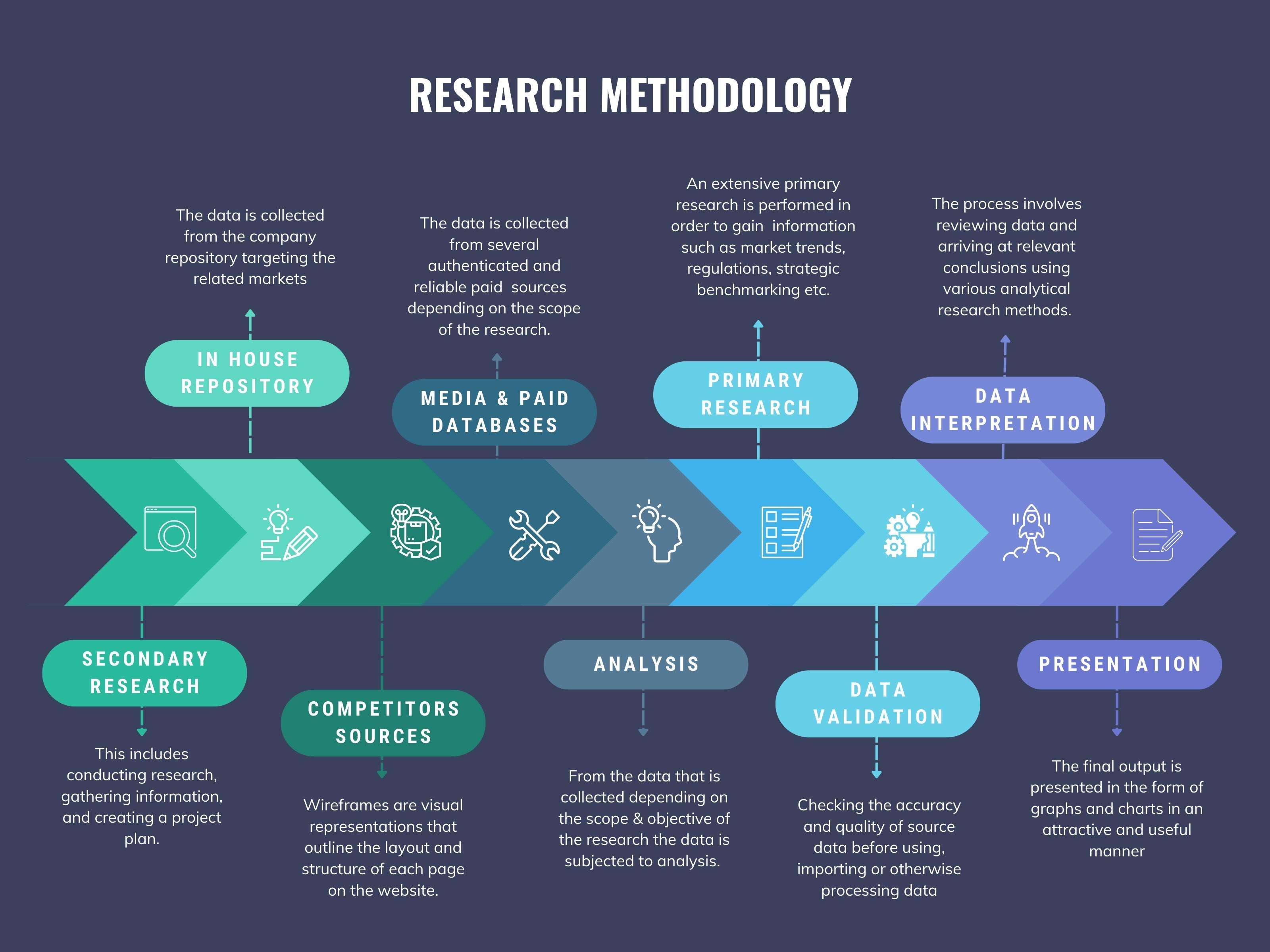
We at ‘Stratistics’ opt for an extensive research approach which involves data mining, data validation, and data analysis. The various research sources include in-house repository, secondary research, competitor’s sources, social media research, client internal data, and primary research.
Our team of analysts prefers the most reliable and authenticated data sources in order to perform the comprehensive literature search. With access to most of the authenticated data bases our team highly considers the best mix of information through various sources to obtain extensive and accurate analysis.
Each report takes an average time of a month and a team of 4 industry analysts. The time may vary depending on the scope and data availability of the desired market report. The various parameters used in the market assessment are standardized in order to enhance the data accuracy.
Data Mining
The data is collected from several authenticated, reliable, paid and unpaid sources and is filtered depending on the scope & objective of the research. Our reports repository acts as an added advantage in this procedure. Data gathering from the raw material suppliers, distributors and the manufacturers is performed on a regular basis, this helps in the comprehensive understanding of the products value chain. Apart from the above mentioned sources the data is also collected from the industry consultants to ensure the objective of the study is in the right direction.
Market trends such as technological advancements, regulatory affairs, market dynamics (Drivers, Restraints, Opportunities and Challenges) are obtained from scientific journals, market related national & international associations and organizations.
Data Analysis
From the data that is collected depending on the scope & objective of the research the data is subjected for the analysis. The critical steps that we follow for the data analysis include:
- Product Lifecycle Analysis
- Competitor analysis
- Risk analysis
- Porters Analysis
- PESTEL Analysis
- SWOT Analysis
The data engineering is performed by the core industry experts considering both the Marketing Mix Modeling and the Demand Forecasting. The marketing mix modeling makes use of multiple-regression techniques to predict the optimal mix of marketing variables. Regression factor is based on a number of variables and how they relate to an outcome such as sales or profits.
Data Validation
The data validation is performed by the exhaustive primary research from the expert interviews. This includes telephonic interviews, focus groups, face to face interviews, and questionnaires to validate our research from all aspects. The industry experts we approach come from the leading firms, involved in the supply chain ranging from the suppliers, distributors to the manufacturers and consumers so as to ensure an unbiased analysis.
We are in touch with more than 15,000 industry experts with the right mix of consultants, CEO's, presidents, vice presidents, managers, experts from both supply side and demand side, executives and so on.
The data validation involves the primary research from the industry experts belonging to:
- Leading Companies
- Suppliers & Distributors
- Manufacturers
- Consumers
- Industry/Strategic Consultants
Apart from the data validation the primary research also helps in performing the fill gap research, i.e. providing solutions for the unmet needs of the research which helps in enhancing the reports quality.
For more details about research methodology, kindly write to us at info@strategymrc.com
Frequently Asked Questions
In case of any queries regarding this report, you can contact the customer service by filing the “Inquiry Before Buy” form available on the right hand side. You may also contact us through email: info@strategymrc.com or phone: +1-301-202-5929
Yes, the samples are available for all the published reports. You can request them by filling the “Request Sample” option available in this page.
Yes, you can request a sample with your specific requirements. All the customized samples will be provided as per the requirement with the real data masked.
All our reports are available in Digital PDF format. In case if you require them in any other formats, such as PPT, Excel etc you can submit a request through “Inquiry Before Buy” form available on the right hand side. You may also contact us through email: info@strategymrc.com or phone: +1-301-202-5929
We offer a free 15% customization with every purchase. This requirement can be fulfilled for both pre and post sale. You may send your customization requirements through email at info@strategymrc.com or call us on +1-301-202-5929.
We have 3 different licensing options available in electronic format.
- Single User Licence: Allows one person, typically the buyer, to have access to the ordered product. The ordered product cannot be distributed to anyone else.
- 2-5 User Licence: Allows the ordered product to be shared among a maximum of 5 people within your organisation.
- Corporate License: Allows the product to be shared among all employees of your organisation regardless of their geographical location.
All our reports are typically be emailed to you as an attachment.
To order any available report you need to register on our website. The payment can be made either through CCAvenue or PayPal payments gateways which accept all international cards.
We extend our support to 6 months post sale. A post sale customization is also provided to cover your unmet needs in the report.
Request Customization
We offer complimentary customization of up to 15% with every purchase. To share your customization requirements, feel free to email us at info@strategymrc.com or call us on +1-301-202-5929. .
Please Note: Customization within the 15% threshold is entirely free of charge. If your request exceeds this limit, we will conduct a feasibility assessment. Following that, a detailed quote and timeline will be provided.
WHY CHOOSE US ?

Assured Quality
Best in class reports with high standard of research integrity

24X7 Research Support
Continuous support to ensure the best customer experience.

Free Customization
Adding more values to your product of interest.

Safe & Secure Access
Providing a secured environment for all online transactions.

Trusted by 600+ Brands
Serving the most reputed brands across the world.