
Automotive Battery Enclosure Market
Automotive Battery Enclosure Market Forecasts to 2034 – Global Analysis By Enclosure Material (Aluminum Enclosures, Steel Enclosures, Glass-Fiber-Reinforced Polymer Enclosures, Carbon-Fiber Composite Enclosures, and Hybrid Metal-Composite Enclosures), Manufacturing Process, Enclosure Design, Vehicle Type, Sales Channel, and By Geography

Market Dynamics:
Driver:
Battery protection and vehicle mass targets must be achieved together
The battery represents a substantial part of an electric vehicle's value and mass, making its protective enclosure a high-priority engineering component. Automakers need structures that resist relevant impacts and environmental exposure without adding unnecessary weight or reducing usable installation space. These demands create a commercial role for suppliers that can coordinate materials, joining, sealing, and testing. Enclosures also influence assembly efficiency and the ability to adapt a platform to different battery sizes. Demand consequently extends beyond basic metal fabrication into increasingly specialized design and validation services that support the vehicle's overall packaging and protection requirements.
Restraint:
Multiple protection requirements increase tooling and validation costs
An enclosure must satisfy several interacting requirements, including mechanical loads, water resistance, corrosion behavior, dimensional stability, and compatibility with thermal-management components. Improving one feature can add weight or create a manufacturing challenge elsewhere. Large parts require substantial tooling and precise joining, while different vehicle platforms often need different geometries. Full-system validation can be expensive and lengthy, particularly when unconventional materials or attachment methods are introduced. Suppliers must therefore fund development before receiving stable production volumes. This limits the attractiveness of designs that show laboratory benefits but lack a convincing route to repeatable and economical manufacturing.
Opportunity:
Hybrid structures and integrated surfaces can reduce assembly complexity
Enclosure development offers scope to place each material where its properties are most useful, combining metals with composites, insulating layers, or specialized surface treatments. Pre-applied coatings can potentially simplify later processing, while integrated cooling and protection features can reduce the number of separate parts. Recycled material content presents another area for differentiation when consistency and performance are maintained. These opportunities require collaboration among material suppliers, forming specialists, and vehicle engineers. A successful concept should demonstrate benefits through the complete production and operating cycle, including joining, inspection, service access, and end-of-life handling rather than weight reduction alone.
Threat:
Price competition and shifting pack architectures can displace current designs
Automakers continually reassess enclosure materials and construction methods as battery layouts evolve. A move toward structural packs, larger cells, or different cooling arrangements can render previously qualified parts unsuitable for the next platform. Steel, aluminum, and composite suppliers also compete through different combinations of material cost and manufacturing investment. Customers may prioritize lower total cost over a supplier's preferred lightweighting approach. Production delays create further exposure when dedicated tooling has already been installed. Enclosure manufacturers need adaptable engineering and realistic volume assumptions to avoid being tied to a design whose advantages disappear under a revised vehicle architecture.
Covid-19 Impact:
Pandemic shutdowns affected enclosure production through interrupted vehicle assembly, metal supply disruption, and difficulties commissioning large tooling. Development programs also faced reduced access to crash testing, prototype facilities, and customer engineering teams. When production restarted, changing vehicle schedules complicated material procurement and factory utilization. The recovery in electrification investment brought new enclosure programs, but suppliers had to manage longer development pipelines and uncertain launch timing. COVID-19 reinforced the importance of coordinating tool investment with confirmed vehicle plans and maintaining reliable regional capabilities for fabrication, joining, and engineering support.
The Aluminum Enclosures segment is expected to be the largest during the forecast period
Aluminum Enclosures are expected to remain the largest segment because the material offers a useful combination of low density, formability, corrosion resistance, and established automotive manufacturing routes. Extrusions, sheet products, and cast components can be combined to meet different structural and packaging requirements. Suppliers and automakers also have experience validating aluminum joints and integrating cooling interfaces. Its position is supported by the range of vehicle platforms already developed around aluminum construction. Competing materials can outperform in selected applications, but aluminum's manufacturing versatility and qualification base give it a broad role across the enclosure market.
The Hybrid Metal-Composite Enclosures segment is expected to have the highest CAGR during the forecast period
Hybrid Metal-Composite Enclosures are anticipated to grow fastest as designers seek more targeted combinations of structural support, insulation, and weight control. Metal components can carry defined loads while composite elements provide design freedom or additional protective functions. This approach may reduce dependence on a single material carrying every requirement. Commercial adoption depends on solving joining, dimensional stability, inspection, and repair questions within an economical production process. Starting from a smaller base, hybrid designs have scope to expand as testing and manufacturing experience accumulate, particularly on platforms where functional integration justifies the additional development effort.
Region with largest share:
Asia Pacific is expected to hold the largest share because extensive electric-vehicle and battery-pack manufacturing generates substantial enclosure demand. Regional suppliers benefit from established metal processing, tooling, and assembly capabilities located near major automotive customers. China provides a particularly varied mix of pack architectures, while Japan and South Korea contribute materials and component expertise. Frequent platform development creates opportunities for enclosure redesign and process improvement. The competitive environment rewards suppliers that can respond quickly while maintaining quality at scale. This combination of production depth and engineering activity supports the region's expected lead.
Region with highest CAGR:
Europe is anticipated to register the highest CAGR as automakers and suppliers invest in enclosure designs that combine lightweight construction with demanding protection and manufacturing requirements. The region's materials research and automotive engineering networks support collaboration on new alloys, joining methods, and composite applications. Growth can also come from increasing functional content in each enclosure rather than vehicle volume alone. The transition requires careful commercial execution because factories and model programs may advance unevenly. Suppliers able to demonstrate repeatable performance, manageable tooling costs, and practical recycling routes have the strongest prospects within this development-intensive market.
Key players in the market
Some of the key players in the Automotive Battery Enclosure Market include Magna International Inc., SGL Carbon SE, Constellium SE, Linamar Corporation, Minth Group Limited, Nemak, S.A.B. de C.V., Novelis Inc., thyssenkrupp AG, Gestamp Automoción, S.A., UACJ Corporation, Proterial, Ltd., TRB Lightweight Structures Ltd., Ling Yun Industrial Corporation Limited, Guangdong Hoshion Aluminium Co., Ltd., and ElringKlinger AG.
Key Developments:
In September 2026, Novelis expanded its coated-aluminum portfolio for battery applications, including enclosures and casings. The company described surface technologies intended to maintain protection after forming and simplify manufacturing steps. The development emphasized the growing importance of engineered surfaces alongside the enclosure’s underlying structural material.
In March 2025, Novelis, Shape Corp., and Metalsa announced collaboration on aluminum roll-form-intensive battery tray concepts. The partners combined alloy development, forming, assembly, and testing expertise, illustrating how enclosure suppliers are working across the manufacturing chain to improve design flexibility and industrialization readiness.
In September 2024, Constellium reported results from the ALIVE research project on aluminum battery enclosures. The consortium developed and tested full-scale prototypes for different vehicle platforms, including structural and cell-to-pack approaches. The work showed the importance of evaluating forming, joining, protection, and production economics together before industrial deployment.
Enclosure Materials Covered:
• Aluminum Enclosures
• Steel Enclosures
• Glass-Fiber-Reinforced Polymer Enclosures
• Carbon-Fiber Composite Enclosures
• Hybrid Metal-Composite Enclosures
Manufacturing Processes Covered:
• Extrusion and Stamping
• Casting and Die Casting
• Thermoforming and Composite Molding
• One-Piece Deep-Drawn Enclosures
Enclosure Designs Covered:
• Underbody Battery Enclosures
• Structural and Cell-to-Pack Enclosures
• Sealed and Liquid-Cooled Enclosures
• Fire- and Crash-Protected Enclosures
Vehicle Types Covered:
• Passenger Cars
• Light Commercial Vehicles
• Heavy Commercial Vehicles
• Electric Buses and Specialty Vehicles
Sales Channels Covered:
• OEM Direct Supply
• Tier-1 System Supply
• Aftermarket and Replacement
Regions Covered:
• North America
o United States
o Canada
o Mexico
• Europe
o United Kingdom
o Germany
o France
o Italy
o Spain
o Netherlands
o Belgium
o Sweden
o Switzerland
o Poland
o Rest of Europe
• Asia Pacific
o China
o Japan
o India
o South Korea
o Australia
o Indonesia
o Thailand
o Malaysia
o Singapore
o Vietnam
o Rest of Asia Pacific
• South America
o Brazil
o Argentina
o Colombia
o Chile
o Peru
o Rest of South America
• Rest of the World (RoW)
o Middle East
Saudi Arabia
United Arab Emirates
Qatar
Israel
Rest of Middle East
o Africa
South Africa
Egypt
Morocco
Rest of Africa
What our report offers:
- Market share assessments for the regional and country-level segments
- Strategic recommendations for the new entrants
- Covers Market data for the years 2023, 2024, 2025, 2026, 2027, 2028, 2030, 2032 and 2034
- Market Trends (Drivers, Constraints, Opportunities, Threats, Challenges, Investment Opportunities, and recommendations)
- Strategic recommendations in key business segments based on the market estimations
- Competitive landscaping mapping the key common trends
- Company profiling with detailed strategies, financials, and recent developments
- Supply chain trends mapping the latest technological advancements
Free Customization Offerings:
All the customers of this report will be entitled to receive one of the following free customization options:
• Company Profiling
o Comprehensive profiling of additional market players (up to 3)
o SWOT Analysis of key players (up to 3)
• Regional Segmentation
o Market estimations, Forecasts and CAGR of any prominent country as per the client's interest (Note: Depends on feasibility check)
• Competitive Benchmarking
o Benchmarking of key players based on product portfolio, geographical presence, and strategic alliances
Table of Contents
1 Executive Summary1.1 Market Snapshot and Key Highlights
1.2 Growth Drivers, Challenges, and Opportunities
1.3 Competitive Landscape Overview
1.4 Strategic Insights and Recommendations
2 Research Framework
2.1 Study Objectives and Scope
2.2 Stakeholder Analysis
2.3 Research Assumptions and Limitations
2.4 Research Methodology
2.4.1 Data Collection (Primary and Secondary)
2.4.2 Data Modeling and Estimation Techniques
2.4.3 Data Validation and Triangulation
2.4.4 Analytical and Forecasting Approach
3 Market Dynamics and Trend Analysis
3.1 Market Definition and Structure
3.2 Key Market Drivers
3.3 Market Restraints and Challenges
3.4 Growth Opportunities and Investment Hotspots
3.5 Industry Threats and Risk Assessment
3.6 Technology and Innovation Landscape
3.7 Emerging and High-Growth Markets
3.8 Regulatory and Policy Environment
3.9 Impact of COVID-19 and Recovery Outlook
4 Competitive and Strategic Assessment
4.1 Porter's Five Forces Analysis
4.1.1 Supplier Bargaining Power
4.1.2 Buyer Bargaining Power
4.1.3 Threat of Substitutes
4.1.4 Threat of New Entrants
4.1.5 Competitive Rivalry
4.2 Market Share Analysis of Key Players
4.3 Product Benchmarking and Performance Comparison
5 Global Automotive Battery Enclosure Market, By Enclosure Material
5.1 Aluminum Enclosures
5.2 Steel Enclosures
5.3 Glass-Fiber-Reinforced Polymer Enclosures
5.4 Carbon-Fiber Composite Enclosures
5.5 Hybrid Metal-Composite Enclosures
6 Global Automotive Battery Enclosure Market, By Manufacturing Process
6.1 Extrusion and Stamping
6.2 Casting and Die Casting
6.3 Thermoforming and Composite Molding
6.4 One-Piece Deep-Drawn Enclosures
7 Global Automotive Battery Enclosure Market, By Enclosure Design
7.1 Underbody Battery Enclosures
7.2 Structural and Cell-to-Pack Enclosures
7.3 Sealed and Liquid-Cooled Enclosures
7.4 Fire- and Crash-Protected Enclosures
8 Global Automotive Battery Enclosure Market, By Vehicle Type
8.1 Passenger Cars
8.2 Light Commercial Vehicles
8.3 Heavy Commercial Vehicles
8.4 Electric Buses and Specialty Vehicles
9 Global Automotive Battery Enclosure Market, By Sales Channel
9.1 OEM Direct Supply
9.2 Tier-1 System Supply
9.3 Aftermarket and Replacement
10 Global Automotive Battery Enclosure Market, By Geography
10.1 North America
10.1.1 United States
10.1.2 Canada
10.1.3 Mexico
10.2 Europe
10.2.1 United Kingdom
10.2.2 Germany
10.2.3 France
10.2.4 Italy
10.2.5 Spain
10.2.6 Netherlands
10.2.7 Belgium
10.2.8 Sweden
10.2.9 Switzerland
10.2.10 Poland
10.2.11 Rest of Europe
10.3 Asia Pacific
10.3.1 China
10.3.2 Japan
10.3.3 India
10.3.4 South Korea
10.3.5 Australia
10.3.6 Indonesia
10.3.7 Thailand
10.3.8 Malaysia
10.3.9 Singapore
10.3.10 Vietnam
10.3.11 Rest of Asia Pacific
10.4 South America
10.4.1 Brazil
10.4.2 Argentina
10.4.3 Colombia
10.4.4 Chile
10.4.5 Peru
10.4.6 Rest of South America
10.5 Rest of the World (RoW)
10.5.1 Middle East
10.5.1.1 Saudi Arabia
10.5.1.2 United Arab Emirates
10.5.1.3 Qatar
10.5.1.4 Israel
10.5.1.5 Rest of Middle East
10.5.2 Africa
10.5.2.1 South Africa
10.5.2.2 Egypt
10.5.2.3 Morocco
10.5.2.4 Rest of Africa
11 Strategic Market Intelligence
11.1 Industry Value Network and Supply Chain Assessment
11.2 White-Space and Opportunity Mapping
11.3 Product Evolution and Market Life Cycle Analysis
11.4 Channel, Distributor, and Go-to-Market Assessment
12 Industry Developments and Strategic Initiatives
12.1 Mergers and Acquisitions
12.2 Partnerships, Alliances, and Joint Ventures
12.3 New Product Launches and Certifications
12.4 Capacity Expansion and Investments
12.5 Other Strategic Initiatives
13 Company Profiles
13.1 Magna International Inc.
13.2 SGL Carbon SE
13.3 Constellium SE
13.4 Linamar Corporation
13.5 Minth Group Limited
13.6 Nemak, S.A.B. de C.V.
13.7 Novelis Inc.
13.8 thyssenkrupp AG
13.9 Gestamp Automoción, S.A.
13.10 UACJ Corporation
13.11 Proterial, Ltd.
13.12 TRB Lightweight Structures Ltd.
13.13 Ling Yun Industrial Corporation Limited
13.14 Guangdong Hoshion Aluminium Co., Ltd.
13.15 ElringKlinger AG
List of Tables
1 Global Automotive Battery Enclosure Market Outlook, By Region (2023–2034) ($MN)
2 Global Automotive Battery Enclosure Market Outlook, By Enclosure Material (2023–2034) ($MN)
3 Global Automotive Battery Enclosure Market Outlook, By Aluminum Enclosures (2023–2034) ($MN)
4 Global Automotive Battery Enclosure Market Outlook, By Steel Enclosures (2023–2034) ($MN)
5 Global Automotive Battery Enclosure Market Outlook, By Glass-Fiber-Reinforced Polymer Enclosures (2023–2034) ($MN)
6 Global Automotive Battery Enclosure Market Outlook, By Carbon-Fiber Composite Enclosures (2023–2034) ($MN)
7 Global Automotive Battery Enclosure Market Outlook, By Hybrid Metal-Composite Enclosures (2023–2034) ($MN)
8 Global Automotive Battery Enclosure Market Outlook, By Manufacturing Process (2023–2034) ($MN)
9 Global Automotive Battery Enclosure Market Outlook, By Extrusion and Stamping (2023–2034) ($MN)
10 Global Automotive Battery Enclosure Market Outlook, By Casting and Die Casting (2023–2034) ($MN)
11 Global Automotive Battery Enclosure Market Outlook, By Thermoforming and Composite Molding (2023–2034) ($MN)
12 Global Automotive Battery Enclosure Market Outlook, By One-Piece Deep-Drawn Enclosures (2023–2034) ($MN)
13 Global Automotive Battery Enclosure Market Outlook, By Enclosure Design (2023–2034) ($MN)
14 Global Automotive Battery Enclosure Market Outlook, By Underbody Battery Enclosures (2023–2034) ($MN)
15 Global Automotive Battery Enclosure Market Outlook, By Structural and Cell-to-Pack Enclosures (2023–2034) ($MN)
16 Global Automotive Battery Enclosure Market Outlook, By Sealed and Liquid-Cooled Enclosures (2023–2034) ($MN)
17 Global Automotive Battery Enclosure Market Outlook, By Fire- and Crash-Protected Enclosures (2023–2034) ($MN)
18 Global Automotive Battery Enclosure Market Outlook, By Vehicle Type (2023–2034) ($MN)
19 Global Automotive Battery Enclosure Market Outlook, By Passenger Cars (2023–2034) ($MN)
20 Global Automotive Battery Enclosure Market Outlook, By Light Commercial Vehicles (2023–2034) ($MN)
21 Global Automotive Battery Enclosure Market Outlook, By Heavy Commercial Vehicles (2023–2034) ($MN)
22 Global Automotive Battery Enclosure Market Outlook, By Electric Buses and Specialty Vehicles (2023–2034) ($MN)
23 Global Automotive Battery Enclosure Market Outlook, By Sales Channel (2023–2034) ($MN)
24 Global Automotive Battery Enclosure Market Outlook, By OEM Direct Supply (2023–2034) ($MN)
25 Global Automotive Battery Enclosure Market Outlook, By Tier-1 System Supply (2023–2034) ($MN)
26 Global Automotive Battery Enclosure Market Outlook, By Aftermarket and Replacement (2023–2034) ($MN)
Note: Tables for North America, Europe, APAC, South America, and Rest of the World (RoW) Regions are also represented in the same manner as above.
List of Figures
RESEARCH METHODOLOGY
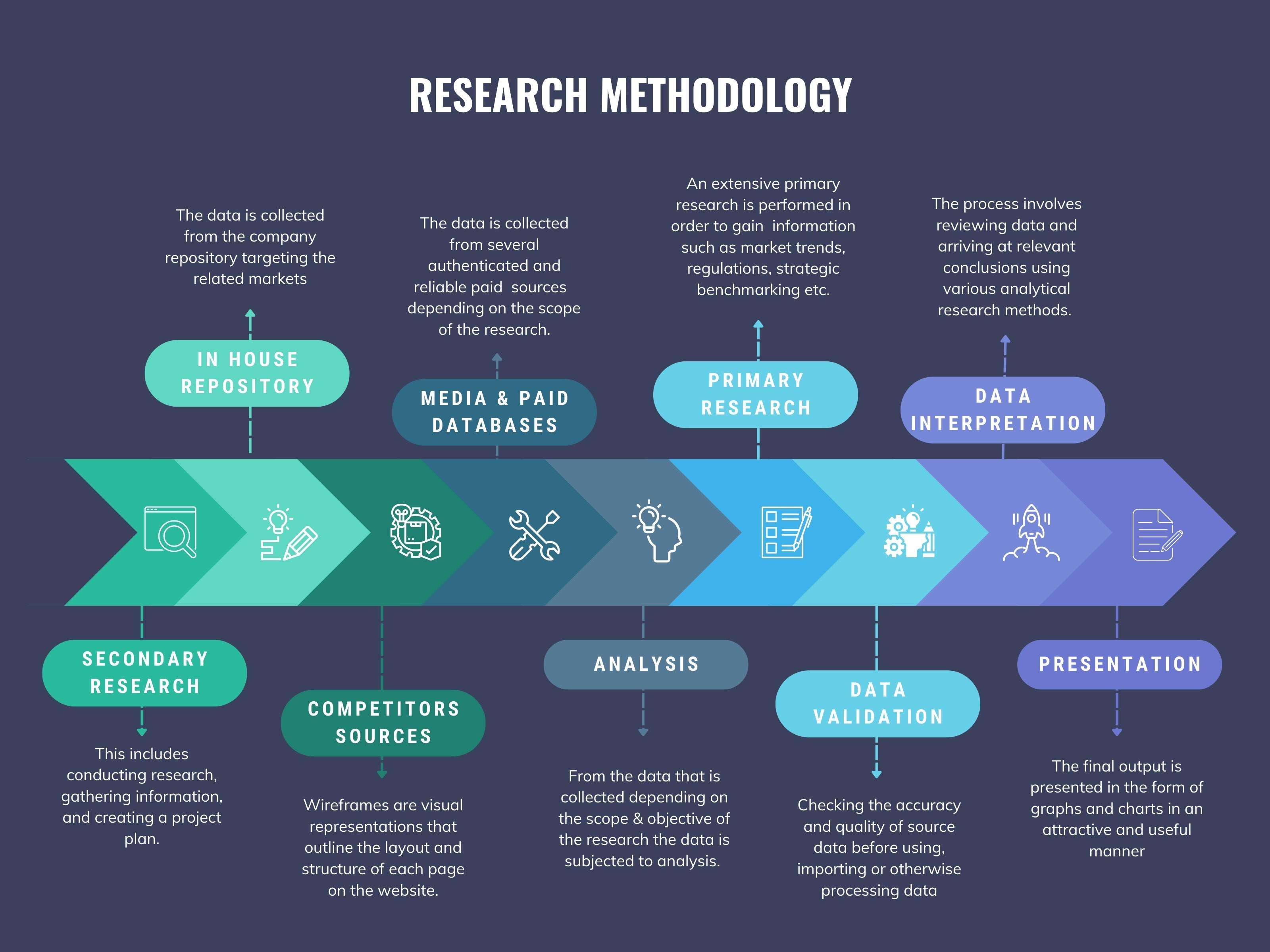
We at ‘Stratistics’ opt for an extensive research approach which involves data mining, data validation, and data analysis. The various research sources include in-house repository, secondary research, competitor’s sources, social media research, client internal data, and primary research.
Our team of analysts prefers the most reliable and authenticated data sources in order to perform the comprehensive literature search. With access to most of the authenticated data bases our team highly considers the best mix of information through various sources to obtain extensive and accurate analysis.
Each report takes an average time of a month and a team of 4 industry analysts. The time may vary depending on the scope and data availability of the desired market report. The various parameters used in the market assessment are standardized in order to enhance the data accuracy.
Data Mining
The data is collected from several authenticated, reliable, paid and unpaid sources and is filtered depending on the scope & objective of the research. Our reports repository acts as an added advantage in this procedure. Data gathering from the raw material suppliers, distributors and the manufacturers is performed on a regular basis, this helps in the comprehensive understanding of the products value chain. Apart from the above mentioned sources the data is also collected from the industry consultants to ensure the objective of the study is in the right direction.
Market trends such as technological advancements, regulatory affairs, market dynamics (Drivers, Restraints, Opportunities and Challenges) are obtained from scientific journals, market related national & international associations and organizations.
Data Analysis
From the data that is collected depending on the scope & objective of the research the data is subjected for the analysis. The critical steps that we follow for the data analysis include:
- Product Lifecycle Analysis
- Competitor analysis
- Risk analysis
- Porters Analysis
- PESTEL Analysis
- SWOT Analysis
The data engineering is performed by the core industry experts considering both the Marketing Mix Modeling and the Demand Forecasting. The marketing mix modeling makes use of multiple-regression techniques to predict the optimal mix of marketing variables. Regression factor is based on a number of variables and how they relate to an outcome such as sales or profits.
Data Validation
The data validation is performed by the exhaustive primary research from the expert interviews. This includes telephonic interviews, focus groups, face to face interviews, and questionnaires to validate our research from all aspects. The industry experts we approach come from the leading firms, involved in the supply chain ranging from the suppliers, distributors to the manufacturers and consumers so as to ensure an unbiased analysis.
We are in touch with more than 15,000 industry experts with the right mix of consultants, CEO's, presidents, vice presidents, managers, experts from both supply side and demand side, executives and so on.
The data validation involves the primary research from the industry experts belonging to:
- Leading Companies
- Suppliers & Distributors
- Manufacturers
- Consumers
- Industry/Strategic Consultants
Apart from the data validation the primary research also helps in performing the fill gap research, i.e. providing solutions for the unmet needs of the research which helps in enhancing the reports quality.
For more details about research methodology, kindly write to us at info@strategymrc.com
Frequently Asked Questions
In case of any queries regarding this report, you can contact the customer service by filing the “Inquiry Before Buy” form available on the right hand side. You may also contact us through email: info@strategymrc.com or phone: +1-301-202-5929
Yes, the samples are available for all the published reports. You can request them by filling the “Request Sample” option available in this page.
Yes, you can request a sample with your specific requirements. All the customized samples will be provided as per the requirement with the real data masked.
All our reports are available in Digital PDF format. In case if you require them in any other formats, such as PPT, Excel etc you can submit a request through “Inquiry Before Buy” form available on the right hand side. You may also contact us through email: info@strategymrc.com or phone: +1-301-202-5929
We offer a free 15% customization with every purchase. This requirement can be fulfilled for both pre and post sale. You may send your customization requirements through email at info@strategymrc.com or call us on +1-301-202-5929.
We have 3 different licensing options available in electronic format.
- Single User Licence: Allows one person, typically the buyer, to have access to the ordered product. The ordered product cannot be distributed to anyone else.
- 2-5 User Licence: Allows the ordered product to be shared among a maximum of 5 people within your organisation.
- Corporate License: Allows the product to be shared among all employees of your organisation regardless of their geographical location.
All our reports are typically be emailed to you as an attachment.
To order any available report you need to register on our website. The payment can be made either through CCAvenue or PayPal payments gateways which accept all international cards.
We extend our support to 6 months post sale. A post sale customization is also provided to cover your unmet needs in the report.
Request Customization
We offer complimentary customization of up to 15% with every purchase. To share your customization requirements, feel free to email us at info@strategymrc.com or call us on +1-301-202-5929. .
Please Note: Customization within the 15% threshold is entirely free of charge. If your request exceeds this limit, we will conduct a feasibility assessment. Following that, a detailed quote and timeline will be provided.
WHY CHOOSE US ?

Assured Quality
Best in class reports with high standard of research integrity

24X7 Research Support
Continuous support to ensure the best customer experience.

Free Customization
Adding more values to your product of interest.

Safe & Secure Access
Providing a secured environment for all online transactions.

Trusted by 600+ Brands
Serving the most reputed brands across the world.