
Automotive Battery Fire Suppression Market
Automotive Battery Fire Suppression Market Forecasts to 2034 – Global Analysis By System Type (Onboard Battery-Pack Fire Suppression, Thermal Runaway Propagation Barriers, Battery Compartment Detection and Suppression, and External Vehicle Fire Protection Systems), Suppression Technology, Detection and Activation, Vehicle Type, Sales Channel, and By Geography

Market Dynamics:
Driver:
Fleet electrification increases the need for application-specific battery protection
Electrified buses, commercial vehicles, and specialized equipment place substantial battery energy close to passengers, operators, or valuable assets. Vehicle manufacturers and fleet owners therefore need a credible strategy for detecting developing faults and limiting their consequences. Battery protection can involve barriers, controlled venting, cooling, suppression, and operational procedures, with each measure selected for the relevant hazard. This creates demand for suppliers capable of system integration and realistic testing rather than isolated product supply. Fleet buyers also consider maintenance and response arrangements, making dependable service and clear operating instructions important parts of the commercial offer.
Restraint:
Battery reactions are difficult to control with conventional suppression alone
Lithium-ion thermal runaway can generate heat and gases inside a cell after external flames have been suppressed. Access to the affected cells may be limited by the pack structure, and the agent quantity or cooling capacity required can be difficult to accommodate on a vehicle. Protection must also remain effective after vibration, temperature cycling, and long service periods. These challenges make testing expensive and discourage assumptions that a solution proven in one battery arrangement will transfer unchanged to another. Suppliers face a demanding task in balancing protection, package size, weight, maintenance, and vehicle integration cost.
Opportunity:
Early detection and targeted cooling can improve integrated protection strategies
Combining multiple indicators of battery distress can support earlier decisions about warning, isolation, cooling, or evacuation. Off-gas and pressure sensing offer complementary information to conventional temperature monitoring, while carefully directed suppression or cooling can focus available resources on the affected area. There is also scope to improve protection for vehicles undergoing service, storage, or recovery after damage. These opportunities favor coordinated solutions with clearly defined response logic. Commercial progress will depend on validated performance under representative conditions and practical maintenance requirements, with suppliers explaining the limits of each protective measure as carefully as its intended benefits.
Threat:
Overstated protection claims and inconsistent maintenance can undermine confidence
A protection system can lose credibility when marketing promises exceed its demonstrated capability or when field maintenance fails to preserve the tested configuration. Battery formats, chemistries, and pack structures continue to change, requiring suppliers to reassess assumptions about gas release, heat transfer, and agent access. Customers may also substitute passive measures or revised pack architecture for a standalone suppression product. A serious incident can trigger costly reviews of an entire protection approach. Providers therefore need traceable test evidence, application-specific design limits, and service support that remains effective throughout the vehicle's operating life.
Covid-19 Impact:
COVID-19 slowed vehicle production, fleet renewal, and access to test facilities, interrupting the development and installation of specialized battery protection systems. Reduced bus and passenger transport activity also altered fleet purchasing priorities. At the same time, electrification planning continued, leaving suppliers to coordinate delayed programs and changing customer budgets. Remote support helped maintain engineering work but could not fully replace physical fire testing or installation training. As activity recovered, the market returned to its central challenge of demonstrating suitable protection for real battery configurations, with service capability and reliable component supply receiving greater attention.
The Thermal Runaway Propagation Barriers segment is expected to be the largest during the forecast period
Thermal Runaway Propagation Barriers are expected to hold the largest share within the supplied scope because they can be integrated into a broad range of battery designs without requiring a separate agent-storage and discharge system. Their role is to limit heat transfer or the exposure of neighboring cells and components during a defined event. Material choice and placement must still be validated for the pack. The segment benefits from demand across passenger and commercial vehicles and from the incorporation of protective layers during battery assembly. Its expected scale reflects this broad applicability rather than a guarantee that barriers prevent every propagation scenario.
The Gas and Off-Gas Detection segment is expected to have the highest CAGR during the forecast period
Gas and Off-Gas Detection is anticipated to achieve the highest growth rate as battery protection strategies incorporate additional indicators of developing faults. Detecting released gases can complement temperature and electrical measurements, providing information that may support earlier warnings or protective actions in some failure scenarios. Deployment opportunities extend to onboard systems and vehicle service environments. Growth depends on sensitivity, selectivity, lifetime stability, and resistance to false alarms under real operating conditions. The segment's value lies in improving the available evidence for a response decision; sensing alone does not suppress a fire or eliminate the need for other protective measures.
Region with largest share:
Asia Pacific is expected to represent the largest regional market because extensive electrified-vehicle production supports demand for both integrated battery barriers and specialized protection systems. The region includes large passenger-car programs, electric bus fleets, and commercial applications with different duty cycles and installation constraints. Suppliers can work near cell, pack, and vehicle manufacturers to adapt protection materials and hardware early in development. Strong competition encourages cost control, while new battery designs create recurring validation needs. These manufacturing links and the breadth of vehicle applications underpin the region's expected share within the report's broad protection scope.
Region with highest CAGR:
Europe is anticipated to show the highest CAGR as electrified public transport and specialized commercial vehicles create opportunities for integrated detection and protection solutions. Fleet operators often assess the complete operating environment, including passenger evacuation, depot procedures, vehicle maintenance, and recovery after an incident. This supports suppliers that can combine equipment with application engineering and ongoing service. Growth also comes from adding protective functions to existing battery designs as technical understanding improves. Adoption will depend on evidence specific to the vehicle and battery configuration, with commercial success favoring solutions that fit practical packaging and maintenance constraints.
Key players in the market
Some of the key players in the Automotive Battery Fire Suppression Market include Dafo Vehicle Fire Protection AB, Johnson Controls International plc, Siemens AG, Kidde (Carrier Global Corporation), Fike Corporation, Minimax GmbH & Co. KG, Firetrace International LLC, FirePro Systems Ltd., BlazeCut s.r.o., Amerex Corporation, Honeywell International Inc., 3M Company, Autoliv, Inc., Webasto SE, and Advanced Innergy Holdings (AIS).
Key Developments:
In March 2026, Dafo Vehicle announced certification to UAE and Saudi standards for automatic fire suppression systems used in buses and coaches. This development in the parent Vehicle Fire Protection Market expanded its documented regional qualification, although the announcement did not establish universal protection against every lithium-ion battery thermal-runaway scenario.
In December 2024, United Safety & Survivability Corporation acquired Dafo Vehicle. The transaction in the parent Vehicle Safety Systems Market brought together fire detection, suppression, and wider safety capabilities, with potential relevance to the engineering and service networks required as commercial fleets introduce more electrified vehicles.
In October 2024, Dafo Vehicle introduced EV-Garm, a carbon monoxide sensing system for electric vehicles undergoing repair and maintenance. Sensors placed near battery pressure-relief outlets were intended to warn workshop personnel of venting. The development addressed early detection in the parent Battery Safety Market, complementing rather than performing fire suppression.
System Types Covered:
• Onboard Battery-Pack Fire Suppression
• Thermal Runaway Propagation Barriers
• Battery Compartment Detection and Suppression
• External Vehicle Fire Protection Systems
Suppression Technologies Covered:
• Water-Mist and Water-Based Systems
• Aerosol and Condensed Aerosol Systems
• Gas and Clean-Agent Systems
• Encapsulating and Specialty Agents
• Thermal Insulation and Barrier Materials
Detection and Activation Covered:
• Temperature and Smoke Detection
• Gas and Off-Gas Detection
• Pressure and Thermal Runaway Detection
• Automatic and Manual Activation
Vehicle Types Covered:
• Passenger Cars
• Commercial Vehicles and Buses
• Off-Highway and Mining Vehicles
• Electric and Hybrid Vehicles
Sales Channels Covered:
• OEM-Integrated Systems
• Fleet Retrofit and Aftermarket Systems
Regions Covered:
• North America
o United States
o Canada
o Mexico
• Europe
o United Kingdom
o Germany
o France
o Italy
o Spain
o Netherlands
o Belgium
o Sweden
o Switzerland
o Poland
o Rest of Europe
• Asia Pacific
o China
o Japan
o India
o South Korea
o Australia
o Indonesia
o Thailand
o Malaysia
o Singapore
o Vietnam
o Rest of Asia Pacific
• South America
o Brazil
o Argentina
o Colombia
o Chile
o Peru
o Rest of South America
• Rest of the World (RoW)
o Middle East
Saudi Arabia
United Arab Emirates
Qatar
Israel
Rest of Middle East
o Africa
South Africa
Egypt
Morocco
Rest of Africa
What our report offers:
- Market share assessments for the regional and country-level segments
- Strategic recommendations for the new entrants
- Covers Market data for the years 2023, 2024, 2025, 2026, 2027, 2028, 2030, 2032 and 2034
- Market Trends (Drivers, Constraints, Opportunities, Threats, Challenges, Investment Opportunities, and recommendations)
- Strategic recommendations in key business segments based on the market estimations
- Competitive landscaping mapping the key common trends
- Company profiling with detailed strategies, financials, and recent developments
- Supply chain trends mapping the latest technological advancements
Free Customization Offerings:
All the customers of this report will be entitled to receive one of the following free customization options:
• Company Profiling
o Comprehensive profiling of additional market players (up to 3)
o SWOT Analysis of key players (up to 3)
• Regional Segmentation
o Market estimations, Forecasts and CAGR of any prominent country as per the client's interest (Note: Depends on feasibility check)
• Competitive Benchmarking
o Benchmarking of key players based on product portfolio, geographical presence, and strategic alliances
Table of Contents
1 Executive Summary1.1 Market Snapshot and Key Highlights
1.2 Growth Drivers, Challenges, and Opportunities
1.3 Competitive Landscape Overview
1.4 Strategic Insights and Recommendations
2 Research Framework
2.1 Study Objectives and Scope
2.2 Stakeholder Analysis
2.3 Research Assumptions and Limitations
2.4 Research Methodology
2.4.1 Data Collection (Primary and Secondary)
2.4.2 Data Modeling and Estimation Techniques
2.4.3 Data Validation and Triangulation
2.4.4 Analytical and Forecasting Approach
3 Market Dynamics and Trend Analysis
3.1 Market Definition and Structure
3.2 Key Market Drivers
3.3 Market Restraints and Challenges
3.4 Growth Opportunities and Investment Hotspots
3.5 Industry Threats and Risk Assessment
3.6 Technology and Innovation Landscape
3.7 Emerging and High-Growth Markets
3.8 Regulatory and Policy Environment
3.9 Impact of COVID-19 and Recovery Outlook
4 Competitive and Strategic Assessment
4.1 Porter's Five Forces Analysis
4.1.1 Supplier Bargaining Power
4.1.2 Buyer Bargaining Power
4.1.3 Threat of Substitutes
4.1.4 Threat of New Entrants
4.1.5 Competitive Rivalry
4.2 Market Share Analysis of Key Players
4.3 Product Benchmarking and Performance Comparison
5 Global Automotive Battery Fire Suppression Market, By System Type
5.1 Onboard Battery-Pack Fire Suppression
5.2 Thermal Runaway Propagation Barriers
5.3 Battery Compartment Detection and Suppression
5.4 External Vehicle Fire Protection Systems
6 Global Automotive Battery Fire Suppression Market, By Suppression Technology
6.1 Water-Mist and Water-Based Systems
6.2 Aerosol and Condensed Aerosol Systems
6.3 Gas and Clean-Agent Systems
6.4 Encapsulating and Specialty Agents
6.5 Thermal Insulation and Barrier Materials
7 Global Automotive Battery Fire Suppression Market, By Detection and Activation
7.1 Temperature and Smoke Detection
7.2 Gas and Off-Gas Detection
7.3 Pressure and Thermal Runaway Detection
7.4 Automatic and Manual Activation
8 Global Automotive Battery Fire Suppression Market, By Vehicle Type
8.1 Passenger Cars
8.2 Commercial Vehicles and Buses
8.3 Off-Highway and Mining Vehicles
8.4 Electric and Hybrid Vehicles
9 Global Automotive Battery Fire Suppression Market, By Sales Channel
9.1 OEM-Integrated Systems
9.2 Fleet Retrofit and Aftermarket Systems
10 Global Automotive Battery Fire Suppression Market, By Geography
10.1 North America
10.1.1 United States
10.1.2 Canada
10.1.3 Mexico
10.2 Europe
10.2.1 United Kingdom
10.2.2 Germany
10.2.3 France
10.2.4 Italy
10.2.5 Spain
10.2.6 Netherlands
10.2.7 Belgium
10.2.8 Sweden
10.2.9 Switzerland
10.2.10 Poland
10.2.11 Rest of Europe
10.3 Asia Pacific
10.3.1 China
10.3.2 Japan
10.3.3 India
10.3.4 South Korea
10.3.5 Australia
10.3.6 Indonesia
10.3.7 Thailand
10.3.8 Malaysia
10.3.9 Singapore
10.3.10 Vietnam
10.3.11 Rest of Asia Pacific
10.4 South America
10.4.1 Brazil
10.4.2 Argentina
10.4.3 Colombia
10.4.4 Chile
10.4.5 Peru
10.4.6 Rest of South America
10.5 Rest of the World (RoW)
10.5.1 Middle East
10.5.1.1 Saudi Arabia
10.5.1.2 United Arab Emirates
10.5.1.3 Qatar
10.5.1.4 Israel
10.5.1.5 Rest of Middle East
10.5.2 Africa
10.5.2.1 South Africa
10.5.2.2 Egypt
10.5.2.3 Morocco
10.5.2.4 Rest of Africa
11 Strategic Market Intelligence
11.1 Industry Value Network and Supply Chain Assessment
11.2 White-Space and Opportunity Mapping
11.3 Product Evolution and Market Life Cycle Analysis
11.4 Channel, Distributor, and Go-to-Market Assessment
12 Industry Developments and Strategic Initiatives
12.1 Mergers and Acquisitions
12.2 Partnerships, Alliances, and Joint Ventures
12.3 New Product Launches and Certifications
12.4 Capacity Expansion and Investments
12.5 Other Strategic Initiatives
13 Company Profiles
13.1 Dafo Vehicle Fire Protection AB
13.2 Johnson Controls International plc
13.3 Siemens AG
13.4 Kidde (Carrier Global Corporation)
13.5 Fike Corporation
13.6 Minimax GmbH & Co. KG
13.7 Firetrace International LLC
13.8 FirePro Systems Ltd.
13.9 BlazeCut s.r.o.
13.10 Amerex Corporation
13.11 Honeywell International Inc.
13.12 3M Company
13.13 Autoliv, Inc.
13.14 Webasto SE
13.15 Advanced Innergy Holdings (AIS)
List of Tables
1 Global Automotive Battery Fire Suppression Market Outlook, By Region (2023–2034) ($MN)
2 Global Automotive Battery Fire Suppression Market Outlook, By System Type (2023–2034) ($MN)
3 Global Automotive Battery Fire Suppression Market Outlook, By Onboard Battery-Pack Fire Suppression (2023–2034) ($MN)
4 Global Automotive Battery Fire Suppression Market Outlook, By Thermal Runaway Propagation Barriers (2023–2034) ($MN)
5 Global Automotive Battery Fire Suppression Market Outlook, By Battery Compartment Detection and Suppression (2023–2034) ($MN)
6 Global Automotive Battery Fire Suppression Market Outlook, By External Vehicle Fire Protection Systems (2023–2034) ($MN)
7 Global Automotive Battery Fire Suppression Market Outlook, By Suppression Technology (2023–2034) ($MN)
8 Global Automotive Battery Fire Suppression Market Outlook, By Water-Mist and Water-Based Systems (2023–2034) ($MN)
9 Global Automotive Battery Fire Suppression Market Outlook, By Aerosol and Condensed Aerosol Systems (2023–2034) ($MN)
10 Global Automotive Battery Fire Suppression Market Outlook, By Gas and Clean-Agent Systems (2023–2034) ($MN)
11 Global Automotive Battery Fire Suppression Market Outlook, By Encapsulating and Specialty Agents (2023–2034) ($MN)
12 Global Automotive Battery Fire Suppression Market Outlook, By Thermal Insulation and Barrier Materials (2023–2034) ($MN)
13 Global Automotive Battery Fire Suppression Market Outlook, By Detection and Activation (2023–2034) ($MN)
14 Global Automotive Battery Fire Suppression Market Outlook, By Temperature and Smoke Detection (2023–2034) ($MN)
15 Global Automotive Battery Fire Suppression Market Outlook, By Gas and Off-Gas Detection (2023–2034) ($MN)
16 Global Automotive Battery Fire Suppression Market Outlook, By Pressure and Thermal Runaway Detection (2023–2034) ($MN)
17 Global Automotive Battery Fire Suppression Market Outlook, By Automatic and Manual Activation (2023–2034) ($MN)
18 Global Automotive Battery Fire Suppression Market Outlook, By Vehicle Type (2023–2034) ($MN)
19 Global Automotive Battery Fire Suppression Market Outlook, By Passenger Cars (2023–2034) ($MN)
20 Global Automotive Battery Fire Suppression Market Outlook, By Commercial Vehicles and Buses (2023–2034) ($MN)
21 Global Automotive Battery Fire Suppression Market Outlook, By Off-Highway and Mining Vehicles (2023–2034) ($MN)
22 Global Automotive Battery Fire Suppression Market Outlook, By Electric and Hybrid Vehicles (2023–2034) ($MN)
23 Global Automotive Battery Fire Suppression Market Outlook, By Sales Channel (2023–2034) ($MN)
24 Global Automotive Battery Fire Suppression Market Outlook, By OEM-Integrated Systems (2023–2034) ($MN)
25 Global Automotive Battery Fire Suppression Market Outlook, By Fleet Retrofit and Aftermarket Systems (2023–2034) ($MN)
Note: Tables for North America, Europe, APAC, South America, and Rest of the World (RoW) Regions are also represented in the same manner as above.
List of Figures
RESEARCH METHODOLOGY
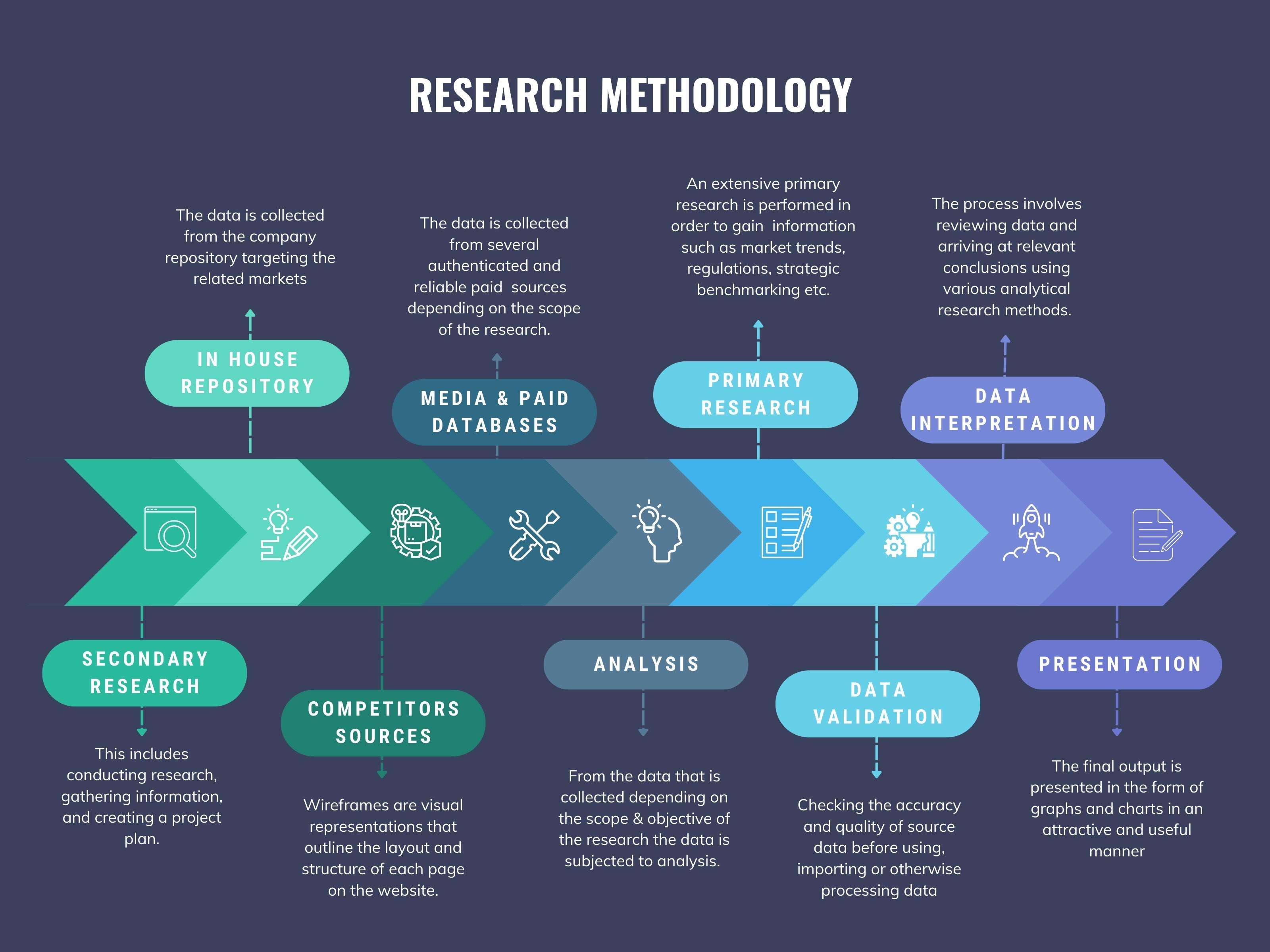
We at ‘Stratistics’ opt for an extensive research approach which involves data mining, data validation, and data analysis. The various research sources include in-house repository, secondary research, competitor’s sources, social media research, client internal data, and primary research.
Our team of analysts prefers the most reliable and authenticated data sources in order to perform the comprehensive literature search. With access to most of the authenticated data bases our team highly considers the best mix of information through various sources to obtain extensive and accurate analysis.
Each report takes an average time of a month and a team of 4 industry analysts. The time may vary depending on the scope and data availability of the desired market report. The various parameters used in the market assessment are standardized in order to enhance the data accuracy.
Data Mining
The data is collected from several authenticated, reliable, paid and unpaid sources and is filtered depending on the scope & objective of the research. Our reports repository acts as an added advantage in this procedure. Data gathering from the raw material suppliers, distributors and the manufacturers is performed on a regular basis, this helps in the comprehensive understanding of the products value chain. Apart from the above mentioned sources the data is also collected from the industry consultants to ensure the objective of the study is in the right direction.
Market trends such as technological advancements, regulatory affairs, market dynamics (Drivers, Restraints, Opportunities and Challenges) are obtained from scientific journals, market related national & international associations and organizations.
Data Analysis
From the data that is collected depending on the scope & objective of the research the data is subjected for the analysis. The critical steps that we follow for the data analysis include:
- Product Lifecycle Analysis
- Competitor analysis
- Risk analysis
- Porters Analysis
- PESTEL Analysis
- SWOT Analysis
The data engineering is performed by the core industry experts considering both the Marketing Mix Modeling and the Demand Forecasting. The marketing mix modeling makes use of multiple-regression techniques to predict the optimal mix of marketing variables. Regression factor is based on a number of variables and how they relate to an outcome such as sales or profits.
Data Validation
The data validation is performed by the exhaustive primary research from the expert interviews. This includes telephonic interviews, focus groups, face to face interviews, and questionnaires to validate our research from all aspects. The industry experts we approach come from the leading firms, involved in the supply chain ranging from the suppliers, distributors to the manufacturers and consumers so as to ensure an unbiased analysis.
We are in touch with more than 15,000 industry experts with the right mix of consultants, CEO's, presidents, vice presidents, managers, experts from both supply side and demand side, executives and so on.
The data validation involves the primary research from the industry experts belonging to:
- Leading Companies
- Suppliers & Distributors
- Manufacturers
- Consumers
- Industry/Strategic Consultants
Apart from the data validation the primary research also helps in performing the fill gap research, i.e. providing solutions for the unmet needs of the research which helps in enhancing the reports quality.
For more details about research methodology, kindly write to us at info@strategymrc.com
Frequently Asked Questions
In case of any queries regarding this report, you can contact the customer service by filing the “Inquiry Before Buy” form available on the right hand side. You may also contact us through email: info@strategymrc.com or phone: +1-301-202-5929
Yes, the samples are available for all the published reports. You can request them by filling the “Request Sample” option available in this page.
Yes, you can request a sample with your specific requirements. All the customized samples will be provided as per the requirement with the real data masked.
All our reports are available in Digital PDF format. In case if you require them in any other formats, such as PPT, Excel etc you can submit a request through “Inquiry Before Buy” form available on the right hand side. You may also contact us through email: info@strategymrc.com or phone: +1-301-202-5929
We offer a free 15% customization with every purchase. This requirement can be fulfilled for both pre and post sale. You may send your customization requirements through email at info@strategymrc.com or call us on +1-301-202-5929.
We have 3 different licensing options available in electronic format.
- Single User Licence: Allows one person, typically the buyer, to have access to the ordered product. The ordered product cannot be distributed to anyone else.
- 2-5 User Licence: Allows the ordered product to be shared among a maximum of 5 people within your organisation.
- Corporate License: Allows the product to be shared among all employees of your organisation regardless of their geographical location.
All our reports are typically be emailed to you as an attachment.
To order any available report you need to register on our website. The payment can be made either through CCAvenue or PayPal payments gateways which accept all international cards.
We extend our support to 6 months post sale. A post sale customization is also provided to cover your unmet needs in the report.
Request Customization
We offer complimentary customization of up to 15% with every purchase. To share your customization requirements, feel free to email us at info@strategymrc.com or call us on +1-301-202-5929. .
Please Note: Customization within the 15% threshold is entirely free of charge. If your request exceeds this limit, we will conduct a feasibility assessment. Following that, a detailed quote and timeline will be provided.
WHY CHOOSE US ?

Assured Quality
Best in class reports with high standard of research integrity

24X7 Research Support
Continuous support to ensure the best customer experience.

Free Customization
Adding more values to your product of interest.

Safe & Secure Access
Providing a secured environment for all online transactions.

Trusted by 600+ Brands
Serving the most reputed brands across the world.