Automotive Battery Separator Market
Automotive Battery Separator Market Forecasts to 2034 – Global Analysis By Separator Material (Polyethylene (PE) Separators, Polypropylene (PP) Separators, Multilayer PE/PP Separators, Ceramic-Coated Separators, and Aramid and High-Heat-Resistance Separators), Manufacturing Process, Battery Chemistry, Vehicle Type, Sales Channel, and By Geography

Market Dynamics:
Driver:
Higher cell output increases demand for consistent, application-specific separator film
The expansion of electric-vehicle battery production creates recurring demand for separator area across every electrode assembly. Cell manufacturers must also accommodate faster charging, thinner components, and demanding lifetime requirements without compromising electrical isolation. These objectives place greater emphasis on uniform pores, coating adhesion, cleanliness, and dimensional stability. A separator that performs consistently on a high-speed production line can reduce rejected cells and simplify process control. Purchasing decisions therefore consider manufacturing yield and reliability alongside material price. Suppliers able to combine large-volume delivery with close technical support are positioned to benefit as automotive cell designs evolve.
Restraint:
Precision film production and lengthy qualification raise the cost of entry
Separator production requires tight control over stretching, thickness, pore formation, coating, and handling of very thin films. Small defects or contamination can undermine cell performance and cause expensive downstream losses. Establishing a new production line consequently involves more than installing nominal capacity: operating stability, inspection capability, and customer qualification must also be demonstrated. Automotive customers may require extensive testing before accepting material from another plant or process. These requirements tie up capital while utilization remains low. New entrants and expanding suppliers face particular difficulty when the cost of a rejected roll is magnified by its effect on finished battery cells.
Opportunity:
Functional coatings create room for differentiation beyond the base membrane
Advanced coatings offer separator producers a route to address specific cell requirements without relying solely on increases in film output. Ceramic layers, adhesive functions, and tailored surface treatments can improve processing compatibility or resistance to dimensional change, depending on the design. The opportunity lies in developing a validated material package with the cell manufacturer, including suitable coating weight, coverage, and handling behavior. Local coating operations can also adapt imported base film to regional customers. Suppliers that connect material development with application testing may secure more durable customer relationships than those competing only on undifferentiated membrane capacity.
Threat:
Overcapacity and changing battery architectures can weaken returns on expansion
Separator investments are exposed to the timing of battery-factory ramp-ups and vehicle demand. When film capacity becomes available before customers need it, price competition and low utilization can erode the returns expected from a new plant. Customers may also change cell chemistry, separator thickness, or coating specifications after suppliers have committed equipment. Longer-term development of solid electrolytes could alter the role of conventional porous films in some applications. These pressures favor flexible manufacturing and disciplined expansion. A strong technical product does not by itself protect a supplier from customer concentration or an unfavorable balance between available capacity and actual orders.
Covid-19 Impact:
COVID-19 disrupted separator supply through restrictions on factory staffing, international transport, and access to customer facilities. The qualification of new lines became more difficult when engineers could not travel to resolve coating or handling issues in person. Demand planning also became uncertain as automotive assembly schedules changed. The subsequent recovery in electric-vehicle investment renewed attention to supply continuity and regional manufacturing. For separator suppliers, the lasting operational lesson was the importance of approved alternative production locations and effective remote quality support. Expansion decisions still required careful coordination with the actual readiness of customers' cell plants.
The Wet-Process Separators segment is expected to be the largest during the forecast period
Wet-Process Separators are expected to represent the largest manufacturing-process segment, reflecting their suitability for thin membranes used in many automotive lithium-ion cell designs. Manufacturers can tailor the film structure and add coatings to meet customer requirements for handling, electrolyte interaction, and thermal behavior. Existing production expertise and qualification relationships support repeat purchasing as cell factories expand. The segment's commercial position also depends on maintaining consistent quality across wide rolls and high production volumes. Demand is expected to remain substantial where customers retain established liquid-electrolyte architectures and seek incremental improvements in cell performance and manufacturing yield.
The Ceramic-Coated Separators segment is expected to have the highest CAGR during the forecast period
Ceramic-Coated Separators are anticipated to register the highest growth among the material segments as cell developers place greater emphasis on dimensional stability and robust processing. Ceramic layers can provide useful performance benefits when their composition, adhesion, and thickness are matched to the underlying membrane and cell design. Adoption requires balancing those benefits against added material, drying, and inspection costs. The strongest opportunities are likely to arise in applications where a validated coating enables a broader improvement in cell performance or production reliability. Continued refinement of coating methods should support adoption across an expanding range of automotive battery specifications.
Region with largest share:
Asia Pacific is expected to retain the largest market share because separator demand is closely tied to the region's extensive battery-cell manufacturing base. China provides a large production and customer network, while Japanese and South Korean companies contribute membrane technology, process experience, and international supply relationships. Proximity between material suppliers and cell factories facilitates trials, quality troubleshooting, and product qualification. The regional outlook also includes pressure from intense supplier competition and uneven capacity utilization. Established manufacturing clusters nevertheless provide a substantial foundation for demand, particularly as local cell producers serve both domestic vehicle programs and export markets.
Region with highest CAGR:
North America is anticipated to achieve the highest percentage growth from a comparatively smaller base of localized automotive separator supply. New coating operations and planned film manufacturing create opportunities to shorten delivery routes and support customers during battery-plant qualification. The commercial case is strongest where suppliers secure sustained customer commitments before expanding capacity. Growth will depend on the pace at which regional cell facilities reach stable production, rather than announced factory capacity alone. Integration of existing operating experience with new separator capabilities could help regional suppliers increase their participation in vehicle battery programs over the forecast period.
Key players in the market
Some of the key players in the Automotive Battery Separator Market include Asahi Kasei Corporation, SEMCORP, SK IE Technology Co., Ltd., Toray Industries, Inc., W-SCOPE Corporation, ENTEK International LLC, Celgard, LLC, Shenzhen Senior Technology Material Co., Ltd., Sinoma Science & Technology Co., Ltd., Sumitomo Chemical Co., Ltd., Ube Corporation, Freudenberg Performance Materials, Mitsubishi Chemical Group Corporation, Teijin Limited, and Cangzhou Mingzhu Plastic Co., Ltd.
Key Developments:
In August 2026, Asahi Kasei marked the opening of a Hipore wet-process separator coating line at its Charlotte, North Carolina site. Commercial production was scheduled for the second half of fiscal 2026. The addition extends the company's regional coating capability and supports its wider North American separator supply plans.
In May 2026, Celgard announced new coating capabilities at its Concord, North Carolina facility. The expansion supports functional and multilayer coatings with different patterns, thicknesses, and coverage. These capabilities allow more customized separator development for electric vehicles and other battery applications, broadening the site's contribution beyond its established base-film operations.
In December 2025, Toray completed the procedures for selling its 50% interest in LG Toray Hungary Battery Separator to LG Chem. The transaction changed ownership of an established European separator-film operation, illustrating how suppliers are restructuring their manufacturing portfolios as regional battery demand and investment priorities evolve.
Separator Materials Covered:
• Polyethylene (PE) Separators
• Polypropylene (PP) Separators
• Multilayer PE/PP Separators
• Ceramic-Coated Separators
• Aramid and High-Heat-Resistance Separators
Manufacturing Processes Covered:
• Wet-Process Separators
• Dry-Process Separators
• Functional and Ceramic-Coating Processes
Battery Chemistries Covered:
• Lithium-Ion Battery Separators
• Solid-State and Hybrid Battery Separators
• Other Advanced Battery Separators
Vehicle Types Covered:
• Battery Electric Vehicles
• Plug-In Hybrid Vehicles
• Hybrid Electric Vehicles
• Electric Commercial Vehicles
Sales Channels Covered:
• Cell Manufacturer Direct Supply
• Automotive OEM and Tier-1 Supply
Regions Covered:
• North America
o United States
o Canada
o Mexico
• Europe
o United Kingdom
o Germany
o France
o Italy
o Spain
o Netherlands
o Belgium
o Sweden
o Switzerland
o Poland
o Rest of Europe
• Asia Pacific
o China
o Japan
o India
o South Korea
o Australia
o Indonesia
o Thailand
o Malaysia
o Singapore
o Vietnam
o Rest of Asia Pacific
• South America
o Brazil
o Argentina
o Colombia
o Chile
o Peru
o Rest of South America
• Rest of the World (RoW)
o Middle East
Saudi Arabia
United Arab Emirates
Qatar
Israel
Rest of Middle East
o Africa
South Africa
Egypt
Morocco
Rest of Africa
What our report offers:
- Market share assessments for the regional and country-level segments
- Strategic recommendations for the new entrants
- Covers Market data for the years 2023, 2024, 2025, 2026, 2027, 2028, 2030, 2032 and 2034
- Market Trends (Drivers, Constraints, Opportunities, Threats, Challenges, Investment Opportunities, and recommendations)
- Strategic recommendations in key business segments based on the market estimations
- Competitive landscaping mapping the key common trends
- Company profiling with detailed strategies, financials, and recent developments
- Supply chain trends mapping the latest technological advancements
Free Customization Offerings:
All the customers of this report will be entitled to receive one of the following free customization options:
• Company Profiling
o Comprehensive profiling of additional market players (up to 3)
o SWOT Analysis of key players (up to 3)
• Regional Segmentation
o Market estimations, Forecasts and CAGR of any prominent country as per the client's interest (Note: Depends on feasibility check)
• Competitive Benchmarking
o Benchmarking of key players based on product portfolio, geographical presence, and strategic alliances
Table of Contents
1 Executive Summary1.1 Market Snapshot and Key Highlights
1.2 Growth Drivers, Challenges, and Opportunities
1.3 Competitive Landscape Overview
1.4 Strategic Insights and Recommendations
2 Research Framework
2.1 Study Objectives and Scope
2.2 Stakeholder Analysis
2.3 Research Assumptions and Limitations
2.4 Research Methodology
2.4.1 Data Collection (Primary and Secondary)
2.4.2 Data Modeling and Estimation Techniques
2.4.3 Data Validation and Triangulation
2.4.4 Analytical and Forecasting Approach
3 Market Dynamics and Trend Analysis
3.1 Market Definition and Structure
3.2 Key Market Drivers
3.3 Market Restraints and Challenges
3.4 Growth Opportunities and Investment Hotspots
3.5 Industry Threats and Risk Assessment
3.6 Technology and Innovation Landscape
3.7 Emerging and High-Growth Markets
3.8 Regulatory and Policy Environment
3.9 Impact of COVID-19 and Recovery Outlook
4 Competitive and Strategic Assessment
4.1 Porter's Five Forces Analysis
4.1.1 Supplier Bargaining Power
4.1.2 Buyer Bargaining Power
4.1.3 Threat of Substitutes
4.1.4 Threat of New Entrants
4.1.5 Competitive Rivalry
4.2 Market Share Analysis of Key Players
4.3 Product Benchmarking and Performance Comparison
5 Global Automotive Battery Separator Market, By Separator Material
5.1 Polyethylene (PE) Separators
5.2 Polypropylene (PP) Separators
5.3 Multilayer PE/PP Separators
5.4 Ceramic-Coated Separators
5.5 Aramid and High-Heat-Resistance Separators
6 Global Automotive Battery Separator Market, By Manufacturing Process
6.1 Wet-Process Separators
6.2 Dry-Process Separators
6.3 Functional and Ceramic-Coating Processes
7 Global Automotive Battery Separator Market, By Battery Chemistry
7.1 Lithium-Ion Battery Separators
7.2 Solid-State and Hybrid Battery Separators
7.3 Other Advanced Battery Separators
8 Global Automotive Battery Separator Market, By Vehicle Type
8.1 Battery Electric Vehicles
8.2 Plug-In Hybrid Vehicles
8.3 Hybrid Electric Vehicles
8.4 Electric Commercial Vehicles
9 Global Automotive Battery Separator Market, By Sales Channel
9.1 Cell Manufacturer Direct Supply
9.2 Automotive OEM and Tier-1 Supply
10 Global Automotive Battery Separator Market, By Geography
10.1 North America
10.1.1 United States
10.1.2 Canada
10.1.3 Mexico
10.2 Europe
10.2.1 United Kingdom
10.2.2 Germany
10.2.3 France
10.2.4 Italy
10.2.5 Spain
10.2.6 Netherlands
10.2.7 Belgium
10.2.8 Sweden
10.2.9 Switzerland
10.2.10 Poland
10.2.11 Rest of Europe
10.3 Asia Pacific
10.3.1 China
10.3.2 Japan
10.3.3 India
10.3.4 South Korea
10.3.5 Australia
10.3.6 Indonesia
10.3.7 Thailand
10.3.8 Malaysia
10.3.9 Singapore
10.3.10 Vietnam
10.3.11 Rest of Asia Pacific
10.4 South America
10.4.1 Brazil
10.4.2 Argentina
10.4.3 Colombia
10.4.4 Chile
10.4.5 Peru
10.4.6 Rest of South America
10.5 Rest of the World (RoW)
10.5.1 Middle East
10.5.1.1 Saudi Arabia
10.5.1.2 United Arab Emirates
10.5.1.3 Qatar
10.5.1.4 Israel
10.5.1.5 Rest of Middle East
10.5.2 Africa
10.5.2.1 South Africa
10.5.2.2 Egypt
10.5.2.3 Morocco
10.5.2.4 Rest of Africa
11 Strategic Market Intelligence
11.1 Industry Value Network and Supply Chain Assessment
11.2 White-Space and Opportunity Mapping
11.3 Product Evolution and Market Life Cycle Analysis
11.4 Channel, Distributor, and Go-to-Market Assessment
12 Industry Developments and Strategic Initiatives
12.1 Mergers and Acquisitions
12.2 Partnerships, Alliances, and Joint Ventures
12.3 New Product Launches and Certifications
12.4 Capacity Expansion and Investments
12.5 Other Strategic Initiatives
13 Company Profiles
13.1 Asahi Kasei Corporation
13.2 SEMCORP
13.3 SK IE Technology Co., Ltd.
13.4 Toray Industries, Inc.
13.5 W-SCOPE Corporation
13.6 ENTEK International LLC
13.7 Celgard, LLC
13.8 Shenzhen Senior Technology Material Co., Ltd.
13.9 Sinoma Science & Technology Co., Ltd.
13.10 Sumitomo Chemical Co., Ltd.
13.11 Ube Corporation
13.12 Freudenberg Performance Materials
13.13 Mitsubishi Chemical Group Corporation
13.14 Teijin Limited
13.15 Cangzhou Mingzhu Plastic Co., Ltd.
List of Tables
1 Global Automotive Battery Separator Market Outlook, By Region (2023–2034) ($MN)
2 Global Automotive Battery Separator Market Outlook, By Separator Material (2023–2034) ($MN)
3 Global Automotive Battery Separator Market Outlook, By Polyethylene (PE) Separators (2023–2034) ($MN)
4 Global Automotive Battery Separator Market Outlook, By Polypropylene (PP) Separators (2023–2034) ($MN)
5 Global Automotive Battery Separator Market Outlook, By Multilayer PE/PP Separators (2023–2034) ($MN)
6 Global Automotive Battery Separator Market Outlook, By Ceramic-Coated Separators (2023–2034) ($MN)
7 Global Automotive Battery Separator Market Outlook, By Aramid and High-Heat-Resistance Separators (2023–2034) ($MN)
8 Global Automotive Battery Separator Market Outlook, By Manufacturing Process (2023–2034) ($MN)
9 Global Automotive Battery Separator Market Outlook, By Wet-Process Separators (2023–2034) ($MN)
10 Global Automotive Battery Separator Market Outlook, By Dry-Process Separators (2023–2034) ($MN)
11 Global Automotive Battery Separator Market Outlook, By Functional and Ceramic-Coating Processes (2023–2034) ($MN)
12 Global Automotive Battery Separator Market Outlook, By Battery Chemistry (2023–2034) ($MN)
13 Global Automotive Battery Separator Market Outlook, By Lithium-Ion Battery Separators (2023–2034) ($MN)
14 Global Automotive Battery Separator Market Outlook, By Solid-State and Hybrid Battery Separators (2023–2034) ($MN)
15 Global Automotive Battery Separator Market Outlook, By Other Advanced Battery Separators (2023–2034) ($MN)
16 Global Automotive Battery Separator Market Outlook, By Vehicle Type (2023–2034) ($MN)
17 Global Automotive Battery Separator Market Outlook, By Battery Electric Vehicles (2023–2034) ($MN)
18 Global Automotive Battery Separator Market Outlook, By Plug-In Hybrid Vehicles (2023–2034) ($MN)
19 Global Automotive Battery Separator Market Outlook, By Hybrid Electric Vehicles (2023–2034) ($MN)
20 Global Automotive Battery Separator Market Outlook, By Electric Commercial Vehicles (2023–2034) ($MN)
21 Global Automotive Battery Separator Market Outlook, By Sales Channel (2023–2034) ($MN)
22 Global Automotive Battery Separator Market Outlook, By Cell Manufacturer Direct Supply (2023–2034) ($MN)
23 Global Automotive Battery Separator Market Outlook, By Automotive OEM and Tier-1 Supply (2023–2034) ($MN)
Note: Tables for North America, Europe, APAC, South America, and Rest of the World (RoW) Regions are also represented in the same manner as above.
List of Figures
RESEARCH METHODOLOGY
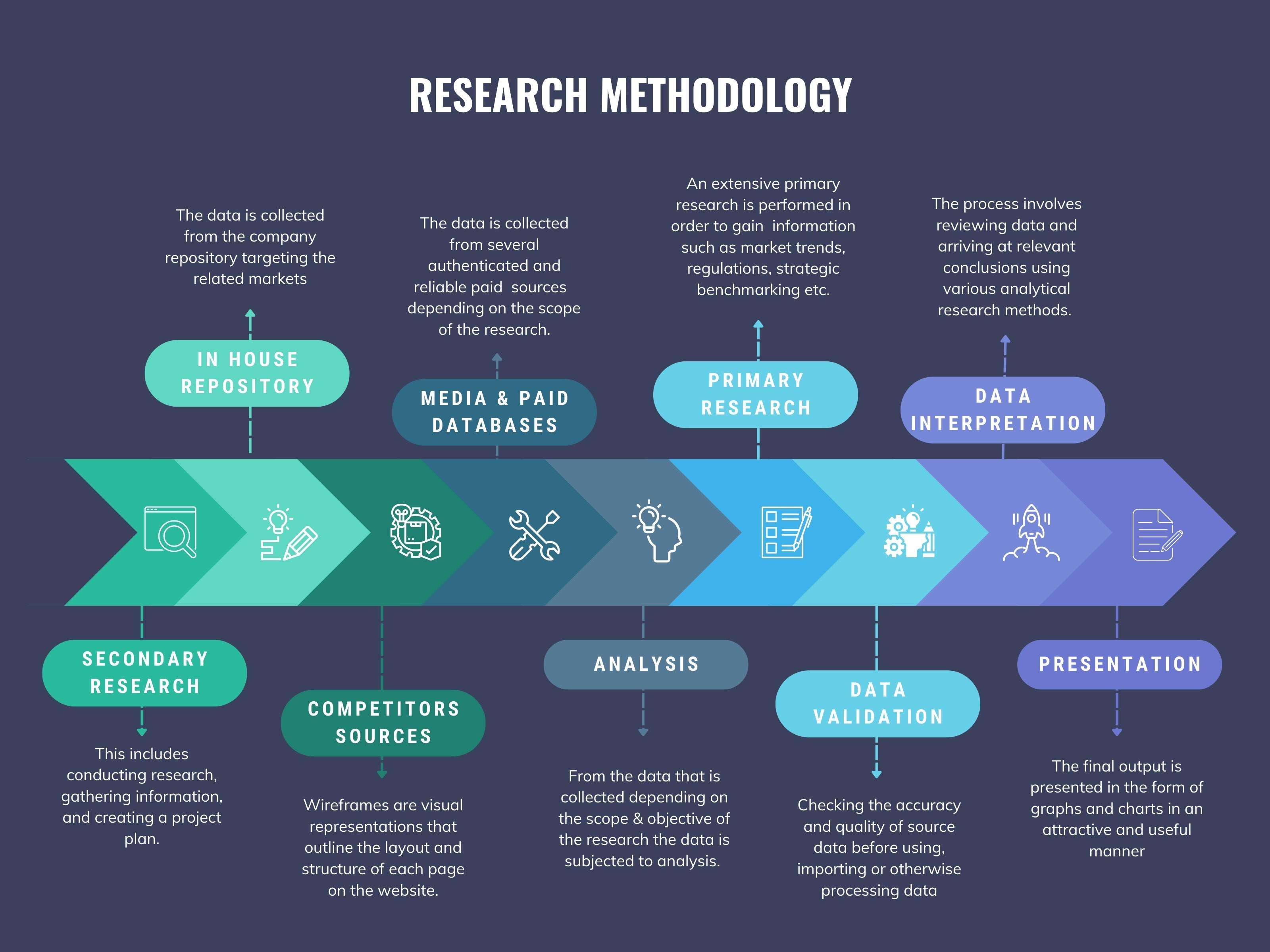
We at ‘Stratistics’ opt for an extensive research approach which involves data mining, data validation, and data analysis. The various research sources include in-house repository, secondary research, competitor’s sources, social media research, client internal data, and primary research.
Our team of analysts prefers the most reliable and authenticated data sources in order to perform the comprehensive literature search. With access to most of the authenticated data bases our team highly considers the best mix of information through various sources to obtain extensive and accurate analysis.
Each report takes an average time of a month and a team of 4 industry analysts. The time may vary depending on the scope and data availability of the desired market report. The various parameters used in the market assessment are standardized in order to enhance the data accuracy.
Data Mining
The data is collected from several authenticated, reliable, paid and unpaid sources and is filtered depending on the scope & objective of the research. Our reports repository acts as an added advantage in this procedure. Data gathering from the raw material suppliers, distributors and the manufacturers is performed on a regular basis, this helps in the comprehensive understanding of the products value chain. Apart from the above mentioned sources the data is also collected from the industry consultants to ensure the objective of the study is in the right direction.
Market trends such as technological advancements, regulatory affairs, market dynamics (Drivers, Restraints, Opportunities and Challenges) are obtained from scientific journals, market related national & international associations and organizations.
Data Analysis
From the data that is collected depending on the scope & objective of the research the data is subjected for the analysis. The critical steps that we follow for the data analysis include:
- Product Lifecycle Analysis
- Competitor analysis
- Risk analysis
- Porters Analysis
- PESTEL Analysis
- SWOT Analysis
The data engineering is performed by the core industry experts considering both the Marketing Mix Modeling and the Demand Forecasting. The marketing mix modeling makes use of multiple-regression techniques to predict the optimal mix of marketing variables. Regression factor is based on a number of variables and how they relate to an outcome such as sales or profits.
Data Validation
The data validation is performed by the exhaustive primary research from the expert interviews. This includes telephonic interviews, focus groups, face to face interviews, and questionnaires to validate our research from all aspects. The industry experts we approach come from the leading firms, involved in the supply chain ranging from the suppliers, distributors to the manufacturers and consumers so as to ensure an unbiased analysis.
We are in touch with more than 15,000 industry experts with the right mix of consultants, CEO's, presidents, vice presidents, managers, experts from both supply side and demand side, executives and so on.
The data validation involves the primary research from the industry experts belonging to:
- Leading Companies
- Suppliers & Distributors
- Manufacturers
- Consumers
- Industry/Strategic Consultants
Apart from the data validation the primary research also helps in performing the fill gap research, i.e. providing solutions for the unmet needs of the research which helps in enhancing the reports quality.
For more details about research methodology, kindly write to us at info@strategymrc.com
Frequently Asked Questions
In case of any queries regarding this report, you can contact the customer service by filing the “Inquiry Before Buy” form available on the right hand side. You may also contact us through email: info@strategymrc.com or phone: +1-301-202-5929
Yes, the samples are available for all the published reports. You can request them by filling the “Request Sample” option available in this page.
Yes, you can request a sample with your specific requirements. All the customized samples will be provided as per the requirement with the real data masked.
All our reports are available in Digital PDF format. In case if you require them in any other formats, such as PPT, Excel etc you can submit a request through “Inquiry Before Buy” form available on the right hand side. You may also contact us through email: info@strategymrc.com or phone: +1-301-202-5929
We offer a free 15% customization with every purchase. This requirement can be fulfilled for both pre and post sale. You may send your customization requirements through email at info@strategymrc.com or call us on +1-301-202-5929.
We have 3 different licensing options available in electronic format.
- Single User Licence: Allows one person, typically the buyer, to have access to the ordered product. The ordered product cannot be distributed to anyone else.
- 2-5 User Licence: Allows the ordered product to be shared among a maximum of 5 people within your organisation.
- Corporate License: Allows the product to be shared among all employees of your organisation regardless of their geographical location.
All our reports are typically be emailed to you as an attachment.
To order any available report you need to register on our website. The payment can be made either through CCAvenue or PayPal payments gateways which accept all international cards.
We extend our support to 6 months post sale. A post sale customization is also provided to cover your unmet needs in the report.
Request Customization
We offer complimentary customization of up to 15% with every purchase. To share your customization requirements, feel free to email us at info@strategymrc.com or call us on +1-301-202-5929. .
Please Note: Customization within the 15% threshold is entirely free of charge. If your request exceeds this limit, we will conduct a feasibility assessment. Following that, a detailed quote and timeline will be provided.
WHY CHOOSE US ?

Assured Quality
Best in class reports with high standard of research integrity

24X7 Research Support
Continuous support to ensure the best customer experience.

Free Customization
Adding more values to your product of interest.

Safe & Secure Access
Providing a secured environment for all online transactions.

Trusted by 600+ Brands
Serving the most reputed brands across the world.