
Battery Energy Storage System Market
Battery Energy Storage System Market Forecasts to 2034 - Global Analysis By Battery Chemistry (Lithium-Ion, Lead-Acid, Flow Batteries, Sodium-Based Batteries, Other Chemistries), Component, Connection Type, Application, Ownership Model, and By Geography

Market Dynamics:
Driver:
Increasing renewable energy integration and demand for grid flexibility
The growing deployment of solar and wind power is a major driver of the battery energy storage system market. Renewable generation varies according to weather conditions and time of day, creating a need for flexible solutions that balance electricity supply and demand. BESS installations store surplus electricity and discharge it during periods of high demand or reduced renewable generation. These systems also support frequency regulation, voltage management, peak shaving, and congestion relief. Furthermore, increasing electricity consumption from data centers, electric vehicles, and industrial facilities is strengthening demand for reliable and responsive power infrastructure. As utilities and energy developers expand renewable capacity, battery storage is becoming an increasingly important component of modern electricity systems.
Restraint:
High initial investment and project financing challenges
The substantial upfront capital required for battery cells, power conversion equipment, control systems, installation, and grid interconnection remains a major restraint for the market. Although battery costs have declined, project economics continue to depend on electricity price differentials, utilization rates, financing costs, operating expenses, and available revenue streams. In some markets, uncertainty surrounding capacity payments, ancillary service compensation, and electricity market regulations can complicate investment decisions. Battery degradation and the potential need for augmentation or replacement also influence lifecycle costs. Additionally, projects in emerging economies may face higher borrowing costs and limited access to long-term financing, slowing deployment despite growing requirements for energy storage.
Opportunity:
Expansion of long-duration storage and diversified battery chemistries
The growing requirement for longer-duration electricity storage creates opportunities for manufacturers and project developers. Lithium iron phosphate batteries remain widely deployed, while sodium-ion batteries, flow batteries, and other emerging chemistries offer alternative approaches for applications with different cost, safety, resource availability, and duration requirements. Long-duration systems can help manage extended periods of low renewable generation and improve the utilization of renewable power assets. Furthermore, advances in battery management software, predictive maintenance, thermal management, and energy optimization can improve system performance and operational economics. Growing investment in grid modernization, microgrids, industrial electrification, and renewable energy projects is creating additional opportunities for integrated storage solutions across developed and emerging markets.
Threat:
Supply chain volatility and safety-related risks
Battery energy storage projects face risks associated with fluctuations in the prices and availability of lithium, graphite, nickel, and other battery materials, depending on the chemistry used. Concentration of manufacturing capacity and mineral processing in particular countries can expose the market to geopolitical tensions, trade restrictions, and logistics disruptions. Battery degradation, thermal runaway, and fire incidents can also create safety concerns, potentially increasing insurance premiums, project costs, and regulatory scrutiny. In addition, rapid technological change may create risks of asset obsolescence or reduced competitiveness for projects using older battery technologies. Manufacturers and developers must therefore maintain robust quality controls, effective thermal management, appropriate fire protection, and diversified sourcing strategies to support reliable deployment.
Covid-19 Impact:
The COVID-19 pandemic disrupted battery manufacturing, raw material supply chains, equipment transportation, and project construction, affecting the deployment schedules of energy storage installations. Restrictions on industrial activity and international logistics created delays in component availability, while uncertainty in electricity demand and investment decisions affected some energy infrastructure projects. However, the pandemic also reinforced the importance of resilient electricity networks and reliable power infrastructure. Following the initial disruptions, renewable energy investment, grid modernization initiatives, and growing demand for energy flexibility supported the recovery of battery storage deployment. The market has subsequently benefited from declining battery costs, expanding manufacturing capacity, and increased investment in utility-scale storage, although supply chain and project execution risks remain relevant.
The Lithium-Ion segment is expected to be the largest during the forecast period
The Lithium-Ion segment is expected to account for the largest share of the battery energy storage system market, supported by its established manufacturing ecosystem, competitive costs, high round-trip efficiency, and suitability for frequent charging and discharging. Lithium iron phosphate (LFP) batteries have become particularly important in stationary storage because of their cost competitiveness, cycle life, and safety characteristics relative to several alternative lithium-ion chemistries. Utility-scale renewable integration, grid balancing, commercial and industrial energy management, and residential storage are supporting demand. Continued improvements in cell manufacturing, system integration, and battery management technologies are strengthening lithium-ion deployment. Its established supply chain and broad commercial availability support its leading position across multiple storage applications.
The Sodium-Based Batteries segment is expected to witness strong growth during the forecast period
The Sodium-Based Batteries segment is expected to experience strong growth as manufacturers commercialize alternatives to lithium-based storage technologies. Sodium-ion batteries use more widely available sodium resources and offer potential advantages in raw material diversification and performance under selected operating conditions. Developments in cell manufacturing, system integration, and large-scale supply agreements are helping move sodium-ion technology toward commercial energy storage applications. The technology can complement lithium-ion batteries in stationary installations where energy density requirements differ from those of electric vehicles. Growing interest in supply chain diversification and cost-effective storage solutions is supporting investment in sodium-based systems, although commercial adoption will depend on manufacturing scale, system performance, and project economics.
Region with largest share:
During the forecast period, Asia Pacific is expected to hold the largest share of the Global Battery Energy Storage System Market, supported by extensive battery manufacturing capacity, rapid renewable energy deployment, and large-scale investments in electricity infrastructure. China is a major contributor to regional growth through utility-scale storage installations, domestic battery production, and the expansion of solar and wind power. Japan, South Korea, India, and Australia also contribute through grid modernization, renewable integration, and energy security initiatives. The region benefits from an established battery supply chain and strong participation from cell manufacturers, system integrators, and power equipment companies. Increasing electricity demand and continued renewable energy investment are expected to reinforce Asia Pacific's leading market position.
Region with highest CAGR:
North America is expected to register a strong CAGR during the forecast period, driven by utility-scale storage deployment, renewable energy integration, grid reliability requirements, and increasing electricity demand from data centers and industrial facilities. The United States represents a major contributor through large battery projects designed to provide capacity, ancillary services, and support for solar and wind generation. Canada offers opportunities through renewable energy development, remote power systems, and grid modernization, while Mexico presents potential demand associated with electricity infrastructure and renewable integration. Investment in domestic battery manufacturing, energy storage project development, and advanced energy management technologies is expected to support regional expansion.
Key players in the market
Some of the key players in the Global Battery Energy Storage System Market include Tesla, Inc., Fluence Energy, Inc., Wärtsilä Corporation, BYD Company Limited, Sungrow Power Supply Co., Ltd., CATL, LG Energy Solution, Ltd., Samsung SDI Co., Ltd., EVE Energy Co., Ltd., Hitachi Energy Ltd., Siemens Energy AG, GE Vernova Inc., Powin, LLC, Nidec Corporation, and Huawei Digital Power.
Key Developments:
In October 2026, Fluence Energy, Inc. secured a contract from Vattenfall to deliver a battery energy storage facility at Brunsbüttel, Germany, with a power output of 254 MW and storage capacity exceeding 1,000 MWh. The project will use Fluence's Gridstack Pro 5000 platform and include engineering, procurement, construction, commissioning, and long-term service support, strengthening the company's presence in the European utility-scale storage market.
In September 2026, Fluence Energy, Inc. announced a multiyear battery supply agreement with EVE Power Co., Ltd. Under the agreement, EVE Power will supply batteries for Fluence energy storage systems, supporting supply availability, cost visibility, and the company's ability to meet customer commitments across global markets.
In June 2026, CATL introduced its TENER Sodium Energy Storage System in Munich, Germany. The company presented the system as a commercially validated sodium-ion storage solution, with initial customer deliveries planned in China for September 2026 and international deliveries scheduled to begin in June 2027. The launch represented an important development in the commercialization of sodium-ion battery storage.
In April 2026, CATL and HyperStrong signed a three-year agreement for 60 GWh of sodium-ion battery energy storage systems. The agreement marked a significant step toward large-scale commercial deployment of sodium-ion storage and highlighted growing investment in alternative battery chemistries for stationary energy storage applications.
Battery Chemistries Covered:
• Lithium-Ion
• Lead-Acid
• Flow Batteries
• Sodium-Based Batteries
• Other Chemistries
Components Covered:
• Battery Cells and Modules
• Battery Management System
• Power Conversion System
• Energy Management System
• Thermal Management and Fire Protection
Connection Types Covered:
• Grid-Connected
• Off-Grid
• Hybrid Grid and Off-Grid
Applications Covered:
• Renewable Integration
• Grid and Ancillary Services
• Commercial and Industrial Backup / Peak Shaving
• Residential Storage
• Microgrids
• EV Charging Support
Ownership Models Covered:
• Utility-Owned
• Third-Party-Owned / Energy-as-a-Service
• Customer-Owned
Regions Covered:
• North America
o United States
o Canada
o Mexico
• Europe
o United Kingdom
o Germany
o France
o Italy
o Spain
o Netherlands
o Belgium
o Sweden
o Switzerland
o Poland
o Rest of Europe
• Asia Pacific
o China
o Japan
o India
o South Korea
o Australia
o Indonesia
o Thailand
o Malaysia
o Singapore
o Vietnam
o Rest of Asia Pacific
• South America
o Brazil
o Argentina
o Colombia
o Chile
o Peru
o Rest of South America
• Rest of the World (RoW)
o Middle East
§ Saudi Arabia
§ United Arab Emirates
§ Qatar
§ Israel
§ Rest of Middle East
o Africa
§ South Africa
§ Egypt
§ Morocco
§ Rest of Africa
What our report offers:
• Market share assessments for regional and country-level segments
• Strategic recommendations for new entrants
• Covers market data for the years 2023, 2024, 2025, 2026, 2027, 2028, 2030, 2032, and 2034
• Market trends, including drivers, constraints, opportunities, threats, challenges, investment opportunities, and recommendations
• Strategic recommendations for key business segments based on market estimations
• Competitive landscape mapping and assessment of key industry trends
• Company profiling with detailed strategies, financials, and recent developments
• Supply chain trends and assessment of the latest technological advancements
Free Customization Offerings:
All customers of this report will be entitled to receive one of the following free customization options:
• Company Profiling
o Comprehensive profiling of additional market players (up to 3)
o SWOT analysis of key players (up to 3)
• Regional Segmentation
o Market estimations, forecasts, and CAGR of any prominent country as per the client's interest (subject to feasibility assessment)
• Competitive Benchmarking
o Benchmarking of key players based on product portfolio, geographical presence, and strategic alliances
Table of Contents
1 Executive Summary1.1 Market Snapshot and Key Highlights
1.2 Growth Drivers, Challenges, and Opportunities
1.3 Competitive Landscape Overview
1.4 Strategic Insights and Recommendations
2 Research Framework
2.1 Study Objectives and Scope
2.2 Stakeholder Analysis
2.3 Research Assumptions and Limitations
2.4 Research Methodology
2.4.1 Data Collection (Primary and Secondary)
2.4.2 Data Modeling and Estimation Techniques
2.4.3 Data Validation and Triangulation
2.4.4 Analytical and Forecasting Approach
3 Market Dynamics and Trend Analysis
3.1 Market Definition and Structure
3.2 Key Market Drivers
3.3 Market Restraints and Challenges
3.4 Growth Opportunities and Investment Hotspots
3.5 Industry Threats and Risk Assessment
3.6 Technology and Innovation Landscape
3.7 Emerging and High-Growth Markets
3.8 Regulatory and Policy Environment
3.9 Impact of COVID-19 and Recovery Outlook
4 Competitive and Strategic Assessment
4.1 Porter's Five Forces Analysis
4.1.1 Supplier Bargaining Power
4.1.2 Buyer Bargaining Power
4.1.3 Threat of Substitutes
4.1.4 Threat of New Entrants
4.1.5 Competitive Rivalry
4.2 Market Share Analysis of Key Players
4.3 Product Benchmarking and Performance Comparison
5 Global Battery Energy Storage System Market, By Battery Chemistry
5.1 Lithium-Ion
5.2 Lead-Acid
5.3 Flow Batteries
5.4 Sodium-Based Batteries
5.5 Other Chemistries
6 Global Battery Energy Storage System Market, By Component
6.1 Battery Cells and Modules
6.2 Battery Management System
6.3 Power Conversion System
6.4 Energy Management System
6.5 Thermal Management and Fire Protection
7 Global Battery Energy Storage System Market, By Connection Type
7.1 Grid-Connected
7.2 Off-Grid
7.3 Hybrid Grid and Off-Grid
8 Global Battery Energy Storage System Market, By Application
8.1 Renewable Integration
8.2 Grid and Ancillary Services
8.3 Commercial and Industrial Backup / Peak Shaving
8.4 Residential Storage
8.5 Microgrids
8.6 EV Charging Support
9 Global Battery Energy Storage System Market, By Ownership Model
9.1 Utility-Owned
9.2 Third-Party-Owned / Energy-as-a-Service
9.3 Customer-Owned
10 Global Battery Energy Storage System Market, By Geography
10.1 North America
10.1.1 United States
10.1.2 Canada
10.1.3 Mexico
10.2 Europe
10.2.1 United Kingdom
10.2.2 Germany
10.2.3 France
10.2.4 Italy
10.2.5 Spain
10.2.6 Netherlands
10.2.7 Belgium
10.2.8 Sweden
10.2.9 Switzerland
10.2.10 Poland
10.2.11 Rest of Europe
10.3 Asia Pacific
10.3.1 China
10.3.2 Japan
10.3.3 India
10.3.4 South Korea
10.3.5 Australia
10.3.6 Indonesia
10.3.7 Thailand
10.3.8 Malaysia
10.3.9 Singapore
10.3.10 Vietnam
10.3.11 Rest of Asia Pacific
10.4 South America
10.4.1 Brazil
10.4.2 Argentina
10.4.3 Colombia
10.4.4 Chile
10.4.5 Peru
10.4.6 Rest of South America
10.5 Rest of the World (RoW)
10.5.1 Middle East
10.5.1.1 Saudi Arabia
10.5.1.2 United Arab Emirates
10.5.1.3 Qatar
10.5.1.4 Israel
10.5.1.5 Rest of Middle East
10.5.2 Africa
10.5.2.1 South Africa
10.5.2.2 Egypt
10.5.2.3 Morocco
10.5.2.4 Rest of Africa
11 Strategic Market Intelligence
11.1 Industry Value Network and Supply Chain Assessment
11.2 White-Space and Opportunity Mapping
11.3 Product Evolution and Market Life Cycle Analysis
11.4 Channel, Distributor, and Go-to-Market Assessment
12 Industry Developments and Strategic Initiatives
12.1 Mergers and Acquisitions
12.2 Partnerships, Alliances, and Joint Ventures
12.3 New Product Launches and Certifications
12.4 Capacity Expansion and Investments
12.5 Other Strategic Initiatives
13 Company Profiles
13.1 Tesla, Inc.
13.2 Fluence Energy, Inc.
13.3 Wärtsilä Corporation
13.4 BYD Company Limited
13.5 Sungrow Power Supply Co., Ltd.
13.6 CATL
13.7 LG Energy Solution, Ltd.
13.8 Samsung SDI Co., Ltd.
13.9 EVE Energy Co., Ltd.
13.10 Hitachi Energy Ltd.
13.11 Siemens Energy AG
13.12 GE Vernova Inc.
13.13 Powin, LLC
13.14 Nidec Corporation
13.15 Huawei Digital Power
List of Tables
1 Global Battery Energy Storage System Market Outlook, By Region (2023–2034) ($MN)
2 Global Battery Energy Storage System Market Outlook, By Battery Chemistry (2023–2034) ($MN)
3 Global Battery Energy Storage System Market Outlook, By Lithium-Ion (2023–2034) ($MN)
4 Global Battery Energy Storage System Market Outlook, By Lead-Acid (2023–2034) ($MN)
5 Global Battery Energy Storage System Market Outlook, By Flow Batteries (2023–2034) ($MN)
6 Global Battery Energy Storage System Market Outlook, By Sodium-Based Batteries (2023–2034) ($MN)
7 Global Battery Energy Storage System Market Outlook, By Other Chemistries (2023–2034) ($MN)
8 Global Battery Energy Storage System Market Outlook, By Component (2023–2034) ($MN)
9 Global Battery Energy Storage System Market Outlook, By Battery Cells and Modules (2023–2034) ($MN)
10 Global Battery Energy Storage System Market Outlook, By Battery Management System (2023–2034) ($MN)
11 Global Battery Energy Storage System Market Outlook, By Power Conversion System (2023–2034) ($MN)
12 Global Battery Energy Storage System Market Outlook, By Energy Management System (2023–2034) ($MN)
13 Global Battery Energy Storage System Market Outlook, By Thermal Management and Fire Protection (2023–2034) ($MN)
14 Global Battery Energy Storage System Market Outlook, By Connection Type (2023–2034) ($MN)
15 Global Battery Energy Storage System Market Outlook, By Grid-Connected (2023–2034) ($MN)
16 Global Battery Energy Storage System Market Outlook, By Off-Grid (2023–2034) ($MN)
17 Global Battery Energy Storage System Market Outlook, By Hybrid Grid and Off-Grid (2023–2034) ($MN)
18 Global Battery Energy Storage System Market Outlook, By Application (2023–2034) ($MN)
19 Global Battery Energy Storage System Market Outlook, By Renewable Integration (2023–2034) ($MN)
20 Global Battery Energy Storage System Market Outlook, By Grid and Ancillary Services (2023–2034) ($MN)
21 Global Battery Energy Storage System Market Outlook, By Commercial and Industrial Backup / Peak Shaving (2023–2034) ($MN)
22 Global Battery Energy Storage System Market Outlook, By Residential Storage (2023–2034) ($MN)
23 Global Battery Energy Storage System Market Outlook, By Microgrids (2023–2034) ($MN)
24 Global Battery Energy Storage System Market Outlook, By EV Charging Support (2023–2034) ($MN)
25 Global Battery Energy Storage System Market Outlook, By Ownership Model (2023–2034) ($MN)
26 Global Battery Energy Storage System Market Outlook, By Utility-Owned (2023–2034) ($MN)
27 Global Battery Energy Storage System Market Outlook, By Third-Party-Owned / Energy-as-a-Service (2023–2034) ($MN)
28 Global Battery Energy Storage System Market Outlook, By Customer-Owned (2023–2034) ($MN)
Note: Tables for North America, Europe, APAC, South America, and Rest of the World (RoW) Regions are also represented in the same manner as above.
List of Figures
RESEARCH METHODOLOGY
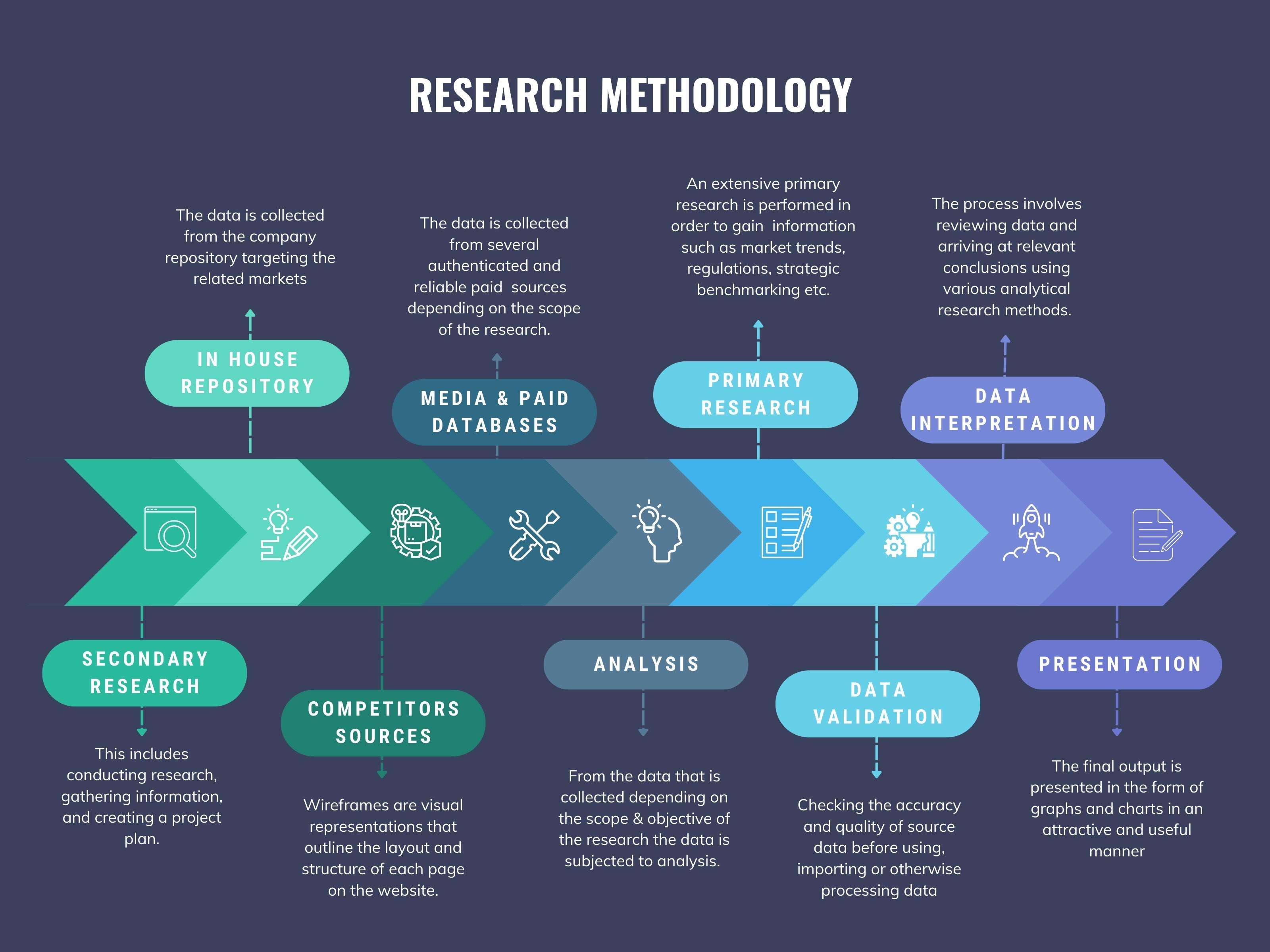
We at ‘Stratistics’ opt for an extensive research approach which involves data mining, data validation, and data analysis. The various research sources include in-house repository, secondary research, competitor’s sources, social media research, client internal data, and primary research.
Our team of analysts prefers the most reliable and authenticated data sources in order to perform the comprehensive literature search. With access to most of the authenticated data bases our team highly considers the best mix of information through various sources to obtain extensive and accurate analysis.
Each report takes an average time of a month and a team of 4 industry analysts. The time may vary depending on the scope and data availability of the desired market report. The various parameters used in the market assessment are standardized in order to enhance the data accuracy.
Data Mining
The data is collected from several authenticated, reliable, paid and unpaid sources and is filtered depending on the scope & objective of the research. Our reports repository acts as an added advantage in this procedure. Data gathering from the raw material suppliers, distributors and the manufacturers is performed on a regular basis, this helps in the comprehensive understanding of the products value chain. Apart from the above mentioned sources the data is also collected from the industry consultants to ensure the objective of the study is in the right direction.
Market trends such as technological advancements, regulatory affairs, market dynamics (Drivers, Restraints, Opportunities and Challenges) are obtained from scientific journals, market related national & international associations and organizations.
Data Analysis
From the data that is collected depending on the scope & objective of the research the data is subjected for the analysis. The critical steps that we follow for the data analysis include:
- Product Lifecycle Analysis
- Competitor analysis
- Risk analysis
- Porters Analysis
- PESTEL Analysis
- SWOT Analysis
The data engineering is performed by the core industry experts considering both the Marketing Mix Modeling and the Demand Forecasting. The marketing mix modeling makes use of multiple-regression techniques to predict the optimal mix of marketing variables. Regression factor is based on a number of variables and how they relate to an outcome such as sales or profits.
Data Validation
The data validation is performed by the exhaustive primary research from the expert interviews. This includes telephonic interviews, focus groups, face to face interviews, and questionnaires to validate our research from all aspects. The industry experts we approach come from the leading firms, involved in the supply chain ranging from the suppliers, distributors to the manufacturers and consumers so as to ensure an unbiased analysis.
We are in touch with more than 15,000 industry experts with the right mix of consultants, CEO's, presidents, vice presidents, managers, experts from both supply side and demand side, executives and so on.
The data validation involves the primary research from the industry experts belonging to:
- Leading Companies
- Suppliers & Distributors
- Manufacturers
- Consumers
- Industry/Strategic Consultants
Apart from the data validation the primary research also helps in performing the fill gap research, i.e. providing solutions for the unmet needs of the research which helps in enhancing the reports quality.
For more details about research methodology, kindly write to us at info@strategymrc.com
Frequently Asked Questions
In case of any queries regarding this report, you can contact the customer service by filing the “Inquiry Before Buy” form available on the right hand side. You may also contact us through email: info@strategymrc.com or phone: +1-301-202-5929
Yes, the samples are available for all the published reports. You can request them by filling the “Request Sample” option available in this page.
Yes, you can request a sample with your specific requirements. All the customized samples will be provided as per the requirement with the real data masked.
All our reports are available in Digital PDF format. In case if you require them in any other formats, such as PPT, Excel etc you can submit a request through “Inquiry Before Buy” form available on the right hand side. You may also contact us through email: info@strategymrc.com or phone: +1-301-202-5929
We offer a free 15% customization with every purchase. This requirement can be fulfilled for both pre and post sale. You may send your customization requirements through email at info@strategymrc.com or call us on +1-301-202-5929.
We have 3 different licensing options available in electronic format.
- Single User Licence: Allows one person, typically the buyer, to have access to the ordered product. The ordered product cannot be distributed to anyone else.
- 2-5 User Licence: Allows the ordered product to be shared among a maximum of 5 people within your organisation.
- Corporate License: Allows the product to be shared among all employees of your organisation regardless of their geographical location.
All our reports are typically be emailed to you as an attachment.
To order any available report you need to register on our website. The payment can be made either through CCAvenue or PayPal payments gateways which accept all international cards.
We extend our support to 6 months post sale. A post sale customization is also provided to cover your unmet needs in the report.
Request Customization
We offer complimentary customization of up to 15% with every purchase. To share your customization requirements, feel free to email us at info@strategymrc.com or call us on +1-301-202-5929. .
Please Note: Customization within the 15% threshold is entirely free of charge. If your request exceeds this limit, we will conduct a feasibility assessment. Following that, a detailed quote and timeline will be provided.
WHY CHOOSE US ?

Assured Quality
Best in class reports with high standard of research integrity

24X7 Research Support
Continuous support to ensure the best customer experience.

Free Customization
Adding more values to your product of interest.

Safe & Secure Access
Providing a secured environment for all online transactions.

Trusted by 600+ Brands
Serving the most reputed brands across the world.