Chemical Supply Chain Risk Management Market
Chemical Supply Chain Risk Management Market Forecasts to 2034 - Global Analysis By Risk Type (Operational Risks, Geopolitical Risks, Environmental Risks, Cybersecurity Risks and Compliance Risks), Solution Type, Deployment Model, End User and By Geography

According to Stratistics MRC, the Global Chemical Supply Chain Risk Management Market is accounted for $38.6 billion in 2026 and is expected to reach $70.4 billion by 2034 growing at a CAGR of 7.8% during the forecast period. Chemical supply chain risk management refers to the systematic process of recognizing, evaluating, and controlling potential disruptions in the flow of chemical goods from sourcing to end delivery. It helps organizations maintain stability amid challenges like raw material scarcity, logistical interruptions, regulatory shifts, and global uncertainties. Firms adopt approaches such as multi-sourcing, advanced analytics, digital tracking systems, and strict compliance measures to build supply chain resilience. It also prioritizes safety, environmental responsibility, and consistent product quality. Through data-driven insights and contingency planning, companies reduce risks, avoid losses, and ensure uninterrupted supply, thereby improving efficiency and strengthening global chemical supply reliability.
According to OECD Supply Chain Resilience and Risk reports, around 80% of global trade by volume is carried through maritime supply chains, making chemical logistics highly exposed to port congestion and shipping disruptions.
Market Dynamics:
Driver:
Globalization and complex supply networks
The expansion of global chemical supply chains and their rising complexity significantly drive demand for risk management solutions. Chemical firms operating internationally depend on multiple suppliers, cross-border logistics, and varied regulatory systems, which increases vulnerability to disruptions. Risks such as shipping delays, exchange rate volatility, trade barriers, and geopolitical tensions become more frequent in such interconnected networks. To manage these challenges, companies implement digital monitoring systems, diversified sourcing strategies, and enhanced coordination tools. As global operations expand, effective risk management becomes essential for ensuring continuity, efficiency, and stability in chemical supply flows.
Restraint:
High implementation cost
The high cost of implementation acts as a significant barrier in the Chemical Supply Chain Risk Management Market. Advanced systems demand substantial spending on software platforms, cloud services, hardware infrastructure, and specialized talent. Many small and mid-sized chemical firms find these investments difficult to manage, restricting adoption rates. In addition, expenses related to system maintenance, upgrades, and employee training further increase the financial burden. Integrating new solutions with legacy supply chain systems also raises costs. Consequently, organizations often continue using traditional approaches, which limits efficiency and visibility. These financial challenges slow digital transformation and hinder widespread deployment of risk management technologies.
Opportunity:
Expansion of digital supply chain solutions
The growing use of digital supply chain technologies offers significant opportunities for the Chemical Supply Chain Risk Management Market. Adoption of cloud-based systems, artificial intelligence, and IoT is improving visibility and control across complex chemical networks. These tools support real-time monitoring, predictive analytics, and faster decision-making, reducing operational risks. Chemical firms are increasingly shifting toward smart digital platforms to enhance efficiency and minimize disruptions. This ongoing digital transformation opens strong growth potential for solution providers delivering advanced risk management systems that improve resilience, transparency, and global supply chain performance.
Threat:
Economic slowdowns and market volatility
Economic instability and fluctuations in global markets represent a major threat to the Chemical Supply Chain Risk Management Market. During downturns, chemical firms often cut back on investments and postpone the adoption of advanced risk management technologies. Reduced industrial activity leads to lower demand for chemical products, disrupting supply chain stability. Additionally, inflationary pressures, currency volatility, and rising operational expenses further weaken financial performance. These challenges limit companies’ ability to invest in digital transformation initiatives. Consequently, market expansion slows, and vendors face declining demand.
Covid-19 Impact:
The COVID-19 outbreak significantly influenced the Chemical Supply Chain Risk Management Market by revealing weaknesses in global supply chain structures. Restrictions on movement, lockdown measures, and temporary shutdowns of manufacturing facilities disrupted the flow of raw materials and chemical production across regions. These disruptions emphasized the importance of robust risk management systems to maintain continuity and resilience. Companies experienced supply shortages, delivery delays, and unpredictable demand patterns, prompting them to adopt technologies like digital monitoring, predictive analytics, and supplier diversification.
The operational risks segment is expected to be the largest during the forecast period
The operational risks segment is expected to account for the largest market share during the forecast period because they influence routine activities across procurement, manufacturing, storage, and distribution functions. These risks typically stem from equipment failures, process inefficiencies, human mistakes, inventory issues, and transportation delays. Chemical companies focus on managing operational disruptions since they directly impact productivity safety and supply continuity. As supply chains grow more complex and interconnected controlling operational risks becomes increasingly important to maintain smooth production flow ensure timely deliveries and support overall efficiency in chemical supply chains.
The pharmaceuticals segment is expected to have the highest CAGR during the forecast period
Over the forecast period, the pharmaceuticals segment is predicted to witness the highest growth rate because of its highly regulated and complex supply chain structure. This segment demands strict temperature management, end-to-end traceability, and adherence to global quality and safety regulations. Rising demand for vaccines, biologics, and advanced therapies has increased supply chain vulnerabilities, strengthening the need for advanced risk management systems. Organizations are increasingly using digital tracking tools, predictive analytics, and real-time monitoring solutions to protect product quality and ensure timely distribution.
Region with largest share:
During the forecast period, the North America region is expected to hold the largest market share owing to its strong industrial base, advanced chemical and pharmaceutical sector, and early adoption of digital technologies. The region hosts leading global companies that rely on sophisticated risk management solutions to maintain supply chain stability and regulatory compliance. High investments in artificial intelligence, cloud computing, and data analytics support market expansion. A well-developed logistics network and emphasis on operational efficiency further enhance adoption. Growing focus on safety, sustainability, and resilience against supply disruptions drives continuous demand.
Region with highest CAGR:
Over the forecast period, the Asia-Pacific region is anticipated to exhibit the highest CAGR, driven by rapid industrial growth, strong expansion of chemical manufacturing, and deeper integration with global trade networks. Key countries including China, India, Japan, and South Korea are experiencing rising chemical output and export activities, boosting demand for advanced risk management solutions. Significant investments in digitalization, smart factories, and logistics infrastructure are supporting market development. Growing awareness of supply chain risks and stricter regulatory compliance is further increasing adoption of advanced systems.
Key players in the market
Some of the key players in Chemical Supply Chain Risk Management Market include SAP SE, IBM Corporation, Resilinc Corporation, Interos Inc., Coupa Software Inc., Oracle Corporation, Riskmethods, Elementum, Everstream Analytics, Sphera Solutions, MetricStream, GEP, JAGGAER, Avetta, Prevalent, Supply Wisdom Inc, Achilles Information and EcoVadis.
Key Developments:
In January 2026, SAP and Syngenta are joining forces with the aim of driving the adoption of Artificial Intelligence to transform the agricultural sector. To this end, the agricultural chemicals firm, which is headquartered in Basel, and the software developer from Walldorf in the German state of Hesse have agreed a multiyear partnership.
In March 2023, Resilinc has partnered with Blue Yonder, a leader in digital supply chain transformations and omni-channel commerce fulfillment. As part of this partnership, organizations utilizing Blue Yonder’s Luminate® Control Tower solution will immediately have access to Resilinc’s early-warning system EventWatch AI, a 24/7 real-time alert system on over 400 disruptive events and sub-event types that can impact an organization’s supply chain ecosystem.
Risk Types Covered:
• Operational Risks
• Geopolitical Risks
• Environmental Risks
• Cybersecurity Risks
• Compliance Risks
Solution Types Covered:
• Risk Assessment & Monitoring Platforms
• Supply Chain Visibility & Traceability Tools
• Predictive Analytics & Scenario Modeling
• Compliance Management Systems
• Contingency Planning & Resilience Frameworks
Deployment Models Covered:
• On-Premise Solutions
• Cloud-Based Solutions
• Hybrid Models
End Users Covered:
• Petrochemicals
• Specialty Chemicals
• Agrochemicals
• Pharmaceuticals
• Industrial Gases
Regions Covered:
• North America
o United States
o Canada
o Mexico
• Europe
o United Kingdom
o Germany
o France
o Italy
o Spain
o Netherlands
o Belgium
o Sweden
o Switzerland
o Poland
o Rest of Europe
• Asia Pacific
o China
o Japan
o India
o South Korea
o Australia
o Indonesia
o Thailand
o Malaysia
o Singapore
o Vietnam
o Rest of Asia Pacific
• South America
o Brazil
o Argentina
o Colombia
o Chile
o Peru
o Rest of South America
• Rest of the World (RoW)
o Middle East
§ Saudi Arabia
§ United Arab Emirates
§ Qatar
§ Israel
§ Rest of Middle East
o Africa
§ South Africa
§ Egypt
§ Morocco
§ Rest of Africa
What our report offers:
- Market share assessments for the regional and country-level segments
- Strategic recommendations for the new entrants
- Covers Market data for the years 2023, 2024, 2025, 2026, 2027, 2028, 2030, 2032 and 2034
- Market Trends (Drivers, Constraints, Opportunities, Threats, Challenges, Investment Opportunities, and recommendations)
- Strategic recommendations in key business segments based on the market estimations
- Competitive landscaping mapping the key common trends
- Company profiling with detailed strategies, financials, and recent developments
- Supply chain trends mapping the latest technological advancements
Free Customization Offerings:
All the customers of this report will be entitled to receive one of the following free customization options:
• Company Profiling
o Comprehensive profiling of additional market players (up to 3)
o SWOT Analysis of key players (up to 3)
• Regional Segmentation
o Market estimations, Forecasts and CAGR of any prominent country as per the client's interest (Note: Depends on feasibility check)
• Competitive Benchmarking
o Benchmarking of key players based on product portfolio, geographical presence, and strategic alliances
Table of Contents
1 Executive Summary
1.1 Market Snapshot and Key Highlights
1.2 Growth Drivers, Challenges, and Opportunities
1.3 Competitive Landscape Overview
1.4 Strategic Insights and Recommendations
2 Research Framework
2.1 Study Objectives and Scope
2.2 Stakeholder Analysis
2.3 Research Assumptions and Limitations
2.4 Research Methodology
2.4.1 Data Collection (Primary and Secondary)
2.4.2 Data Modeling and Estimation Techniques
2.4.3 Data Validation and Triangulation
2.4.4 Analytical and Forecasting Approach
3 Market Dynamics and Trend Analysis
3.1 Market Definition and Structure
3.2 Key Market Drivers
3.3 Market Restraints and Challenges
3.4 Growth Opportunities and Investment Hotspots
3.5 Industry Threats and Risk Assessment
3.6 Technology and Innovation Landscape
3.7 Emerging and High-Growth Markets
3.8 Regulatory and Policy Environment
3.9 Impact of COVID-19 and Recovery Outlook
4 Competitive and Strategic Assessment
4.1 Porter's Five Forces Analysis
4.1.1 Supplier Bargaining Power
4.1.2 Buyer Bargaining Power
4.1.3 Threat of Substitutes
4.1.4 Threat of New Entrants
4.1.5 Competitive Rivalry
4.2 Market Share Analysis of Key Players
4.3 Product Benchmarking and Performance Comparison
5 Global Chemical Supply Chain Risk Management Market, By Risk Type
5.1 Operational Risks
5.2 Geopolitical Risks
5.3 Environmental Risks
5.4 Cybersecurity Risks
5.5 Compliance Risks
6 Global Chemical Supply Chain Risk Management Market, By Solution Type
6.1 Risk Assessment & Monitoring Platforms
6.2 Supply Chain Visibility & Traceability Tools
6.3 Predictive Analytics & Scenario Modeling
6.4 Compliance Management Systems
6.5 Contingency Planning & Resilience Frameworks
7 Global Chemical Supply Chain Risk Management Market, By Deployment Model
7.1 On-Premise Solutions
7.2 Cloud-Based Solutions
7.3 Hybrid Models
8 Global Chemical Supply Chain Risk Management Market, By End User
8.1 Petrochemicals
8.2 Specialty Chemicals
8.3 Agrochemicals
8.4 Pharmaceuticals
8.5 Industrial Gases
9 Global Chemical Supply Chain Risk Management Market, By Geography
9.1 North America
9.1.1 United States
9.1.2 Canada
9.1.3 Mexico
9.2 Europe
9.2.1 United Kingdom
9.2.2 Germany
9.2.3 France
9.2.4 Italy
9.2.5 Spain
9.2.6 Netherlands
9.2.7 Belgium
9.2.8 Sweden
9.2.9 Switzerland
9.2.10 Poland
9.2.11 Rest of Europe
9.3 Asia Pacific
9.3.1 China
9.3.2 Japan
9.3.3 India
9.3.4 South Korea
9.3.5 Australia
9.3.6 Indonesia
9.3.7 Thailand
9.3.8 Malaysia
9.3.9 Singapore
9.3.10 Vietnam
9.3.11 Rest of Asia Pacific
9.4 South America
9.4.1 Brazil
9.4.2 Argentina
9.4.3 Colombia
9.4.4 Chile
9.4.5 Peru
9.4.6 Rest of South America
9.5 Rest of the World (RoW)
9.5.1 Middle East
9.5.1.1 Saudi Arabia
9.5.1.2 United Arab Emirates
9.5.1.3 Qatar
9.5.1.4 Israel
9.5.1.5 Rest of Middle East
9.5.2 Africa
9.5.2.1 South Africa
9.5.2.2 Egypt
9.5.2.3 Morocco
9.5.2.4 Rest of Africa
10 Strategic Market Intelligence
10.1 Industry Value Network and Supply Chain Assessment
10.2 White-Space and Opportunity Mapping
10.3 Product Evolution and Market Life Cycle Analysis
10.4 Channel, Distributor, and Go-to-Market Assessment
11 Industry Developments and Strategic Initiatives
11.1 Mergers and Acquisitions
11.2 Partnerships, Alliances, and Joint Ventures
11.3 New Product Launches and Certifications
11.4 Capacity Expansion and Investments
11.5 Other Strategic Initiatives
12 Company Profiles
12.1 SAP SE
12.2 IBM Corporation
12.3 Resilinc Corporation
12.4 Interos Inc.
12.5 Coupa Software Inc.
12.6 Oracle Corporation
12.7 Riskmethods
12.8 Elementum
12.9 Everstream Analytics
12.10 Sphera Solutions
12.11 MetricStream
12.12 GEP
12.13 JAGGAER
12.14 Avetta
12.15 Prevalent
12.16 Supply Wisdom Inc
12.17 Achilles Information
12.18 EcoVadis
List of Tables
1 Global Chemical Supply Chain Risk Management Market Outlook, By Region (2023-2034) ($MN)
2 Global Chemical Supply Chain Risk Management Market Outlook, By Risk Type (2023-2034) ($MN)
3 Global Chemical Supply Chain Risk Management Market Outlook, By Operational Risks (2023-2034) ($MN)
4 Global Chemical Supply Chain Risk Management Market Outlook, By Geopolitical Risks (2023-2034) ($MN)
5 Global Chemical Supply Chain Risk Management Market Outlook, By Environmental Risks (2023-2034) ($MN)
6 Global Chemical Supply Chain Risk Management Market Outlook, By Cybersecurity Risks (2023-2034) ($MN)
7 Global Chemical Supply Chain Risk Management Market Outlook, By Compliance Risks (2023-2034) ($MN)
8 Global Chemical Supply Chain Risk Management Market Outlook, By Solution Type (2023-2034) ($MN)
9 Global Chemical Supply Chain Risk Management Market Outlook, By Risk Assessment & Monitoring Platforms (2023-2034) ($MN)
10 Global Chemical Supply Chain Risk Management Market Outlook, By Supply Chain Visibility & Traceability Tools (2023-2034) ($MN)
11 Global Chemical Supply Chain Risk Management Market Outlook, By Predictive Analytics & Scenario Modeling (2023-2034) ($MN)
12 Global Chemical Supply Chain Risk Management Market Outlook, By Compliance Management Systems (2023-2034) ($MN)
13 Global Chemical Supply Chain Risk Management Market Outlook, By Contingency Planning & Resilience Frameworks (2023-2034) ($MN)
14 Global Chemical Supply Chain Risk Management Market Outlook, By Deployment Model (2023-2034) ($MN)
15 Global Chemical Supply Chain Risk Management Market Outlook, By On-Premise Solutions (2023-2034) ($MN)
16 Global Chemical Supply Chain Risk Management Market Outlook, By Cloud-Based Solutions (2023-2034) ($MN)
17 Global Chemical Supply Chain Risk Management Market Outlook, By Hybrid Models (2023-2034) ($MN)
18 Global Chemical Supply Chain Risk Management Market Outlook, By End User (2023-2034) ($MN)
19 Global Chemical Supply Chain Risk Management Market Outlook, By Petrochemicals (2023-2034) ($MN)
20 Global Chemical Supply Chain Risk Management Market Outlook, By Specialty Chemicals (2023-2034) ($MN)
21 Global Chemical Supply Chain Risk Management Market Outlook, By Agrochemicals (2023-2034) ($MN)
22 Global Chemical Supply Chain Risk Management Market Outlook, By Pharmaceuticals (2023-2034) ($MN)
23 Global Chemical Supply Chain Risk Management Market Outlook, By Industrial Gases (2023-2034) ($MN)
Note: Tables for North America, Europe, APAC, South America, and Rest of the World (RoW) Regions are also represented in the same manner as above.
List of Figures
RESEARCH METHODOLOGY
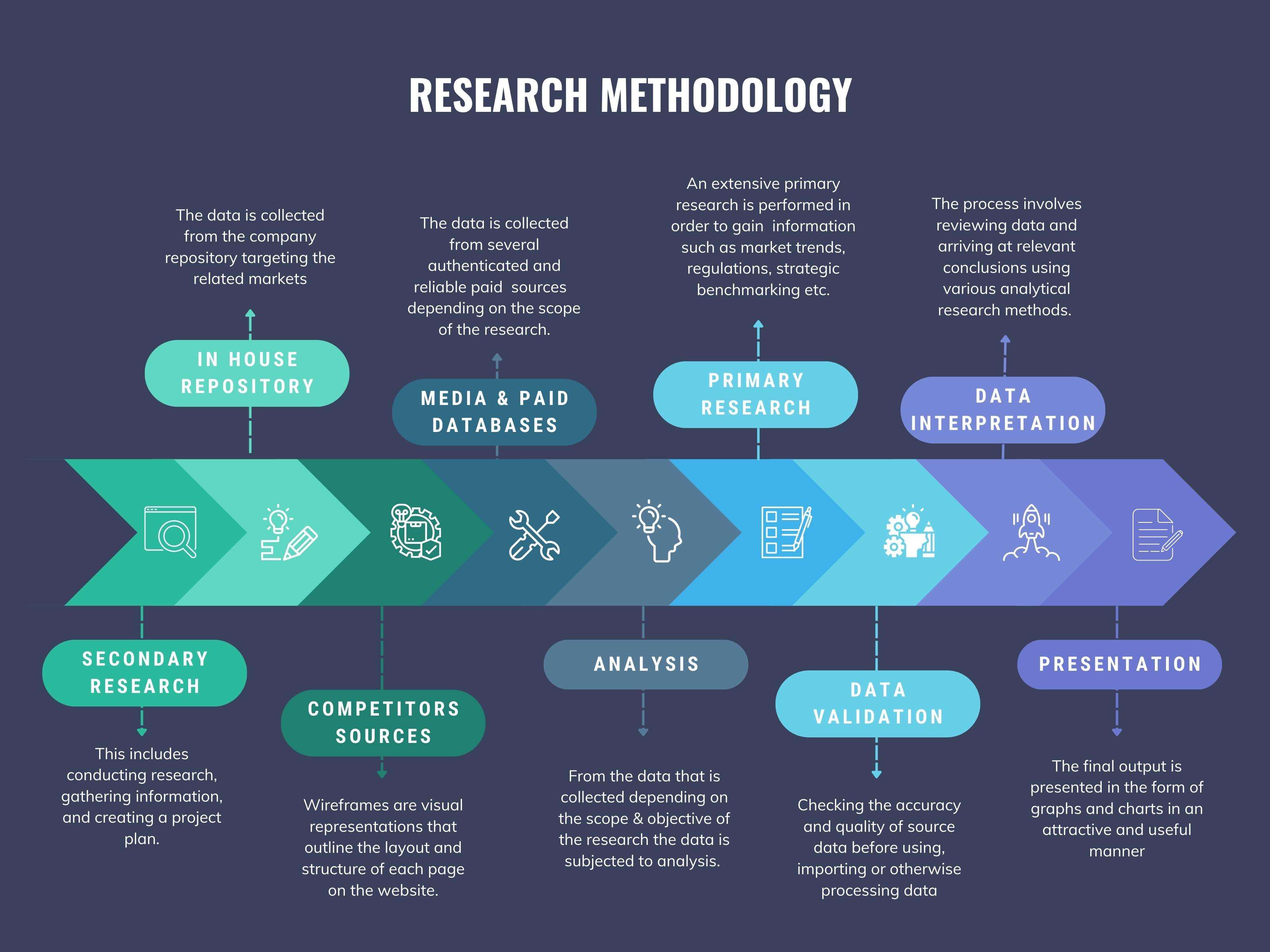
We at ‘Stratistics’ opt for an extensive research approach which involves data mining, data validation, and data analysis. The various research sources include in-house repository, secondary research, competitor’s sources, social media research, client internal data, and primary research.
Our team of analysts prefers the most reliable and authenticated data sources in order to perform the comprehensive literature search. With access to most of the authenticated data bases our team highly considers the best mix of information through various sources to obtain extensive and accurate analysis.
Each report takes an average time of a month and a team of 4 industry analysts. The time may vary depending on the scope and data availability of the desired market report. The various parameters used in the market assessment are standardized in order to enhance the data accuracy.
Data Mining
The data is collected from several authenticated, reliable, paid and unpaid sources and is filtered depending on the scope & objective of the research. Our reports repository acts as an added advantage in this procedure. Data gathering from the raw material suppliers, distributors and the manufacturers is performed on a regular basis, this helps in the comprehensive understanding of the products value chain. Apart from the above mentioned sources the data is also collected from the industry consultants to ensure the objective of the study is in the right direction.
Market trends such as technological advancements, regulatory affairs, market dynamics (Drivers, Restraints, Opportunities and Challenges) are obtained from scientific journals, market related national & international associations and organizations.
Data Analysis
From the data that is collected depending on the scope & objective of the research the data is subjected for the analysis. The critical steps that we follow for the data analysis include:
- Product Lifecycle Analysis
- Competitor analysis
- Risk analysis
- Porters Analysis
- PESTEL Analysis
- SWOT Analysis
The data engineering is performed by the core industry experts considering both the Marketing Mix Modeling and the Demand Forecasting. The marketing mix modeling makes use of multiple-regression techniques to predict the optimal mix of marketing variables. Regression factor is based on a number of variables and how they relate to an outcome such as sales or profits.
Data Validation
The data validation is performed by the exhaustive primary research from the expert interviews. This includes telephonic interviews, focus groups, face to face interviews, and questionnaires to validate our research from all aspects. The industry experts we approach come from the leading firms, involved in the supply chain ranging from the suppliers, distributors to the manufacturers and consumers so as to ensure an unbiased analysis.
We are in touch with more than 15,000 industry experts with the right mix of consultants, CEO's, presidents, vice presidents, managers, experts from both supply side and demand side, executives and so on.
The data validation involves the primary research from the industry experts belonging to:
- Leading Companies
- Suppliers & Distributors
- Manufacturers
- Consumers
- Industry/Strategic Consultants
Apart from the data validation the primary research also helps in performing the fill gap research, i.e. providing solutions for the unmet needs of the research which helps in enhancing the reports quality.
For more details about research methodology, kindly write to us at info@strategymrc.com
Frequently Asked Questions
In case of any queries regarding this report, you can contact the customer service by filing the “Inquiry Before Buy” form available on the right hand side. You may also contact us through email: info@strategymrc.com or phone: +1-301-202-5929
Yes, the samples are available for all the published reports. You can request them by filling the “Request Sample” option available in this page.
Yes, you can request a sample with your specific requirements. All the customized samples will be provided as per the requirement with the real data masked.
All our reports are available in Digital PDF format. In case if you require them in any other formats, such as PPT, Excel etc you can submit a request through “Inquiry Before Buy” form available on the right hand side. You may also contact us through email: info@strategymrc.com or phone: +1-301-202-5929
We offer a free 15% customization with every purchase. This requirement can be fulfilled for both pre and post sale. You may send your customization requirements through email at info@strategymrc.com or call us on +1-301-202-5929.
We have 3 different licensing options available in electronic format.
- Single User Licence: Allows one person, typically the buyer, to have access to the ordered product. The ordered product cannot be distributed to anyone else.
- 2-5 User Licence: Allows the ordered product to be shared among a maximum of 5 people within your organisation.
- Corporate License: Allows the product to be shared among all employees of your organisation regardless of their geographical location.
All our reports are typically be emailed to you as an attachment.
To order any available report you need to register on our website. The payment can be made either through CCAvenue or PayPal payments gateways which accept all international cards.
We extend our support to 6 months post sale. A post sale customization is also provided to cover your unmet needs in the report.
Request Customization
We offer complimentary customization of up to 15% with every purchase. To share your customization requirements, feel free to email us at info@strategymrc.com or call us on +1-301-202-5929. .
Please Note: Customization within the 15% threshold is entirely free of charge. If your request exceeds this limit, we will conduct a feasibility assessment. Following that, a detailed quote and timeline will be provided.
WHY CHOOSE US ?

Assured Quality
Best in class reports with high standard of research integrity

24X7 Research Support
Continuous support to ensure the best customer experience.

Free Customization
Adding more values to your product of interest.

Safe & Secure Access
Providing a secured environment for all online transactions.

Trusted by 600+ Brands
Serving the most reputed brands across the world.