
Crude Tall Oil Market
Crude Tall Oil Market Forecasts to 2034 – Global Analysis By Source (Softwood Kraft Pulping and Mixed Wood Kraft Pulping), Composition, Processing Route, Product Destination, Application, End User and By Geography

Market Dynamics:
Driver:
Biofuel Policy Mandates and Renewable Feedstock Demand
Regulatory frameworks including the EU Renewable Energy Directive III, ReFuelEU Aviation, and FuelEU Maritime are creating structural demand for advanced biofuel feedstocks that do not compete with food production or require dedicated agricultural land. Crude tall oil occupies a unique position in this value chain, as its ISCC-certified derivatives deliver greenhouse gas reductions of up to 99.7 percent compared with fossil fuels, and the feedstock is a residual stream from existing pulp operations. As European refiners scale renewable diesel and sustainable aviation fuel output to meet binding blending targets, crude tall oil demand is rising, which in turn incentivizes pulp mills and biorefinery operators to maximize recovery and invest in downstream fractionation capacity, thereby supporting volume growth across the biofuel feedstock segment.
Restraint:
Feedstock Supply Concentration and Pulp Mill Dependency
Crude tall oil supply is structurally constrained by kraft pulp production volumes and the geographic concentration of softwood pulping operations, which limits the ability of the market to expand independently of pulp industry cycles. Fluctuating costs of wood logs and pine trees used for pulp extraction act as a major restraining factor, and the availability of alternative substitutes at lower costs poses challenges for price-sensitive applications. Additionally, stricter forestry regulations on logging in key producing regions constrain crude tall oil availability, while the long-term downward trend in rosin demand has reshaped the economics of integrated tall oil refineries, thereby exposing the market to supply volatility and limiting volume expansion potential during periods of pulp mill downtime.
Opportunity:
Downstream Integration into High-Purity Derivatives
The trend toward downstream integration and high-value derivative production creates a substantial opportunity for crude tall oil processors to capture margin beyond commodity fractionation. Pulp companies are strengthening downstream integration and upgrading fractionation technology to produce higher-purity derivatives, while sustainability certification and biorefinery models are becoming key competitive differentiators. Producers capable of delivering purified tall oil fatty acids, specialty rosins, and bio-based sterols can access premium pricing in adhesives, coatings, and pharmaceutical applications. As brand owners and formulators seek renewable alternatives to petroleum-derived feedstocks, suppliers with integrated refining capabilities and certified low-carbon footprints can capture long-term supply agreements, thereby establishing a defensible position in the high-growth specialty derivatives segment.
Threat:
Competition from Alternative Bio-Based Feedstocks
Crude tall oil faces intensifying competition from soy-based, palm-based, and used cooking oil feedstocks, which benefit from larger agricultural production scale, broader geographic availability, and established biofuel supply chains. In the biofuel segment, used cooking oil and animal fats compete directly for renewable diesel and SAF feedstock allocation, while in oleochemical applications soy and palm fatty acids offer comparable functionality at competitive pricing. Additionally, the supply concentration of crude tall oil in North America and Europe means that Asian formulators face higher logistics costs and limited availability, which may encourage substitution with regionally sourced alternatives. If crude tall oil producers cannot maintain cost-competitive pricing and reliable supply during periods of tight feedstock availability, downstream customers may qualify alternative feedstocks, thereby eroding market share in price-sensitive segments.
Covid-19 Impact:
The pandemic initially disrupted crude tall oil supply chains through reduced pulp production, logistics constraints, and deferral of biofuel investment decisions, while demand for adhesives, coatings, and oilfield chemicals weakened in parallel with industrial activity. As recovery progressed, renewable fuel policy momentum strengthened, and European biorefinery investment resumed, particularly in Sweden and Finland. Post-pandemic, the structural impact has been a sharper focus on supply chain resilience and feedstock traceability, which has prompted pulp mills and biorefinery operators to prioritize integrated recovery systems and certified sustainable sourcing in order to meet the documentation requirements of renewable fuel regulators and brand-owner sustainability commitments.
The tall oil fatty acids segment is expected to be the largest during the forecast period
The tall oil fatty acids segment is expected to account for the largest market share during the forecast period, due to its broad application base across alkyd resins, dimer acids, adhesives, metalworking fluids, and oilfield chemicals, where oleic and linoleic acid content provides essential reactivity and fluidity. Distilled tall oil fatty acids serve as the standard commercial grade for volume-driven coating and adhesive programs, and their compatibility with existing formulation processes reduces adoption friction for industrial chemical manufacturers. As paint and coating producers seek bio-based alternatives to petroleum-derived fatty acids and as adhesive formulators prioritize renewable content, tall oil fatty acids remain the default specification for downstream derivative production, thereby sustaining their leading revenue position throughout the forecast horizon.
The biofuel feedstock segment is expected to have the highest CAGR during the forecast period
Over the forecast period, the biofuel feedstock segment is predicted to witness the highest growth rate, driven by binding renewable fuel mandates in Europe and the strategic position of crude tall oil as a food-competing-free advanced feedstock for HVO and SAF production. The acquisition of SunPine by VAROPreem, combining a 400,000-tonne annual biorefinery with integrated renewable fuels refining and trading capabilities, exemplifies the scale of investment flowing into this segment. As RED III targets escalate through 2030 and as ReFuelEU Aviation imposes escalating SAF blending obligations, demand for crude tall oil as a biofuel precursor is rising, which in turn incentivizes pulp mills to maximize recovery and supports premium pricing for ISCC-certified volumes, thereby outpacing traditional chemical applications in growth terms.
Region with largest share:
During the forecast period, the Europe region is expected to hold the largest market share, due to the region’s mature kraft pulping industry in Sweden and Finland, its position as the global leader in crude tall oil fractionation and biorefinery capacity, and its policy-driven demand for advanced biofuels. Europe accounts for approximately 45 percent of global crude tall oil market share, supported by producers including Forchem Oyj, UPM-Kymmene Corporation, Stora Enso Oyj, and SunPine AB. The region benefits from integrated pulp and paper operations that generate crude tall oil as a byproduct, and from renewable fuel mandates that create stable offtake for tall oil-derived biofuel feedstocks, thereby sustaining Europe’s dominant volume position throughout the forecast period.
Region with highest CAGR:
Over the forecast period, the Asia Pacific region is anticipated to exhibit the highest CAGR, due to expanding chemical manufacturing capacity, growing demand for bio-based oleochemicals, and increasing imports of crude tall oil and its derivatives to serve coating, adhesive, and industrial chemical production. China’s specialty chemicals sector and India’s infrastructure-driven coatings demand provide volume anchors, while Japan and South Korea maintain technology-intensive positions in high-purity derivatives and specialty applications. As regional formulators seek renewable alternatives to petroleum-derived feedstocks and as pulp production expands in Southeast Asia, crude tall oil demand is positioned for above-average growth, thereby supporting Asia Pacific’s emergence as a significant incremental demand center across the forecast horizon.
Key players in the market
Some of the key players in Crude Tall Oil Market include Forchem Oyj, Ingevity Corporation, Kraton Corporation, UPM-Kymmene Corporation, Stora Enso Oyj, SunPine AB, Neste Oyj, Pine Chemical Group, Harima Chemicals Group, Inc., Eastman Chemical Company, Georgia-Pacific LLC, International Paper Company, West Fraser Timber Co. Ltd., Sappi Limited, Nippon Paper Industries Co., Ltd., Suzano S.A., Metsa Group, and Segezha Group.
Key Developments:
In November 2026, VAROPreem Sunpine AB continued integration of its Piteå biorefinery into VAROPreem’s renewable fuels value chain following the July 2026 acquisition, processing approximately 400,000 tonnes of raw tall oil annually for HVO and SAF feedstock production with ISCC-certified greenhouse gas reductions up to 99.7 percent.
In October 2026, Forchem Oyj advanced its crude tall oil distillation operations under new CEO Henrik Lindegrén, who assumed leadership on January 1, 2026, while continuing trials of liquefied biogas for energy production at its Rauma, Finland refinery to reduce operational carbon intensity.
In September 2026, Sveaskog completed the sale of its stake in SunPine AB to VAROPreem Sverige AB, concluding a joint venture structure that had previously included Södra Skogsägarna and Lawter Europe BV and transferring full ownership of the world’s largest crude tall oil biorefinery to VAROPreem .
Sources Covered:
• Softwood Kraft Pulping
• Mixed Wood Kraft Pulping
Compositions Covered:
• Fatty Acids
• Rosin Acids
• Unsaponifiables
Processing Routes Covered:
• Fractional Distillation
• Chemical Refining
• Direct Industrial Use
Product Destinations Covered:
• Tall Oil Fatty Acids
• Tall Oil Rosin
• Distilled Tall Oil
• Tall Oil Pitch
Applications Covered:
• Biofuel Feedstock
• Resin and Adhesive Intermediates
• Industrial Fatty Acid Production
• Oilfield Chemical Feedstock
• Other Applications
End Users Covered:
• Biorefinery Operators
• Pine Chemical Processors
• Resin Manufacturers
• Industrial Chemical Producers
• Other End Users
What our report offers:
- Market share assessments for the regional and country-level segments
- Strategic recommendations for the new entrants
- Covers Market data for the years 2023, 2024, 2025, 2026, 2027, 2028, 2030, 2032 and 2034
- Market Trends (Drivers, Constraints, Opportunities, Threats, Challenges, Investment Opportunities, and recommendations)
- Strategic recommendations in key business segments based on the market estimations
- Competitive landscaping mapping the key common trends
- Company profiling with detailed strategies, financials, and recent developments
- Supply chain trends mapping the latest technological advancements
Complimentary Customization Options:
- Every purchase of this report includes ONE complimentary customization option, allowing clients to tailor the research to their specific business requirements at no additional cost..
1. Company Profiling & Competitive Intelligence
• Detailed profiling of up to 3 additional market players
• SWOT analysis of up to 3 key market participants
• Analysis of competitive positioning, product portfolios and strategic developments
2. Country-Level Market Analysis
• Market size estimates, forecasts and CAGR analysis for one additional country of the client's choice
• Country-specific market trends, growth drivers, opportunities and challenges
• Regional market insights tailored to the client's geographical interests
• Subject to data availability and feasibility assessment
3. Competitive Benchmarking
• Comparative benchmarking of up to 5 key market players
• Evaluation based on product portfolios, geographical presence, technological capabilities and strategic partnerships
• Competitive positioning matrix highlighting key strengths and market differentiation
4. Additional Market Segmentation
• Market size estimates and forecasts for one additional subsegment relevant to the client's requirements
• Analysis of growth opportunities, demand patterns and emerging trends within the selected subsegment
• Subject to data availability and feasibility assessment
5. Market Trends & Strategic Insights
• Analysis of up to 3 emerging market trends relevant to the client's business interests
• Assessment of key growth opportunities, technological developments and potential market disruptions
• Strategic insights to support market entry, expansion or investment decisions
Customization Terms
• Clients may select one of the above complimentary customization options per report purchase.
• Complimentary customization is subject to data availability, research feasibility and scope confirmation.
• Requests exceeding the complimentary scope may be accommodated through paid customization.
• Delivery timelines for customized content will be confirmed upon assessment of the requirements.
Need something more specific?
- Our research team can also provide tailored research solutions to address your unique business requirements. Contact us to discuss additional customization opportunities
Table of Contents
1 Executive Summary1.1 Market Snapshot and Key Highlights
1.2 Growth Drivers, Challenges, and Opportunities
1.3 Competitive Landscape Overview
1.4 Strategic Insights and Recommendations
2 Research Framework
2.1 Study Objectives and Scope
2.2 Stakeholder Analysis
2.3 Research Assumptions and Limitations
2.4 Research Methodology
2.4.1 Data Collection (Primary and Secondary)
2.4.2 Data Modeling and Estimation Techniques
2.4.3 Data Validation and Triangulation
2.4.4 Analytical and Forecasting Approach
3 Market Dynamics and Trend Analysis
3.1 Market Definition and Structure
3.2 Key Market Drivers
3.3 Market Restraints and Challenges
3.4 Growth Opportunities and Investment Hotspots
3.5 Industry Threats and Risk Assessment
3.6 Technology and Innovation Landscape
3.7 Emerging and High-Growth Markets
3.8 Regulatory and Policy Environment
3.9 Impact of COVID-19 and Recovery Outlook
4 Competitive and Strategic Assessment
4.1 Porter's Five Forces Analysis
4.1.1 Supplier Bargaining Power
4.1.2 Buyer Bargaining Power
4.1.3 Threat of Substitutes
4.1.4 Threat of New Entrants
4.1.5 Competitive Rivalry
4.2 Market Share Analysis of Key Players
4.3 Product Benchmarking and Performance Comparison
5 Global Crude Tall Oil Market, By Source
5.1 Softwood Kraft Pulping
5.2 Mixed Wood Kraft Pulping
6 Global Crude Tall Oil Market, By Composition
6.1 Fatty Acids
6.2 Rosin Acids
6.3 Unsaponifiables
7 Global Crude Tall Oil Market, By Processing Route
7.1 Fractional Distillation
7.2 Chemical Refining
7.3 Direct Industrial Use
8 Global Crude Tall Oil Market, By Product Destination
8.1 Tall Oil Fatty Acids
8.2 Tall Oil Rosin
8.3 Distilled Tall Oil
8.4 Tall Oil Pitch
9 Global Crude Tall Oil Market, By Application
9.1 Biofuel Feedstock
9.2 Resin and Adhesive Intermediates
9.3 Industrial Fatty Acid Production
9.4 Oilfield Chemical Feedstock
9.5 Other Applications
10 Global Crude Tall Oil Market, By End User
10.1 Biorefinery Operators
10.2 Pine Chemical Processors
10.3 Resin Manufacturers
10.4 Industrial Chemical Producers
10.5 Other End Users
11 Global Crude Tall Oil Market, By Geography
11.1 North America
11.1.1 United States
11.1.2 Canada
11.1.3 Mexico
11.2 Europe
11.2.1 United Kingdom
11.2.2 Germany
11.2.3 France
11.2.4 Italy
11.2.5 Spain
11.2.6 Netherlands
11.2.7 Belgium
11.2.8 Sweden
11.2.9 Switzerland
11.2.10 Poland
11.2.11 Rest of Europe
11.3 Asia Pacific
11.3.1 China
11.3.2 Japan
11.3.3 India
11.3.4 South Korea
11.3.5 Australia
11.3.6 Indonesia
11.3.7 Thailand
11.3.8 Malaysia
11.3.9 Singapore
11.3.10 Vietnam
11.3.11 Rest of Asia Pacific
11.4 South America
11.4.1 Brazil
11.4.2 Argentina
11.4.3 Colombia
11.4.4 Chile
11.4.5 Peru
11.4.6 Rest of South America
11.5 Rest of the World (RoW)
11.5.1 Middle East
11.5.1.1 Saudi Arabia
11.5.1.2 United Arab Emirates
11.5.1.3 Qatar
11.5.1.4 Israel
11.5.1.5 Rest of Middle East
11.5.2 Africa
11.5.2.1 South Africa
11.5.2.2 Egypt
11.5.2.3 Morocco
11.5.2.4 Rest of Africa
12 Strategic Market Intelligence
12.1 Industry Value Network and Supply Chain Assessment
12.2 White-Space and Opportunity Mapping
12.3 Product Evolution and Market Life Cycle Analysis
12.4 Channel, Distributor, and Go-to-Market Assessment
13 Industry Developments and Strategic Initiatives
13.1 Mergers and Acquisitions
13.2 Partnerships, Alliances, and Joint Ventures
13.3 New Product Launches and Certifications
13.4 Capacity Expansion and Investments
13.5 Other Strategic Initiatives
14 Company Profiles
14.1 Forchem Oyj
14.2 Ingevity Corporation
14.3 Kraton Corporation
14.4 UPM-Kymmene Corporation
14.5 Stora Enso Oyj
14.6 SunPine AB
14.7 Neste Oyj
14.8 Pine Chemical Group
14.9 Harima Chemicals Group, Inc.
14.10 Eastman Chemical Company
14.11 Georgia-Pacific LLC
14.12 International Paper Company
14.13 West Fraser Timber Co. Ltd.
14.14 Sappi Limited
14.15 Nippon Paper Industries Co., Ltd.
14.16 Suzano S.A.
14.17 Metsa Group
14.18 Segezha Group
List of Tables
1 Global Crude Tall Oil Market Outlook, By Region (2023-2034) ($MN)
2 Global Crude Tall Oil Market Outlook, By Source (2023-2034) ($MN)
3 Global Crude Tall Oil Market Outlook, By Softwood Kraft Pulping (2023-2034) ($MN)
4 Global Crude Tall Oil Market Outlook, By Mixed Wood Kraft Pulping (2023-2034) ($MN)
5 Global Crude Tall Oil Market Outlook, By Composition (2023-2034) ($MN)
6 Global Crude Tall Oil Market Outlook, By Fatty Acids (2023-2034) ($MN)
7 Global Crude Tall Oil Market Outlook, By Rosin Acids (2023-2034) ($MN)
8 Global Crude Tall Oil Market Outlook, By Unsaponifiables (2023-2034) ($MN)
9 Global Crude Tall Oil Market Outlook, By Processing Route (2023-2034) ($MN)
10 Global Crude Tall Oil Market Outlook, By Fractional Distillation (2023-2034) ($MN)
11 Global Crude Tall Oil Market Outlook, By Chemical Refining (2023-2034) ($MN)
12 Global Crude Tall Oil Market Outlook, By Direct Industrial Use (2023-2034) ($MN)
13 Global Crude Tall Oil Market Outlook, By Product Destination (2023-2034) ($MN)
14 Global Crude Tall Oil Market Outlook, By Tall Oil Fatty Acids (2023-2034) ($MN)
15 Global Crude Tall Oil Market Outlook, By Tall Oil Rosin (2023-2034) ($MN)
16 Global Crude Tall Oil Market Outlook, By Distilled Tall Oil (2023-2034) ($MN)
17 Global Crude Tall Oil Market Outlook, By Tall Oil Pitch (2023-2034) ($MN)
18 Global Crude Tall Oil Market Outlook, By Application (2023-2034) ($MN)
19 Global Crude Tall Oil Market Outlook, By Biofuel Feedstock (2023-2034) ($MN)
20 Global Crude Tall Oil Market Outlook, By Resin and Adhesive Intermediates (2023-2034) ($MN)
21 Global Crude Tall Oil Market Outlook, By Industrial Fatty Acid Production (2023-2034) ($MN)
22 Global Crude Tall Oil Market Outlook, By Oilfield Chemical Feedstock (2023-2034) ($MN)
23 Global Crude Tall Oil Market Outlook, By Other Applications (2023-2034) ($MN)
24 Global Crude Tall Oil Market Outlook, By End User (2023-2034) ($MN)
25 Global Crude Tall Oil Market Outlook, By Biorefinery Operators (2023-2034) ($MN)
26 Global Crude Tall Oil Market Outlook, By Pine Chemical Processors (2023-2034) ($MN)
27 Global Crude Tall Oil Market Outlook, By Resin Manufacturers (2023-2034) ($MN)
28 Global Crude Tall Oil Market Outlook, By Industrial Chemical Producers (2023-2034) ($MN)
29 Global Crude Tall Oil Market Outlook, By Other End Users (2023-2034) ($MN)
Note: Tables for North America, Europe, APAC, South America, and Rest of the World (RoW) Regions are also represented in the same manner as above.
List of Figures
RESEARCH METHODOLOGY
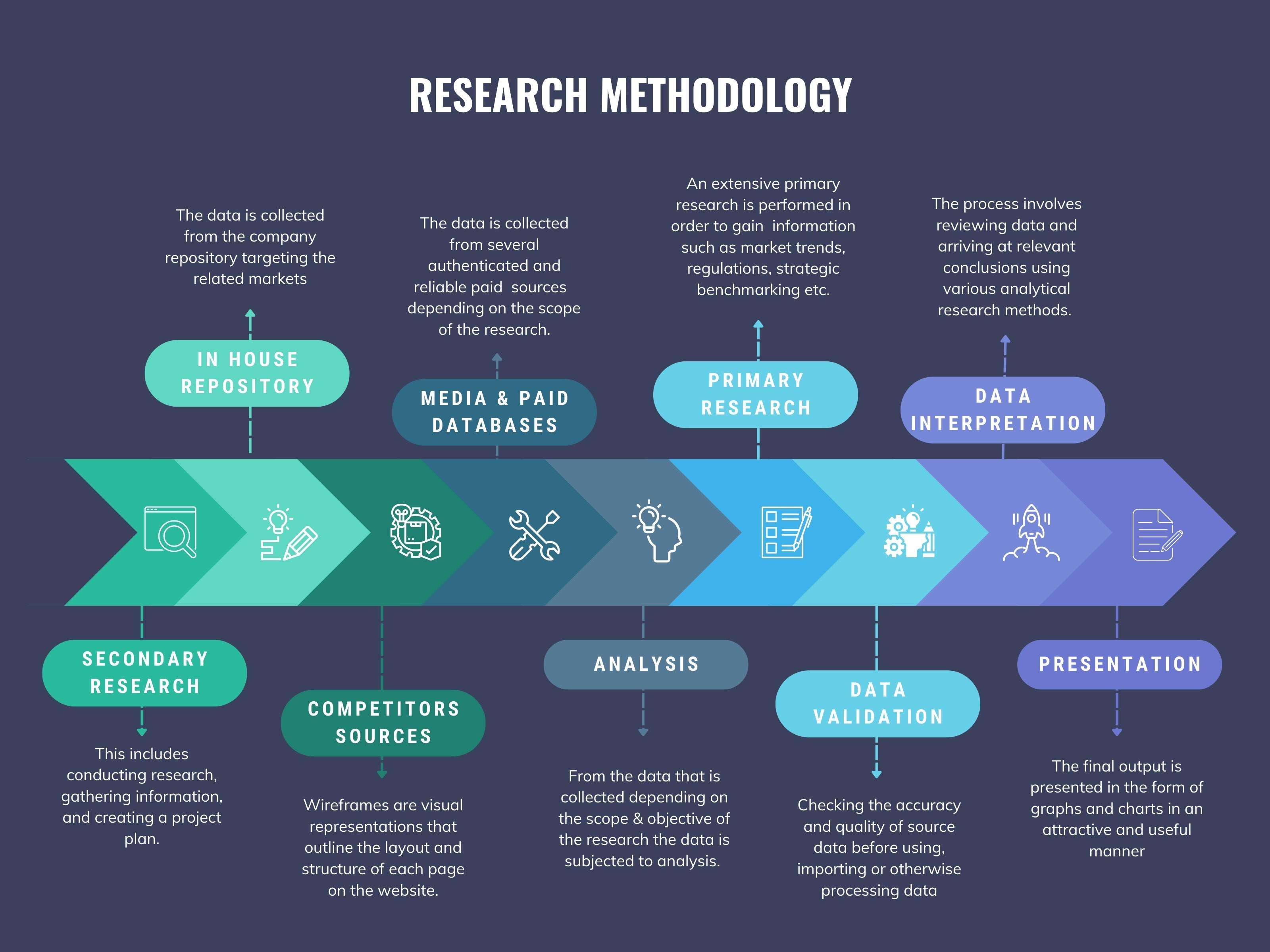
We at ‘Stratistics’ opt for an extensive research approach which involves data mining, data validation, and data analysis. The various research sources include in-house repository, secondary research, competitor’s sources, social media research, client internal data, and primary research.
Our team of analysts prefers the most reliable and authenticated data sources in order to perform the comprehensive literature search. With access to most of the authenticated data bases our team highly considers the best mix of information through various sources to obtain extensive and accurate analysis.
Each report takes an average time of a month and a team of 4 industry analysts. The time may vary depending on the scope and data availability of the desired market report. The various parameters used in the market assessment are standardized in order to enhance the data accuracy.
Data Mining
The data is collected from several authenticated, reliable, paid and unpaid sources and is filtered depending on the scope & objective of the research. Our reports repository acts as an added advantage in this procedure. Data gathering from the raw material suppliers, distributors and the manufacturers is performed on a regular basis, this helps in the comprehensive understanding of the products value chain. Apart from the above mentioned sources the data is also collected from the industry consultants to ensure the objective of the study is in the right direction.
Market trends such as technological advancements, regulatory affairs, market dynamics (Drivers, Restraints, Opportunities and Challenges) are obtained from scientific journals, market related national & international associations and organizations.
Data Analysis
From the data that is collected depending on the scope & objective of the research the data is subjected for the analysis. The critical steps that we follow for the data analysis include:
- Product Lifecycle Analysis
- Competitor analysis
- Risk analysis
- Porters Analysis
- PESTEL Analysis
- SWOT Analysis
The data engineering is performed by the core industry experts considering both the Marketing Mix Modeling and the Demand Forecasting. The marketing mix modeling makes use of multiple-regression techniques to predict the optimal mix of marketing variables. Regression factor is based on a number of variables and how they relate to an outcome such as sales or profits.
Data Validation
The data validation is performed by the exhaustive primary research from the expert interviews. This includes telephonic interviews, focus groups, face to face interviews, and questionnaires to validate our research from all aspects. The industry experts we approach come from the leading firms, involved in the supply chain ranging from the suppliers, distributors to the manufacturers and consumers so as to ensure an unbiased analysis.
We are in touch with more than 15,000 industry experts with the right mix of consultants, CEO's, presidents, vice presidents, managers, experts from both supply side and demand side, executives and so on.
The data validation involves the primary research from the industry experts belonging to:
- Leading Companies
- Suppliers & Distributors
- Manufacturers
- Consumers
- Industry/Strategic Consultants
Apart from the data validation the primary research also helps in performing the fill gap research, i.e. providing solutions for the unmet needs of the research which helps in enhancing the reports quality.
For more details about research methodology, kindly write to us at info@strategymrc.com
Frequently Asked Questions
In case of any queries regarding this report, you can contact the customer service by filing the “Inquiry Before Buy” form available on the right hand side. You may also contact us through email: info@strategymrc.com or phone: +1-301-202-5929
Yes, the samples are available for all the published reports. You can request them by filling the “Request Sample” option available in this page.
Yes, you can request a sample with your specific requirements. All the customized samples will be provided as per the requirement with the real data masked.
All our reports are available in Digital PDF format. In case if you require them in any other formats, such as PPT, Excel etc you can submit a request through “Inquiry Before Buy” form available on the right hand side. You may also contact us through email: info@strategymrc.com or phone: +1-301-202-5929
We offer a free 15% customization with every purchase. This requirement can be fulfilled for both pre and post sale. You may send your customization requirements through email at info@strategymrc.com or call us on +1-301-202-5929.
We have 3 different licensing options available in electronic format.
- Single User Licence: Allows one person, typically the buyer, to have access to the ordered product. The ordered product cannot be distributed to anyone else.
- 2-5 User Licence: Allows the ordered product to be shared among a maximum of 5 people within your organisation.
- Corporate License: Allows the product to be shared among all employees of your organisation regardless of their geographical location.
All our reports are typically be emailed to you as an attachment.
To order any available report you need to register on our website. The payment can be made either through CCAvenue or PayPal payments gateways which accept all international cards.
We extend our support to 6 months post sale. A post sale customization is also provided to cover your unmet needs in the report.
Request Customization
We offer complimentary customization of up to 15% with every purchase. To share your customization requirements, feel free to email us at info@strategymrc.com or call us on +1-301-202-5929. .
Please Note: Customization within the 15% threshold is entirely free of charge. If your request exceeds this limit, we will conduct a feasibility assessment. Following that, a detailed quote and timeline will be provided.
WHY CHOOSE US ?

Assured Quality
Best in class reports with high standard of research integrity

24X7 Research Support
Continuous support to ensure the best customer experience.

Free Customization
Adding more values to your product of interest.

Safe & Secure Access
Providing a secured environment for all online transactions.

Trusted by 600+ Brands
Serving the most reputed brands across the world.