
Egg Alternatives Market
Egg Alternatives Market Forecasts to 2034 - Global Analysis By Type (Whole Egg Alternatives, Egg White Alternatives, and Egg Yolk Alternatives), Form (Powder, Liquid, and Other Forms), Source, Ingredient, Functionality, Distribution Channel, Application, End Use, and By Geography

According to Stratistics MRC, the Global Egg Alternatives Market is accounted for $2.7 billion in 2026 and is expected to reach $5.2 billion by 2034 growing at a CAGR of 8.5% during the forecast period. Egg alternatives are plant-based or fermentation-derived products that replicate the functional properties of conventional eggs, including binding, emulsification, leavening, and thickening, without using animal-derived ingredients. These solutions cater to vegan consumers, individuals with egg allergies, and health-conscious buyers seeking cholesterol-free options. The market encompasses a diverse range of ingredients sourced from soy, legumes, starches, seeds, and emerging algal and yeast platforms, serving applications in bakery, confectionery, sauces, dressings, and processed foods globally.
Market Dynamics:
Driver:
Rising vegan population and plant-based food trends
The global shift toward plant-based diets is accelerating demand for egg alternatives as consumers actively eliminate animal products from their lifestyles. Ethical concerns about industrial egg production, including hen welfare and environmental impact, motivate consumers to seek credible replacements that do not compromise on culinary performance. Mainstream food service chains and quick-service restaurants are introducing vegan breakfast sandwiches, baked goods, and mayonnaise options formulated with egg replacers, normalizing these products for casual consumers. Social media influencers and documentary films highlighting the environmental footprint of egg production further amplify awareness, creating sustained momentum for egg alternative adoption across retail and food service channels.
Restraint:
Functional limitations compared to conventional eggs
Technical challenges in perfectly replicating the full functionality of eggs continue to restrain widespread adoption across certain applications. While modern egg alternatives perform well in binding and thickening roles, recreating the unique foaming properties required for meringues, soufflés, and angel food cakes remains difficult. Temperature sensitivity during high-heat applications can cause texture or color variations that food manufacturers find unacceptable for premium products. Professional bakers and chefs accustomed to egg-based formulations may resist reformulating established recipes, particularly when alternative ingredients produce inconsistent results across different batches or storage conditions, limiting market penetration in traditional bakery segments.
Opportunity:
Expanding applications in commercial food manufacturing
Food manufacturers are increasingly incorporating egg alternatives into mainstream product lines as production costs decrease and formulation expertise improves. Industrial bakeries producing cakes, cookies, and pastries are adopting egg replacers to reduce ingredient costs, eliminate supply chain volatility associated with egg prices, and appeal to flexitarian consumers. Pasta producers, sauce manufacturers, and dressing companies are exploring egg-free formulations that maintain shelf stability without refrigeration requirements. Contract manufacturing partnerships between ingredient suppliers and large food corporations accelerate product development cycles, enabling faster commercialization of egg-free versions of established brands, dramatically expanding addressable market size beyond vegan specialty channels.
Threat:
Stringent labeling and allergen regulations
Complex regulatory landscapes across different jurisdictions pose operational challenges for egg alternative manufacturers seeking global market presence. While egg alternatives serve allergy-friendly markets, some products contain soy, gluten, or other major allergens requiring prominent labeling disclosures that may confuse consumers seeking completely allergen-free options. Regulatory definitions of terms like "egg-free," "vegan," and "plant-based" vary by country, creating compliance burdens for multinational distribution. Emerging legislation around novel ingredients, particularly fermentation-derived egg proteins, requires extensive safety documentation before market approval, delaying product launches and increasing development costs for innovative companies compared to incumbents using established ingredients.
Covid-19 Impact:
The COVID-19 pandemic dramatically accelerated egg alternative market growth as home baking surged globally and consumers increasingly prepared meals from scratch. Supply chain disruptions affecting liquid egg products and temporary shortages at retail grocery stores prompted consumers to experiment with plant-based substitutes for the first time. Health concerns about zoonotic diseases associated with intensive animal agriculture drove lasting interest in alternative protein sources, with many pandemic-era converts maintaining egg alternative usage post-lockdown. The crisis also highlighted egg price volatility, encouraging food service operators to adopt shelf-stable egg replacements as business continuity measures, permanently raising baseline demand across commercial channels.
The Soy-Based segment is expected to be the largest during the forecast period
The Soy-Based segment is expected to account for the largest market share during the forecast period, benefiting from soy's well-established functional profile and cost-effective production at industrial scale. Soy protein isolates and lecithins deliver reliable binding and emulsification properties, making them the preferred choice for commercial bakery, meat alternatives, and dressing applications. Extensive research into soy functionality over decades provides manufacturers with predictable performance parameters, reducing formulation risk compared to newer ingredient categories. Widespread consumer familiarity with soy-based tofu and tempeh creates acceptance across retail channels, while established supply chain infrastructure ensures consistent quality and pricing, cementing soy's dominant market position throughout the forecast timeline.
The Multi-functional segment is expected to have the highest CAGR during the forecast period
Over the forecast period, the Multi-functional segment is predicted to witness the highest growth rate, as food manufacturers increasingly seek single solutions that replace multiple egg properties simultaneously. These advanced formulations combine starches, proteins, and hydrocolloids to perform binding, emulsification, leavening, and thickening within a single product, dramatically simplifying recipe reformulation. Ready-to-use liquid egg replacers designed for scrambled egg applications, as well as baking powders that provide both structure and moisture retention, are gaining traction across retail and food service channels. As formulation science advances and companies patent proprietary blends, multi-functional products command premium pricing while reducing kitchen inventory requirements, accelerating commercial adoption across diverse culinary applications.
Region with largest share:
During the forecast period, the North America region is expected to hold the largest market share, driven by high vegan population density, strong retail infrastructure for plant-based products, and early adoption by major food manufacturers. The United States leads in egg alternative product launches, with extensive distribution across conventional grocery chains, not just specialty natural food stores. Significant venture capital investment in alternative protein startups has established robust manufacturing capabilities and consumer awareness campaigns. Restaurant chains including fast-food and fast-casual operators have incorporated egg-free breakfast and bakery items into core menus, normalizing these products for mainstream consumers. This mature ecosystem ensures North America maintains market leadership throughout the forecast period.
Region with highest CAGR:
Over the forecast period, the Asia Pacific region is anticipated to exhibit the highest CAGR, fueled by rising disposable incomes, urbanization, and increasing awareness of plant-based nutrition across populous nations. Traditional Asian cuisines already incorporate tofu and legume-based products, providing cultural familiarity that accelerates acceptance of modern egg alternatives. Countries including China, India, and Thailand are witnessing expansion of Western-style bakeries and processed food industries seeking cost-stable ingredients that avoid egg price volatility. Government initiatives promoting sustainable protein sources to address food security concerns further support market development. As international egg alternative brands establish local manufacturing partnerships and domestic startups emerge, Asia Pacific emerges as the fastest-growing regional market.
Key players in the market
Some of the key players in Egg Alternatives Market include Eat Just Inc., Follow Your Heart, The Every Company, Ingredion Incorporated, Cargill Incorporated, Archer Daniels Midland Company, PURIS Holdings LLC, Bob's Red Mill Natural Foods Inc., Orgran Foods Pty Ltd, Ener G Foods Inc., Mantiqueira Brasil, Zero Egg Ltd, Nestle SA, Unilever PLC and Danone SA.
Key Developments:
In April 2026, Nestle's Garden Gourmet brand expanded the distribution of its "vEGGie" liquid egg alternative across European retail markets (notably through Billa in Austria). The product, based on soy protein and omega-3s, is being positioned as a "Nutri-Score A" alternative capable of being scrambled or used in frittatas.
In January 2026, Mantiqueira Brasil, South America's largest egg producer, officially launched its partnership with Bunge to source low-carbon, traceable soybean meal. While primarily an egg producer, this move strengthens their "circular economy" initiative, which supports the raw material supply chain for plant-based feed and potential plant-based egg derivative.
In May 2025, PURIS ramped up production of its high-protein pea isolates specifically optimized for the egg alternative market. The company cited the loss of 21 million egg-laying hens in early 2025 as the primary catalyst for the surge in demand for their domestic, non-GMO pea protein binders.
Types Covered:
• Whole Egg Alternatives
• Egg White Alternatives
• Egg Yolk Alternatives
Forms Covered:
• Powder
• Liquid
• Other Forms
Sources Covered:
• Plant-Based
• Animal-Based
• Fermentation-Based
Ingredients Covered:
• Soy-Based
• Legume-Based
• Starch-Based
• Seed-Based
• Algal & Yeast-Based
• Other Ingredients
Functionalities Covered:
• Binding
• Emulsification
• Leavening
• Thickening
• Multi-functional
Distribution Channels Covered:
• Supermarkets & Hypermarkets
• Convenience Stores
• Specialty Stores
• E-commerce
Applications Covered:
• Bakery & Confectionery
• Savory & Snacks
• Sauces & Dressings
• Ready-to-Eat Foods
• Breakfast Foods
• Desserts
End Uses Covered:
• Food Processing Industry
• Food Service
• Household / Retail Consumers
Regions Covered:
• North America
o United States
o Canada
o Mexico
• Europe
o United Kingdom
o Germany
o France
o Italy
o Spain
o Netherlands
o Belgium
o Sweden
o Switzerland
o Poland
o Rest of Europe
• Asia Pacific
o China
o Japan
o India
o South Korea
o Australia
o Indonesia
o Thailand
o Malaysia
o Singapore
o Vietnam
o Rest of Asia Pacific
• South America
o Brazil
o Argentina
o Colombia
o Chile
o Peru
o Rest of South America
• Rest of the World (RoW)
o Middle East
§ Saudi Arabia
§ United Arab Emirates
§ Qatar
§ Israel
§ Rest of Middle East
o Africa
§ South Africa
§ Egypt
§ Morocco
§ Rest of Africa
What our report offers:
- Market share assessments for the regional and country-level segments
- Strategic recommendations for the new entrants
- Covers Market data for the years 2023, 2024, 2025, 2026, 2027, 2028, 2030, 2032 and 2034
- Market Trends (Drivers, Constraints, Opportunities, Threats, Challenges, Investment Opportunities, and recommendations)
- Strategic recommendations in key business segments based on the market estimations
- Competitive landscaping mapping the key common trends
- Company profiling with detailed strategies, financials, and recent developments
- Supply chain trends mapping the latest technological advancements
Free Customization Offerings:
All the customers of this report will be entitled to receive one of the following free customization options:
• Company Profiling
o Comprehensive profiling of additional market players (up to 3)
o SWOT Analysis of key players (up to 3)
• Regional Segmentation
o Market estimations, Forecasts and CAGR of any prominent country as per the client's interest (Note: Depends on feasibility check)
• Competitive Benchmarking
o Benchmarking of key players based on product portfolio, geographical presence, and strategic alliances
Table of Contents
1 Executive Summary
1.1 Market Snapshot and Key Highlights
1.2 Growth Drivers, Challenges, and Opportunities
1.3 Competitive Landscape Overview
1.4 Strategic Insights and Recommendations
2 Research Framework
2.1 Study Objectives and Scope
2.2 Stakeholder Analysis
2.3 Research Assumptions and Limitations
2.4 Research Methodology
2.4.1 Data Collection (Primary and Secondary)
2.4.2 Data Modeling and Estimation Techniques
2.4.3 Data Validation and Triangulation
2.4.4 Analytical and Forecasting Approach
3 Market Dynamics and Trend Analysis
3.1 Market Definition and Structure
3.2 Key Market Drivers
3.3 Market Restraints and Challenges
3.4 Growth Opportunities and Investment Hotspots
3.5 Industry Threats and Risk Assessment
3.6 Technology and Innovation Landscape
3.7 Emerging and High-Growth Markets
3.8 Regulatory and Policy Environment
3.9 Impact of COVID-19 and Recovery Outlook
4 Competitive and Strategic Assessment
4.1 Porter's Five Forces Analysis
4.1.1 Supplier Bargaining Power
4.1.2 Buyer Bargaining Power
4.1.3 Threat of Substitutes
4.1.4 Threat of New Entrants
4.1.5 Competitive Rivalry
4.2 Market Share Analysis of Key Players
4.3 Product Benchmarking and Performance Comparison
5 Global Egg Alternatives Market, By Type
5.1 Whole Egg Alternatives
5.2 Egg White Alternatives
5.3 Egg Yolk Alternatives
6 Global Egg Alternatives Market, By Form
6.1 Powder
6.2 Liquid
6.3 Other Forms
7 Global Egg Alternatives Market, By Source
7.1 Plant-Based
7.2 Animal-Based
7.3 Fermentation-Based
8 Global Egg Alternatives Market, By Ingredient
8.1 Soy-Based
8.2 Legume-Based
8.3 Starch-Based
8.4 Seed-Based
8.5 Algal & Yeast-Based
8.6 Other Ingredients
9 Global Egg Alternatives Market, By Functionality
9.1 Binding
9.2 Emulsification
9.3 Leavening
9.4 Thickening
9.5 Multi-functional
10 Global Egg Alternatives Market, By Distribution Channel
10.1 Supermarkets & Hypermarkets
10.2 Convenience Stores
10.3 Specialty Stores
10.4 E-commerce
11 Global Egg Alternatives Market, By Application
11.1 Bakery & Confectionery
11.2 Savory & Snacks
11.3 Sauces & Dressings
11.4 Ready-to-Eat Foods
11.5 Breakfast Foods
11.6 Desserts
12 Global Egg Alternatives Market, By End Use
12.1 Food Processing Industry
12.2 Food Service
12.3 Household / Retail Consumers
13 Global Egg Alternatives Market, By Geography
13.1 North America
13.1.1 United States
13.1.2 Canada
13.1.3 Mexico
13.2 Europe
13.2.1 United Kingdom
13.2.2 Germany
13.2.3 France
13.2.4 Italy
13.2.5 Spain
13.2.6 Netherlands
13.2.7 Belgium
13.2.8 Sweden
13.2.9 Switzerland
13.2.10 Poland
13.2.11 Rest of Europe
13.3 Asia Pacific
13.3.1 China
13.3.2 Japan
13.3.3 India
13.3.4 South Korea
13.3.5 Australia
13.3.6 Indonesia
13.3.7 Thailand
13.3.8 Malaysia
13.3.9 Singapore
13.3.10 Vietnam
13.3.11 Rest of Asia Pacific
13.4 South America
13.4.1 Brazil
13.4.2 Argentina
13.4.3 Colombia
13.4.4 Chile
13.4.5 Peru
13.4.6 Rest of South America
13.5 Rest of the World (RoW)
13.5.1 Middle East
13.5.1.1 Saudi Arabia
13.5.1.2 United Arab Emirates
13.5.1.3 Qatar
13.5.1.4 Israel
13.5.1.5 Rest of Middle East
13.5.2 Africa
13.5.2.1 South Africa
13.5.2.2 Egypt
13.5.2.3 Morocco
13.5.2.4 Rest of Africa
14 Strategic Market Intelligence
14.1 Industry Value Network and Supply Chain Assessment
14.2 White-Space and Opportunity Mapping
14.3 Product Evolution and Market Life Cycle Analysis
14.4 Channel, Distributor, and Go-to-Market Assessment
15 Industry Developments and Strategic Initiatives
15.1 Mergers and Acquisitions
15.2 Partnerships, Alliances, and Joint Ventures
15.3 New Product Launches and Certifications
15.4 Capacity Expansion and Investments
15.5 Other Strategic Initiatives
16 Company Profiles
16.1 Eat Just Inc.
16.2 Follow Your Heart
16.3 The Every Company
16.4 Ingredion Incorporated
16.5 Cargill Incorporated
16.6 Archer Daniels Midland Company
16.7 PURIS Holdings LLC
16.8 Bob's Red Mill Natural Foods Inc.
16.9 Orgran Foods Pty Ltd
16.10 Ener G Foods Inc.
16.11 Mantiqueira Brasil
16.12 Zero Egg Ltd
16.13 Nestle SA
16.14 Unilever PLC
16.15 Danone SA
List of Tables
1 Global Egg Alternatives Market Outlook, By Region (2023–2034) ($MN)
2 Global Egg Alternatives Market Outlook, By Type (2023–2034) ($MN)
3 Global Egg Alternatives Market Outlook, By Whole Egg Alternatives (2023–2034) ($MN)
4 Global Egg Alternatives Market Outlook, By Egg White Alternatives (2023–2034) ($MN)
5 Global Egg Alternatives Market Outlook, By Egg Yolk Alternatives (2023–2034) ($MN)
6 Global Egg Alternatives Market Outlook, By Form (2023–2034) ($MN)
7 Global Egg Alternatives Market Outlook, By Powder (2023–2034) ($MN)
8 Global Egg Alternatives Market Outlook, By Liquid (2023–2034) ($MN)
9 Global Egg Alternatives Market Outlook, By Other Forms (2023–2034) ($MN)
10 Global Egg Alternatives Market Outlook, By Source (2023–2034) ($MN)
11 Global Egg Alternatives Market Outlook, By Plant-Based (2023–2034) ($MN)
12 Global Egg Alternatives Market Outlook, By Animal-Based (2023–2034) ($MN)
13 Global Egg Alternatives Market Outlook, By Fermentation-Based (2023–2034) ($MN)
14 Global Egg Alternatives Market Outlook, By Ingredient (2023–2034) ($MN)
15 Global Egg Alternatives Market Outlook, By Soy-Based (2023–2034) ($MN)
16 Global Egg Alternatives Market Outlook, By Legume-Based (2023–2034) ($MN)
17 Global Egg Alternatives Market Outlook, By Starch-Based (2023–2034) ($MN)
18 Global Egg Alternatives Market Outlook, By Seed-Based (2023–2034) ($MN)
19 Global Egg Alternatives Market Outlook, By Algal & Yeast-Based (2023–2034) ($MN)
20 Global Egg Alternatives Market Outlook, By Other Ingredients (2023–2034) ($MN)
21 Global Egg Alternatives Market Outlook, By Functionality (2023–2034) ($MN)
22 Global Egg Alternatives Market Outlook, By Binding (2023–2034) ($MN)
23 Global Egg Alternatives Market Outlook, By Emulsification (2023–2034) ($MN)
24 Global Egg Alternatives Market Outlook, By Leavening (2023–2034) ($MN)
25 Global Egg Alternatives Market Outlook, By Thickening (2023–2034) ($MN)
26 Global Egg Alternatives Market Outlook, By Multi-functional (2023–2034) ($MN)
27 Global Egg Alternatives Market Outlook, By Distribution Channel (2023–2034) ($MN)
28 Global Egg Alternatives Market Outlook, By Supermarkets & Hypermarkets (2023–2034) ($MN)
29 Global Egg Alternatives Market Outlook, By Convenience Stores (2023–2034) ($MN)
30 Global Egg Alternatives Market Outlook, By Specialty Stores (2023–2034) ($MN)
31 Global Egg Alternatives Market Outlook, By E-commerce (2023–2034) ($MN)
32 Global Egg Alternatives Market Outlook, By Application (2023–2034) ($MN)
33 Global Egg Alternatives Market Outlook, By Bakery & Confectionery (2023–2034) ($MN)
34 Global Egg Alternatives Market Outlook, By Savory & Snacks (2023–2034) ($MN)
35 Global Egg Alternatives Market Outlook, By Sauces & Dressings (2023–2034) ($MN)
36 Global Egg Alternatives Market Outlook, By Ready-to-Eat Foods (2023–2034) ($MN)
37 Global Egg Alternatives Market Outlook, By Breakfast Foods (2023–2034) ($MN)
38 Global Egg Alternatives Market Outlook, By Desserts (2023–2034) ($MN)
39 Global Egg Alternatives Market Outlook, By End Use (2023–2034) ($MN)
40 Global Egg Alternatives Market Outlook, By Food Processing Industry (2023–2034) ($MN)
41 Global Egg Alternatives Market Outlook, By Food Service (2023–2034) ($MN)
42 Global Egg Alternatives Market Outlook, By Household / Retail Consumers (2023–2034) ($MN)
Note: Tables for North America, Europe, APAC, South America, and Rest of the World (RoW) Regions are also represented in the same manner as above.
List of Figures
RESEARCH METHODOLOGY
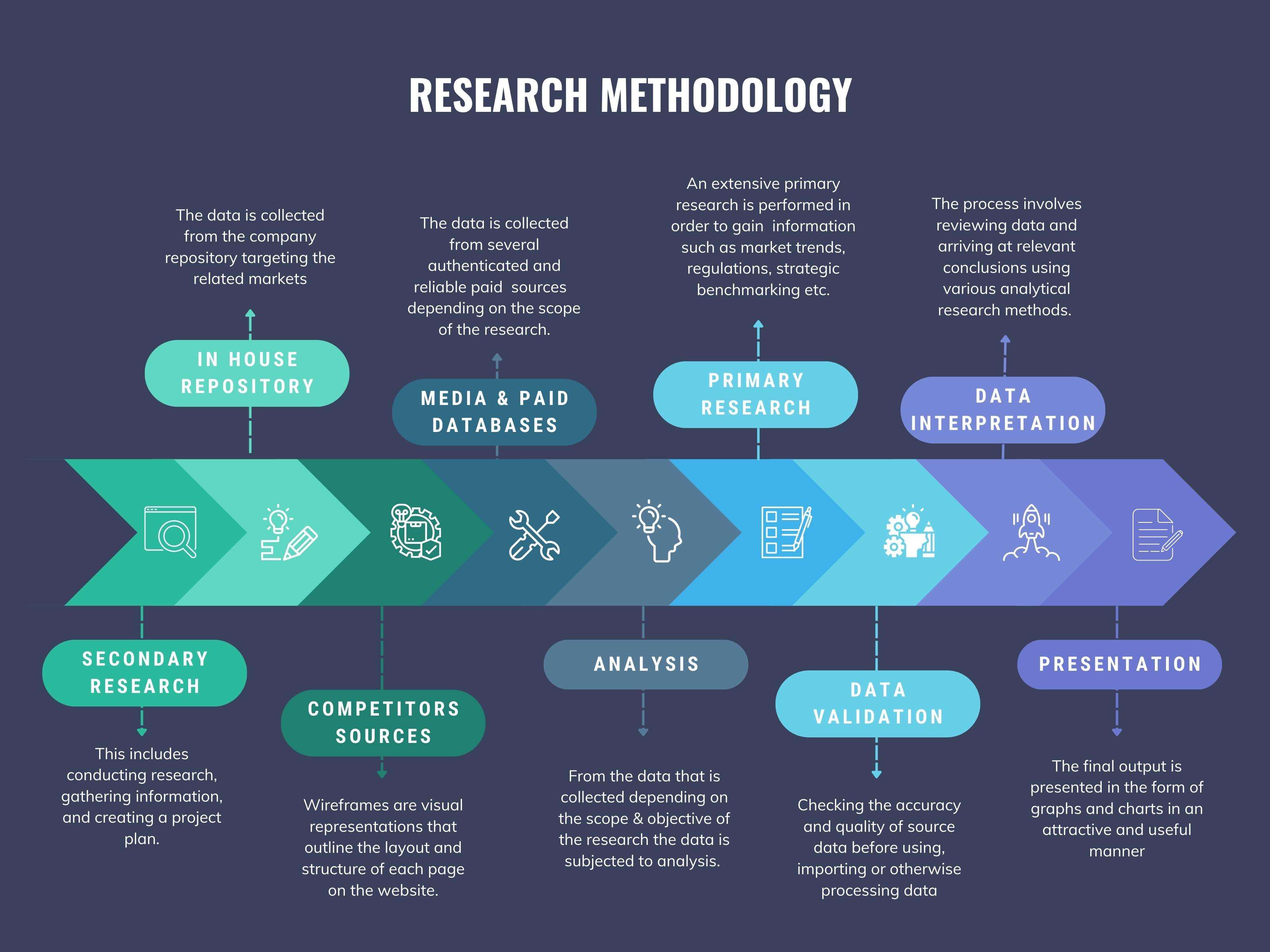
We at ‘Stratistics’ opt for an extensive research approach which involves data mining, data validation, and data analysis. The various research sources include in-house repository, secondary research, competitor’s sources, social media research, client internal data, and primary research.
Our team of analysts prefers the most reliable and authenticated data sources in order to perform the comprehensive literature search. With access to most of the authenticated data bases our team highly considers the best mix of information through various sources to obtain extensive and accurate analysis.
Each report takes an average time of a month and a team of 4 industry analysts. The time may vary depending on the scope and data availability of the desired market report. The various parameters used in the market assessment are standardized in order to enhance the data accuracy.
Data Mining
The data is collected from several authenticated, reliable, paid and unpaid sources and is filtered depending on the scope & objective of the research. Our reports repository acts as an added advantage in this procedure. Data gathering from the raw material suppliers, distributors and the manufacturers is performed on a regular basis, this helps in the comprehensive understanding of the products value chain. Apart from the above mentioned sources the data is also collected from the industry consultants to ensure the objective of the study is in the right direction.
Market trends such as technological advancements, regulatory affairs, market dynamics (Drivers, Restraints, Opportunities and Challenges) are obtained from scientific journals, market related national & international associations and organizations.
Data Analysis
From the data that is collected depending on the scope & objective of the research the data is subjected for the analysis. The critical steps that we follow for the data analysis include:
- Product Lifecycle Analysis
- Competitor analysis
- Risk analysis
- Porters Analysis
- PESTEL Analysis
- SWOT Analysis
The data engineering is performed by the core industry experts considering both the Marketing Mix Modeling and the Demand Forecasting. The marketing mix modeling makes use of multiple-regression techniques to predict the optimal mix of marketing variables. Regression factor is based on a number of variables and how they relate to an outcome such as sales or profits.
Data Validation
The data validation is performed by the exhaustive primary research from the expert interviews. This includes telephonic interviews, focus groups, face to face interviews, and questionnaires to validate our research from all aspects. The industry experts we approach come from the leading firms, involved in the supply chain ranging from the suppliers, distributors to the manufacturers and consumers so as to ensure an unbiased analysis.
We are in touch with more than 15,000 industry experts with the right mix of consultants, CEO's, presidents, vice presidents, managers, experts from both supply side and demand side, executives and so on.
The data validation involves the primary research from the industry experts belonging to:
- Leading Companies
- Suppliers & Distributors
- Manufacturers
- Consumers
- Industry/Strategic Consultants
Apart from the data validation the primary research also helps in performing the fill gap research, i.e. providing solutions for the unmet needs of the research which helps in enhancing the reports quality.
For more details about research methodology, kindly write to us at info@strategymrc.com
Frequently Asked Questions
In case of any queries regarding this report, you can contact the customer service by filing the “Inquiry Before Buy” form available on the right hand side. You may also contact us through email: info@strategymrc.com or phone: +1-301-202-5929
Yes, the samples are available for all the published reports. You can request them by filling the “Request Sample” option available in this page.
Yes, you can request a sample with your specific requirements. All the customized samples will be provided as per the requirement with the real data masked.
All our reports are available in Digital PDF format. In case if you require them in any other formats, such as PPT, Excel etc you can submit a request through “Inquiry Before Buy” form available on the right hand side. You may also contact us through email: info@strategymrc.com or phone: +1-301-202-5929
We offer a free 15% customization with every purchase. This requirement can be fulfilled for both pre and post sale. You may send your customization requirements through email at info@strategymrc.com or call us on +1-301-202-5929.
We have 3 different licensing options available in electronic format.
- Single User Licence: Allows one person, typically the buyer, to have access to the ordered product. The ordered product cannot be distributed to anyone else.
- 2-5 User Licence: Allows the ordered product to be shared among a maximum of 5 people within your organisation.
- Corporate License: Allows the product to be shared among all employees of your organisation regardless of their geographical location.
All our reports are typically be emailed to you as an attachment.
To order any available report you need to register on our website. The payment can be made either through CCAvenue or PayPal payments gateways which accept all international cards.
We extend our support to 6 months post sale. A post sale customization is also provided to cover your unmet needs in the report.
Request Customization
We offer complimentary customization of up to 15% with every purchase. To share your customization requirements, feel free to email us at info@strategymrc.com or call us on +1-301-202-5929. .
Please Note: Customization within the 15% threshold is entirely free of charge. If your request exceeds this limit, we will conduct a feasibility assessment. Following that, a detailed quote and timeline will be provided.
WHY CHOOSE US ?

Assured Quality
Best in class reports with high standard of research integrity

24X7 Research Support
Continuous support to ensure the best customer experience.

Free Customization
Adding more values to your product of interest.

Safe & Secure Access
Providing a secured environment for all online transactions.

Trusted by 600+ Brands
Serving the most reputed brands across the world.