Electrolyzer Market
Electrolyzer Market Forecasts to 2034 - Global Analysis By Technology (Alkaline Electrolyzers, PEM Electrolyzers, Solid Oxide Electrolyzers, AEM Electrolyzers), Capacity, Application, End User, Configuration, and By Geography

Market Dynamics:
Driver:
Growing demand for green hydrogen and industrial decarbonization
Increasing demand for low-carbon hydrogen is a major driver of the global electrolyzer market. Industries such as refining, chemicals, fertilizers, steel, and synthetic fuel production are exploring hydrogen produced through electrolysis to reduce dependence on fossil-based hydrogen and lower process emissions. Government-backed hydrogen strategies, clean energy incentives, and investments in renewable electricity are supporting project development across major economies. Moreover, technological improvements in electrolyzer efficiency, system integration, and manufacturing are helping developers pursue larger installations. The expansion of green ammonia production, hydrogen infrastructure, and renewable power projects is creating additional demand for electrolyzer systems capable of supporting industrial-scale hydrogen production.
Restraint:
High capital costs and uncertain project economics
High upfront investment and uncertain operating economics remain significant restraints for the electrolyzer market. Electrolyzer projects require substantial expenditure on stacks, balance-of-plant equipment, electrical infrastructure, water treatment, installation, and commissioning. Hydrogen production costs are also influenced by electricity prices, utilization rates, financing costs, and maintenance requirements. In many markets, renewable hydrogen remains more expensive than conventional hydrogen produced from natural gas, particularly where carbon pricing and financial incentives are limited. Additionally, delays in project approvals, insufficient hydrogen transportation infrastructure, and uncertainty regarding long-term offtake agreements can affect investment decisions. These challenges may delay final investment decisions and constrain the deployment of large-scale electrolysis facilities.
Opportunity:
Expansion of large-scale electrolyzer manufacturing and emerging hydrogen applications
The expansion of clean hydrogen projects presents substantial opportunities for electrolyzer manufacturers. Large industrial installations are being developed to supply hydrogen for ammonia production, refining, steelmaking, synthetic fuels, and other hard-to-abate sectors. Manufacturers are investing in standardized system designs, automated production processes, and larger electrolyzer modules to reduce installation complexity and improve project economics. Advances in PEM and solid oxide electrolysis also create opportunities for applications requiring flexible operation or integration with industrial heat. Furthermore, green hydrogen corridors, hydrogen refueling infrastructure, and power-to-X projects can expand demand across transportation and energy systems. Strategic partnerships between technology suppliers, renewable energy developers, engineering companies, and industrial hydrogen consumers can accelerate commercialization.
Threat:
Policy uncertainty and competition from alternative hydrogen production pathways
The electrolyzer market faces risks from changing policy incentives, uncertain hydrogen demand, and competition from alternative production technologies. Delays in subsidy implementation, changes in renewable hydrogen qualification rules, and insufficient long-term offtake commitments can weaken project economics. Electrolyzer deployment also depends on access to competitively priced renewable electricity and supporting infrastructure. In some applications, conventional hydrogen production combined with carbon capture, as well as other low-carbon hydrogen pathways, may compete with renewable electrolysis. Additionally, fluctuations in electricity prices, supply chain constraints, and competition among manufacturers can pressure project margins. These factors may lead to investment postponements, project restructuring, and slower capacity utilization across the electrolyzer industry.
Covid-19 Impact:
The COVID-19 pandemic affected the electrolyzer market through manufacturing interruptions, transportation constraints, supply chain disruptions, and delays in industrial project execution. Restrictions on movement and workforce availability affected equipment production, installation, and commissioning schedules. However, the recovery period strengthened attention toward energy security, clean energy investment, and industrial decarbonization in several major economies. Government recovery initiatives and hydrogen strategies subsequently supported project announcements and investment in renewable hydrogen infrastructure. The market has continued to face challenges associated with high equipment costs, electricity prices, financing, and delayed project execution. Nevertheless, expanding clean hydrogen initiatives and growing industrial demand for lower-carbon production pathways have supported the longer-term development of electrolyzer technologies.
The Alkaline Electrolyzers segment is expected to be the largest during the forecast period
The Alkaline Electrolyzers segment is expected to account for the largest market share during the forecast period, supported by its established industrial operating history, commercial maturity, and suitability for large-scale hydrogen production. Alkaline technology benefits from extensive deployment experience, established manufacturing capabilities, and the availability of industrial-scale systems. These characteristics make it attractive for applications such as green ammonia production, refining, chemical manufacturing, and other industrial hydrogen requirements. Manufacturers are also developing higher-capacity modules and standardized systems to improve installation efficiency and reduce project costs. The technology's established supply chain and suitability for large industrial installations support its leading position in the electrolyzer market.
The PEM Electrolyzers segment is expected to have the highest CAGR during the forecast period
The PEM Electrolyzers segment is expected to witness the highest growth rate, driven by its ability to respond rapidly to changes in electricity supply and its suitability for integration with variable renewable energy sources. PEM systems offer compact designs, high current density, and operational flexibility, making them attractive for applications requiring dynamic operation and space-efficient installations. These characteristics support deployment in renewable hydrogen projects, mobility-related applications, distributed hydrogen production, and industrial facilities seeking flexible power integration. Continued advances in stack performance, manufacturing processes, and system integration are expected to improve the technology's commercial competitiveness. Growing investment in renewable hydrogen infrastructure is expected to support strong growth in PEM electrolyzer adoption.
Region with largest share:
During the forecast period, Asia Pacific is expected to hold the largest market share, supported by substantial industrial hydrogen demand, expanding renewable energy capacity, and investment in domestic electrolyzer manufacturing. China represents a major regional market due to its industrial base, clean hydrogen initiatives, and growing manufacturing capabilities across electrolyzer technologies. Japan, South Korea, India, and Australia also provide opportunities through hydrogen strategies, industrial decarbonization programs, and renewable energy investments. The region's established chemical and fertilizer industries create potential demand for hydrogen production systems, while expanding green ammonia and steelmaking initiatives support additional deployment opportunities. These factors reinforce Asia Pacific's position as a leading electrolyzer market.
Region with highest CAGR:
Europe is expected to exhibit the highest CAGR during the forecast period, driven by industrial decarbonization targets, renewable hydrogen policies, and investment in large-scale electrolysis projects. Regional initiatives are encouraging the development of hydrogen production facilities for refining, ammonia, steel, synthetic fuels, and other industrial applications. Germany, Spain, the Netherlands, France, and the United Kingdom are important markets for electrolyzer deployment and hydrogen infrastructure development. European manufacturers are also investing in advanced electrolyzer systems, manufacturing automation, and larger-capacity modules to improve project economics. Continued policy support, industrial hydrogen demand, and cross-border hydrogen infrastructure development are expected to accelerate market growth across Europe.
Key players in the market
Some of the key players in the Global Electrolyzer Market include Nel ASA, thyssenkrupp nucera AG & Co. KGaA, Siemens Energy AG, ITM Power plc, Cummins Inc., Plug Power Inc., Bloom Energy Corporation, John Cockerill, Sunfire GmbH, Topsoe A/S, Enapter AG, Ohmium International, Inc., LONGi Hydrogen Technology Co., Ltd., PERIC Hydrogen Technologies Co., Ltd., and McPhy Energy S.A.
Key Developments:
In October 2026, Nel ASA received a purchase order for multiple containerized PEM electrolyzer solutions from a leading U.S. technology customer. The order highlights demand for modular hydrogen production systems and the potential expansion of electrolyzer applications beyond conventional industrial facilities.
In October 2026, thyssenkrupp nucera announced the establishment of its first company-operated electrolyzer cell assembly hub in Europe, located in Vila Nova de Gaia, Portugal. The facility is intended to strengthen the company's European supply chain, increase assembly automation, and expand its capacity to manufacture alkaline electrolyzer cells.
In October 2026, ITM Power's subsidiary Hydropulse signed heads of terms with a European oil refinery for a 150 MW green hydrogen project using the company's Alpha electrolyzer platform. The project is being developed under a proposed 10-year agreement, with a final investment decision targeted for 2027.
In October 2026, Plug Power signed a 280 MW GenEco electrolyzer supply agreement with Arcadia eFuels for Project ENDOR in Denmark. The agreement supports the development of renewable hydrogen infrastructure for e-sustainable aviation fuel production and forms part of a broader strategic cooperation covering future projects.
Technologies Covered:
• Alkaline Electrolyzers
• PEM Electrolyzers
• Solid Oxide Electrolyzers
• AEM Electrolyzers
Capacity Categories Covered:
• Below 1 MW
• 1–10 MW
• Above 10 MW
Applications Covered:
• Green Ammonia and Fertilizers
• Refining and Chemicals
• Steel and Industrial Decarbonization
• Mobility and Refueling
• Power-to-Gas and Storage
• Synthetic Fuels
End Users Covered:
• Hydrogen Producers
• Utilities and Energy Companies
• Chemical and Fertilizer Producers
• Steel and Metals Producers
• Transport Operators
Configurations Covered:
• Containerized / Modular
• Skid-Mounted
• Large Centralized Plants
Regions Covered:
• North America
o United States
o Canada
o Mexico
• Europe
o United Kingdom
o Germany
o France
o Italy
o Spain
o Netherlands
o Belgium
o Sweden
o Switzerland
o Poland
o Rest of Europe
• Asia Pacific
o China
o Japan
o India
o South Korea
o Australia
o Indonesia
o Thailand
o Malaysia
o Singapore
o Vietnam
o Rest of Asia Pacific
• South America
o Brazil
o Argentina
o Colombia
o Chile
o Peru
o Rest of South America
• Rest of the World (RoW)
o Middle East
§ Saudi Arabia
§ United Arab Emirates
§ Qatar
§ Israel
§ Rest of Middle East
o Africa
§ South Africa
§ Egypt
§ Morocco
§ Rest of Africa
What our report offers:
• Market share assessments for regional and country-level segments
• Strategic recommendations for new entrants
• Covers market data for the years 2023, 2024, 2025, 2026, 2027, 2028, 2030, 2032, and 2034
• Market trends, including drivers, constraints, opportunities, threats, challenges, investment opportunities, and recommendations
• Strategic recommendations for key business segments based on market estimations
• Competitive landscape mapping and assessment of key industry trends
• Company profiling with detailed strategies, financials, and recent developments
• Supply chain trends and assessment of the latest technological advancements
Free Customization Offerings:
All customers of this report will be entitled to receive one of the following free customization options:
• Company Profiling
o Comprehensive profiling of additional market players (up to 3)
o SWOT analysis of key players (up to 3)
• Regional Segmentation
o Market estimations, forecasts, and CAGR of any prominent country as per the client's interest (subject to feasibility assessment)
• Competitive Benchmarking
o Benchmarking of key players based on product portfolio, geographical presence, and strategic alliances
Table of Contents
1 Executive Summary1.1 Market Snapshot and Key Highlights
1.2 Growth Drivers, Challenges, and Opportunities
1.3 Competitive Landscape Overview
1.4 Strategic Insights and Recommendations
2 Research Framework
2.1 Study Objectives and Scope
2.2 Stakeholder Analysis
2.3 Research Assumptions and Limitations
2.4 Research Methodology
2.4.1 Data Collection (Primary and Secondary)
2.4.2 Data Modeling and Estimation Techniques
2.4.3 Data Validation and Triangulation
2.4.4 Analytical and Forecasting Approach
3 Market Dynamics and Trend Analysis
3.1 Market Definition and Structure
3.2 Key Market Drivers
3.3 Market Restraints and Challenges
3.4 Growth Opportunities and Investment Hotspots
3.5 Industry Threats and Risk Assessment
3.6 Technology and Innovation Landscape
3.7 Emerging and High-Growth Markets
3.8 Regulatory and Policy Environment
3.9 Impact of COVID-19 and Recovery Outlook
4 Competitive and Strategic Assessment
4.1 Porter's Five Forces Analysis
4.1.1 Supplier Bargaining Power
4.1.2 Buyer Bargaining Power
4.1.3 Threat of Substitutes
4.1.4 Threat of New Entrants
4.1.5 Competitive Rivalry
4.2 Market Share Analysis of Key Players
4.3 Product Benchmarking and Performance Comparison
5 Global Electrolyzer Market, By Technology
5.1 Alkaline Electrolyzers
5.2 PEM Electrolyzers
5.3 Solid Oxide Electrolyzers
5.4 AEM Electrolyzers
6 Global Electrolyzer Market, By Capacity
6.1 Below 1 MW
6.2 1–10 MW
6.3 Above 10 MW
7 Global Electrolyzer Market, By Application
7.1 Green Ammonia and Fertilizers
7.2 Refining and Chemicals
7.3 Steel and Industrial Decarbonization
7.4 Mobility and Refueling
7.5 Power-to-Gas and Storage
7.6 Synthetic Fuels
8 Global Electrolyzer Market, By End User
8.1 Hydrogen Producers
8.2 Utilities and Energy Companies
8.3 Chemical and Fertilizer Producers
8.4 Steel and Metals Producers
8.5 Transport Operators
9 Global Electrolyzer Market, By Configuration
9.1 Containerized / Modular
9.2 Skid-Mounted
9.3 Large Centralized Plants
10 Global Electrolyzer Market, By Geography
10.1 North America
10.1.1 United States
10.1.2 Canada
10.1.3 Mexico
10.2 Europe
10.2.1 United Kingdom
10.2.2 Germany
10.2.3 France
10.2.4 Italy
10.2.5 Spain
10.2.6 Netherlands
10.2.7 Belgium
10.2.8 Sweden
10.2.9 Switzerland
10.2.10 Poland
10.2.11 Rest of Europe
10.3 Asia Pacific
10.3.1 China
10.3.2 Japan
10.3.3 India
10.3.4 South Korea
10.3.5 Australia
10.3.6 Indonesia
10.3.7 Thailand
10.3.8 Malaysia
10.3.9 Singapore
10.3.10 Vietnam
10.3.11 Rest of Asia Pacific
10.4 South America
10.4.1 Brazil
10.4.2 Argentina
10.4.3 Colombia
10.4.4 Chile
10.4.5 Peru
10.4.6 Rest of South America
10.5 Rest of the World (RoW)
10.5.1 Middle East
10.5.1.1 Saudi Arabia
10.5.1.2 United Arab Emirates
10.5.1.3 Qatar
10.5.1.4 Israel
10.5.1.5 Rest of Middle East
10.5.2 Africa
10.5.2.1 South Africa
10.5.2.2 Egypt
10.5.2.3 Morocco
10.5.2.4 Rest of Africa
11 Strategic Market Intelligence
11.1 Industry Value Network and Supply Chain Assessment
11.2 White-Space and Opportunity Mapping
11.3 Product Evolution and Market Life Cycle Analysis
11.4 Channel, Distributor, and Go-to-Market Assessment
12 Industry Developments and Strategic Initiatives
12.1 Mergers and Acquisitions
12.2 Partnerships, Alliances, and Joint Ventures
12.3 New Product Launches and Certifications
12.4 Capacity Expansion and Investments
12.5 Other Strategic Initiatives
13 Company Profiles
13.1 Nel ASA
13.2 thyssenkrupp nucera AG & Co. KGaA
13.3 Siemens Energy AG
13.4 ITM Power plc
13.5 Cummins Inc.
13.6 Plug Power Inc.
13.7 Bloom Energy Corporation
13.8 John Cockerill
13.9 Sunfire GmbH
13.10 Topsoe A/S
13.11 Enapter AG
13.12 Ohmium International, Inc.
13.13 LONGi Hydrogen Technology Co., Ltd.
13.14 PERIC Hydrogen Technologies Co., Ltd.
13.15 McPhy Energy S.A.
List of Tables
1 Global Electrolyzer Market Outlook, By Region (2023–2034) ($MN)
2 Global Electrolyzer Market Outlook, By Technology (2023–2034) ($MN)
3 Global Electrolyzer Market Outlook, By Alkaline Electrolyzers (2023–2034) ($MN)
4 Global Electrolyzer Market Outlook, By PEM Electrolyzers (2023–2034) ($MN)
5 Global Electrolyzer Market Outlook, By Solid Oxide Electrolyzers (2023–2034) ($MN)
6 Global Electrolyzer Market Outlook, By AEM Electrolyzers (2023–2034) ($MN)
7 Global Electrolyzer Market Outlook, By Capacity (2023–2034) ($MN)
8 Global Electrolyzer Market Outlook, By Below 1 MW (2023–2034) ($MN)
9 Global Electrolyzer Market Outlook, By 1–10 MW (2023–2034) ($MN)
10 Global Electrolyzer Market Outlook, By Above 10 MW (2023–2034) ($MN)
11 Global Electrolyzer Market Outlook, By Application (2023–2034) ($MN)
12 Global Electrolyzer Market Outlook, By Green Ammonia and Fertilizers (2023–2034) ($MN)
13 Global Electrolyzer Market Outlook, By Refining and Chemicals (2023–2034) ($MN)
14 Global Electrolyzer Market Outlook, By Steel and Industrial Decarbonization (2023–2034) ($MN)
15 Global Electrolyzer Market Outlook, By Mobility and Refueling (2023–2034) ($MN)
16 Global Electrolyzer Market Outlook, By Power-to-Gas and Storage (2023–2034) ($MN)
17 Global Electrolyzer Market Outlook, By Synthetic Fuels (2023–2034) ($MN)
18 Global Electrolyzer Market Outlook, By End User (2023–2034) ($MN)
19 Global Electrolyzer Market Outlook, By Hydrogen Producers (2023–2034) ($MN)
20 Global Electrolyzer Market Outlook, By Utilities and Energy Companies (2023–2034) ($MN)
21 Global Electrolyzer Market Outlook, By Chemical and Fertilizer Producers (2023–2034) ($MN)
22 Global Electrolyzer Market Outlook, By Steel and Metals Producers (2023–2034) ($MN)
23 Global Electrolyzer Market Outlook, By Transport Operators (2023–2034) ($MN)
24 Global Electrolyzer Market Outlook, By Configuration (2023–2034) ($MN)
25 Global Electrolyzer Market Outlook, By Containerized / Modular (2023–2034) ($MN)
26 Global Electrolyzer Market Outlook, By Skid-Mounted (2023–2034) ($MN)
27 Global Electrolyzer Market Outlook, By Large Centralized Plants (2023–2034) ($MN)
Note: Tables for North America, Europe, APAC, South America, and Rest of the World (RoW) Regions are also represented in the same manner as above.
List of Figures
RESEARCH METHODOLOGY
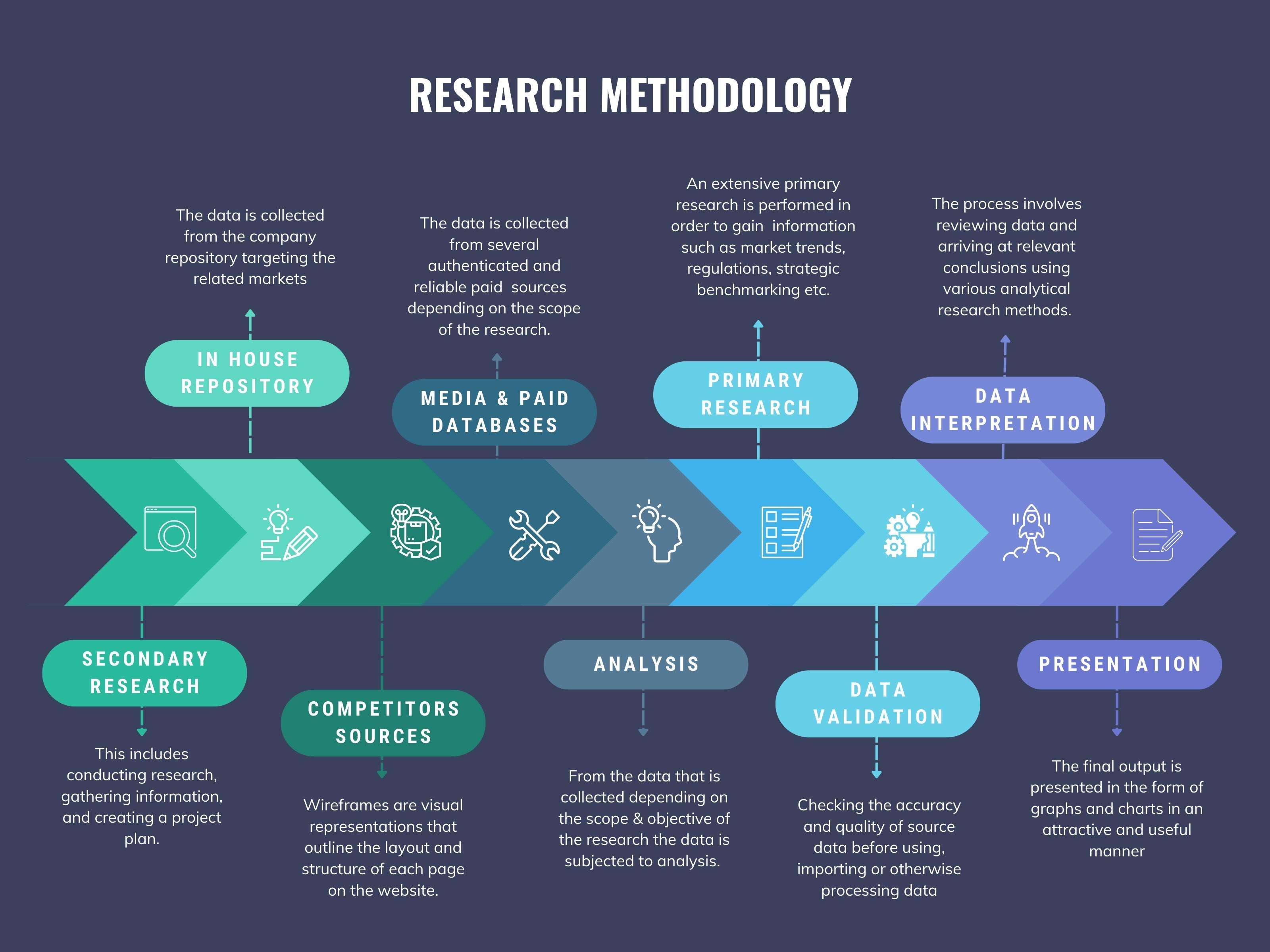
We at ‘Stratistics’ opt for an extensive research approach which involves data mining, data validation, and data analysis. The various research sources include in-house repository, secondary research, competitor’s sources, social media research, client internal data, and primary research.
Our team of analysts prefers the most reliable and authenticated data sources in order to perform the comprehensive literature search. With access to most of the authenticated data bases our team highly considers the best mix of information through various sources to obtain extensive and accurate analysis.
Each report takes an average time of a month and a team of 4 industry analysts. The time may vary depending on the scope and data availability of the desired market report. The various parameters used in the market assessment are standardized in order to enhance the data accuracy.
Data Mining
The data is collected from several authenticated, reliable, paid and unpaid sources and is filtered depending on the scope & objective of the research. Our reports repository acts as an added advantage in this procedure. Data gathering from the raw material suppliers, distributors and the manufacturers is performed on a regular basis, this helps in the comprehensive understanding of the products value chain. Apart from the above mentioned sources the data is also collected from the industry consultants to ensure the objective of the study is in the right direction.
Market trends such as technological advancements, regulatory affairs, market dynamics (Drivers, Restraints, Opportunities and Challenges) are obtained from scientific journals, market related national & international associations and organizations.
Data Analysis
From the data that is collected depending on the scope & objective of the research the data is subjected for the analysis. The critical steps that we follow for the data analysis include:
- Product Lifecycle Analysis
- Competitor analysis
- Risk analysis
- Porters Analysis
- PESTEL Analysis
- SWOT Analysis
The data engineering is performed by the core industry experts considering both the Marketing Mix Modeling and the Demand Forecasting. The marketing mix modeling makes use of multiple-regression techniques to predict the optimal mix of marketing variables. Regression factor is based on a number of variables and how they relate to an outcome such as sales or profits.
Data Validation
The data validation is performed by the exhaustive primary research from the expert interviews. This includes telephonic interviews, focus groups, face to face interviews, and questionnaires to validate our research from all aspects. The industry experts we approach come from the leading firms, involved in the supply chain ranging from the suppliers, distributors to the manufacturers and consumers so as to ensure an unbiased analysis.
We are in touch with more than 15,000 industry experts with the right mix of consultants, CEO's, presidents, vice presidents, managers, experts from both supply side and demand side, executives and so on.
The data validation involves the primary research from the industry experts belonging to:
- Leading Companies
- Suppliers & Distributors
- Manufacturers
- Consumers
- Industry/Strategic Consultants
Apart from the data validation the primary research also helps in performing the fill gap research, i.e. providing solutions for the unmet needs of the research which helps in enhancing the reports quality.
For more details about research methodology, kindly write to us at info@strategymrc.com
Frequently Asked Questions
In case of any queries regarding this report, you can contact the customer service by filing the “Inquiry Before Buy” form available on the right hand side. You may also contact us through email: info@strategymrc.com or phone: +1-301-202-5929
Yes, the samples are available for all the published reports. You can request them by filling the “Request Sample” option available in this page.
Yes, you can request a sample with your specific requirements. All the customized samples will be provided as per the requirement with the real data masked.
All our reports are available in Digital PDF format. In case if you require them in any other formats, such as PPT, Excel etc you can submit a request through “Inquiry Before Buy” form available on the right hand side. You may also contact us through email: info@strategymrc.com or phone: +1-301-202-5929
We offer a free 15% customization with every purchase. This requirement can be fulfilled for both pre and post sale. You may send your customization requirements through email at info@strategymrc.com or call us on +1-301-202-5929.
We have 3 different licensing options available in electronic format.
- Single User Licence: Allows one person, typically the buyer, to have access to the ordered product. The ordered product cannot be distributed to anyone else.
- 2-5 User Licence: Allows the ordered product to be shared among a maximum of 5 people within your organisation.
- Corporate License: Allows the product to be shared among all employees of your organisation regardless of their geographical location.
All our reports are typically be emailed to you as an attachment.
To order any available report you need to register on our website. The payment can be made either through CCAvenue or PayPal payments gateways which accept all international cards.
We extend our support to 6 months post sale. A post sale customization is also provided to cover your unmet needs in the report.
Request Customization
We offer complimentary customization of up to 15% with every purchase. To share your customization requirements, feel free to email us at info@strategymrc.com or call us on +1-301-202-5929. .
Please Note: Customization within the 15% threshold is entirely free of charge. If your request exceeds this limit, we will conduct a feasibility assessment. Following that, a detailed quote and timeline will be provided.
WHY CHOOSE US ?

Assured Quality
Best in class reports with high standard of research integrity

24X7 Research Support
Continuous support to ensure the best customer experience.

Free Customization
Adding more values to your product of interest.

Safe & Secure Access
Providing a secured environment for all online transactions.

Trusted by 600+ Brands
Serving the most reputed brands across the world.