
Industrial Enzymes Market
Industrial Enzymes Market Forecasts to 2034 – Global Analysis By Enzyme Type (Carbohydrases, Proteases, Lipases, Polymerases and Nucleases, Oxidoreductases and Other Enzyme Types), Source, Form, Application, End User and By Geography

Market Dynamics:
Driver:
Sustainability Mandates Reshaping Industrial Processes
Regulatory frameworks targeting carbon emissions, chemical effluent, and energy intensity are compelling manufacturers across food, textile, and pulp processing to replace conventional chemical routes with enzymatic alternatives. Industrial enzymes operate at lower temperatures and neutral pH ranges, substantially reducing energy demand and hazardous waste generation. As sustainability reporting requirements expand and consumers favor environmentally responsible production methods, the commercial incentive to integrate enzyme-based processes strengthens, thereby driving sustained volume growth across established application segments.
Restraint:
Price Sensitivity in Commodity Segments
Industrial enzymes remain cost-intensive relative to conventional chemical catalysts in price-sensitive applications such as detergents and starch processing, where margins are narrow and buyers possess substantial bargaining power. Formulation stability and shelf-life constraints further limit adoption in tropical climates and distributed manufacturing settings where cold-chain infrastructure is unreliable. These economic and logistical barriers slow penetration in emerging markets and commodity-grade product categories, constraining the pace at which enzymatic solutions displace entrenched chemical alternatives across the broader industrial landscape.
Opportunity:
Second-Generation Biofuel Expansion
Lignocellulosic biomass conversion represents a substantial growth frontier for industrial enzymes, as governments worldwide mandate blending targets and invest in advanced biofuel infrastructure. Cellulase and hemicellulase preparations capable of degrading agricultural residues and woody biomass at commercial scale remain a technical bottleneck, creating demand for higher-performance enzyme cocktails. As pretreatment technologies mature and biorefinery capacity expands in North America, Europe, and Asia Pacific, the enzyme requirements for cellulosic ethanol and biochemical production are expected to scale considerably, opening a durable new volume stream for enzyme manufacturers.
Threat:
Feedstock and Fermentation Capacity Constraints
Industrial enzyme production depends on fermentation infrastructure and agricultural feedstock inputs that are subject to capacity limitations and price volatility. Competition for fermentation capacity from other bioproducts, including cultivated proteins and bio-based chemicals, may tighten supply and increase production costs. Additionally, strain contamination and batch variability in large-scale fermentation can disrupt output and quality consistency. These operational vulnerabilities expose enzyme suppliers to margin pressure and delivery reliability risks, particularly during periods of elevated demand or supply chain disruption.
Covid-19 Impact:
The pandemic disrupted enzyme supply chains and industrial production schedules, reducing demand from textile and automotive sectors during initial lockdowns. Mid-pandemic, demand from food processing, detergents, and pharmaceutical applications remained resilient, partially offsetting industrial weakness. Post-pandemic, the structural emphasis on supply chain localization and biomanufacturing capacity has accelerated investment in regional enzyme production facilities, particularly in Asia Pacific and North America, reinforcing the long-term growth trajectory of the industrial enzymes sector.
The carbohydrases segment is expected to be the largest during the forecast period
The carbohydrases segment is expected to account for the largest market share during the forecast period, due to their extensive deployment in starch processing, food and beverage manufacturing, animal feed, and biofuel production, where they catalyze the breakdown of complex carbohydrates into fermentable sugars and functional ingredients. These enzymes benefit from mature production economics and broad regulatory acceptance, which supports their dominant position across multiple end-user industries. As demand for sugar alternatives, prebiotic ingredients, and bio-based chemicals expands, the entrenched application base of carbohydrases reinforces their leading revenue contribution.
The microbial segment is expected to have the highest CAGR during the forecast period
Over the forecast period, the microbial segment is predicted to witness the highest growth rate, driven by the scalability and cost efficiency of microbial fermentation platforms relative to plant and animal-derived enzyme sources. Microbial production enables high yields, consistent quality, and rapid strain optimization through established genetic engineering techniques, which in turn supports the development of tailored enzyme solutions for emerging applications. As fermentation capacity expands and strain engineering advances accelerate, microbial-derived enzymes are expected to capture an increasing share of industrial demand across all major end-user segments.
Region with largest share:
During the forecast period, the North America region is expected to hold the largest market share, due to the presence of leading enzyme producers, advanced bioprocessing infrastructure, and stringent environmental regulations that favor enzymatic alternatives. The United States accounts for the majority of regional demand, supported by major industry participants including Novonesis, IFF, and BASF. Canada contributes through expanding biofuel and food processing capacity, while Mexico offers growing opportunities in beverage and textile manufacturing, reinforcing the region's revenue leadership throughout the forecast horizon.
Region with highest CAGR:
Over the forecast period, the Asia Pacific region is anticipated to exhibit the highest CAGR, due to rapid industrialization, expanding food and beverage production, and government initiatives promoting domestic biofuel and biochemical manufacturing. China and India are investing heavily in enzyme production capacity and industrial biotechnology infrastructure, while Japan and South Korea contribute advanced capabilities in specialty enzyme development. Growing demand for animal feed enzymes, textile processing aids, and sustainable chemical alternatives across Southeast Asia further accelerates regional growth, positioning Asia Pacific as the fastest-expanding market.
Key players in the market
Some of the key players in Industrial Enzymes Market include Novonesis A/S, IFF, DSM-Firmenich AG, BASF SE, AB Enzymes GmbH, Amano Enzyme Inc., Advanced Enzyme Technologies Limited, Kerry Group plc, Associated British Foods plc, Sunson Industry Group Co., Ltd., Enzyme Development Corporation, Dyadic International, Inc., BRAIN Biotech AG, Biocatalysts Ltd., Codexis, Inc., Creative Enzymes, Shandong Longda Bio-Products Co., Ltd., and Aumgene Biosciences.
Key Developments:
In October 2026, Novonesis A/S completed its acquisition of MicroBioGen, an Australian biotechnology company specializing in industrial yeast strains. The acquisition strengthens Novonesis' fermentation expertise, bioethanol capabilities, and development of sustainable biological solutions across industrial applications.
In September 2026, Novonesis A/S announced an investment exceeding €600 million to expand its enzyme manufacturing facility in Patalganga, India. The project will strengthen industrial enzyme production for biofuels, household care, food processing, and other biotechnology applications.
In August 2026, Dyadic International, Inc. entered a development and commercial licensing agreement with a European biotechnology company to expand its precision-fermented dairy protein portfolio. The initiative complements existing enzyme commercialization activities and strengthens industrial fermentation capabilities.
Enzyme Types Covered:
• Carbohydrases
• Proteases
• Lipases
• Polymerases and Nucleases
• Oxidoreductases
• Other Enzyme Types
Sources Covered:
• Microbial
• Plant
• Animal
Forms Covered:
• Liquid
• Dry
Applications Covered:
• Starch Processing and Saccharification
• Protein Hydrolysis and Modification
• Fat and Oil Modification
• Cellulose and Biomass Conversion
• Fabric Desizing and Biopolishing
• Pulp Bleaching and Deinking
• Stain Removal and Fabric Care
• Feed Digestibility Enhancement
• Waste Degradation and Bioremediation
• Other Applications
End Users Covered:
• Food and Beverage Manufacturers
• Detergent and Cleaning Product Manufacturers
• Animal Feed Producers
• Biofuel and Biorefinery Operators
• Textile and Apparel Manufacturers
• Pulp and Paper Manufacturers
• Chemical Manufacturers
• Environmental and Wastewater Treatment Companies
• Other End Users
Regions Covered:
• North America
o United States
o Canada
o Mexico
• Europe
o United Kingdom
o Germany
o France
o Italy
o Spain
o Netherlands
o Belgium
o Sweden
o Switzerland
o Poland
o Rest of Europe
• Asia Pacific
o China
o Japan
o India
o South Korea
o Australia
o Indonesia
o Thailand
o Malaysia
o Singapore
o Vietnam
o Rest of Asia Pacific
• South America
o Brazil
o Argentina
o Colombia
o Chile
o Peru
o Rest of South America
• Rest of the World (RoW)
o Middle East
Saudi Arabia
United Arab Emirates
Qatar
Israel
Rest of Middle East
o Africa
South Africa
Egypt
Morocco
Rest of Africa
What our report offers:
- Market share assessments for the regional and country-level segments
- Strategic recommendations for the new entrants
- Covers Market data for the years 2023, 2024, 2025, 2026, 2027, 2028, 2030, 2032 and 2034
- Market Trends (Drivers, Constraints, Opportunities, Threats, Challenges, Investment Opportunities, and recommendations)
- Strategic recommendations in key business segments based on the market estimations
- Competitive landscaping mapping the key common trends
- Company profiling with detailed strategies, financials, and recent developments
- Supply chain trends mapping the latest technological advancements
Free Customization Offerings:
All the customers of this report will be entitled to receive one of the following free customization options:
• Company Profiling
o Comprehensive profiling of additional market players (up to 3)
o SWOT Analysis of key players (up to 3)
• Regional Segmentation
o Market estimations, Forecasts and CAGR of any prominent country as per the client's interest (Note: Depends on feasibility check)
• Competitive Benchmarking
o Benchmarking of key players based on product portfolio, geographical presence, and strategic alliances
Table of Contents
1 Executive Summary1.1 Market Snapshot and Key Highlights
1.2 Growth Drivers, Challenges, and Opportunities
1.3 Competitive Landscape Overview
1.4 Strategic Insights and Recommendations
2 Research Framework
2.1 Study Objectives and Scope
2.2 Stakeholder Analysis
2.3 Research Assumptions and Limitations
2.4 Research Methodology
2.4.1 Data Collection (Primary and Secondary)
2.4.2 Data Modeling and Estimation Techniques
2.4.3 Data Validation and Triangulation
2.4.4 Analytical and Forecasting Approach
3 Market Dynamics and Trend Analysis
3.1 Market Definition and Structure
3.2 Key Market Drivers
3.3 Market Restraints and Challenges
3.4 Growth Opportunities and Investment Hotspots
3.5 Industry Threats and Risk Assessment
3.6 Technology and Innovation Landscape
3.7 Emerging and High-Growth Markets
3.8 Regulatory and Policy Environment
3.9 Impact of COVID-19 and Recovery Outlook
4 Competitive and Strategic Assessment
4.1 Porter's Five Forces Analysis
4.1.1 Supplier Bargaining Power
4.1.2 Buyer Bargaining Power
4.1.3 Threat of Substitutes
4.1.4 Threat of New Entrants
4.1.5 Competitive Rivalry
4.2 Market Share Analysis of Key Players
4.3 Product Benchmarking and Performance Comparison
5 Global Industrial Enzymes Market, By Enzyme Type
5.1 Carbohydrases
5.2 Proteases
5.3 Lipases
5.4 Polymerases and Nucleases
5.5 Oxidoreductases
5.6 Other Enzyme Types
6 Global Industrial Enzymes Market, By Source
6.1 Microbial
6.2 Plant
6.3 Animal
7 Global Industrial Enzymes Market, By Form
7.1 Liquid
7.2 Dry
8 Global Industrial Enzymes Market, By Application
8.1 Starch Processing and Saccharification
8.2 Protein Hydrolysis and Modification
8.3 Fat and Oil Modification
8.4 Cellulose and Biomass Conversion
8.5 Fabric Desizing and Biopolishing
8.6 Pulp Bleaching and Deinking
8.7 Stain Removal and Fabric Care
8.8 Feed Digestibility Enhancement
8.9 Waste Degradation and Bioremediation
8.10 Other Applications
9 Global Industrial Enzymes Market, By End User
9.1 Food and Beverage Manufacturers
9.2 Detergent and Cleaning Product Manufacturers
9.3 Animal Feed Producers
9.4 Biofuel and Biorefinery Operators
9.5 Textile and Apparel Manufacturers
9.6 Pulp and Paper Manufacturers
9.7 Chemical Manufacturers
9.8 Environmental and Wastewater Treatment Companies
9.9 Other End Users
10 Global Industrial Enzymes Market, By Geography
10.1 North America
10.1.1 United States
10.1.2 Canada
10.1.3 Mexico
10.2 Europe
10.2.1 United Kingdom
10.2.2 Germany
10.2.3 France
10.2.4 Italy
10.2.5 Spain
10.2.6 Netherlands
10.2.7 Belgium
10.2.8 Sweden
10.2.9 Switzerland
10.2.10 Poland
10.2.11 Rest of Europe
10.3 Asia Pacific
10.3.1 China
10.3.2 Japan
10.3.3 India
10.3.4 South Korea
10.3.5 Australia
10.3.6 Indonesia
10.3.7 Thailand
10.3.8 Malaysia
10.3.9 Singapore
10.3.10 Vietnam
10.3.11 Rest of Asia Pacific
10.4 South America
10.4.1 Brazil
10.4.2 Argentina
10.4.3 Colombia
10.4.4 Chile
10.4.5 Peru
10.4.6 Rest of South America
10.5 Rest of the World (RoW)
10.5.1 Middle East
10.5.1.1 Saudi Arabia
10.5.1.2 United Arab Emirates
10.5.1.3 Qatar
10.5.1.4 Israel
10.5.1.5 Rest of Middle East
10.5.2 Africa
10.5.2.1 South Africa
10.5.2.2 Egypt
10.5.2.3 Morocco
10.5.2.4 Rest of Africa
11 Strategic Market Intelligence
11.1 Industry Value Network and Supply Chain Assessment
11.2 White-Space and Opportunity Mapping
11.3 Product Evolution and Market Life Cycle Analysis
11.4 Channel, Distributor, and Go-to-Market Assessment
12 Industry Developments and Strategic Initiatives
12.1 Mergers and Acquisitions
12.2 Partnerships, Alliances, and Joint Ventures
12.3 New Product Launches and Certifications
12.4 Capacity Expansion and Investments
12.5 Other Strategic Initiatives
13 Company Profiles
13.1 Novonesis A/S
13.2 IFF
13.3 DSM-Firmenich AG
13.4 BASF SE
13.5 AB Enzymes GmbH
13.6 Amano Enzyme Inc.
13.7 Advanced Enzyme Technologies Limited
13.8 Kerry Group plc
13.9 Associated British Foods plc
13.10 Sunson Industry Group Co., Ltd.
13.11 Enzyme Development Corporation
13.12 Dyadic International, Inc.
13.13 BRAIN Biotech AG
13.14 Biocatalysts Ltd.
13.15 Codexis, Inc.
13.16 Creative Enzymes
13.17 Shandong Longda Bio-Products Co., Ltd.
13.18 Aumgene Biosciences
List of Tables
1 Global Industrial Enzymes Market Outlook, By Region (2023-2034) ($MN)
2 Global Industrial Enzymes Market Outlook, By Enzyme Type (2023-2034) ($MN)
3 Global Industrial Enzymes Market Outlook, By Carbohydrases (2023-2034) ($MN)
4 Global Industrial Enzymes Market Outlook, By Proteases (2023-2034) ($MN)
5 Global Industrial Enzymes Market Outlook, By Lipases (2023-2034) ($MN)
6 Global Industrial Enzymes Market Outlook, By Polymerases and Nucleases (2023-2034) ($MN)
7 Global Industrial Enzymes Market Outlook, By Oxidoreductases (2023-2034) ($MN)
8 Global Industrial Enzymes Market Outlook, By Other Enzyme Types (2023-2034) ($MN)
9 Global Industrial Enzymes Market Outlook, By Source (2023-2034) ($MN)
10 Global Industrial Enzymes Market Outlook, By Microbial (2023-2034) ($MN)
11 Global Industrial Enzymes Market Outlook, By Plant (2023-2034) ($MN)
12 Global Industrial Enzymes Market Outlook, By Animal (2023-2034) ($MN)
13 Global Industrial Enzymes Market Outlook, By Form (2023-2034) ($MN)
14 Global Industrial Enzymes Market Outlook, By Liquid (2023-2034) ($MN)
15 Global Industrial Enzymes Market Outlook, By Dry (2023-2034) ($MN)
16 Global Industrial Enzymes Market Outlook, By Application (2023-2034) ($MN)
17 Global Industrial Enzymes Market Outlook, By Starch Processing and Saccharification (2023-2034) ($MN)
18 Global Industrial Enzymes Market Outlook, By Protein Hydrolysis and Modification (2023-2034) ($MN)
19 Global Industrial Enzymes Market Outlook, By Fat and Oil Modification (2023-2034) ($MN)
20 Global Industrial Enzymes Market Outlook, By Cellulose and Biomass Conversion (2023-2034) ($MN)
21 Global Industrial Enzymes Market Outlook, By Fabric Desizing and Biopolishing (2023-2034) ($MN)
22 Global Industrial Enzymes Market Outlook, By Pulp Bleaching and Deinking (2023-2034) ($MN)
23 Global Industrial Enzymes Market Outlook, By Stain Removal and Fabric Care (2023-2034) ($MN)
24 Global Industrial Enzymes Market Outlook, By Feed Digestibility Enhancement (2023-2034) ($MN)
25 Global Industrial Enzymes Market Outlook, By Waste Degradation and Bioremediation (2023-2034) ($MN)
26 Global Industrial Enzymes Market Outlook, By Other Applications (2023-2034) ($MN)
27 Global Industrial Enzymes Market Outlook, By End User (2023-2034) ($MN)
28 Global Industrial Enzymes Market Outlook, By Food and Beverage Manufacturers (2023-2034) ($MN)
29 Global Industrial Enzymes Market Outlook, By Detergent and Cleaning Product Manufacturers (2023-2034) ($MN)
30 Global Industrial Enzymes Market Outlook, By Animal Feed Producers (2023-2034) ($MN)
31 Global Industrial Enzymes Market Outlook, By Biofuel and Biorefinery Operators (2023-2034) ($MN)
32 Global Industrial Enzymes Market Outlook, By Textile and Apparel Manufacturers (2023-2034) ($MN)
33 Global Industrial Enzymes Market Outlook, By Pulp and Paper Manufacturers (2023-2034) ($MN)
34 Global Industrial Enzymes Market Outlook, By Chemical Manufacturers (2023-2034) ($MN)
35 Global Industrial Enzymes Market Outlook, By Environmental and Wastewater Treatment Companies (2023-2034) ($MN)
36 Global Industrial Enzymes Market Outlook, By Other End Users (2023-2034) ($MN)
Note: Tables for North America, Europe, APAC, South America, and Rest of the World (RoW) Regions are also represented in the same manner as above.
List of Figures
RESEARCH METHODOLOGY
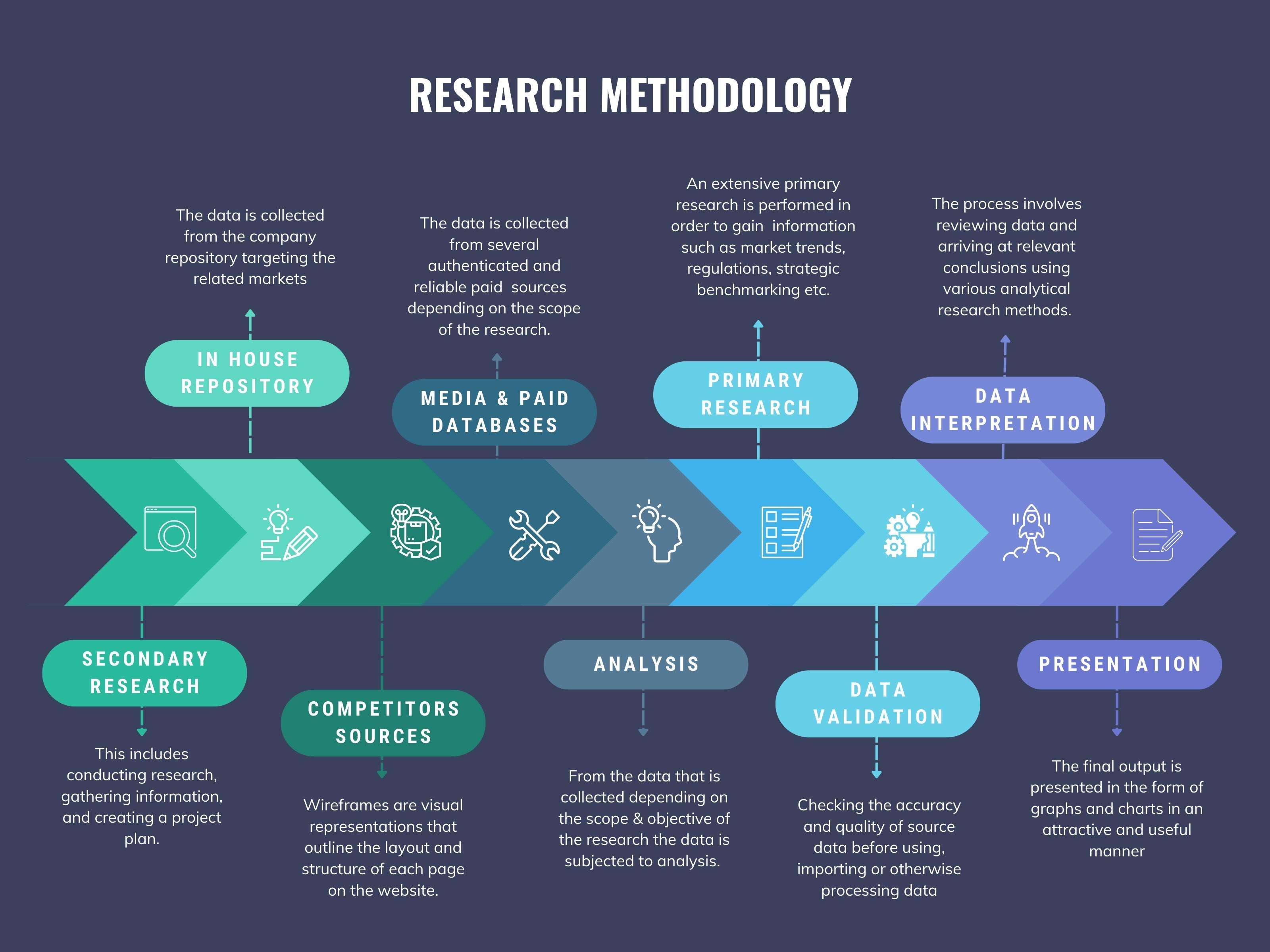
We at ‘Stratistics’ opt for an extensive research approach which involves data mining, data validation, and data analysis. The various research sources include in-house repository, secondary research, competitor’s sources, social media research, client internal data, and primary research.
Our team of analysts prefers the most reliable and authenticated data sources in order to perform the comprehensive literature search. With access to most of the authenticated data bases our team highly considers the best mix of information through various sources to obtain extensive and accurate analysis.
Each report takes an average time of a month and a team of 4 industry analysts. The time may vary depending on the scope and data availability of the desired market report. The various parameters used in the market assessment are standardized in order to enhance the data accuracy.
Data Mining
The data is collected from several authenticated, reliable, paid and unpaid sources and is filtered depending on the scope & objective of the research. Our reports repository acts as an added advantage in this procedure. Data gathering from the raw material suppliers, distributors and the manufacturers is performed on a regular basis, this helps in the comprehensive understanding of the products value chain. Apart from the above mentioned sources the data is also collected from the industry consultants to ensure the objective of the study is in the right direction.
Market trends such as technological advancements, regulatory affairs, market dynamics (Drivers, Restraints, Opportunities and Challenges) are obtained from scientific journals, market related national & international associations and organizations.
Data Analysis
From the data that is collected depending on the scope & objective of the research the data is subjected for the analysis. The critical steps that we follow for the data analysis include:
- Product Lifecycle Analysis
- Competitor analysis
- Risk analysis
- Porters Analysis
- PESTEL Analysis
- SWOT Analysis
The data engineering is performed by the core industry experts considering both the Marketing Mix Modeling and the Demand Forecasting. The marketing mix modeling makes use of multiple-regression techniques to predict the optimal mix of marketing variables. Regression factor is based on a number of variables and how they relate to an outcome such as sales or profits.
Data Validation
The data validation is performed by the exhaustive primary research from the expert interviews. This includes telephonic interviews, focus groups, face to face interviews, and questionnaires to validate our research from all aspects. The industry experts we approach come from the leading firms, involved in the supply chain ranging from the suppliers, distributors to the manufacturers and consumers so as to ensure an unbiased analysis.
We are in touch with more than 15,000 industry experts with the right mix of consultants, CEO's, presidents, vice presidents, managers, experts from both supply side and demand side, executives and so on.
The data validation involves the primary research from the industry experts belonging to:
- Leading Companies
- Suppliers & Distributors
- Manufacturers
- Consumers
- Industry/Strategic Consultants
Apart from the data validation the primary research also helps in performing the fill gap research, i.e. providing solutions for the unmet needs of the research which helps in enhancing the reports quality.
For more details about research methodology, kindly write to us at info@strategymrc.com
Frequently Asked Questions
In case of any queries regarding this report, you can contact the customer service by filing the “Inquiry Before Buy” form available on the right hand side. You may also contact us through email: info@strategymrc.com or phone: +1-301-202-5929
Yes, the samples are available for all the published reports. You can request them by filling the “Request Sample” option available in this page.
Yes, you can request a sample with your specific requirements. All the customized samples will be provided as per the requirement with the real data masked.
All our reports are available in Digital PDF format. In case if you require them in any other formats, such as PPT, Excel etc you can submit a request through “Inquiry Before Buy” form available on the right hand side. You may also contact us through email: info@strategymrc.com or phone: +1-301-202-5929
We offer a free 15% customization with every purchase. This requirement can be fulfilled for both pre and post sale. You may send your customization requirements through email at info@strategymrc.com or call us on +1-301-202-5929.
We have 3 different licensing options available in electronic format.
- Single User Licence: Allows one person, typically the buyer, to have access to the ordered product. The ordered product cannot be distributed to anyone else.
- 2-5 User Licence: Allows the ordered product to be shared among a maximum of 5 people within your organisation.
- Corporate License: Allows the product to be shared among all employees of your organisation regardless of their geographical location.
All our reports are typically be emailed to you as an attachment.
To order any available report you need to register on our website. The payment can be made either through CCAvenue or PayPal payments gateways which accept all international cards.
We extend our support to 6 months post sale. A post sale customization is also provided to cover your unmet needs in the report.
Request Customization
We offer complimentary customization of up to 15% with every purchase. To share your customization requirements, feel free to email us at info@strategymrc.com or call us on +1-301-202-5929. .
Please Note: Customization within the 15% threshold is entirely free of charge. If your request exceeds this limit, we will conduct a feasibility assessment. Following that, a detailed quote and timeline will be provided.
WHY CHOOSE US ?

Assured Quality
Best in class reports with high standard of research integrity

24X7 Research Support
Continuous support to ensure the best customer experience.

Free Customization
Adding more values to your product of interest.

Safe & Secure Access
Providing a secured environment for all online transactions.

Trusted by 600+ Brands
Serving the most reputed brands across the world.