Plastics Additives Market
Plastics Additives Market Forecasts to 2034 - Global Analysis By Additive Type (Plasticizers, Stabilizers, Flame Retardants, Impact Modifiers, Fillers, and Other Additive Types), Polymer Type, Function, Form, End Use Industry, and By Geography

According to Stratistics MRC, the Global Plastics Additives Market is accounted for $61.1 billion in 2026 and is expected to reach $89.7 billion by 2034 growing at a CAGR of 4.9% during the forecast period. Plastics additives are chemical substances incorporated into polymer matrices to enhance processing characteristics, modify physical properties, or extend product lifespan. These essential compounds enable the production of high-performance plastics tailored for automotive, packaging, construction, and consumer goods applications. The market encompasses a wide spectrum of additive types including plasticizers, stabilizers, flame retardants, fillers, colorants, and antimicrobial agents, each addressing specific performance requirements. As global plastic production continues to expand and regulatory standards evolve, the demand for sophisticated additive formulations is steadily increasing.
Market Dynamics:
Driver:
Rising demand for lightweight materials in automotive and aerospace industries
This factor is significantly driving market growth as manufacturers seek to reduce vehicle weight for improved fuel efficiency and lower emissions. Plastics reinforced with additives such as impact modifiers, lubricants, and processing aids offer exceptional strength-to-weight ratios compared to traditional metal components. Automotive manufacturers increasingly replace metal parts with engineered plastics containing stabilizers and flame retardants to meet safety standards while achieving weight reduction targets. The global shift toward electric vehicles, which require lightweight structures to maximize battery range, further amplifies demand for high-performance plastic additives, creating sustained growth opportunities across the transportation sector.
Restraint:
Stringent environmental regulations on certain additive chemistries
This factor significantly restrains market expansion as regulatory bodies impose restrictions on additives linked to health and environmental concerns. Phthalate plasticizers, certain brominated flame retardants, and heavy-metal-based stabilizers face phase-outs or bans under regulations such as REACH in Europe and various national chemical safety laws. Compliance requires manufacturers to reformulate products, invest in alternative chemistries, and navigate complex approval processes across different jurisdictions. The resulting uncertainty and increased development costs discourage investment in new additive technologies, while customers hesitate to adopt products that may face future restrictions, slowing overall market momentum in established application segments.
Opportunity:
Development of bio-based and sustainable additive solutions
This factor presents transformative opportunities as the plastics industry responds to circular economy principles and consumer demand for eco-friendly products. Bio-based plasticizers derived from vegetable oils, non-toxic flame retardants, and naturally sourced antioxidants are gaining traction among brand owners seeking to improve environmental profiles. Additives that enhance the recyclability of plastics or enable compostability in bioplastics offer particular promise for packaging applications. Companies investing in green additive technologies can capture premium pricing and establish long-term customer relationships as regulatory pressures intensify. The convergence of sustainability mandates and technological innovation creates a fertile ground for market differentiation and growth.
Threat:
Volatility in raw material prices and supply chain disruptions
This factor poses significant threats to additive manufacturers and downstream users through unpredictable cost structures and availability challenges. Many plastic additives depend on petrochemical feedstocks, mineral resources, or specialty chemicals subject to geopolitical tensions, trade policies, and production outages. Price fluctuations in crude oil, natural gas, or key minerals directly impact additive production costs, compressing margins for suppliers and creating budget uncertainty for plastic processors. Global events such as pandemics or regional conflicts can disrupt logistics networks, leading to shortages of critical additives that halt plastic production lines. These vulnerabilities encourage customers to seek alternative materials or reduce additive usage where possible.
Covid-19 Impact:
The COVID-19 pandemic produced mixed effects on the plastics additives market, with significant divergence across application segments. Lockdowns initially disrupted manufacturing and logistics, delaying additive shipments and reducing demand from automotive and construction sectors. However, surging demand for medical packaging, personal protective equipment, and food packaging plastics created strong counterbalancing growth. Antimicrobial additives experienced unprecedented demand as manufacturers sought to produce self-disinfecting surfaces and packaging. The pandemic also accelerated e-commerce packaging growth, boosting demand for additives that enhance durability and drop resistance. Supply chain lessons learned during the crisis have prompted increased inventory buffers and regionalization of additive production.
The Plasticizers segment is expected to be the largest during the forecast period
The Plasticizers segment is expected to account for the largest market share during the forecast period, driven by the massive consumption of flexible polyvinyl chloride (PVC) in construction, wire and cable, flooring, and automotive interior applications. Plasticizers impart flexibility, workability, and durability to rigid polymer matrices, with ortho-phthalates historically dominating due to low cost and effective performance. Despite regulatory pressures on certain chemistries, the segment maintains leadership through continuous innovation in non-phthalate and bio-based alternatives that meet safety standards. The construction industry's steady growth in developing economies, combined with replacement demand in mature markets, ensures plasticizers remain the most voluminous additive category throughout the forecast timeline.
The Bioplastics segment is expected to have the highest CAGR during the forecast period
Over the forecast period, the Bioplastics segment is predicted to witness the highest growth rate, fueled by global initiatives to reduce fossil-based plastic consumption and enhance biodegradability. Bioplastics require specialized additives including nucleating agents for crystallization control, processing aids for temperature sensitivity, and hydrolysis stabilizers for moisture resistance. Unlike conventional polymers, bioplastics often exhibit narrower processing windows and inferior mechanical properties, creating demand for tailored additive packages. Government bans on single-use conventional plastics, corporate sustainability pledges, and consumer preference for renewable materials collectively drive bioplastics expansion. As production capacity for polylactic acid (PLA), polyhydroxyalkanoates (PHA), and starch blends multiplies, additive consumption in this segment accelerates correspondingly.
Region with largest share:
During the forecast period, the Asia Pacific region is expected to hold the largest market share, driven by the region's position as the global hub for plastic production and processing. China accounts for nearly one-third of worldwide plastic consumption, while India and Southeast Asian nations are rapidly expanding their manufacturing bases. The concentration of packaging, electronics, automotive, and construction industries in this region generates sustained demand for all additive categories. Lower production costs, favorable government policies supporting industrial growth, and proximity to raw material sources give Asia Pacific a competitive advantage. With the world's largest plastic processing infrastructure and continuously growing end-use markets, this region maintains its dominant market position throughout the forecast period.
Region with highest CAGR:
Over the forecast period, the Asia Pacific region is anticipated to exhibit the highest CAGR, supported by accelerating industrialization, urbanization, and rising middle-class consumption across emerging economies. Countries such as Vietnam, Indonesia, Thailand, and the Philippines are witnessing rapid growth in plastic-intensive sectors including packaged foods, consumer electronics, and automotive manufacturing. Government initiatives promoting domestic manufacturing and infrastructure development further stimulate plastics demand. As multinational corporations diversify supply chains within the region, new additive production facilities are being established, increasing local availability and reducing import dependence. The combination of a large existing base and robust growth drivers makes Asia Pacific the fastest-growing region for plastics additives globally.
Key players in the market
Some of the key players in Plastics Additives Market include BASF SE, Clariant AG, Songwon Industrial Co. Ltd., Lanxess AG, Evonik Industries AG, Adeka Corporation, Albemarle Corporation, Kaneka Corporation, Sabo S.p.A., Baerlocher GmbH, Avient Corporation, Ampacet Corporation, Dow Inc., Exxon Mobil Corporation, Arkema S.A., Akzo Nobel N.V., Tosaf Group, SI Group Inc., PMC Group Inc., and Valtris Specialty Chemicals.
Key Developments:
In April 2026, Clariant launched its new AddWorks PPA solutions (101 FG and 122 G) at Chinaplas 2026, offering manufacturers a highly anticipated PFAS-free polymer processing aid that eliminates surface defects in film extrusion while strictly satisfying tightening global food-contact regulations.
In March 2026, BASF showcased its next-generation plastic additive technologies at Chinaplas 2026, debuting its Tinuvin NOR 600 stabilizer, engineered to provide strong acid resistance and weatherability for outdoor architectural, agricultural, and industrial infrastructure plastics.
In October 2025, Songwon expanded its international leadership footprint by finalizing a major investment package in Saudi Arabia to upscale the production and distribution lines of its proprietary One-Pack Systems (OPS) additives.
Additive Types Covered:
• Plasticizers
• Stabilizers
• Flame Retardants
• Impact Modifiers
• Fillers
• Colorants and Pigments
• Antioxidants
• UV Stabilizers
• Processing Aids
• Lubricants
• Antistatic Agents
• Antimicrobial Additives
• Nucleating Agents
• Foaming Agents
• Other Additive Types
Polymer Types Covered:
• PVC
• Polyethylene
• Polypropylene
• PET
• Polystyrene
• Engineering Plastics
• Bioplastics
Functions Covered:
• Performance Enhancement
• Processing Improvement
• Durability Enhancement
• Safety Enhancement
• Aesthetic Enhancement
Forms Covered:
• Liquid
• Powder
• Granules
• Masterbatch
End Use Industries Covered:
• Packaging
• Automotive
• Construction
• Consumer Goods
• Electrical and Electronics
• Healthcare
• Agriculture
• Textiles
Regions Covered:
• North America
o United States
o Canada
o Mexico
• Europe
o United Kingdom
o Germany
o France
o Italy
o Spain
o Netherlands
o Belgium
o Sweden
o Switzerland
o Poland
o Rest of Europe
• Asia Pacific
o China
o Japan
o India
o South Korea
o Australia
o Indonesia
o Thailand
o Malaysia
o Singapore
o Vietnam
o Rest of Asia Pacific
• South America
o Brazil
o Argentina
o Colombia
o Chile
o Peru
o Rest of South America
• Rest of the World (RoW)
o Middle East
§ Saudi Arabia
§ United Arab Emirates
§ Qatar
§ Israel
§ Rest of Middle East
o Africa
§ South Africa
§ Egypt
§ Morocco
§ Rest of Africa
What our report offers:
- Market share assessments for the regional and country-level segments
- Strategic recommendations for the new entrants
- Covers Market data for the years 2023, 2024, 2025, 2026, 2027, 2028, 2030, 2032 and 2034
- Market Trends (Drivers, Constraints, Opportunities, Threats, Challenges, Investment Opportunities, and recommendations)
- Strategic recommendations in key business segments based on the market estimations
- Competitive landscaping mapping the key common trends
- Company profiling with detailed strategies, financials, and recent developments
- Supply chain trends mapping the latest technological advancements
Free Customization Offerings:
All the customers of this report will be entitled to receive one of the following free customization options:
• Company Profiling
o Comprehensive profiling of additional market players (up to 3)
o SWOT Analysis of key players (up to 3)
• Regional Segmentation
o Market estimations, Forecasts and CAGR of any prominent country as per the client's interest (Note: Depends on feasibility check)
• Competitive Benchmarking
o Benchmarking of key players based on product portfolio, geographical presence, and strategic alliances
Table of Contents
1 Executive Summary
1.1 Market Snapshot and Key Highlights
1.2 Growth Drivers, Challenges, and Opportunities
1.3 Competitive Landscape Overview
1.4 Strategic Insights and Recommendations
2 Research Framework
2.1 Study Objectives and Scope
2.2 Stakeholder Analysis
2.3 Research Assumptions and Limitations
2.4 Research Methodology
2.4.1 Data Collection (Primary and Secondary)
2.4.2 Data Modeling and Estimation Techniques
2.4.3 Data Validation and Triangulation
2.4.4 Analytical and Forecasting Approach
3 Market Dynamics and Trend Analysis
3.1 Market Definition and Structure
3.2 Key Market Drivers
3.3 Market Restraints and Challenges
3.4 Growth Opportunities and Investment Hotspots
3.5 Industry Threats and Risk Assessment
3.6 Technology and Innovation Landscape
3.7 Emerging and High-Growth Markets
3.8 Regulatory and Policy Environment
3.9 Impact of COVID-19 and Recovery Outlook
4 Competitive and Strategic Assessment
4.1 Porter's Five Forces Analysis
4.1.1 Supplier Bargaining Power
4.1.2 Buyer Bargaining Power
4.1.3 Threat of Substitutes
4.1.4 Threat of New Entrants
4.1.5 Competitive Rivalry
4.2 Market Share Analysis of Key Players
4.3 Product Benchmarking and Performance Comparison
5 Global Plastics Additives Market, By Additive Type
5.1 Plasticizers
5.2 Stabilizers
5.3 Flame Retardants
5.4 Impact Modifiers
5.5 Fillers
5.6 Colorants and Pigments
5.7 Antioxidants
5.8 UV Stabilizers
5.9 Processing Aids
5.10 Lubricants
5.11 Antistatic Agents
5.12 Antimicrobial Additives
5.13 Nucleating Agents
5.14 Foaming Agents
5.15 Other Additive Types
6 Global Plastics Additives Market, By Polymer Type
6.1 PVC
6.2 Polyethylene
6.3 Polypropylene
6.4 PET
6.5 Polystyrene
6.6 Engineering Plastics
6.7 Bioplastics
7 Global Plastics Additives Market, By Function
7.1 Performance Enhancement
7.2 Processing Improvement
7.3 Durability Enhancement
7.4 Safety Enhancement
7.5 Aesthetic Enhancement
8 Global Plastics Additives Market, By Form
8.1 Liquid
8.2 Powder
8.3 Granules
8.4 Masterbatch
9 Global Plastics Additives Market, By End Use Industry
9.1 Packaging
9.2 Automotive
9.3 Construction
9.4 Consumer Goods
9.5 Electrical and Electronics
9.6 Healthcare
9.7 Agriculture
9.8 Textiles
10 Global Plastics Additives Market, By Geography
10.1 North America
10.1.1 United States
10.1.2 Canada
10.1.3 Mexico
10.2 Europe
10.2.1 United Kingdom
10.2.2 Germany
10.2.3 France
10.2.4 Italy
10.2.5 Spain
10.2.6 Netherlands
10.2.7 Belgium
10.2.8 Sweden
10.2.9 Switzerland
10.2.10 Poland
10.2.11 Rest of Europe
10.3 Asia Pacific
10.3.1 China
10.3.2 Japan
10.3.3 India
10.3.4 South Korea
10.3.5 Australia
10.3.6 Indonesia
10.3.7 Thailand
10.3.8 Malaysia
10.3.9 Singapore
10.3.10 Vietnam
10.3.11 Rest of Asia Pacific
10.4 South America
10.4.1 Brazil
10.4.2 Argentina
10.4.3 Colombia
10.4.4 Chile
10.4.5 Peru
10.4.6 Rest of South America
10.5 Rest of the World (RoW)
10.5.1 Middle East
10.5.1.1 Saudi Arabia
10.5.1.2 United Arab Emirates
10.5.1.3 Qatar
10.5.1.4 Israel
10.5.1.5 Rest of Middle East
10.5.2 Africa
10.5.2.1 South Africa
10.5.2.2 Egypt
10.5.2.3 Morocco
10.5.2.4 Rest of Africa
11 Strategic Market Intelligence
11.1 Industry Value Network and Supply Chain Assessment
11.2 White-Space and Opportunity Mapping
11.3 Product Evolution and Market Life Cycle Analysis
11.4 Channel, Distributor, and Go-to-Market Assessment
12 Industry Developments and Strategic Initiatives
12.1 Mergers and Acquisitions
12.2 Partnerships, Alliances, and Joint Ventures
12.3 New Product Launches and Certifications
12.4 Capacity Expansion and Investments
12.5 Other Strategic Initiatives
13 Company Profiles
13.1 BASF SE
13.2 Clariant AG
13.3 Songwon Industrial Co. Ltd.
13.4 Lanxess AG
13.5 Evonik Industries AG
13.6 Adeka Corporation
13.7 Albemarle Corporation
13.8 Kaneka Corporation
13.9 Sabo S.p.A.
13.10 Baerlocher GmbH
13.11 Avient Corporation
13.12 Ampacet Corporation
13.13 Dow Inc.
13.14 Exxon Mobil Corporation
13.15 Arkema S.A.
13.16 Akzo Nobel N.V.
13.17 Tosaf Group
13.18 SI Group Inc.
13.19 PMC Group Inc.
13.20 Valtris Specialty Chemicals
List of Tables
1 Global Plastics Additives Market Outlook, By Region (2023–2034) ($MN)
2 Global Plastics Additives Market Outlook, By Polymer Type (2023–2034) ($MN)
3 Global Plastics Additives Market Outlook, By PVC (2023–2034) ($MN)
4 Global Plastics Additives Market Outlook, By Polyethylene (2023–2034) ($MN)
5 Global Plastics Additives Market Outlook, By Polypropylene (2023–2034) ($MN)
6 Global Plastics Additives Market Outlook, By PET (2023–2034) ($MN)
7 Global Plastics Additives Market Outlook, By Polystyrene (2023–2034) ($MN)
8 Global Plastics Additives Market Outlook, By Engineering Plastics (2023–2034) ($MN)
9 Global Plastics Additives Market Outlook, By Bioplastics (2023–2034) ($MN)
10 Global Plastics Additives Market Outlook, By Function (2023–2034) ($MN)
11 Global Plastics Additives Market Outlook, By Performance Enhancement (2023–2034) ($MN)
12 Global Plastics Additives Market Outlook, By Processing Improvement (2023–2034) ($MN)
13 Global Plastics Additives Market Outlook, By Durability Enhancement (2023–2034) ($MN)
14 Global Plastics Additives Market Outlook, By Safety Enhancement (2023–2034) ($MN)
15 Global Plastics Additives Market Outlook, By Aesthetic Enhancement (2023–2034) ($MN)
16 Global Plastics Additives Market Outlook, By Form (2023–2034) ($MN)
17 Global Plastics Additives Market Outlook, By Liquid (2023–2034) ($MN)
18 Global Plastics Additives Market Outlook, By Powder (2023–2034) ($MN)
19 Global Plastics Additives Market Outlook, By Granules (2023–2034) ($MN)
20 Global Plastics Additives Market Outlook, By Masterbatch (2023–2034) ($MN)
21 Global Plastics Additives Market Outlook, By End Use Industry (2023–2034) ($MN)
22 Global Plastics Additives Market Outlook, By Packaging (2023–2034) ($MN)
23 Global Plastics Additives Market Outlook, By Automotive (2023–2034) ($MN)
24 Global Plastics Additives Market Outlook, By Construction (2023–2034) ($MN)
25 Global Plastics Additives Market Outlook, By Consumer Goods (2023–2034) ($MN)
26 Global Plastics Additives Market Outlook, By Electrical and Electronics (2023–2034) ($MN)
27 Global Plastics Additives Market Outlook, By Healthcare (2023–2034) ($MN)
28 Global Plastics Additives Market Outlook, By Agriculture (2023–2034) ($MN)
29 Global Plastics Additives Market Outlook, By Textiles (2023–2034) ($MN)
Note: Tables for North America, Europe, APAC, South America, and Rest of the World (RoW) Regions are also represented in the same manner as above.
List of Figures
RESEARCH METHODOLOGY
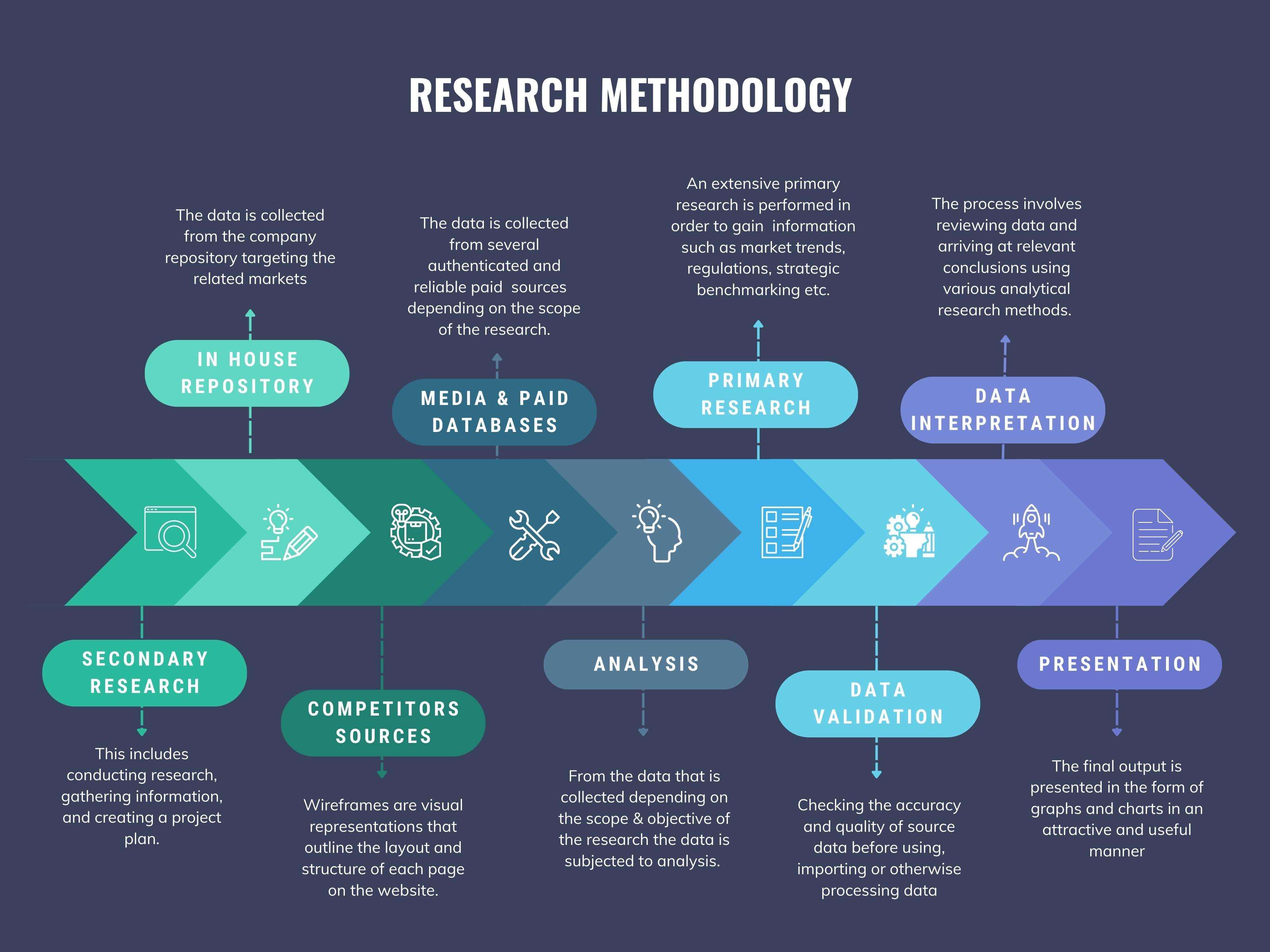
We at ‘Stratistics’ opt for an extensive research approach which involves data mining, data validation, and data analysis. The various research sources include in-house repository, secondary research, competitor’s sources, social media research, client internal data, and primary research.
Our team of analysts prefers the most reliable and authenticated data sources in order to perform the comprehensive literature search. With access to most of the authenticated data bases our team highly considers the best mix of information through various sources to obtain extensive and accurate analysis.
Each report takes an average time of a month and a team of 4 industry analysts. The time may vary depending on the scope and data availability of the desired market report. The various parameters used in the market assessment are standardized in order to enhance the data accuracy.
Data Mining
The data is collected from several authenticated, reliable, paid and unpaid sources and is filtered depending on the scope & objective of the research. Our reports repository acts as an added advantage in this procedure. Data gathering from the raw material suppliers, distributors and the manufacturers is performed on a regular basis, this helps in the comprehensive understanding of the products value chain. Apart from the above mentioned sources the data is also collected from the industry consultants to ensure the objective of the study is in the right direction.
Market trends such as technological advancements, regulatory affairs, market dynamics (Drivers, Restraints, Opportunities and Challenges) are obtained from scientific journals, market related national & international associations and organizations.
Data Analysis
From the data that is collected depending on the scope & objective of the research the data is subjected for the analysis. The critical steps that we follow for the data analysis include:
- Product Lifecycle Analysis
- Competitor analysis
- Risk analysis
- Porters Analysis
- PESTEL Analysis
- SWOT Analysis
The data engineering is performed by the core industry experts considering both the Marketing Mix Modeling and the Demand Forecasting. The marketing mix modeling makes use of multiple-regression techniques to predict the optimal mix of marketing variables. Regression factor is based on a number of variables and how they relate to an outcome such as sales or profits.
Data Validation
The data validation is performed by the exhaustive primary research from the expert interviews. This includes telephonic interviews, focus groups, face to face interviews, and questionnaires to validate our research from all aspects. The industry experts we approach come from the leading firms, involved in the supply chain ranging from the suppliers, distributors to the manufacturers and consumers so as to ensure an unbiased analysis.
We are in touch with more than 15,000 industry experts with the right mix of consultants, CEO's, presidents, vice presidents, managers, experts from both supply side and demand side, executives and so on.
The data validation involves the primary research from the industry experts belonging to:
- Leading Companies
- Suppliers & Distributors
- Manufacturers
- Consumers
- Industry/Strategic Consultants
Apart from the data validation the primary research also helps in performing the fill gap research, i.e. providing solutions for the unmet needs of the research which helps in enhancing the reports quality.
For more details about research methodology, kindly write to us at info@strategymrc.com
Frequently Asked Questions
In case of any queries regarding this report, you can contact the customer service by filing the “Inquiry Before Buy” form available on the right hand side. You may also contact us through email: info@strategymrc.com or phone: +1-301-202-5929
Yes, the samples are available for all the published reports. You can request them by filling the “Request Sample” option available in this page.
Yes, you can request a sample with your specific requirements. All the customized samples will be provided as per the requirement with the real data masked.
All our reports are available in Digital PDF format. In case if you require them in any other formats, such as PPT, Excel etc you can submit a request through “Inquiry Before Buy” form available on the right hand side. You may also contact us through email: info@strategymrc.com or phone: +1-301-202-5929
We offer a free 15% customization with every purchase. This requirement can be fulfilled for both pre and post sale. You may send your customization requirements through email at info@strategymrc.com or call us on +1-301-202-5929.
We have 3 different licensing options available in electronic format.
- Single User Licence: Allows one person, typically the buyer, to have access to the ordered product. The ordered product cannot be distributed to anyone else.
- 2-5 User Licence: Allows the ordered product to be shared among a maximum of 5 people within your organisation.
- Corporate License: Allows the product to be shared among all employees of your organisation regardless of their geographical location.
All our reports are typically be emailed to you as an attachment.
To order any available report you need to register on our website. The payment can be made either through CCAvenue or PayPal payments gateways which accept all international cards.
We extend our support to 6 months post sale. A post sale customization is also provided to cover your unmet needs in the report.
Request Customization
We offer complimentary customization of up to 15% with every purchase. To share your customization requirements, feel free to email us at info@strategymrc.com or call us on +1-301-202-5929. .
Please Note: Customization within the 15% threshold is entirely free of charge. If your request exceeds this limit, we will conduct a feasibility assessment. Following that, a detailed quote and timeline will be provided.
WHY CHOOSE US ?

Assured Quality
Best in class reports with high standard of research integrity

24X7 Research Support
Continuous support to ensure the best customer experience.

Free Customization
Adding more values to your product of interest.

Safe & Secure Access
Providing a secured environment for all online transactions.

Trusted by 600+ Brands
Serving the most reputed brands across the world.