Polycaprolactone Market
Polycaprolactone Market Forecasts to 2034 – Global Analysis By Product Form (Pellets and Granules, Powder, Films and Sheets, Fibers and Other Forms), Molecular Weight, Grade, Processing Method, Application, End User and By Geography

Market Dynamics:
Driver:
Expanding Biomedical and Pharmaceutical Applications
The growing demand for biocompatible and bioresorbable materials in medical device manufacturing and pharmaceutical drug delivery is accelerating polycaprolactone adoption across healthcare applications. Polycaprolactone serves as a foundational material in resorbable sutures, orthopedic implants, tissue engineering scaffolds, and controlled-release drug carriers, where its slow degradation profile aligns with tissue regeneration timelines. The shift toward minimally invasive procedures and personalized medicine further supports demand for customizable polymer systems, which in turn drives pharmaceutical companies and medical device manufacturers to qualify polycaprolactone-based formulations, thereby sustaining volume growth in high-value clinical segments.
Restraint:
High Production Cost Relative to Conventional Polymers
Polycaprolactone remains significantly more expensive than commodity thermoplastics such as polyethylene and polypropylene, and this cost differential constrains adoption in price-sensitive industrial applications where biodegradability is not a primary requirement. The production process requires specialized ring-opening polymerization infrastructure and purified ε-caprolactone monomer, which limits the number of qualified manufacturers and keeps pricing elevated. Additionally, the qualification cycle for medical-grade polycaprolactone involves extensive regulatory documentation and traceability requirements, which adds further cost burden and discourages conversion from established materials in cost-driven segments, thereby limiting the pace of volume expansion outside healthcare.
Opportunity:
Additive Manufacturing and 3D Printing Growth
The rapid expansion of additive manufacturing in medical, dental, and industrial prototyping creates a substantial opportunity for polycaprolactone filaments and pellet feedstocks, as the polymer’s low melting point and excellent layer adhesion suit extrusion-based 3D printing. Polycaprolactone is increasingly utilized in patient-specific implants, surgical planning models, and wearable medical devices, where its flexibility and controlled degradation offer advantages over rigid thermoplastics. As healthcare providers and device manufacturers invest in point-of-care printing capabilities, suppliers capable of delivering medical-grade polycaprolactone with consistent molecular weight and validated biocompatibility can capture long-term supply agreements, thereby establishing a defensible position in the high-growth additive manufacturing materials segment.
Threat:
Competition from Alternative Biodegradable Polyesters
Polycaprolactone faces intensifying competition from polylactic acid, polyhydroxyalkanoates, and polybutylene succinate, which benefit from broader production scale, established converter familiarity, and in some applications lower cost profiles. Polylactic acid has achieved significant commercial penetration in packaging and disposable foodservice, while polyhydroxyalkanoates offer fully bio-based content that appeals to brand owners prioritizing renewable feedstocks. Additionally, inconsistent end-of-life infrastructure for compostable and biodegradable materials means that polycaprolactone’s biodegradability advantage does not always translate into practical disposal pathways, thereby weakening the differentiation that underpins its premium pricing in non-medical applications.
Covid-19 Impact:
The pandemic initially disrupted polycaprolactone supply chains through raw material shortages and reduced elective medical procedure volumes, which temporarily softened demand for resorbable implants and device components. As healthcare systems recovered, the backlog of deferred procedures and accelerated investment in pharmaceutical manufacturing capacity restored demand momentum. Post-pandemic, the structural impact has been a sharper focus on supply chain resilience and regional sourcing, which has prompted medical device manufacturers to qualify alternate polycaprolactone suppliers and reduce dependence on single production nodes, thereby reshaping procurement strategies across the healthcare materials value chain.
The pellets and granules segment is expected to be the largest during the forecast period
The pellets and granules segment is expected to account for the largest market share during the forecast period, due to its role as the primary commercial form for compounding, extrusion, and injection molding operations across medical device and industrial applications. Pellets and granules offer consistent feed characteristics, predictable melt flow, and compatibility with standard processing equipment, which simplifies converter qualification and scale-up. Medical device manufacturers and polymer compounders prefer pelletized polycaprolactone for controlled dosing in blends and masterbatches, while additive manufacturing material suppliers utilize pellets for filament extrusion, thereby sustaining the segment’s dominant revenue position across diverse end-use channels.
The medical grade segment is expected to have the highest CAGR during the forecast period
Over the forecast period, the medical grade segment is predicted to witness the highest growth rate, driven by expanding applications in resorbable implants, drug delivery systems, and tissue engineering scaffolds that require stringent purity, traceability, and regulatory compliance. Medical-grade polycaprolactone commands premium pricing and benefits from long qualification cycles that create sticky customer relationships once approved. As healthcare providers adopt personalized medicine approaches and as medical device manufacturers invest in bioresorbable technologies, demand for validated medical-grade material is rising, which in turn incentivizes producers to expand dedicated medical-grade capacity and documentation capabilities, thereby outpacing industrial and research grades in growth terms.
Region with largest share:
During the forecast period, the North America region is expected to hold the largest market share, due to the concentration of advanced medical device manufacturers, pharmaceutical companies, and additive manufacturing material suppliers in the United States. The region benefits from a mature regulatory framework that supports innovation in resorbable medical technologies and a well-developed healthcare infrastructure that facilitates clinical adoption of polycaprolactone-based products. Key players including Ingevity and Durect Corporation maintain significant presence, while research institutions and hospital systems collaborate on tissue engineering and drug delivery applications, thereby reinforcing North America’s dominant revenue position in the global polycaprolactone market.
Region with highest CAGR:
Over the forecast period, the Asia Pacific region is anticipated to exhibit the highest CAGR, due to rapid expansion of healthcare infrastructure, growing pharmaceutical manufacturing capacity, and increasing investment in additive manufacturing across China, Japan, and South Korea. China accounts for a substantial share of regional demand, supported by domestic producers such as Shenzhen Esun Industrial Co., Ltd. that serve both local and export markets. Japan maintains a technology-intensive position in biomedical research and precision materials, while India is gaining momentum through medical device localization initiatives and sustainability-driven polymer research, thereby supporting above-average regional growth across the forecast horizon.
Key players in the market
Some of the key players in Polycaprolactone Market include Perstorp Holding AB, Daicel Corporation, Ingevity Corporation, BASF SE, Merck KGaA, Sigma-Aldrich Co. LLC, Polysciences, Inc., Corbion N.V., Evonik Industries AG, Shenzhen Esun Industrial Co., Ltd., Lactel Absorbable Polymers, Poly-Med, Inc., PURAC Biochem BV, Durect Corporation, Ashland Inc., Arkema S.A., Dow Inc., and Mitsubishi Chemical Group Corporation.
Key Developments:
In November 2026, Ingevity Corporation expanded its Capa polycaprolactone polyol application development program for two-component polyurethane coatings, targeting improved adhesion to difficult substrates in automotive and industrial coating systems while maintaining long-term durability under demanding service conditions.
In October 2026, Corbion N.V. advanced its biomedical polymer portfolio through expanded supply agreements with resorbable medical device manufacturers, positioning its polycaprolactone-based resomer materials for sutures, orthopedic fixation devices, and drug delivery systems requiring validated biocompatibility and controlled degradation profiles.
In September 2026, Daicel Corporation extended its ISCC PLUS certification to additional engineering plastics produced at its Fuji Plant, enabling mass-balance allocation of bio-based and recycled feedstocks across its polymer portfolio as part of the group’s broader sustainable materials strategy.
Product Forms Covered:
• Pellets and Granules
• Powder
• Films and Sheets
• Fibers
• Other Forms
Molecular Weights Covered:
• Low Molecular Weight
• Medium Molecular Weight
• High Molecular Weight
Grades Covered:
• Industrial Grade
• Medical Grade
• Research Grade
Processing Methods Covered:
• Melt Processing
• Solution Processing
• Additive Manufacturing
• Electrospinning
• Other Methods
Applications Covered:
• Polymer Blending and Modification
• Drug Delivery Systems
• Tissue Engineering Scaffolds
• Sutures and Medical Implants
• 3D Printing Filaments
• Coatings and Adhesives
• Other Applications
End Users Covered:
• Medical Device Manufacturers
• Pharmaceutical Companies
• Polymer Compounders
• Additive Manufacturing Material Suppliers
• Research Institutions
• Other End Users
What our report offers:
- Market share assessments for the regional and country-level segments
- Strategic recommendations for the new entrants
- Covers Market data for the years 2023, 2024, 2025, 2026, 2027, 2028, 2030, 2032 and 2034
- Market Trends (Drivers, Constraints, Opportunities, Threats, Challenges, Investment Opportunities, and recommendations)
- Strategic recommendations in key business segments based on the market estimations
- Competitive landscaping mapping the key common trends
- Company profiling with detailed strategies, financials, and recent developments
- Supply chain trends mapping the latest technological advancements
Complimentary Customization Options:
- Every purchase of this report includes ONE complimentary customization option, allowing clients to tailor the research to their specific business requirements at no additional cost..
1. Company Profiling & Competitive Intelligence
• Detailed profiling of up to 3 additional market players
• SWOT analysis of up to 3 key market participants
• Analysis of competitive positioning, product portfolios and strategic developments
2. Country-Level Market Analysis
• Market size estimates, forecasts and CAGR analysis for one additional country of the client's choice
• Country-specific market trends, growth drivers, opportunities and challenges
• Regional market insights tailored to the client's geographical interests
• Subject to data availability and feasibility assessment
3. Competitive Benchmarking
• Comparative benchmarking of up to 5 key market players
• Evaluation based on product portfolios, geographical presence, technological capabilities and strategic partnerships
• Competitive positioning matrix highlighting key strengths and market differentiation
4. Additional Market Segmentation
• Market size estimates and forecasts for one additional subsegment relevant to the client's requirements
• Analysis of growth opportunities, demand patterns and emerging trends within the selected subsegment
• Subject to data availability and feasibility assessment
5. Market Trends & Strategic Insights
• Analysis of up to 3 emerging market trends relevant to the client's business interests
• Assessment of key growth opportunities, technological developments and potential market disruptions
• Strategic insights to support market entry, expansion or investment decisions
Customization Terms
• Clients may select one of the above complimentary customization options per report purchase.
• Complimentary customization is subject to data availability, research feasibility and scope confirmation.
• Requests exceeding the complimentary scope may be accommodated through paid customization.
• Delivery timelines for customized content will be confirmed upon assessment of the requirements.
Need something more specific?
- Our research team can also provide tailored research solutions to address your unique business requirements. Contact us to discuss additional customization opportunities
Table of Contents
1 Executive Summary1.1 Market Snapshot and Key Highlights
1.2 Growth Drivers, Challenges, and Opportunities
1.3 Competitive Landscape Overview
1.4 Strategic Insights and Recommendations
2 Research Framework
2.1 Study Objectives and Scope
2.2 Stakeholder Analysis
2.3 Research Assumptions and Limitations
2.4 Research Methodology
2.4.1 Data Collection (Primary and Secondary)
2.4.2 Data Modeling and Estimation Techniques
2.4.3 Data Validation and Triangulation
2.4.4 Analytical and Forecasting Approach
3 Market Dynamics and Trend Analysis
3.1 Market Definition and Structure
3.2 Key Market Drivers
3.3 Market Restraints and Challenges
3.4 Growth Opportunities and Investment Hotspots
3.5 Industry Threats and Risk Assessment
3.6 Technology and Innovation Landscape
3.7 Emerging and High-Growth Markets
3.8 Regulatory and Policy Environment
3.9 Impact of COVID-19 and Recovery Outlook
4 Competitive and Strategic Assessment
4.1 Porter's Five Forces Analysis
4.1.1 Supplier Bargaining Power
4.1.2 Buyer Bargaining Power
4.1.3 Threat of Substitutes
4.1.4 Threat of New Entrants
4.1.5 Competitive Rivalry
4.2 Market Share Analysis of Key Players
4.3 Product Benchmarking and Performance Comparison
5 Global Polycaprolactone Market, By Product Form
5.1 Pellets and Granules
5.2 Powder
5.3 Films and Sheets
5.4 Fibers
5.5 Other Forms
6 Global Polycaprolactone Market, By Molecular Weight
6.1 Low Molecular Weight
6.2 Medium Molecular Weight
6.3 High Molecular Weight
7 Global Polycaprolactone Market, By Grade
7.1 Industrial Grade
7.2 Medical Grade
7.3 Research Grade
8 Global Polycaprolactone Market, By Processing Method
8.1 Melt Processing
8.2 Solution Processing
8.3 Additive Manufacturing
8.4 Electrospinning
8.5 Other Methods
9 Global Polycaprolactone Market, By Application
9.1 Polymer Blending and Modification
9.2 Drug Delivery Systems
9.3 Tissue Engineering Scaffolds
9.4 Sutures and Medical Implants
9.5 3D Printing Filaments
9.6 Coatings and Adhesives
9.7 Other Applications
10 Global Polycaprolactone Market, By End User
10.1 Medical Device Manufacturers
10.2 Pharmaceutical Companies
10.3 Polymer Compounders
10.4 Additive Manufacturing Material Suppliers
10.5 Research Institutions
10.6 Other End Users
11 Global Polycaprolactone Market, By Geography
11.1 North America
11.1.1 United States
11.1.2 Canada
11.1.3 Mexico
11.2 Europe
11.2.1 United Kingdom
11.2.2 Germany
11.2.3 France
11.2.4 Italy
11.2.5 Spain
11.2.6 Netherlands
11.2.7 Belgium
11.2.8 Sweden
11.2.9 Switzerland
11.2.10 Poland
11.2.11 Rest of Europe
11.3 Asia Pacific
11.3.1 China
11.3.2 Japan
11.3.3 India
11.3.4 South Korea
11.3.5 Australia
11.3.6 Indonesia
11.3.7 Thailand
11.3.8 Malaysia
11.3.9 Singapore
11.3.10 Vietnam
11.3.11 Rest of Asia Pacific
11.4 South America
11.4.1 Brazil
11.4.2 Argentina
11.4.3 Colombia
11.4.4 Chile
11.4.5 Peru
11.4.6 Rest of South America
11.5 Rest of the World (RoW)
11.5.1 Middle East
11.5.1.1 Saudi Arabia
11.5.1.2 United Arab Emirates
11.5.1.3 Qatar
11.5.1.4 Israel
11.5.1.5 Rest of Middle East
11.5.2 Africa
11.5.2.1 South Africa
11.5.2.2 Egypt
11.5.2.3 Morocco
11.5.2.4 Rest of Africa
12 Strategic Market Intelligence
12.1 Industry Value Network and Supply Chain Assessment
12.2 White-Space and Opportunity Mapping
12.3 Product Evolution and Market Life Cycle Analysis
12.4 Channel, Distributor, and Go-to-Market Assessment
13 Industry Developments and Strategic Initiatives
13.1 Mergers and Acquisitions
13.2 Partnerships, Alliances, and Joint Ventures
13.3 New Product Launches and Certifications
13.4 Capacity Expansion and Investments
13.5 Other Strategic Initiatives
14 Company Profiles
14.1 Perstorp Holding AB
14.2 Daicel Corporation
14.3 Ingevity Corporation
14.4 BASF SE
14.5 Merck KGaA
14.6 Sigma-Aldrich Co. LLC
14.7 Polysciences, Inc.
14.8 Corbion N.V.
14.9 Evonik Industries AG
14.10 Shenzhen Esun Industrial Co., Ltd.
14.11 Lactel Absorbable Polymers
14.12 Poly-Med, Inc.
14.13 PURAC Biochem BV
14.14 Durect Corporation
14.15 Ashland Inc.
14.16 Arkema S.A.
14.17 Dow Inc.
14.18 Mitsubishi Chemical Group Corporation
List of Tables
1 Global Polycaprolactone Market Outlook, By Region (2023-2034) ($MN)
2 Global Polycaprolactone Market Outlook, By Product Form (2023-2034) ($MN)
3 Global Polycaprolactone Market Outlook, By Pellets and Granules (2023-2034) ($MN)
4 Global Polycaprolactone Market Outlook, By Powder (2023-2034) ($MN)
5 Global Polycaprolactone Market Outlook, By Films and Sheets (2023-2034) ($MN)
6 Global Polycaprolactone Market Outlook, By Fibers (2023-2034) ($MN)
7 Global Polycaprolactone Market Outlook, By Other Forms (2023-2034) ($MN)
8 Global Polycaprolactone Market Outlook, By Molecular Weight (2023-2034) ($MN)
9 Global Polycaprolactone Market Outlook, By Low Molecular Weight (2023-2034) ($MN)
10 Global Polycaprolactone Market Outlook, By Medium Molecular Weight (2023-2034) ($MN)
11 Global Polycaprolactone Market Outlook, By High Molecular Weight (2023-2034) ($MN)
12 Global Polycaprolactone Market Outlook, By Grade (2023-2034) ($MN)
13 Global Polycaprolactone Market Outlook, By Industrial Grade (2023-2034) ($MN)
14 Global Polycaprolactone Market Outlook, By Medical Grade (2023-2034) ($MN)
15 Global Polycaprolactone Market Outlook, By Research Grade (2023-2034) ($MN)
16 Global Polycaprolactone Market Outlook, By Processing Method (2023-2034) ($MN)
17 Global Polycaprolactone Market Outlook, By Melt Processing (2023-2034) ($MN)
18 Global Polycaprolactone Market Outlook, By Solution Processing (2023-2034) ($MN)
19 Global Polycaprolactone Market Outlook, By Additive Manufacturing (2023-2034) ($MN)
20 Global Polycaprolactone Market Outlook, By Electrospinning (2023-2034) ($MN)
21 Global Polycaprolactone Market Outlook, By Other Methods (2023-2034) ($MN)
22 Global Polycaprolactone Market Outlook, By Application (2023-2034) ($MN)
23 Global Polycaprolactone Market Outlook, By Polymer Blending and Modification (2023-2034) ($MN)
24 Global Polycaprolactone Market Outlook, By Drug Delivery Systems (2023-2034) ($MN)
25 Global Polycaprolactone Market Outlook, By Tissue Engineering Scaffolds (2023-2034) ($MN)
26 Global Polycaprolactone Market Outlook, By Sutures and Medical Implants (2023-2034) ($MN)
27 Global Polycaprolactone Market Outlook, By 3D Printing Filaments (2023-2034) ($MN)
28 Global Polycaprolactone Market Outlook, By Coatings and Adhesives (2023-2034) ($MN)
29 Global Polycaprolactone Market Outlook, By Other Applications (2023-2034) ($MN)
30 Global Polycaprolactone Market Outlook, By End User (2023-2034) ($MN)
31 Global Polycaprolactone Market Outlook, By Medical Device Manufacturers (2023-2034) ($MN)
32 Global Polycaprolactone Market Outlook, By Pharmaceutical Companies (2023-2034) ($MN)
33 Global Polycaprolactone Market Outlook, By Polymer Compounders (2023-2034) ($MN)
34 Global Polycaprolactone Market Outlook, By Additive Manufacturing Material Suppliers (2023-2034) ($MN)
35 Global Polycaprolactone Market Outlook, By Research Institutions (2023-2034) ($MN)
36 Global Polycaprolactone Market Outlook, By Other End Users (2023-2034) ($MN)
Note: Tables for North America, Europe, APAC, South America, and Rest of the World (RoW) Regions are also represented in the same manner as above.
List of Figures
RESEARCH METHODOLOGY
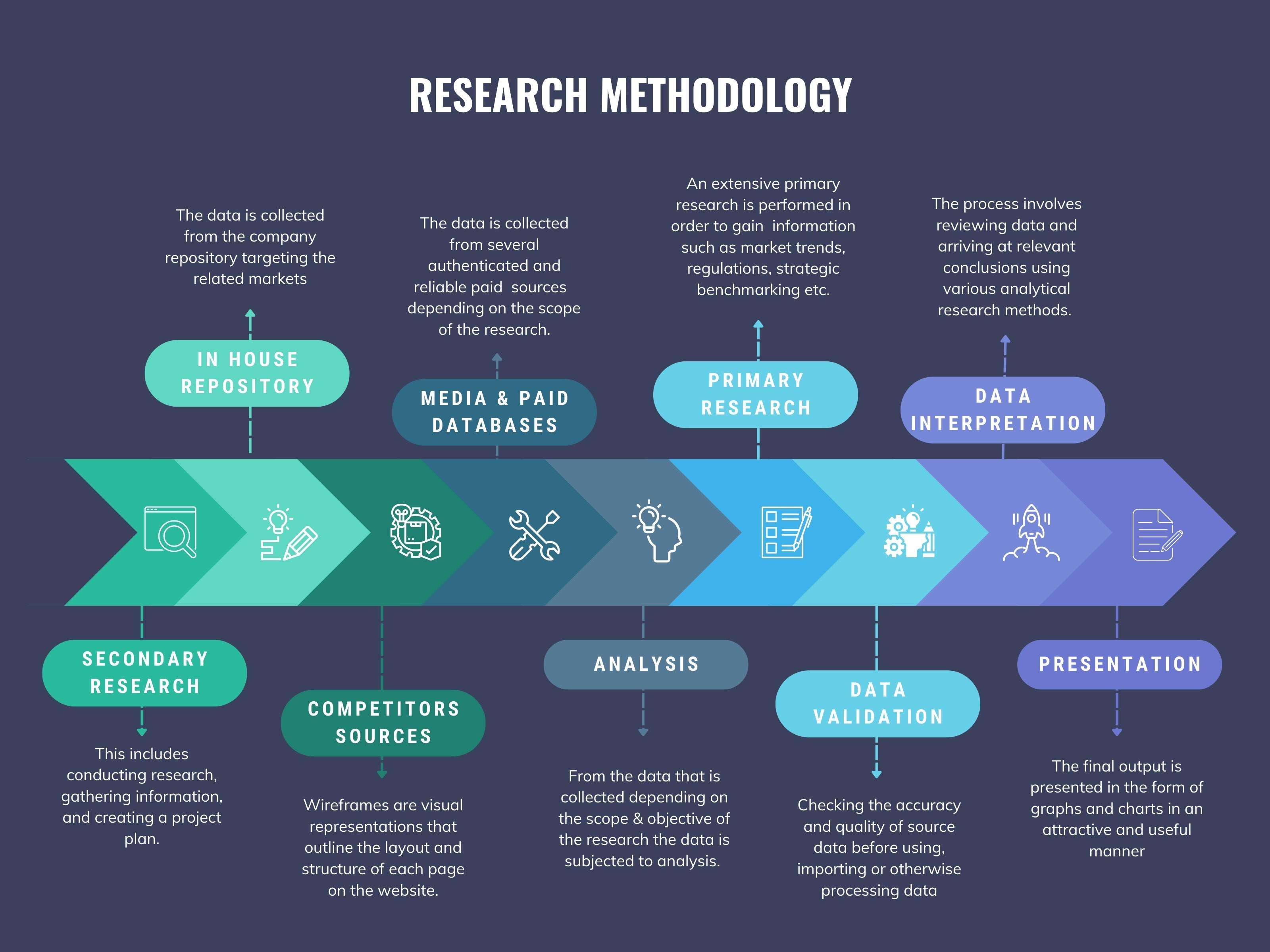
We at ‘Stratistics’ opt for an extensive research approach which involves data mining, data validation, and data analysis. The various research sources include in-house repository, secondary research, competitor’s sources, social media research, client internal data, and primary research.
Our team of analysts prefers the most reliable and authenticated data sources in order to perform the comprehensive literature search. With access to most of the authenticated data bases our team highly considers the best mix of information through various sources to obtain extensive and accurate analysis.
Each report takes an average time of a month and a team of 4 industry analysts. The time may vary depending on the scope and data availability of the desired market report. The various parameters used in the market assessment are standardized in order to enhance the data accuracy.
Data Mining
The data is collected from several authenticated, reliable, paid and unpaid sources and is filtered depending on the scope & objective of the research. Our reports repository acts as an added advantage in this procedure. Data gathering from the raw material suppliers, distributors and the manufacturers is performed on a regular basis, this helps in the comprehensive understanding of the products value chain. Apart from the above mentioned sources the data is also collected from the industry consultants to ensure the objective of the study is in the right direction.
Market trends such as technological advancements, regulatory affairs, market dynamics (Drivers, Restraints, Opportunities and Challenges) are obtained from scientific journals, market related national & international associations and organizations.
Data Analysis
From the data that is collected depending on the scope & objective of the research the data is subjected for the analysis. The critical steps that we follow for the data analysis include:
- Product Lifecycle Analysis
- Competitor analysis
- Risk analysis
- Porters Analysis
- PESTEL Analysis
- SWOT Analysis
The data engineering is performed by the core industry experts considering both the Marketing Mix Modeling and the Demand Forecasting. The marketing mix modeling makes use of multiple-regression techniques to predict the optimal mix of marketing variables. Regression factor is based on a number of variables and how they relate to an outcome such as sales or profits.
Data Validation
The data validation is performed by the exhaustive primary research from the expert interviews. This includes telephonic interviews, focus groups, face to face interviews, and questionnaires to validate our research from all aspects. The industry experts we approach come from the leading firms, involved in the supply chain ranging from the suppliers, distributors to the manufacturers and consumers so as to ensure an unbiased analysis.
We are in touch with more than 15,000 industry experts with the right mix of consultants, CEO's, presidents, vice presidents, managers, experts from both supply side and demand side, executives and so on.
The data validation involves the primary research from the industry experts belonging to:
- Leading Companies
- Suppliers & Distributors
- Manufacturers
- Consumers
- Industry/Strategic Consultants
Apart from the data validation the primary research also helps in performing the fill gap research, i.e. providing solutions for the unmet needs of the research which helps in enhancing the reports quality.
For more details about research methodology, kindly write to us at info@strategymrc.com
Frequently Asked Questions
In case of any queries regarding this report, you can contact the customer service by filing the “Inquiry Before Buy” form available on the right hand side. You may also contact us through email: info@strategymrc.com or phone: +1-301-202-5929
Yes, the samples are available for all the published reports. You can request them by filling the “Request Sample” option available in this page.
Yes, you can request a sample with your specific requirements. All the customized samples will be provided as per the requirement with the real data masked.
All our reports are available in Digital PDF format. In case if you require them in any other formats, such as PPT, Excel etc you can submit a request through “Inquiry Before Buy” form available on the right hand side. You may also contact us through email: info@strategymrc.com or phone: +1-301-202-5929
We offer a free 15% customization with every purchase. This requirement can be fulfilled for both pre and post sale. You may send your customization requirements through email at info@strategymrc.com or call us on +1-301-202-5929.
We have 3 different licensing options available in electronic format.
- Single User Licence: Allows one person, typically the buyer, to have access to the ordered product. The ordered product cannot be distributed to anyone else.
- 2-5 User Licence: Allows the ordered product to be shared among a maximum of 5 people within your organisation.
- Corporate License: Allows the product to be shared among all employees of your organisation regardless of their geographical location.
All our reports are typically be emailed to you as an attachment.
To order any available report you need to register on our website. The payment can be made either through CCAvenue or PayPal payments gateways which accept all international cards.
We extend our support to 6 months post sale. A post sale customization is also provided to cover your unmet needs in the report.
Request Customization
We offer complimentary customization of up to 15% with every purchase. To share your customization requirements, feel free to email us at info@strategymrc.com or call us on +1-301-202-5929. .
Please Note: Customization within the 15% threshold is entirely free of charge. If your request exceeds this limit, we will conduct a feasibility assessment. Following that, a detailed quote and timeline will be provided.
WHY CHOOSE US ?

Assured Quality
Best in class reports with high standard of research integrity

24X7 Research Support
Continuous support to ensure the best customer experience.

Free Customization
Adding more values to your product of interest.

Safe & Secure Access
Providing a secured environment for all online transactions.

Trusted by 600+ Brands
Serving the most reputed brands across the world.