
Residential Energy Management Market
Residential Energy Management Market Forecasts to 2034 – Global Analysis By Component (Hardware, Software and Platforms, and Services), Hardware Type, Application, Deployment Type, Household Type, and By Geography

Market Dynamics:
Driver:
Increasing complexity of household electricity choices
A household with solar generation, a battery, an electric vehicle, and connected heating has more opportunities to manage energy but also more decisions to coordinate. Tariff differences and limits on household electrical capacity can make timing as important as total consumption. Energy management systems translate these choices into schedules and controls that residents can use without constant intervention. Even homes with fewer devices can benefit from identifying avoidable consumption and adjusting heating or cooling patterns. Demand grows when the system makes its actions understandable and connects them to practical household priorities, such as predictable bills, comfort, and available backup power.
Restraint:
Installation expense and inconsistent device compatibility
Homes contain equipment from different manufacturers and generations, making integrated control more difficult than adding a single connected device. Electrical-panel work, compatible metering, network coverage, and installer availability can increase deployment costs. Renters and residents of multi-family buildings may also lack authority to modify shared infrastructure. Savings are harder to demonstrate where electricity prices vary little over time or controllable loads are limited. These constraints can discourage purchase of a complete system. Suppliers must therefore provide clear compatibility information and practical installation pathways, allowing customers to understand which functions are available before committing to equipment and service costs.
Opportunity:
Household participation in coordinated flexibility programs
Residential controls create opportunities to connect customer preferences with utility or aggregator programs that value flexible consumption and stored energy. Thermostats, water heating, vehicle charging, and batteries can contribute differently, depending on household equipment and local arrangements. A well-designed service can manage participation while preserving agreed comfort settings and backup reserves. Software providers also have opportunities to combine energy insights with automation that adapts as residents add devices. Commercial expansion depends on simple enrollment, transparent compensation, and reliable customer support. These features can turn occasional interest in energy savings into sustained use of coordinated household systems and associated services.
Threat:
Privacy concerns and loss of trust in automated decisions
Detailed household energy data can reveal patterns of occupancy and activity, making privacy and secure access important purchasing considerations. Residents may also disengage if automated controls create discomfort, charge a vehicle unexpectedly, or use stored energy they expected to retain for an outage. Dependence on remote platforms introduces concerns about service continuity and long-term device support. A confusing update or unsupported product can weaken confidence in the wider system. Vendors therefore face a commercial threat when technical sophistication exceeds transparency. Clear controls, dependable fallback operation, and understandable explanations of automated actions are central to retaining users over time.
Covid-19 Impact:
Pandemic restrictions moved work, education, and other daily activities into the home, changing the timing and visibility of residential electricity use. Households became more aware of comfort requirements and the costs of operating occupied homes throughout the day. Installation activity nevertheless faced access restrictions and equipment-delivery difficulties, limiting immediate deployment in some markets. Remote monitoring and app-based control became practical ways to manage existing connected devices. The lasting implication is a stronger need for controls that accommodate varied occupancy patterns, while the commercial case still depends on household equipment, local tariffs, and the affordability of installation.
The Hardware segment is expected to be the largest during the forecast period
Hardware is expected to account for the largest component share because residential energy management requires physical devices to measure consumption and act on control decisions. Meters, thermostats, sensors, connected outlets, batteries, and inverters create the practical interface between household energy flows and management software. More comprehensive installations can involve substantial equipment expenditure, particularly when storage or electrical-panel upgrades are included. Replacement cycles and additions to existing homes provide continuing demand alongside new construction. The segment's projected leadership reflects this necessary physical foundation, with installation quality and compatibility influencing whether the equipment delivers the functions and household benefits promised by the complete system.
The Software and Platforms segment is expected to have the highest CAGR during the forecast period
Software and Platforms are projected to achieve the highest component CAGR as households move from isolated devices toward coordinated control of several energy resources. Platforms combine measurements, tariffs, and resident preferences to decide when eligible loads should run or stored energy should be used. Updates can add functionality without replacing every connected device, supporting continuing service relationships. Integration with demand-response programs and fleet management creates additional value for utilities and property operators. Growth will depend on reliable interoperability and a usable interface, since customers need to understand automated decisions and retain practical control over comfort, charging, and backup priorities.
Region with largest share:
North America is expected to hold the largest regional share, supported by established connected-home suppliers and a substantial market for residential heating, cooling, solar, and backup systems. Equipment providers and installers can introduce management functions through familiar home-improvement and energy-service channels. Customer interest spans energy visibility, convenient control, and resilience during interruptions. Utility flexibility programs create further opportunities where participation and compensation arrangements are workable. The regional outlook remains sensitive to installation costs and differences in tariffs, housing, and ownership. Suppliers that present clear household benefits and dependable service can serve these varied needs across both individual devices and integrated systems.
Region with highest CAGR:
Asia Pacific is anticipated to deliver the highest regional CAGR as connected appliances, residential solar, and storage create additional opportunities for coordinated home energy use. The region encompasses highly developed device ecosystems as well as markets where household energy management is less established, leaving room for different price points and deployment models. Dense urban housing increases the importance of solutions suited to apartments and managed properties. Local-language interfaces, installer capability, and integration with available metering will affect uptake. Growth is expected to favor systems that adapt to local household practices and electricity arrangements while making automation simple enough for regular use.
Key players in the market
Some of the key players in the Residential Energy Management Market include Schneider Electric SE, Honeywell International Inc., Johnson Controls International plc, Enphase Energy, Inc., Tesla, Inc., Panasonic Holdings Corporation, Google LLC (Nest), ecobee Inc., Vivint Smart Home, Inc., SPAN.IO, Inc., Sense Labs, Inc., OhmConnect, Inc., Sunverge Energy, Inc., Tado GmbH, and Resideo Technologies, Inc..
Key Developments:
In July 2025, Enphase Energy launched its fourth-generation Energy System, including the IQ Battery 10C, IQ Meter Collar, and IQ Combiner 6C. The offering combined storage and backup-related functions with a simplified installation approach, strengthening the physical foundation for coordinated household energy management.
In September 2024, Schneider Electric announced availability of Schneider Home at RE+ in Anaheim. The system brought together solar, battery storage, electric-vehicle charging, and utility power through a single application, supporting integrated monitoring and control across several major household energy resources.
In August 2024, Google announced the fourth-generation Nest Learning Thermostat and an updated temperature sensor. The thermostat added energy-management features and Matter compatibility, expanding options for coordinating heating and cooling controls with compatible connected-home applications.
Components Covered:
• Hardware
• Software and Platforms
• Services
Hardware Types Covered:
• Smart Meters and Energy Monitors
• Smart Thermostats and HVAC Controls
• Home Battery and Inverter Systems
• Smart Plugs, Sensors, and Connected Appliances
Applications Covered:
• Energy Monitoring and Analytics
• Load Control and Load Shifting
• Demand Response and Flexible Load Management
• Home Energy Storage Optimization
• Solar and Distributed Energy Resource Management
Deployment Types Covered:
• Cloud-Based
• On-Premises and Edge-Managed
• Mobile Application and Connected Home Platform
Household Types Covered:
• Single-Family Homes
• Multi-Family Homes
• Rental and Managed Residential Properties
Regions Covered:
• North America
o United States
o Canada
o Mexico
• Europe
o United Kingdom
o Germany
o France
o Italy
o Spain
o Netherlands
o Belgium
o Sweden
o Switzerland
o Poland
o Rest of Europe
• Asia Pacific
o China
o Japan
o India
o South Korea
o Australia
o Indonesia
o Thailand
o Malaysia
o Singapore
o Vietnam
o Rest of Asia Pacific
• South America
o Brazil
o Argentina
o Colombia
o Chile
o Peru
o Rest of South America
• Rest of the World (RoW)
o Middle East
Saudi Arabia
United Arab Emirates
Qatar
Israel
Rest of Middle East
o Africa
South Africa
Egypt
Morocco
Rest of Africa
What our report offers:
- Regional and country-level share assessments for residential energy management
- Recommendations for new entrants on household needs, installation channels, and product positioning
- Market data for each specified year: 2023, 2024, 2025, 2026, 2027, 2028, 2030, 2032 and 2034
- Review of drivers, constraints, opportunities, threats, challenges, investment opportunities, and recommendations
- Strategic recommendations for key residential business segments based on market estimations
- Competitive landscape mapping of common connected-home and energy-service trends
- Company profiles presenting strategies, financials, and recent product developments
- Supply-chain trends and technological advances in household hardware and control platforms
Free Customization Offerings:
Customers can tailor the residential energy management study by choosing one free customization offering:
• Company Profiling
o Comprehensive profiles of additional companies relevant to the household energy ecosystem (up to 3)
o SWOT analysis of key players selected for comparison (up to 3)
• Regional Segmentation
o Market estimations, forecasts, and CAGR for a prominent country of particular client interest (Note: Depends on feasibility check)
• Competitive Benchmarking
o Benchmarking by product range, geographical presence, and strategic alliances among key players
Table of Contents
1 Executive Summary1.1 Market Snapshot and Key Highlights
1.2 Growth Drivers, Challenges, and Opportunities
1.3 Competitive Landscape Overview
1.4 Strategic Insights and Recommendations
2 Research Framework
2.1 Study Objectives and Scope
2.2 Stakeholder Analysis
2.3 Research Assumptions and Limitations
2.4 Research Methodology
2.4.1 Data Collection (Primary and Secondary)
2.4.2 Data Modeling and Estimation Techniques
2.4.3 Data Validation and Triangulation
2.4.4 Analytical and Forecasting Approach
3 Market Dynamics and Trend Analysis
3.1 Market Definition and Structure
3.2 Key Market Drivers
3.3 Market Restraints and Challenges
3.4 Growth Opportunities and Investment Hotspots
3.5 Industry Threats and Risk Assessment
3.6 Technology and Innovation Landscape
3.7 Emerging and High-Growth Markets
3.8 Regulatory and Policy Environment
3.9 Impact of COVID-19 and Recovery Outlook
4 Competitive and Strategic Assessment
4.1 Porter's Five Forces Analysis
4.1.1 Supplier Bargaining Power
4.1.2 Buyer Bargaining Power
4.1.3 Threat of Substitutes
4.1.4 Threat of New Entrants
4.1.5 Competitive Rivalry
4.2 Market Share Analysis of Key Players
4.3 Product Benchmarking and Performance Comparison
5 Global Residential Energy Management Market, By Component
5.1 Hardware
5.2 Software and Platforms
5.3 Services
6 Global Residential Energy Management Market, By Hardware Type
6.1 Smart Meters and Energy Monitors
6.2 Smart Thermostats and HVAC Controls
6.3 Home Battery and Inverter Systems
6.4 Smart Plugs, Sensors, and Connected Appliances
7 Global Residential Energy Management Market, By Application
7.1 Energy Monitoring and Analytics
7.2 Load Control and Load Shifting
7.3 Demand Response and Flexible Load Management
7.4 Home Energy Storage Optimization
7.5 Solar and Distributed Energy Resource Management
8 Global Residential Energy Management Market, By Deployment Type
8.1 Cloud-Based
8.2 On-Premises and Edge-Managed
8.3 Mobile Application and Connected Home Platform
9 Global Residential Energy Management Market, By Household Type
9.1 Single-Family Homes
9.2 Multi-Family Homes
9.3 Rental and Managed Residential Properties
10 Global Residential Energy Management Market, By Geography
10.1 North America
10.1.1 United States
10.1.2 Canada
10.1.3 Mexico
10.2 Europe
10.2.1 United Kingdom
10.2.2 Germany
10.2.3 France
10.2.4 Italy
10.2.5 Spain
10.2.6 Netherlands
10.2.7 Belgium
10.2.8 Sweden
10.2.9 Switzerland
10.2.10 Poland
10.2.11 Rest of Europe
10.3 Asia Pacific
10.3.1 China
10.3.2 Japan
10.3.3 India
10.3.4 South Korea
10.3.5 Australia
10.3.6 Indonesia
10.3.7 Thailand
10.3.8 Malaysia
10.3.9 Singapore
10.3.10 Vietnam
10.3.11 Rest of Asia Pacific
10.4 South America
10.4.1 Brazil
10.4.2 Argentina
10.4.3 Colombia
10.4.4 Chile
10.4.5 Peru
10.4.6 Rest of South America
10.5 Rest of the World (RoW)
10.5.1 Middle East
10.5.1.1 Saudi Arabia
10.5.1.2 United Arab Emirates
10.5.1.3 Qatar
10.5.1.4 Israel
10.5.1.5 Rest of Middle East
10.5.2 Africa
10.5.2.1 South Africa
10.5.2.2 Egypt
10.5.2.3 Morocco
10.5.2.4 Rest of Africa
11 Strategic Market Intelligence
11.1 Industry Value Network and Supply Chain Assessment
11.2 White-Space and Opportunity Mapping
11.3 Product Evolution and Market Life Cycle Analysis
11.4 Channel, Distributor, and Go-to-Market Assessment
12 Industry Developments and Strategic Initiatives
12.1 Mergers and Acquisitions
12.2 Partnerships, Alliances, and Joint Ventures
12.3 New Product Launches and Certifications
12.4 Capacity Expansion and Investments
12.5 Other Strategic Initiatives
13 Company Profiles
13.1 Schneider Electric SE
13.2 Honeywell International Inc.
13.3 Johnson Controls International plc
13.4 Enphase Energy, Inc.
13.5 Tesla, Inc.
13.6 Panasonic Holdings Corporation
13.7 Google LLC (Nest)
13.8 ecobee Inc.
13.9 Vivint Smart Home, Inc.
13.10 SPAN.IO, Inc.
13.11 Sense Labs, Inc.
13.12 OhmConnect, Inc.
13.13 Sunverge Energy, Inc.
13.14 Tado GmbH
13.15 Resideo Technologies, Inc.
List of Tables
1 Global Residential Energy Management Market Outlook, By Region (2023–2034) ($MN)
2 Global Residential Energy Management Market Outlook, By Component (2023–2034) ($MN)
3 Global Residential Energy Management Market Outlook, By Hardware (2023–2034) ($MN)
4 Global Residential Energy Management Market Outlook, By Software and Platforms (2023–2034) ($MN)
5 Global Residential Energy Management Market Outlook, By Services (2023–2034) ($MN)
6 Global Residential Energy Management Market Outlook, By Hardware Type (2023–2034) ($MN)
7 Global Residential Energy Management Market Outlook, By Smart Meters and Energy Monitors (2023–2034) ($MN)
8 Global Residential Energy Management Market Outlook, By Smart Thermostats and HVAC Controls (2023–2034) ($MN)
9 Global Residential Energy Management Market Outlook, By Home Battery and Inverter Systems (2023–2034) ($MN)
10 Global Residential Energy Management Market Outlook, By Smart Plugs, Sensors, and Connected Appliances (2023–2034) ($MN)
11 Global Residential Energy Management Market Outlook, By Application (2023–2034) ($MN)
12 Global Residential Energy Management Market Outlook, By Energy Monitoring and Analytics (2023–2034) ($MN)
13 Global Residential Energy Management Market Outlook, By Load Control and Load Shifting (2023–2034) ($MN)
14 Global Residential Energy Management Market Outlook, By Demand Response and Flexible Load Management (2023–2034) ($MN)
15 Global Residential Energy Management Market Outlook, By Home Energy Storage Optimization (2023–2034) ($MN)
16 Global Residential Energy Management Market Outlook, By Solar and Distributed Energy Resource Management (2023–2034) ($MN)
17 Global Residential Energy Management Market Outlook, By Deployment Type (2023–2034) ($MN)
18 Global Residential Energy Management Market Outlook, By Cloud-Based (2023–2034) ($MN)
19 Global Residential Energy Management Market Outlook, By On-Premises and Edge-Managed (2023–2034) ($MN)
20 Global Residential Energy Management Market Outlook, By Mobile Application and Connected Home Platform (2023–2034) ($MN)
21 Global Residential Energy Management Market Outlook, By Household Type (2023–2034) ($MN)
22 Global Residential Energy Management Market Outlook, By Single-Family Homes (2023–2034) ($MN)
23 Global Residential Energy Management Market Outlook, By Multi-Family Homes (2023–2034) ($MN)
24 Global Residential Energy Management Market Outlook, By Rental and Managed Residential Properties (2023–2034) ($MN)
Note: Tables for North America, Europe, APAC, South America, and Rest of the World (RoW) Regions are also represented in the same manner as above.
List of Figures
RESEARCH METHODOLOGY
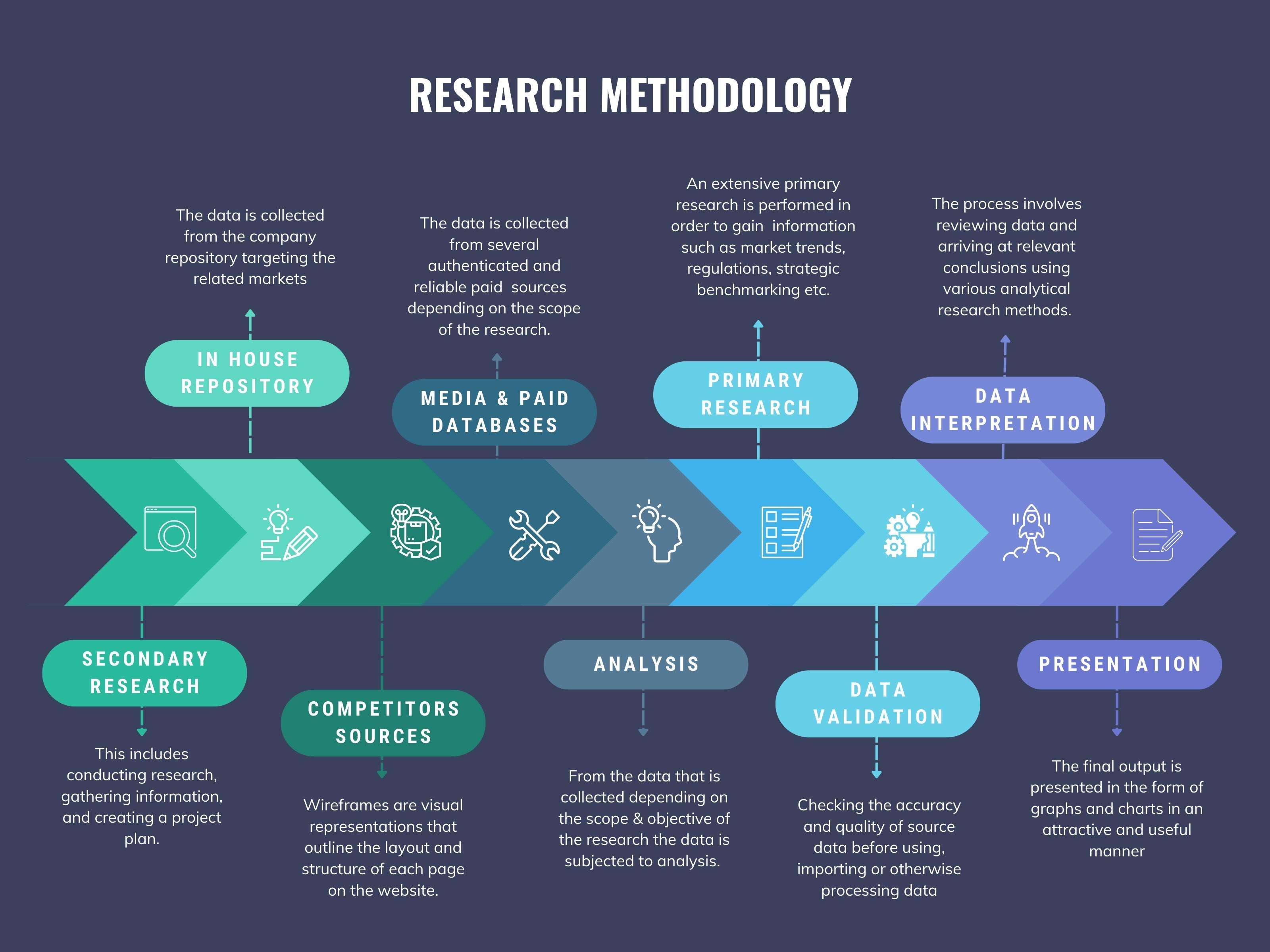
We at ‘Stratistics’ opt for an extensive research approach which involves data mining, data validation, and data analysis. The various research sources include in-house repository, secondary research, competitor’s sources, social media research, client internal data, and primary research.
Our team of analysts prefers the most reliable and authenticated data sources in order to perform the comprehensive literature search. With access to most of the authenticated data bases our team highly considers the best mix of information through various sources to obtain extensive and accurate analysis.
Each report takes an average time of a month and a team of 4 industry analysts. The time may vary depending on the scope and data availability of the desired market report. The various parameters used in the market assessment are standardized in order to enhance the data accuracy.
Data Mining
The data is collected from several authenticated, reliable, paid and unpaid sources and is filtered depending on the scope & objective of the research. Our reports repository acts as an added advantage in this procedure. Data gathering from the raw material suppliers, distributors and the manufacturers is performed on a regular basis, this helps in the comprehensive understanding of the products value chain. Apart from the above mentioned sources the data is also collected from the industry consultants to ensure the objective of the study is in the right direction.
Market trends such as technological advancements, regulatory affairs, market dynamics (Drivers, Restraints, Opportunities and Challenges) are obtained from scientific journals, market related national & international associations and organizations.
Data Analysis
From the data that is collected depending on the scope & objective of the research the data is subjected for the analysis. The critical steps that we follow for the data analysis include:
- Product Lifecycle Analysis
- Competitor analysis
- Risk analysis
- Porters Analysis
- PESTEL Analysis
- SWOT Analysis
The data engineering is performed by the core industry experts considering both the Marketing Mix Modeling and the Demand Forecasting. The marketing mix modeling makes use of multiple-regression techniques to predict the optimal mix of marketing variables. Regression factor is based on a number of variables and how they relate to an outcome such as sales or profits.
Data Validation
The data validation is performed by the exhaustive primary research from the expert interviews. This includes telephonic interviews, focus groups, face to face interviews, and questionnaires to validate our research from all aspects. The industry experts we approach come from the leading firms, involved in the supply chain ranging from the suppliers, distributors to the manufacturers and consumers so as to ensure an unbiased analysis.
We are in touch with more than 15,000 industry experts with the right mix of consultants, CEO's, presidents, vice presidents, managers, experts from both supply side and demand side, executives and so on.
The data validation involves the primary research from the industry experts belonging to:
- Leading Companies
- Suppliers & Distributors
- Manufacturers
- Consumers
- Industry/Strategic Consultants
Apart from the data validation the primary research also helps in performing the fill gap research, i.e. providing solutions for the unmet needs of the research which helps in enhancing the reports quality.
For more details about research methodology, kindly write to us at info@strategymrc.com
Frequently Asked Questions
In case of any queries regarding this report, you can contact the customer service by filing the “Inquiry Before Buy” form available on the right hand side. You may also contact us through email: info@strategymrc.com or phone: +1-301-202-5929
Yes, the samples are available for all the published reports. You can request them by filling the “Request Sample” option available in this page.
Yes, you can request a sample with your specific requirements. All the customized samples will be provided as per the requirement with the real data masked.
All our reports are available in Digital PDF format. In case if you require them in any other formats, such as PPT, Excel etc you can submit a request through “Inquiry Before Buy” form available on the right hand side. You may also contact us through email: info@strategymrc.com or phone: +1-301-202-5929
We offer a free 15% customization with every purchase. This requirement can be fulfilled for both pre and post sale. You may send your customization requirements through email at info@strategymrc.com or call us on +1-301-202-5929.
We have 3 different licensing options available in electronic format.
- Single User Licence: Allows one person, typically the buyer, to have access to the ordered product. The ordered product cannot be distributed to anyone else.
- 2-5 User Licence: Allows the ordered product to be shared among a maximum of 5 people within your organisation.
- Corporate License: Allows the product to be shared among all employees of your organisation regardless of their geographical location.
All our reports are typically be emailed to you as an attachment.
To order any available report you need to register on our website. The payment can be made either through CCAvenue or PayPal payments gateways which accept all international cards.
We extend our support to 6 months post sale. A post sale customization is also provided to cover your unmet needs in the report.
Request Customization
We offer complimentary customization of up to 15% with every purchase. To share your customization requirements, feel free to email us at info@strategymrc.com or call us on +1-301-202-5929. .
Please Note: Customization within the 15% threshold is entirely free of charge. If your request exceeds this limit, we will conduct a feasibility assessment. Following that, a detailed quote and timeline will be provided.
WHY CHOOSE US ?

Assured Quality
Best in class reports with high standard of research integrity

24X7 Research Support
Continuous support to ensure the best customer experience.

Free Customization
Adding more values to your product of interest.

Safe & Secure Access
Providing a secured environment for all online transactions.

Trusted by 600+ Brands
Serving the most reputed brands across the world.