
Aircraft Simulation And Training Market
Aircraft Simulation and Training Market Forecasts to 2034 - Global Analysis By Simulation Type (Full Flight Simulators (FFS), Flight Training Devices (FTD), Partial Flight/Sub-System Trainers, and Virtual & Immersive Trainers), Platform (Commercial Aviation, Military Aviation, Business & General Aviation, Unmanned Aerial Vehicles, and Advanced Air Mobility), Component, End User, and By Geography

|
Years Covered |
2023-2034 |
|
Estimated Year Value (2026) |
US $12.7 BN |
|
Projected Year Value (2032) |
US $26.5 BN |
|
CAGR (2026-2032) |
9.6% |
|
Regions Covered |
North America, Europe, Asia Pacific, South America, and Middle East & Africa |
|
Countries Covered |
US, Canada, Mexico, Germany, UK, Italy, France, Spain, Japan, China, India, Australia, New Zealand, South Korea, Rest of Asia Pacific, South America, Argentina, Brazil, Chile, Middle East & Africa, Saudi Arabia, UAE, Qatar, and South Africa |
|
Largest Market |
North America |
|
Highest Growing Market |
Asia Pacific |
According to Stratistics MRC, the Global Aircraft Simulation and Training Market is accounted for $12.7 billion in 2026 and is expected to reach $26.5 billion by 2034 growing at a CAGR of 9.6% during the forecast period. The aircraft simulation and training provides flight simulators, virtual training software, instructor systems, and maintenance training platforms for pilots, cabin crew, and ground personnel. It serves commercial aviation, defense, and training academies. Growth is driven by rising global air traffic, pilot shortage concerns, safety regulations requiring recurrent training, cost advantages over live flight training, and advances in virtual reality and digital twin technologies.
According to the International Civil Aviation Organization (ICAO), the global aviation system will require over 620,000 new pilots by 2042.
Market Dynamics:
Driver:
Global pilot shortage requiring accelerated and efficient training pathways
The aviation industry is currently navigating a severe global pilot shortage, largely catalyzed by a wave of mandatory retirements and a rapid rebound in passenger traffic. To bridge this gap, airlines are aggressively adopting advanced simulation technologies to compress training timelines without compromising safety. These systems allow for high-frequency, repetitive practice of complex maneuvers that would be too costly or dangerous in actual aircraft. By shifting a greater percentage of curriculum hours to high-fidelity simulators, training centers can process larger cohorts of students more efficiently, ensuring a steady supply of qualified personnel to support global fleet expansions.
Restraint:
Extremely high capital cost of full-flight simulators (FFS) and visual systems
Despite the clear benefits of simulation, the substantial initial investment required for Level D Full-Flight Simulators remains a significant market barrier. These units often cost upwards of $15 million, excluding the specialized infrastructure and ongoing maintenance expenses needed for operation. For smaller flight schools and regional carriers, this capital intensity can be prohibitive, leading to a reliance on older hardware or the outsourcing of training. Furthermore, the rapid pace of technological obsolescence in visual systems and avionics requires frequent, expensive updates, which can strain the financial resources of even well-established training providers globally.
Opportunity:
Expansion into UAV and Advanced Air Mobility (AAM) pilot training
Simulation providers find a fertile new frontier in the meteoric rise of Unmanned Aerial Vehicles (UAVs) and the emerging Advanced Air Mobility (AAM) sector. As regulatory bodies establish certification standards for "air taxi" pilots and commercial drone operators, there is an urgent demand for specialized simulation platforms tailored to electric vertical takeoff and landing (eVTOL) aircraft. Developers are leveraging existing simulation engines to create low-altitude, urban environment scenarios, offering a scalable solution for training thousands of new operators. This diversification allows traditional simulation firms to capture high-growth revenue streams outside of conventional commercial and military aviation.
Threat:
Competition from training outsourcing and overseas training centers
Domestic simulation providers face intensifying pressure from the rising trend of training outsourcing to overseas centers, particularly in regions with lower operational costs. Many airlines are now opting to send their crews to centralized global hubs that offer "Training-as-a-Service" (TaaS) models, which reduce the need for carriers to maintain their simulator fleets. This shift creates a highly competitive pricing environment, often resulting in margin erosion for local equipment manufacturers. Additionally, the proliferation of remote, cloud-based training modules allows pilots to complete ground school requirements anywhere, further challenging the dominance of traditional, fixed-location simulation facilities.
Covid-19 Impact:
The COVID-19 pandemic initially devastated the market as grounded fleets led to the suspension of pilot hiring and a sharp decline in simulator orders. However, the long-term impact served as a catalyst for digital transformation. The industry pivoted toward remote learning and "extended reality" (XR) solutions to maintain crew currency during lockdowns. Post-pandemic, the massive exit of senior pilots via early retirement packages created the current labor vacuum, ultimately driving a renewed, robust demand for simulation to train a new generation of aviators.
The commercial aviation segment is expected to be the largest during the forecast period
The commercial aviation segment is expected to account for the largest market share during the forecast period due to the massive volume of pilot recruitment needed by global airlines. Carriers are receiving hundreds of next-generation, fuel-efficient aircraft, which has led to an unprecedented demand for type-rating and recurrent training. Stringent safety mandates from civil aviation authorities require pilots to undergo regular simulator evaluations, ensuring a continuous revenue stream for hardware and service providers. The persistent growth in emerging markets, where new airline startups are heavily investing in training infrastructure, further reinforces this segment's dominance.
The virtual & immersive trainers segment is expected to have the highest CAGR during the forecast period
Over the forecast period, the virtual & immersive trainers segment is predicted to witness the highest growth rate as VR, AR, and MR technologies become mainstream in flight schools. These "low-footprint" devices offer a cost-effective bridge between traditional ground school and expensive full-motion simulators, allowing students to master cockpit layouts and procedural checklists in a portable environment. The rapid advancement in headset resolution and haptic feedback has made these trainers highly effective for muscle memory development. Consequently, defense and commercial sectors are rapidly integrating these immersive tools to enhance training density and reduce the overall cost per pilot.
Region with largest share:
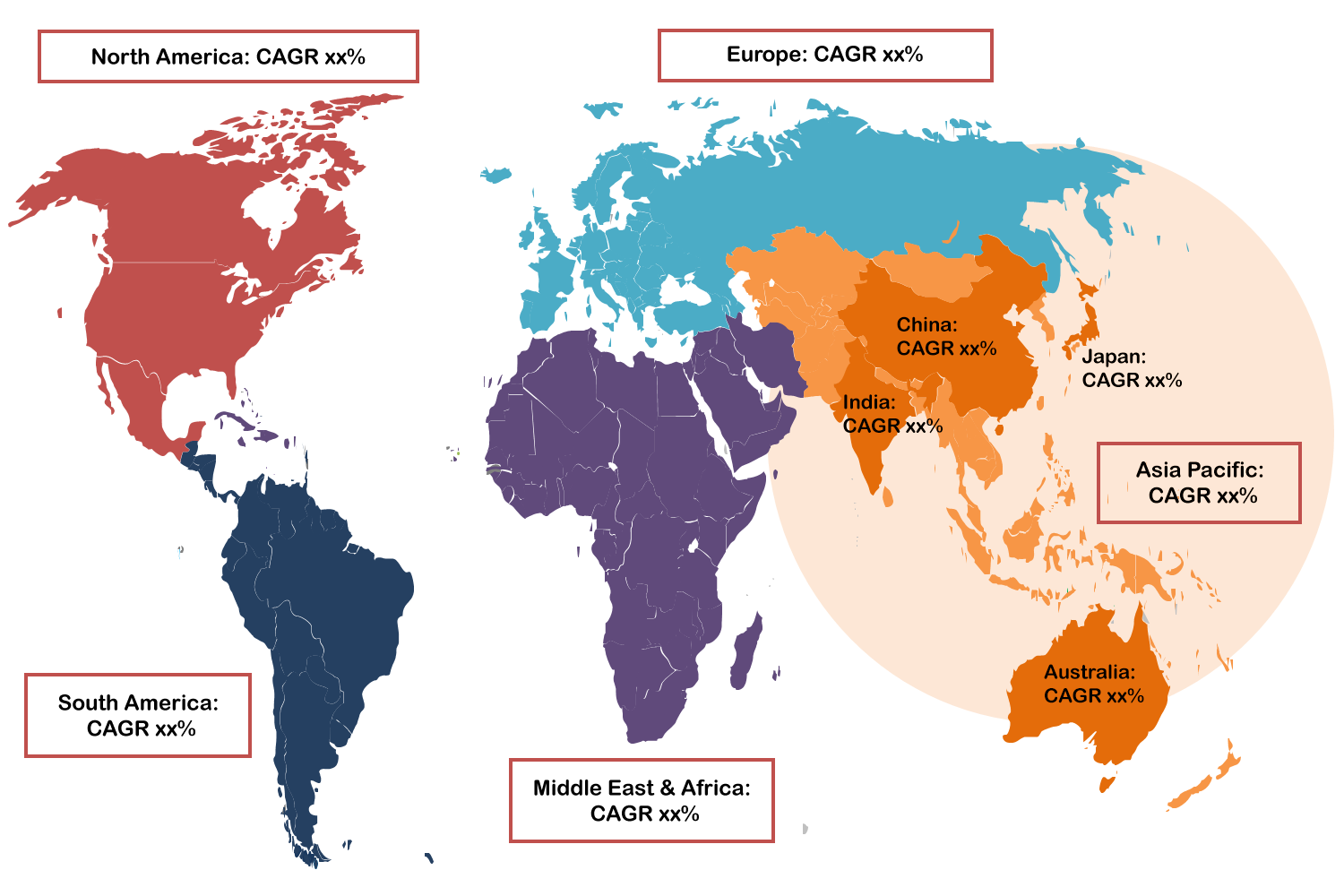
During the forecast period, the North America region is expected to hold the largest market share owing to its deeply established aviation ecosystem and the presence of industry titans like Boeing and CAE. A highly sophisticated network of flight academies and a massive military aviation budget that prioritizes synthetic training environments benefit the region. Furthermore, strict FAA regulations regarding simulator-based training hours ensure a high replacement rate for aging hardware. North America’s leadership is sustained by continuous R&D investments in AI-driven simulation and a proactive approach to certifying new pilot training technologies for emerging air mobility.
Region with highest CAGR:
During the forecast period, the Asia Pacific region is anticipated to exhibit the highest CAGR as a result of explosive growth in passenger air traffic across China, India, and Southeast Asia. To support the hundreds of aircraft currently on order by regional low-cost carriers, there is an urgent need to build domestic training capacity from the ground up. Governments in the region are incentivizing the establishment of new flight training hubs to reduce dependency on Western centers. This massive infrastructure build-out, combined with a rising middle class and increasing defense spending, positions Asia Pacific as the primary engine for future market expansion.
Key players in the market
Some of the key players in Aircraft Simulation and Training Market include CAE Inc., L3Harris Technologies, Inc., FlightSafety International Inc., Thales Group, The Boeing Company, Airbus SE, Lockheed Martin Corporation, RTX Corporation, Textron Inc., Leonardo S.p.A., Saab AB, Northrop Grumman Corporation, Elbit Systems Ltd., BAE Systems plc, and Rheinmetall AG.
Key Developments:
In October 2025, CAE Inc. announced deployment of AI-enabled flight simulators for major airlines, enhancing pilot training efficiency.
In September 2025, Thales Group introduced mixed reality training systems, combining VR and AR for advanced pilot instruction.
In July 2025, L3Harris Technologies expanded its military flight simulation programs, integrating next-gen cockpit systems.
In May 2025, Boeing Training Systems launched cloud-based pilot training modules, enabling remote access for global aviation schools.
Simulation Types Covered:
• Full Flight Simulators (FFS)
• Flight Training Devices (FTD)
• Partial Flight/Sub-System Trainers
• Virtual & Immersive Trainers
Platforms Covered:
• Commercial Aviation
• Military Aviation
• Business & General Aviation
• Unmanned Aerial Vehicles
• Advanced Air Mobility
Components Covered:
• Hardware
• Software
• Services
End Users Covered:
• Commercial Airlines & Cargo Operators
• Defense & Government Agencies
• Civil Flight Schools & Ab-Initio Academies
• Aircraft OEMs
Regions Covered:
• North America
o US
o Canada
o Mexico
• Europe
o Germany
o UK
o Italy
o France
o Spain
o Rest of Europe
• Asia Pacific
o Japan
o China
o India
o Australia
o New Zealand
o South Korea
o Rest of Asia Pacific
• South America
o Argentina
o Brazil
o Chile
o Rest of South America
• Middle East & Africa
o Saudi Arabia
o UAE
o Qatar
o South Africa
o Rest of Middle East & Africa
What our report offers:
- Market share assessments for the regional and country-level segments
- Strategic recommendations for the new entrants
- Covers Market data for the years 2024, 2025, 2026, 2028, and 2032
- Market Trends (Drivers, Constraints, Opportunities, Threats, Challenges, Investment Opportunities, and recommendations)
- Strategic recommendations in key business segments based on the market estimations
- Competitive landscaping mapping the key common trends
- Company profiling with detailed strategies, financials, and recent developments
- Supply chain trends mapping the latest technological advancements
Free Customization Offerings:
All the customers of this report will be entitled to receive one of the following free customization options:
• Company Profiling
o Comprehensive profiling of additional market players (up to 3)
o SWOT Analysis of key players (up to 3)
• Regional Segmentation
o Market estimations, Forecasts and CAGR of any prominent country as per the client's interest (Note: Depends on feasibility check)
• Competitive Benchmarking
o Benchmarking of key players based on product portfolio, geographical presence, and strategic alliances
Table of Contents
1 Executive Summary
2 Preface
2.1 Abstract
2.2 Stake Holders
2.3 Research Scope
2.4 Research Methodology
2.4.1 Data Mining
2.4.2 Data Analysis
2.4.3 Data Validation
2.4.4 Research Approach
2.5 Research Sources
2.5.1 Primary Research Sources
2.5.2 Secondary Research Sources
2.5.3 Assumptions
3 Market Trend Analysis
3.1 Introduction
3.2 Drivers
3.3 Restraints
3.4 Opportunities
3.5 Threats
3.6 End User Analysis
3.7 Emerging Markets
3.8 Impact of Covid-19
4 Porters Five Force Analysis
4.1 Bargaining power of suppliers
4.2 Bargaining power of buyers
4.3 Threat of substitutes
4.4 Threat of new entrants
4.5 Competitive rivalry
5 Global Aircraft Simulation and Training Market, By Simulation Type
5.1 Introduction
5.2 Full Flight Simulators (FFS)
5.2.1 Level D/Type 7
5.2.2 Lower-Level FFS
5.3 Flight Training Devices (FTD)
5.3.1 Fixed-Base Simulators (FBS)
5.3.2 Cockpit Procedures Trainers (CPT)
5.4 Partial Flight/Sub-System Trainers
5.5 Virtual & Immersive Trainers
6 Global Aircraft Simulation and Training Market, By Platform
6.1 Introduction
6.2 Commercial Aviation
6.2.1 Narrow-body Aircraft
6.2.2 Wide-body Aircraft
6.2.3 Regional Jets
6.3 Military Aviation
6.3.1 Fighter Jets & Attack Helicopters
6.3.2 Transport & Tanker Aircraft
6.3.3 Special Mission Aircraft
6.4 Business & General Aviation
6.5 Unmanned Aerial Vehicles
6.6 Advanced Air Mobility
7 Global Aircraft Simulation and Training Market, By Component
7.1 Introduction
7.2 Hardware
7.2.1 Motion Systems & Actuators
7.2.2 Visual Systems
7.2.3 Cockpit Replikas & Control Loading
7.3 Software
7.3.1 Flight Dynamics Modelling
7.3.2 Scenario/Instructor Operating Station (IOS) Software
7.4 Services
7.4.1 Training-as-a-Service (TaaS) & Outsourced Centers
7.4.2 Maintenance, Repair, & Overhaul (MRO) of Simulators
7.4.3 Content Development & Courseware
8 Global Aircraft Simulation and Training Market, By End User
8.1 Introduction
8.2 Commercial Airlines & Cargo Operators
8.3 Defense & Government Agencies
8.4 Civil Flight Schools & Ab-Initio Academies
8.5 Aircraft OEMs
9 Global Aircraft Simulation and Training Market, By Geography
9.1 Introduction
9.2 North America
9.2.1 US
9.2.2 Canada
9.2.3 Mexico
9.3 Europe
9.3.1 Germany
9.3.2 UK
9.3.3 Italy
9.3.4 France
9.3.5 Spain
9.3.6 Rest of Europe
9.4 Asia Pacific
9.4.1 Japan
9.4.2 China
9.4.3 India
9.4.4 Australia
9.4.5 New Zealand
9.4.6 South Korea
9.4.7 Rest of Asia Pacific
9.5 South America
9.5.1 Argentina
9.5.2 Brazil
9.5.3 Chile
9.5.4 Rest of South America
9.6 Middle East & Africa
9.6.1 Saudi Arabia
9.6.2 UAE
9.6.3 Qatar
9.6.4 South Africa
9.6.5 Rest of Middle East & Africa
10 Key Developments
10.1 Agreements, Partnerships, Collaborations and Joint Ventures
10.2 Acquisitions & Mergers
10.3 New Product Launch
10.4 Expansions
10.5 Other Key Strategies
11 Company Profiling
11.1 CAE Inc.
11.2 L3Harris Technologies, Inc.
11.3 FlightSafety International Inc.
11.4 Thales Group
11.5 The Boeing Company
11.6 Airbus SE
11.7 Lockheed Martin Corporation
11.8 RTX Corporation
11.9 Textron Inc.
11.10 Leonardo S.p.A.
11.11 Saab AB
11.12 Northrop Grumman Corporation
11.13 Elbit Systems Ltd.
11.14 BAE Systems plc
11.15 Rheinmetall AG
List of Tables
1 Global Aircraft Simulation and Training Market Outlook, By Region (2023–2034) ($MN)
2 Global Aircraft Simulation and Training Market Outlook, By Simulation Type (2023–2034) ($MN)
3 Global Aircraft Simulation and Training Market Outlook, By Full Flight Simulators (FFS) (2023–2034) ($MN)
4 Global Aircraft Simulation and Training Market Outlook, By Level D / Type 7 (2023–2034) ($MN)
5 Global Aircraft Simulation and Training Market Outlook, By Lower-Level FFS (2023–2034) ($MN)
6 Global Aircraft Simulation and Training Market Outlook, By Flight Training Devices (FTD) (2023–2034) ($MN)
7 Global Aircraft Simulation and Training Market Outlook, By Fixed-Base Simulators (FBS) (2023–2034) ($MN)
8 Global Aircraft Simulation and Training Market Outlook, By Cockpit Procedures Trainers (CPT) (2023–2034) ($MN)
9 Global Aircraft Simulation and Training Market Outlook, By Partial Flight / Sub-System Trainers (2023–2034) ($MN)
10 Global Aircraft Simulation and Training Market Outlook, By Virtual & Immersive Trainers (2023–2034) ($MN)
11 Global Aircraft Simulation and Training Market Outlook, By Platform (2023–2034) ($MN)
12 Global Aircraft Simulation and Training Market Outlook, By Commercial Aviation (2023–2034) ($MN)
13 Global Aircraft Simulation and Training Market Outlook, By Narrow-body Aircraft (2023–2034) ($MN)
14 Global Aircraft Simulation and Training Market Outlook, By Wide-body Aircraft (2023–2034) ($MN)
15 Global Aircraft Simulation and Training Market Outlook, By Regional Jets (2023–2034) ($MN)
16 Global Aircraft Simulation and Training Market Outlook, By Military Aviation (2023–2034) ($MN)
17 Global Aircraft Simulation and Training Market Outlook, By Fighter Jets & Attack Helicopters (2023–2034) ($MN)
18 Global Aircraft Simulation and Training Market Outlook, By Transport & Tanker Aircraft (2023–2034) ($MN)
19 Global Aircraft Simulation and Training Market Outlook, By Special Mission Aircraft (2023–2034) ($MN)
20 Global Aircraft Simulation and Training Market Outlook, By Business & General Aviation (2023–2034) ($MN)
21 Global Aircraft Simulation and Training Market Outlook, By Unmanned Aerial Vehicles (2023–2034) ($MN)
22 Global Aircraft Simulation and Training Market Outlook, By Advanced Air Mobility (2023–2034) ($MN)
23 Global Aircraft Simulation and Training Market Outlook, By Component (2023–2034) ($MN)
24 Global Aircraft Simulation and Training Market Outlook, By Hardware (2023–2034) ($MN)
25 Global Aircraft Simulation and Training Market Outlook, By Motion Systems & Actuators (2023–2034) ($MN)
26 Global Aircraft Simulation and Training Market Outlook, By Visual Systems (2023–2034) ($MN)
27 Global Aircraft Simulation and Training Market Outlook, By Cockpit Replicas & Control Loading (2023–2034) ($MN)
28 Global Aircraft Simulation and Training Market Outlook, By Software (2023–2034) ($MN)
29 Global Aircraft Simulation and Training Market Outlook, By Flight Dynamics Modelling (2023–2034) ($MN)
30 Global Aircraft Simulation and Training Market Outlook, By Scenario / IOS Software (2023–2034) ($MN)
31 Global Aircraft Simulation and Training Market Outlook, By Services (2023–2034) ($MN)
32 Global Aircraft Simulation and Training Market Outlook, By Training-as-a-Service (TaaS) (2023–2034) ($MN)
33 Global Aircraft Simulation and Training Market Outlook, By Simulator MRO (2023–2034) ($MN)
34 Global Aircraft Simulation and Training Market Outlook, By Content Development & Courseware (2023–2034) ($MN)
35 Global Aircraft Simulation and Training Market Outlook, By End User (2023–2034) ($MN)
36 Global Aircraft Simulation and Training Market Outlook, By Commercial Airlines & Cargo Operators (2023–2034) ($MN)
37 Global Aircraft Simulation and Training Market Outlook, By Defense & Government Agencies (2023–2034) ($MN)
38 Global Aircraft Simulation and Training Market Outlook, By Civil Flight Schools & Ab-Initio Academies (2023–2034) ($MN)
39 Global Aircraft Simulation and Training Market Outlook, By Aircraft OEMs (2023–2034) ($MN)
Note: Tables for North America, Europe, APAC, South America, and Middle East & Africa Regions are also represented in the same manner as above.
List of Figures
RESEARCH METHODOLOGY

We at ‘Stratistics’ opt for an extensive research approach which involves data mining, data validation, and data analysis. The various research sources include in-house repository, secondary research, competitor’s sources, social media research, client internal data, and primary research.
Our team of analysts prefers the most reliable and authenticated data sources in order to perform the comprehensive literature search. With access to most of the authenticated data bases our team highly considers the best mix of information through various sources to obtain extensive and accurate analysis.
Each report takes an average time of a month and a team of 4 industry analysts. The time may vary depending on the scope and data availability of the desired market report. The various parameters used in the market assessment are standardized in order to enhance the data accuracy.
Data Mining
The data is collected from several authenticated, reliable, paid and unpaid sources and is filtered depending on the scope & objective of the research. Our reports repository acts as an added advantage in this procedure. Data gathering from the raw material suppliers, distributors and the manufacturers is performed on a regular basis, this helps in the comprehensive understanding of the products value chain. Apart from the above mentioned sources the data is also collected from the industry consultants to ensure the objective of the study is in the right direction.
Market trends such as technological advancements, regulatory affairs, market dynamics (Drivers, Restraints, Opportunities and Challenges) are obtained from scientific journals, market related national & international associations and organizations.
Data Analysis
From the data that is collected depending on the scope & objective of the research the data is subjected for the analysis. The critical steps that we follow for the data analysis include:
- Product Lifecycle Analysis
- Competitor analysis
- Risk analysis
- Porters Analysis
- PESTEL Analysis
- SWOT Analysis
The data engineering is performed by the core industry experts considering both the Marketing Mix Modeling and the Demand Forecasting. The marketing mix modeling makes use of multiple-regression techniques to predict the optimal mix of marketing variables. Regression factor is based on a number of variables and how they relate to an outcome such as sales or profits.
Data Validation
The data validation is performed by the exhaustive primary research from the expert interviews. This includes telephonic interviews, focus groups, face to face interviews, and questionnaires to validate our research from all aspects. The industry experts we approach come from the leading firms, involved in the supply chain ranging from the suppliers, distributors to the manufacturers and consumers so as to ensure an unbiased analysis.
We are in touch with more than 15,000 industry experts with the right mix of consultants, CEO's, presidents, vice presidents, managers, experts from both supply side and demand side, executives and so on.
The data validation involves the primary research from the industry experts belonging to:
- Leading Companies
- Suppliers & Distributors
- Manufacturers
- Consumers
- Industry/Strategic Consultants
Apart from the data validation the primary research also helps in performing the fill gap research, i.e. providing solutions for the unmet needs of the research which helps in enhancing the reports quality.
For more details about research methodology, kindly write to us at info@strategymrc.com
Frequently Asked Questions
In case of any queries regarding this report, you can contact the customer service by filing the “Inquiry Before Buy” form available on the right hand side. You may also contact us through email: info@strategymrc.com or phone: +1-301-202-5929
Yes, the samples are available for all the published reports. You can request them by filling the “Request Sample” option available in this page.
Yes, you can request a sample with your specific requirements. All the customized samples will be provided as per the requirement with the real data masked.
All our reports are available in Digital PDF format. In case if you require them in any other formats, such as PPT, Excel etc you can submit a request through “Inquiry Before Buy” form available on the right hand side. You may also contact us through email: info@strategymrc.com or phone: +1-301-202-5929
We offer a free 15% customization with every purchase. This requirement can be fulfilled for both pre and post sale. You may send your customization requirements through email at info@strategymrc.com or call us on +1-301-202-5929.
We have 3 different licensing options available in electronic format.
- Single User Licence: Allows one person, typically the buyer, to have access to the ordered product. The ordered product cannot be distributed to anyone else.
- 2-5 User Licence: Allows the ordered product to be shared among a maximum of 5 people within your organisation.
- Corporate License: Allows the product to be shared among all employees of your organisation regardless of their geographical location.
All our reports are typically be emailed to you as an attachment.
To order any available report you need to register on our website. The payment can be made either through CCAvenue or PayPal payments gateways which accept all international cards.
We extend our support to 6 months post sale. A post sale customization is also provided to cover your unmet needs in the report.
Request Customization
We offer complimentary customization of up to 15% with every purchase. To share your customization requirements, feel free to email us at info@strategymrc.com or call us on +1-301-202-5929. .
Please Note: Customization within the 15% threshold is entirely free of charge. If your request exceeds this limit, we will conduct a feasibility assessment. Following that, a detailed quote and timeline will be provided.
WHY CHOOSE US ?

Assured Quality
Best in class reports with high standard of research integrity

24X7 Research Support
Continuous support to ensure the best customer experience.

Free Customization
Adding more values to your product of interest.

Safe & Secure Access
Providing a secured environment for all online transactions.

Trusted by 600+ Brands
Serving the most reputed brands across the world.
