
Wi Fi Offloading Market
Wi-Fi Offloading Market Forecasts to 2034 – Global Analysis By Component (Wi-Fi Access Infrastructure, Traffic Steering Software, Authentication and Policy Platforms and Integration and Managed Services), Offloading Method, Access Technology, Deployment Location, Application, End User and By Geography

Market Dynamics:
Driver:
Video Traffic Growth and the Economics of Unlicensed Spectrum
The structural growth in mobile video consumption is outpacing the rate at which carriers can add licensed cellular capacity economically, and Wi-Fi offloading has become the primary mechanism for closing this gap. The mobile data offload market is projected to grow from roughly $12.4 billion in 2026 to $119 billion by 2035, a CAGR of approximately 28.6 percent, driven almost entirely by video traffic outgrowing licensed cellular spectrum. RUCKUS positions Wi-Fi 7 powered mobile data offload explicitly around cost-per-bit economics, noting that higher capacity per access point and lower latency directly improve the economics of offload, allowing operators to carry more traffic on Wi-Fi instead of expensive licensed spectrum. As 5G subscriptions scale and video resolution increases, the capacity gap between what cellular networks can deliver and what subscribers consume continues to widen, and offloading to Wi-Fi remains the most capital-efficient response, thereby sustaining demand across mobile network operators and neutral host providers.
Restraint:
Quality Visibility and the Trust Deficit in Offload Decisions
Wi-Fi offloading faces persistent adoption barriers from carriers' historical inability to verify the quality of Wi-Fi networks before steering subscribers onto them, which has limited offload to controlled or best-effort scenarios rather than carrier-grade service delivery. Helium's CEO observed that Wi-Fi offload is not new but has not always been fully trusted by carriers because they could not manage the connection quality, and the company's HeliumOS platform addresses this by giving carriers active control over whether to keep a user on cellular, move them to Wi-Fi, or remove them from Wi-Fi when quality degrades. The Wireless Broadband Alliance's Access Network Metrics initiative addresses the same gap, enabling identity providers to receive real-time performance metrics at the moment of association and reject connections to poor-quality networks before users experience degradation. Until quality visibility becomes universal rather than vendor-specific, carriers remain cautious about aggressive offload policies, thereby constraining the pace at which Wi-Fi capacity is fully utilized.
Opportunity:
OpenRoaming Federation and Neutral Host Monetization
The maturation of OpenRoaming federation and the emergence of commercial settlement platforms create a substantial opportunity for Wi-Fi offloading to scale beyond bilateral agreements into a many-to-many marketplace model. Uplink launched its Connectivity Marketplace in May 2026 specifically to unlock the economic potential of OpenRoaming, Passpoint, Wi-Fi offload, and neutral host networks, introducing a multi-party exchange that enables operators, identity providers, neutral host networks, and enterprises to transact at scale through a unified commercial and settlement layer. The platform supports SIM, eSIM, Passpoint profiles, and application-based authentication, and it provides automated usage collection, rating, and settlement with dynamic pricing models including corridor-based pricing. OpenRoaming crossed one million hotspots worldwide within eighteen months of launch, and in a 2025 WBA survey of 170 industry executives, 81 percent said they plan to deploy Passpoint or OpenRoaming, with 25 percent already rolling it out and 42 percent targeting 2026. Suppliers capable of integrating with this federated ecosystem and delivering carrier-grade quality assurance can capture long-term agreements as neutral host infrastructure becomes monetizable at scale, thereby establishing a defensible position in the emerging Wi-Fi economy.
Threat:
Small Cell and Private 5G Competition for Indoor Capacity
Wi-Fi offloading faces structural competition from licensed small cell and private 5G deployments that offer carriers greater control, guaranteed quality of service, and integration with 3GPP core networks without the authentication and quality variability that have historically complicated Wi-Fi offload. Helium's CEO acknowledged that the future of wireless involves cellular, satellite, and Wi-Fi working together, with intelligent routing across every available network rather than reliance on any single access technology. Carriers investing in small cells for high-density venues may view Wi-Fi offload as a temporary bridge rather than a strategic architecture, particularly where spectrum holdings allow them to deploy licensed capacity economically. Additionally, private 5G deployments in enterprise and industrial environments compete directly with enterprise Wi-Fi for the same indoor connectivity budget, and organizations choosing private cellular may reduce their reliance on Wi-Fi infrastructure that could otherwise support offload. If licensed indoor solutions become cost-competitive with Wi-Fi for carrier-grade capacity, the economic rationale for offload weakens in the venues where it is most valuable.
Covid-19 Impact:
The pandemic accelerated the shift of mobile data consumption to indoor environments as populations worked, studied, and entertained themselves at home, and this concentration of demand exposed the indoor coverage limitations of macro cellular networks. Carriers observed that a substantial majority of mobile usage occurs indoors where cellular signals degrade, and this recognition strengthened the case for Wi-Fi offload as a complement to outdoor macro investment. Post-pandemic, the structural impact has been a durable shift toward treating indoor connectivity as a strategic priority rather than an afterthought, and the convergence of cellular, Wi-Fi, and satellite into unified connectivity fabrics has become a board-level discussion for operators seeking to manage cost per bit while maintaining subscriber experience.
The Wi-Fi access infrastructure segment is expected to be the largest during the forecast period
The Wi-Fi access infrastructure segment is expected to account for the largest market share during the forecast period, due to the capital-intensive nature of access point and controller deployments, the necessity of physical infrastructure in venues where offload occurs, and the scale of carrier-grade Wi-Fi rollouts in high-density public and outdoor environments. RUCKUS positions its Wi-Fi 7 outdoor access points, including the T670, specifically for mobile data offload use cases requiring high density, high throughput, and low latency, and it emphasizes superior RF performance through BeamFlex adaptive antenna technology that improves attachment rates and reduces retries and drops . Carrier Wi-Fi equipment represents a distinct market segment with its own investment cycle, and operators must deploy or contract access infrastructure before any offload traffic can be carried. As carriers seek to relieve congestion in hot zones and as neutral host operators build monetizable footprints, access infrastructure remains the foundational procurement category, thereby reinforcing its dominant revenue position throughout the forecast period.
The Wi-Fi 6 and 6E segment is expected to have the highest CAGR during the forecast period
Over the forecast period, the Wi-Fi 6 and 6E segment is predicted to witness the highest growth rate, driven by the maturity of the standard, the availability of 6 GHz spectrum in major markets, and the balance between performance and cost that carrier-grade offload deployments require. Wi-Fi 7 offers higher capacity and lower latency, and RUCKUS is actively positioning Wi-Fi 7 for mobile data offload, but Wi-Fi 6 and 6E equipment benefits from broader deployment experience, lower cost per unit, and a client ecosystem that is already ubiquitous. Carriers and neutral hosts seeking to expand offload footprints economically will deploy Wi-Fi 6E where 6 GHz spectrum is available and reserve Wi-Fi 7 for the highest-density venues. As offload volumes grow and as operators seek to maximize capacity per dollar invested, demand for Wi-Fi 6 and 6E infrastructure is rising faster than legacy Wi-Fi 5 replacements and early Wi-Fi 7 premium deployments, thereby positioning this segment for above-average growth.
Region with largest share:
During the forecast period, the North America region is expected to hold the largest market share, due to the concentration of mobile network operators, neutral host providers, and Wi-Fi infrastructure vendors across the United States and Canada, combined with early adoption of Passpoint and OpenRoaming frameworks. The region benefits from mature cable and fiber broadband infrastructure that supports backhaul for offload access points, and from venue operators including stadiums, airports, and convention centers that have deployed carrier-grade Wi-Fi for both fan experience and offload purposes. Helium's network spans tens of thousands of access points across the United States and has proven reliability during large public events including Mardi Gras and the Super Bowl. RUCKUS, Cisco, and other major vendors maintain significant offload-related development and go-to-market operations in the region. This concentration of demand and supply sustains North America's leading revenue position throughout the forecast period.
Region with highest CAGR:
Over the forecast period, the Asia Pacific region is anticipated to exhibit the highest CAGR, due to rapid mobile data growth across China, India, and Southeast Asia, expanding broadband infrastructure, and the emergence of neutral host and OpenRoaming deployments in markets that lack extensive fixed-line alternatives. Helium is expanding its footprint in Mexico and Brazil, and the model of decentralized Wi-Fi infrastructure monetization is attracting interest in emerging markets where carrier capex is constrained relative to data demand. Universities, hospitals, transit systems, and emerging markets across Asia are deploying Passpoint and OpenRoaming, with at least one country recently seeing its first fully OpenRoaming-enabled enterprise deployment. As regional operators seek cost-effective capacity relief and as venue operators recognize the monetization potential of their Wi-Fi assets, offload demand is positioned for above-average growth, thereby supporting Asia Pacific's emergence as a significant incremental demand center.
Key players in the market
Some of the key players in Wi-Fi Offloading Market include Cisco Systems, Inc., Hewlett Packard Enterprise Company, Huawei Technologies Co., Ltd., Juniper Networks, Inc., Extreme Networks, Inc., Ubiquiti Inc., TP-Link Systems Inc., NETGEAR, Inc., Ruckus Networks, Cambium Networks Corporation, Fortinet, Inc., Arista Networks, Inc., Zyxel Networks Corporation, Ruijie Networks Co., Ltd., CommScope Holding Company, Inc., Broadcom Inc., Qualcomm Incorporated, and MediaTek Inc.
Key Developments:
In November 2026, Ruckus Networks continued positioning its Wi-Fi 7 outdoor access points, including the T670, for carrier-grade mobile data offload, emphasizing BeamFlex adaptive antenna technology, Passpoint seamless roaming, and AI-driven cloud assurance to improve cost per bit economics for operators managing surging video traffic.
In September 2026, Helium launched HeliumOS, an operating system for the business of connectivity that gives carriers and MVNOs active management of Wi-Fi offload quality, including real-time session control through its Wi-Fi Offload Experience component that decides whether to redirect traffic to Wi-Fi based on quality metrics, with Affinity Ventures as the first customer.
Components Covered:
• Wi-Fi Access Infrastructure
• Traffic Steering Software
• Authentication and Policy Platforms
• Integration and Managed Services
Offloading Methods Covered:
• Network-Initiated Offloading
• Device-Initiated Offloading
• Policy-Based Automatic Offloading
• Seamless Handover Offloading
Access Technologies Covered:
• Wi-Fi 5
• Wi-Fi 6 and 6E
• Wi-Fi 7
• Other Access Technologies
Deployment Locations Covered:
• Indoor Public Hotspots
• Outdoor Public Hotspots
• Residential Hotspots
• Enterprise Hotspots
Applications Covered:
• Cellular Traffic Congestion Relief
• Indoor Coverage Extension
• Seamless Cellular-Wi-Fi Mobility
• Roaming Data Cost Optimization
• High-Bandwidth Content Delivery
• Other Applications
End Users Covered:
• Mobile Network Operators
• Fixed Broadband Providers
• Neutral Host Network Operators
• Venue and Property Operators
• Enterprise Network Administrators
• Other End Users
What our report offers:
- Market share assessments for the regional and country-level segments
- Strategic recommendations for the new entrants
- Covers Market data for the years 2023, 2024, 2025, 2026, 2027, 2028, 2030, 2032 and 2034
- Market Trends (Drivers, Constraints, Opportunities, Threats, Challenges, Investment Opportunities, and recommendations)
- Strategic recommendations in key business segments based on the market estimations
- Competitive landscaping mapping the key common trends
- Company profiling with detailed strategies, financials, and recent developments
- Supply chain trends mapping the latest technological advancements
Complimentary Customization Options:
- Every purchase of this report includes ONE complimentary customization option, allowing clients to tailor the research to their specific business requirements at no additional cost..
1. Company Profiling & Competitive Intelligence
• Detailed profiling of up to 3 additional market players
• SWOT analysis of up to 3 key market participants
• Analysis of competitive positioning, product portfolios and strategic developments
2. Country-Level Market Analysis
• Market size estimates, forecasts and CAGR analysis for one additional country of the client's choice
• Country-specific market trends, growth drivers, opportunities and challenges
• Regional market insights tailored to the client's geographical interests
• Subject to data availability and feasibility assessment
3. Competitive Benchmarking
• Comparative benchmarking of up to 5 key market players
• Evaluation based on product portfolios, geographical presence, technological capabilities and strategic partnerships
• Competitive positioning matrix highlighting key strengths and market differentiation
4. Additional Market Segmentation
• Market size estimates and forecasts for one additional subsegment relevant to the client's requirements
• Analysis of growth opportunities, demand patterns and emerging trends within the selected subsegment
• Subject to data availability and feasibility assessment
5. Market Trends & Strategic Insights
• Analysis of up to 3 emerging market trends relevant to the client's business interests
• Assessment of key growth opportunities, technological developments and potential market disruptions
• Strategic insights to support market entry, expansion or investment decisions
Customization Terms
• Clients may select one of the above complimentary customization options per report purchase.
• Complimentary customization is subject to data availability, research feasibility and scope confirmation.
• Requests exceeding the complimentary scope may be accommodated through paid customization.
• Delivery timelines for customized content will be confirmed upon assessment of the requirements.
Need something more specific?
- Our research team can also provide tailored research solutions to address your unique business requirements. Contact us to discuss additional customization opportunities
Table of Contents
1 Executive Summary1.1 Market Snapshot and Key Highlights
1.2 Growth Drivers, Challenges, and Opportunities
1.3 Competitive Landscape Overview
1.4 Strategic Insights and Recommendations
2 Research Framework
2.1 Study Objectives and Scope
2.2 Stakeholder Analysis
2.3 Research Assumptions and Limitations
2.4 Research Methodology
2.4.1 Data Collection (Primary and Secondary)
2.4.2 Data Modeling and Estimation Techniques
2.4.3 Data Validation and Triangulation
2.4.4 Analytical and Forecasting Approach
3 Market Dynamics and Trend Analysis
3.1 Market Definition and Structure
3.2 Key Market Drivers
3.3 Market Restraints and Challenges
3.4 Growth Opportunities and Investment Hotspots
3.5 Industry Threats and Risk Assessment
3.6 Technology and Innovation Landscape
3.7 Emerging and High-Growth Markets
3.8 Regulatory and Policy Environment
3.9 Impact of COVID-19 and Recovery Outlook
4 Competitive and Strategic Assessment
4.1 Porter's Five Forces Analysis
4.1.1 Supplier Bargaining Power
4.1.2 Buyer Bargaining Power
4.1.3 Threat of Substitutes
4.1.4 Threat of New Entrants
4.1.5 Competitive Rivalry
4.2 Market Share Analysis of Key Players
4.3 Product Benchmarking and Performance Comparison
5 Global Wi-Fi Offloading Market, By Component
5.1 Wi-Fi Access Infrastructure
5.2 Traffic Steering Software
5.3 Authentication and Policy Platforms
5.4 Integration and Managed Services
6 Global Wi-Fi Offloading Market, By Offloading Method
6.1 Network-Initiated Offloading
6.2 Device-Initiated Offloading
6.3 Policy-Based Automatic Offloading
6.4 Seamless Handover Offloading
7 Global Wi-Fi Offloading Market, By Access Technology
7.1 Wi-Fi 5
7.2 Wi-Fi 6 and 6E
7.3 Wi-Fi 7
7.4 Other Wi-Fi Technologies
8 Global Wi-Fi Offloading Market, By Deployment Location
8.1 Indoor Public Hotspots
8.2 Outdoor Public Hotspots
8.3 Residential Hotspots
8.4 Enterprise Hotspots
9 Global Wi-Fi Offloading Market, By Application
9.1 Cellular Traffic Congestion Relief
9.2 Indoor Coverage Extension
9.3 Seamless Cellular-Wi-Fi Mobility
9.4 Roaming Data Cost Optimization
9.5 High-Bandwidth Content Delivery
9.6 Other Applications
10 Global Wi-Fi Offloading Market, By End User
10.1 Mobile Network Operators
10.2 Fixed Broadband Providers
10.3 Neutral Host Network Operators
10.4 Venue and Property Operators
10.5 Enterprise Network Administrators
10.6 Other End Users
11 Global Wi-Fi Offloading Market, By Geography
11.1 North America
11.1.1 United States
11.1.2 Canada
11.1.3 Mexico
11.2 Europe
11.2.1 United Kingdom
11.2.2 Germany
11.2.3 France
11.2.4 Italy
11.2.5 Spain
11.2.6 Netherlands
11.2.7 Belgium
11.2.8 Sweden
11.2.9 Switzerland
11.2.10 Poland
11.2.11 Rest of Europe
11.3 Asia Pacific
11.3.1 China
11.3.2 Japan
11.3.3 India
11.3.4 South Korea
11.3.5 Australia
11.3.6 Indonesia
11.3.7 Thailand
11.3.8 Malaysia
11.3.9 Singapore
11.3.10 Vietnam
11.3.11 Rest of Asia Pacific
11.4 South America
11.4.1 Brazil
11.4.2 Argentina
11.4.3 Colombia
11.4.4 Chile
11.4.5 Peru
11.4.6 Rest of South America
11.5 Rest of the World (RoW)
11.5.1 Middle East
11.5.1.1 Saudi Arabia
11.5.1.2 United Arab Emirates
11.5.1.3 Qatar
11.5.1.4 Israel
11.5.1.5 Rest of Middle East
11.5.2 Africa
11.5.2.1 South Africa
11.5.2.2 Egypt
11.5.2.3 Morocco
11.5.2.4 Rest of Africa
12 Strategic Market Intelligence
12.1 Industry Value Network and Supply Chain Assessment
12.2 White-Space and Opportunity Mapping
12.3 Product Evolution and Market Life Cycle Analysis
12.4 Channel, Distributor, and Go-to-Market Assessment
13 Industry Developments and Strategic Initiatives
13.1 Mergers and Acquisitions
13.2 Partnerships, Alliances, and Joint Ventures
13.3 New Product Launches and Certifications
13.4 Capacity Expansion and Investments
13.5 Other Strategic Initiatives
14 Company Profiles
14.1 Cisco Systems, Inc.
14.2 Hewlett Packard Enterprise Company
14.3 Huawei Technologies Co., Ltd.
14.4 Juniper Networks, Inc.
14.5 Extreme Networks, Inc.
14.6 Ubiquiti Inc.
14.7 TP-Link Systems Inc.
14.8 NETGEAR, Inc.
14.9 Ruckus Networks
14.10 Cambium Networks Corporation
14.11 Fortinet, Inc.
14.12 Arista Networks, Inc.
14.13 Zyxel Networks Corporation
14.14 Ruijie Networks Co., Ltd.
14.15 CommScope Holding Company, Inc.
14.16 Broadcom Inc.
14.17 Qualcomm Incorporated
14.18 MediaTek Inc.
List of Tables
1 Global Wi-Fi Offloading Market Outlook, By Region (2023-2034) ($MN)
2 Global Wi-Fi Offloading Market Outlook, By Component (2023-2034) ($MN)
3 Global Wi-Fi Offloading Market Outlook, By Wi-Fi Access Infrastructure (2023-2034) ($MN)
4 Global Wi-Fi Offloading Market Outlook, By Traffic Steering Software (2023-2034) ($MN)
5 Global Wi-Fi Offloading Market Outlook, By Authentication and Policy Platforms (2023-2034) ($MN)
6 Global Wi-Fi Offloading Market Outlook, By Integration and Managed Services (2023-2034) ($MN)
7 Global Wi-Fi Offloading Market Outlook, By Offloading Method (2023-2034) ($MN)
8 Global Wi-Fi Offloading Market Outlook, By Network-Initiated Offloading (2023-2034) ($MN)
9 Global Wi-Fi Offloading Market Outlook, By Device-Initiated Offloading (2023-2034) ($MN)
10 Global Wi-Fi Offloading Market Outlook, By Policy-Based Automatic Offloading (2023-2034) ($MN)
11 Global Wi-Fi Offloading Market Outlook, By Seamless Handover Offloading (2023-2034) ($MN)
12 Global Wi-Fi Offloading Market Outlook, By Access Technology (2023-2034) ($MN)
13 Global Wi-Fi Offloading Market Outlook, By Wi-Fi 5 (2023-2034) ($MN)
14 Global Wi-Fi Offloading Market Outlook, By Wi-Fi 6 and 6E (2023-2034) ($MN)
15 Global Wi-Fi Offloading Market Outlook, By Wi-Fi 7 (2023-2034) ($MN)
16 Global Wi-Fi Offloading Market Outlook, By Other Wi-Fi Technologies (2023-2034) ($MN)
17 Global Wi-Fi Offloading Market Outlook, By Deployment Location (2023-2034) ($MN)
18 Global Wi-Fi Offloading Market Outlook, By Indoor Public Hotspots (2023-2034) ($MN)
19 Global Wi-Fi Offloading Market Outlook, By Outdoor Public Hotspots (2023-2034) ($MN)
20 Global Wi-Fi Offloading Market Outlook, By Residential Hotspots (2023-2034) ($MN)
21 Global Wi-Fi Offloading Market Outlook, By Enterprise Hotspots (2023-2034) ($MN)
22 Global Wi-Fi Offloading Market Outlook, By Application (2023-2034) ($MN)
23 Global Wi-Fi Offloading Market Outlook, By Cellular Traffic Congestion Relief (2023-2034) ($MN)
24 Global Wi-Fi Offloading Market Outlook, By Indoor Coverage Extension (2023-2034) ($MN)
25 Global Wi-Fi Offloading Market Outlook, By Seamless Cellular-Wi-Fi Mobility (2023-2034) ($MN)
26 Global Wi-Fi Offloading Market Outlook, By Roaming Data Cost Optimization (2023-2034) ($MN)
27 Global Wi-Fi Offloading Market Outlook, By High-Bandwidth Content Delivery (2023-2034) ($MN)
28 Global Wi-Fi Offloading Market Outlook, By Other Applications (2023-2034) ($MN)
29 Global Wi-Fi Offloading Market Outlook, By End User (2023-2034) ($MN)
30 Global Wi-Fi Offloading Market Outlook, By Mobile Network Operators (2023-2034) ($MN)
31 Global Wi-Fi Offloading Market Outlook, By Fixed Broadband Providers (2023-2034) ($MN)
32 Global Wi-Fi Offloading Market Outlook, By Neutral Host Network Operators (2023-2034) ($MN)
33 Global Wi-Fi Offloading Market Outlook, By Venue and Property Operators (2023-2034) ($MN)
34 Global Wi-Fi Offloading Market Outlook, By Enterprise Network Administrators (2023-2034) ($MN)
35 Global Wi-Fi Offloading Market Outlook, By Other End Users (2023-2034) ($MN)
Note: Tables for North America, Europe, APAC, South America, and Rest of the World (RoW) Regions are also represented in the same manner as above.
List of Figures
RESEARCH METHODOLOGY
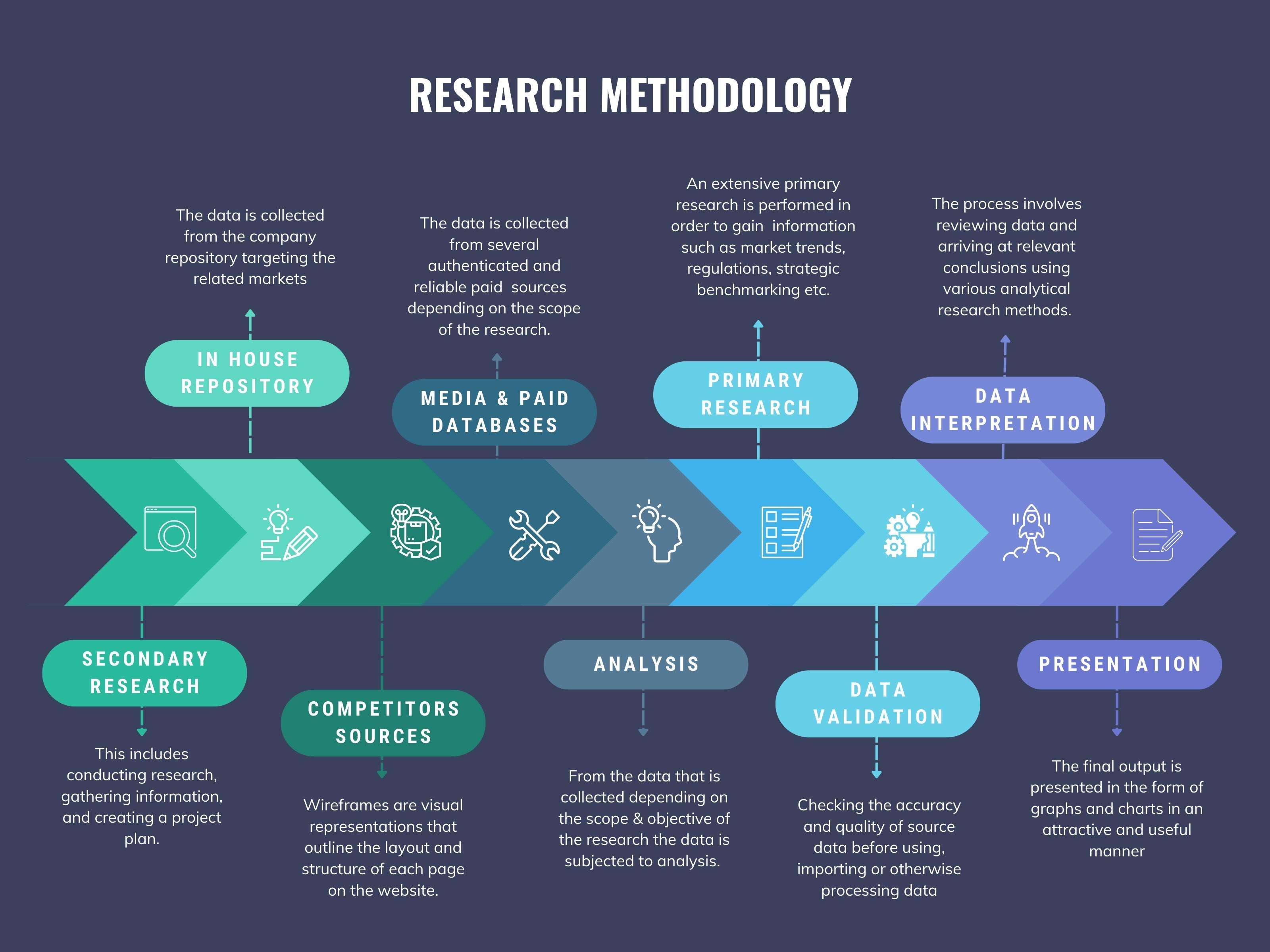
We at ‘Stratistics’ opt for an extensive research approach which involves data mining, data validation, and data analysis. The various research sources include in-house repository, secondary research, competitor’s sources, social media research, client internal data, and primary research.
Our team of analysts prefers the most reliable and authenticated data sources in order to perform the comprehensive literature search. With access to most of the authenticated data bases our team highly considers the best mix of information through various sources to obtain extensive and accurate analysis.
Each report takes an average time of a month and a team of 4 industry analysts. The time may vary depending on the scope and data availability of the desired market report. The various parameters used in the market assessment are standardized in order to enhance the data accuracy.
Data Mining
The data is collected from several authenticated, reliable, paid and unpaid sources and is filtered depending on the scope & objective of the research. Our reports repository acts as an added advantage in this procedure. Data gathering from the raw material suppliers, distributors and the manufacturers is performed on a regular basis, this helps in the comprehensive understanding of the products value chain. Apart from the above mentioned sources the data is also collected from the industry consultants to ensure the objective of the study is in the right direction.
Market trends such as technological advancements, regulatory affairs, market dynamics (Drivers, Restraints, Opportunities and Challenges) are obtained from scientific journals, market related national & international associations and organizations.
Data Analysis
From the data that is collected depending on the scope & objective of the research the data is subjected for the analysis. The critical steps that we follow for the data analysis include:
- Product Lifecycle Analysis
- Competitor analysis
- Risk analysis
- Porters Analysis
- PESTEL Analysis
- SWOT Analysis
The data engineering is performed by the core industry experts considering both the Marketing Mix Modeling and the Demand Forecasting. The marketing mix modeling makes use of multiple-regression techniques to predict the optimal mix of marketing variables. Regression factor is based on a number of variables and how they relate to an outcome such as sales or profits.
Data Validation
The data validation is performed by the exhaustive primary research from the expert interviews. This includes telephonic interviews, focus groups, face to face interviews, and questionnaires to validate our research from all aspects. The industry experts we approach come from the leading firms, involved in the supply chain ranging from the suppliers, distributors to the manufacturers and consumers so as to ensure an unbiased analysis.
We are in touch with more than 15,000 industry experts with the right mix of consultants, CEO's, presidents, vice presidents, managers, experts from both supply side and demand side, executives and so on.
The data validation involves the primary research from the industry experts belonging to:
- Leading Companies
- Suppliers & Distributors
- Manufacturers
- Consumers
- Industry/Strategic Consultants
Apart from the data validation the primary research also helps in performing the fill gap research, i.e. providing solutions for the unmet needs of the research which helps in enhancing the reports quality.
For more details about research methodology, kindly write to us at info@strategymrc.com
Frequently Asked Questions
In case of any queries regarding this report, you can contact the customer service by filing the “Inquiry Before Buy” form available on the right hand side. You may also contact us through email: info@strategymrc.com or phone: +1-301-202-5929
Yes, the samples are available for all the published reports. You can request them by filling the “Request Sample” option available in this page.
Yes, you can request a sample with your specific requirements. All the customized samples will be provided as per the requirement with the real data masked.
All our reports are available in Digital PDF format. In case if you require them in any other formats, such as PPT, Excel etc you can submit a request through “Inquiry Before Buy” form available on the right hand side. You may also contact us through email: info@strategymrc.com or phone: +1-301-202-5929
We offer a free 15% customization with every purchase. This requirement can be fulfilled for both pre and post sale. You may send your customization requirements through email at info@strategymrc.com or call us on +1-301-202-5929.
We have 3 different licensing options available in electronic format.
- Single User Licence: Allows one person, typically the buyer, to have access to the ordered product. The ordered product cannot be distributed to anyone else.
- 2-5 User Licence: Allows the ordered product to be shared among a maximum of 5 people within your organisation.
- Corporate License: Allows the product to be shared among all employees of your organisation regardless of their geographical location.
All our reports are typically be emailed to you as an attachment.
To order any available report you need to register on our website. The payment can be made either through CCAvenue or PayPal payments gateways which accept all international cards.
We extend our support to 6 months post sale. A post sale customization is also provided to cover your unmet needs in the report.
Request Customization
We offer complimentary customization of up to 15% with every purchase. To share your customization requirements, feel free to email us at info@strategymrc.com or call us on +1-301-202-5929. .
Please Note: Customization within the 15% threshold is entirely free of charge. If your request exceeds this limit, we will conduct a feasibility assessment. Following that, a detailed quote and timeline will be provided.
WHY CHOOSE US ?

Assured Quality
Best in class reports with high standard of research integrity

24X7 Research Support
Continuous support to ensure the best customer experience.

Free Customization
Adding more values to your product of interest.

Safe & Secure Access
Providing a secured environment for all online transactions.

Trusted by 600+ Brands
Serving the most reputed brands across the world.