
Wi Fi Sensing Market
Wi-Fi Sensing Market Forecasts to 2034 – Global Analysis By Component (Sensing-Enabled Chipsets, Access Points and Routers, Sensing Software and Integration and Support Services), Sensing Technique, Sensing Capability, Deployment Environment, Application, End User and By Geography

Market Dynamics:
Driver:
IEEE 802.11bf Standardization and Silicon Integration
The publication of IEEE 802.11bf in September 2025 established the first international standard for WLAN sensing, defining procedures that enable interoperable Wi-Fi sensing across devices and encouraging chipset makers to embed sensing capabilities into silicon rather than requiring proprietary implementations. Infineon’s AIROC Wi-Fi 7 ACW741x and Qualcomm’s Dragonwing platforms now list 802.11bf sensing in their 2026 product briefs, signaling that sensing is transitioning from software add-on to native hardware capability. Origin Wireless, which holds more than 225 patents defining motion detection through standard Wi-Fi signals, has partnered with Synaptics to integrate its sensing software directly into Veros wireless SoCs, enabling customers to add motion awareness without redesigning hardware. This standardization and silicon integration trajectory is reducing the barriers to adoption and enabling device makers to ship sensing-enabled products at scale, thereby driving volume growth across residential, commercial, and industrial segments.
Restraint:
Accuracy Variability and Environmental Sensitivity
Wi-Fi sensing faces persistent technical limitations from the sensitivity of radio signal propagation to environmental factors including room layout, furniture placement, wall materials, multiple occupants, pets, and changes in wireless equipment configuration. Distinguishing normal activity from clinically meaningful events such as falls or prolonged inactivity remains a significant challenge, and systems must minimize false alarms while maintaining detection reliability, particularly in multi-person households where algorithms must differentiate between occupants. Advanced sensing capabilities often require specialized routers, access points, or software, and calibration requirements vary across environments. These accuracy and reliability constraints limit deployment confidence in safety-critical applications such as elder care and security, and they slow adoption in environments where false positives carry operational or clinical consequences, thereby constraining market expansion beyond controlled pilot deployments.
Opportunity:
Elder Care and Passive Health Monitoring
The convergence of aging populations, caregiver shortages, and demand for home-based healthcare creates a substantial opportunity for Wi-Fi sensing in elder care and passive health monitoring. Wi-Fi signals can detect changes in movement, presence, activity patterns, and in some systems breathing or other subtle physical movements by analyzing radio-frequency propagation changes, enabling passive monitoring without requiring elderly individuals to wear or charge dedicated devices. Passive monitoring is particularly attractive for individuals who may forget to wear conventional sensors or find wearables uncomfortable, and applications include fall-risk monitoring, activity recognition, sleep monitoring, room occupancy, and caregiver alerts. As senior living operators, healthcare providers, and insurers seek scalable, privacy-preserving monitoring solutions that leverage existing home Wi-Fi infrastructure, demand for sensing capabilities optimized for elder care is rising, thereby establishing a defensible position in the high-value healthcare segment.
Threat:
Privacy Concerns and Absence of Regulatory Safeguards
Wi-Fi sensing faces structural demand risk from privacy concerns that are not addressed by the technology’s governing standard. The IEEE 802.11bf working group declined to incorporate a secure transmission mechanism proposal, and the standard shipped with no privacy protections, leaving the gap structural and acknowledged. Continuous passive sensing generates potentially sensitive behavioral information including presence, movement patterns, and daily routines, and the absence of standardized safeguards means that privacy protections depend entirely on vendor implementation and deployment context. Documented guest backlash against in-room sensors in hospitality settings and emerging scrutiny of passive monitoring in workplaces create reputational risk for early adopters. If privacy concerns escalate or if regulators impose restrictions on passive sensing without consent, deployment could be constrained in residential, hospitality, and workplace environments, thereby limiting the market’s addressable scope.
Covid-19 Impact:
The pandemic accelerated demand for contactless technologies and remote health monitoring, which in turn increased interest in Wi-Fi sensing as a privacy-preserving alternative to cameras and wearables for occupancy monitoring and elder care. Organizations managing social distancing and occupancy constraints explored sensing for space utilization insights, and healthcare providers sought remote monitoring solutions that could operate without patient interaction. Post-pandemic, the structural impact has been a durable shift toward ambient, passive sensing as a preferred approach for health and occupancy monitoring, and this recognition has driven investment in sensing software, silicon integration, and clinical validation as organizations recognize that privacy-preserving ambient intelligence aligns with both public health priorities and long-term care models.
The Sensing software segment is expected to be the largest during the forecast period
The sensing software segment is expected to account for the largest market share during the forecast period, due to the recurring licensing revenue model, the technical complexity of CSI extraction and machine learning inference, and the fact that sensing capability is primarily delivered through software that runs on existing hardware. Origin Wireless licenses its WiFi Sensing software for integration into routers, mesh systems, and IoT devices, and its platform supports multiple deployment architectures including router-embedded, soft-AP mode, client-to-client, and single-point sensing. As device makers seek to add sensing without hardware redesign, software licensing becomes the primary procurement category, and this position is reinforced by the need for continuous algorithm updates and calibration across diverse environments, thereby sustaining the segment’s dominant revenue position throughout the forecast period.
The fall detection and safety monitoring segment is expected to have the highest CAGR during the forecast period
Over the forecast period, the fall detection and safety monitoring segment is predicted to witness the highest growth rate, driven by aging population demographics, caregiver shortages, and the clinical imperative to detect falls and prolonged inactivity without requiring wearable devices that elderly individuals may forget or resist. Wi-Fi sensing can monitor movement and activity patterns passively, alerting caregivers to anomalies while preserving privacy in bedrooms and bathrooms where cameras are unacceptable. As senior living operators and home care providers seek scalable monitoring that integrates with existing connectivity infrastructure, and as clinical evidence for sensing accuracy accumulates, demand for fall detection capabilities is rising. The segment’s growth is further supported by insurance and aging-in-place programs that incentivize passive monitoring as a cost-effective alternative to institutional care, thereby outpacing other applications in growth terms.
Region with largest share:
During the forecast period, the North America region is expected to hold the largest market share, due to early commercial deployment, mature broadband infrastructure, and the concentration of Wi-Fi sensing vendors and intellectual property across the United States and Canada. Plume and Cognitive Systems’ WiFi Motion represents the largest deployed sensing footprint today, and Origin Wireless, acquired by ADT for $170 million in February 2026, is headquartered in the region. The presence of major chipset vendors including Qualcomm and the integration of sensing into Wi-Fi 7 platforms reinforce the region’s supply-side capability. Security providers, elder care operators, and smart home platforms drive adoption, and this concentration of demand and supply sustains North America’s leading revenue position throughout the forecast period.
Region with highest CAGR:
Over the forecast period, the Asia Pacific region is anticipated to exhibit the highest CAGR, due to rapid smart home adoption, aging population pressures in Japan and China, and expanding broadband infrastructure across Southeast Asia. The region is home to significant manufacturing capacity for Wi-Fi devices and chipsets, and device makers are integrating sensing capabilities to differentiate products in competitive markets. Japan’s aging population and caregiver constraints create acute demand for passive monitoring, while China’s smart building and security markets present large-scale deployment opportunities. As regional telecom operators and broadband providers bundle sensing-enabled services into connected-home packages, and as device costs decline, Wi-Fi sensing demand is positioned for above-average growth, thereby supporting Asia Pacific’s emergence as a significant incremental demand center.
Key players in the market
Some of the key players in Wi-Fi Sensing Market include Cisco Systems, Inc., Hewlett Packard Enterprise Company, Huawei Technologies Co., Ltd., Juniper Networks, Inc., Extreme Networks, Inc., Ubiquiti Inc., TP-Link Systems Inc., NETGEAR, Inc., Ruckus Networks, Cambium Networks Corporation, Fortinet, Inc., Arista Networks, Inc., Zyxel Networks Corporation, Ruijie Networks Co., Ltd., CommScope Holding Company, Inc., Broadcom Inc., Qualcomm Incorporated, and MediaTek Inc.
Key Developments:
In November 2026, Cognitive Systems Corp. continued deployment of its WiFi Motion stack through Plume and broadband partners, maintaining the largest deployed Wi-Fi sensing footprint while licensing its motion detection technology for integration into routers, mesh systems, and home gateways across Tier-1 ISP ecosystems.
In September 2026, IEEE 802.11bf sensing capabilities advanced toward commercial silicon integration as Infineon’s AIROC Wi-Fi 7 ACW741x and Qualcomm’s Dragonwing platforms listed 802.11bf sensing support in 2026 product briefs, signaling the transition from standard to native hardware capability.
Components Covered:
• Sensing-Enabled Chipsets
• Access Points and Routers
• Sensing Software
• Integration and Support Services
Sensing Techniques Covered:
• Channel State Information Sensing
• Received Signal Strength Sensing
• Doppler-Based Sensing
• Time-of-Flight Sensing
• Hybrid Sensing
Sensing Capabilities Covered:
• Motion Detection
• Presence Detection
• Gesture Recognition
• Breathing and Vital Sign Detection
• Activity Recognition
• Other Sensing Capabilities
Deployment Environments Covered:
• Residential Indoor
• Commercial Indoor
• Industrial Indoor
• Other Environments
Applications Covered:
• Contactless Occupancy Automation
• Fall Detection and Safety Monitoring
• Smart Building Energy Optimization
• Perimeter and Intrusion Monitoring
• Human-Machine Interaction
• Other Applications
End Users Covered:
• Smart Home Technology Providers
• Building Management Companies
• Elder Care Providers
• Security Solution Integrators
• Industrial Facility Operators
• Other End Users
What our report offers:
- Market share assessments for the regional and country-level segments
- Strategic recommendations for the new entrants
- Covers Market data for the years 2023, 2024, 2025, 2026, 2027, 2028, 2030, 2032 and 2034
- Market Trends (Drivers, Constraints, Opportunities, Threats, Challenges, Investment Opportunities, and recommendations)
- Strategic recommendations in key business segments based on the market estimations
- Competitive landscaping mapping the key common trends
- Company profiling with detailed strategies, financials, and recent developments
- Supply chain trends mapping the latest technological advancements
Complimentary Customization Options:
- Every purchase of this report includes ONE complimentary customization option, allowing clients to tailor the research to their specific business requirements at no additional cost..
1. Company Profiling & Competitive Intelligence
• Detailed profiling of up to 3 additional market players
• SWOT analysis of up to 3 key market participants
• Analysis of competitive positioning, product portfolios and strategic developments
2. Country-Level Market Analysis
• Market size estimates, forecasts and CAGR analysis for one additional country of the client's choice
• Country-specific market trends, growth drivers, opportunities and challenges
• Regional market insights tailored to the client's geographical interests
• Subject to data availability and feasibility assessment
3. Competitive Benchmarking
• Comparative benchmarking of up to 5 key market players
• Evaluation based on product portfolios, geographical presence, technological capabilities and strategic partnerships
• Competitive positioning matrix highlighting key strengths and market differentiation
4. Additional Market Segmentation
• Market size estimates and forecasts for one additional subsegment relevant to the client's requirements
• Analysis of growth opportunities, demand patterns and emerging trends within the selected subsegment
• Subject to data availability and feasibility assessment
5. Market Trends & Strategic Insights
• Analysis of up to 3 emerging market trends relevant to the client's business interests
• Assessment of key growth opportunities, technological developments and potential market disruptions
• Strategic insights to support market entry, expansion or investment decisions
Customization Terms
• Clients may select one of the above complimentary customization options per report purchase.
• Complimentary customization is subject to data availability, research feasibility and scope confirmation.
• Requests exceeding the complimentary scope may be accommodated through paid customization.
• Delivery timelines for customized content will be confirmed upon assessment of the requirements.
Need something more specific?
- Our research team can also provide tailored research solutions to address your unique business requirements. Contact us to discuss additional customization opportunities
Table of Contents
1 Executive Summary1.1 Market Snapshot and Key Highlights
1.2 Growth Drivers, Challenges, and Opportunities
1.3 Competitive Landscape Overview
1.4 Strategic Insights and Recommendations
2 Research Framework
2.1 Study Objectives and Scope
2.2 Stakeholder Analysis
2.3 Research Assumptions and Limitations
2.4 Research Methodology
2.4.1 Data Collection (Primary and Secondary)
2.4.2 Data Modeling and Estimation Techniques
2.4.3 Data Validation and Triangulation
2.4.4 Analytical and Forecasting Approach
3 Market Dynamics and Trend Analysis
3.1 Market Definition and Structure
3.2 Key Market Drivers
3.3 Market Restraints and Challenges
3.4 Growth Opportunities and Investment Hotspots
3.5 Industry Threats and Risk Assessment
3.6 Technology and Innovation Landscape
3.7 Emerging and High-Growth Markets
3.8 Regulatory and Policy Environment
3.9 Impact of COVID-19 and Recovery Outlook
4 Competitive and Strategic Assessment
4.1 Porter's Five Forces Analysis
4.1.1 Supplier Bargaining Power
4.1.2 Buyer Bargaining Power
4.1.3 Threat of Substitutes
4.1.4 Threat of New Entrants
4.1.5 Competitive Rivalry
4.2 Market Share Analysis of Key Players
4.3 Product Benchmarking and Performance Comparison
5 Global Wi-Fi Sensing Market, By Component
5.1 Sensing-Enabled Chipsets
5.2 Access Points and Routers
5.3 Sensing Software
5.4 Integration and Support Services
6 Global Wi-Fi Sensing Market, By Sensing Technique
6.1 Channel State Information Sensing
6.2 Received Signal Strength Sensing
6.3 Doppler-Based Sensing
6.4 Time-of-Flight Sensing
6.5 Hybrid Sensing
7 Global Wi-Fi Sensing Market, By Sensing Capability
7.1 Motion Detection
7.2 Presence Detection
7.3 Gesture Recognition
7.4 Breathing and Vital Sign Detection
7.5 Activity Recognition
7.6 Other Sensing Capabilities
8 Global Wi-Fi Sensing Market, By Deployment Environment
8.1 Residential Indoor
8.2 Commercial Indoor
8.3 Industrial Indoor
8.4 Other Environments
9 Global Wi-Fi Sensing Market, By Application
9.1 Contactless Occupancy Automation
9.2 Fall Detection and Safety Monitoring
9.3 Smart Building Energy Optimization
9.4 Perimeter and Intrusion Monitoring
9.5 Human-Machine Interaction
9.6 Other Applications
10 Global Wi-Fi Sensing Market, By End User
10.1 Smart Home Technology Providers
10.2 Building Management Companies
10.3 Elder Care Providers
10.4 Security Solution Integrators
10.5 Industrial Facility Operators
10.6 Other End Users
11 Global Wi-Fi Sensing Market, By Geography
11.1 North America
11.1.1 United States
11.1.2 Canada
11.1.3 Mexico
11.2 Europe
11.2.1 United Kingdom
11.2.2 Germany
11.2.3 France
11.2.4 Italy
11.2.5 Spain
11.2.6 Netherlands
11.2.7 Belgium
11.2.8 Sweden
11.2.9 Switzerland
11.2.10 Poland
11.2.11 Rest of Europe
11.3 Asia Pacific
11.3.1 China
11.3.2 Japan
11.3.3 India
11.3.4 South Korea
11.3.5 Australia
11.3.6 Indonesia
11.3.7 Thailand
11.3.8 Malaysia
11.3.9 Singapore
11.3.10 Vietnam
11.3.11 Rest of Asia Pacific
11.4 South America
11.4.1 Brazil
11.4.2 Argentina
11.4.3 Colombia
11.4.4 Chile
11.4.5 Peru
11.4.6 Rest of South America
11.5 Rest of the World (RoW)
11.5.1 Middle East
11.5.1.1 Saudi Arabia
11.5.1.2 United Arab Emirates
11.5.1.3 Qatar
11.5.1.4 Israel
11.5.1.5 Rest of Middle East
11.5.2 Africa
11.5.2.1 South Africa
11.5.2.2 Egypt
11.5.2.3 Morocco
11.5.2.4 Rest of Africa
12 Strategic Market Intelligence
12.1 Industry Value Network and Supply Chain Assessment
12.2 White-Space and Opportunity Mapping
12.3 Product Evolution and Market Life Cycle Analysis
12.4 Channel, Distributor, and Go-to-Market Assessment
13 Industry Developments and Strategic Initiatives
13.1 Mergers and Acquisitions
13.2 Partnerships, Alliances, and Joint Ventures
13.3 New Product Launches and Certifications
13.4 Capacity Expansion and Investments
13.5 Other Strategic Initiatives
14 Company Profiles
14.1 Cisco Systems, Inc.
14.2 Hewlett Packard Enterprise Company
14.3 Huawei Technologies Co., Ltd.
14.4 Juniper Networks, Inc.
14.5 Extreme Networks, Inc.
14.6 Ubiquiti Inc.
14.7 TP-Link Systems Inc.
14.8 NETGEAR, Inc.
14.9 Ruckus Networks
14.10 Cambium Networks Corporation
14.11 Fortinet, Inc.
14.12 Arista Networks, Inc.
14.13 Zyxel Networks Corporation
14.14 Ruijie Networks Co., Ltd.
14.15 CommScope Holding Company, Inc.
14.16 Broadcom Inc.
14.17 Qualcomm Incorporated
14.18 MediaTek Inc.
List of Tables
1 Global Wi-Fi Sensing Market Outlook, By Region (2023-2034) ($MN)
2 Global Wi-Fi Sensing Market Outlook, By Component (2023-2034) ($MN)
3 Global Wi-Fi Sensing Market Outlook, By Sensing-Enabled Chipsets (2023-2034) ($MN)
4 Global Wi-Fi Sensing Market Outlook, By Access Points and Routers (2023-2034) ($MN)
5 Global Wi-Fi Sensing Market Outlook, By Sensing Software (2023-2034) ($MN)
6 Global Wi-Fi Sensing Market Outlook, By Integration and Support Services (2023-2034) ($MN)
7 Global Wi-Fi Sensing Market Outlook, By Sensing Technique (2023-2034) ($MN)
8 Global Wi-Fi Sensing Market Outlook, By Channel State Information Sensing (2023-2034) ($MN)
9 Global Wi-Fi Sensing Market Outlook, By Received Signal Strength Sensing (2023-2034) ($MN)
10 Global Wi-Fi Sensing Market Outlook, By Doppler-Based Sensing (2023-2034) ($MN)
11 Global Wi-Fi Sensing Market Outlook, By Time-of-Flight Sensing (2023-2034) ($MN)
12 Global Wi-Fi Sensing Market Outlook, By Hybrid Sensing (2023-2034) ($MN)
13 Global Wi-Fi Sensing Market Outlook, By Sensing Capability (2023-2034) ($MN)
14 Global Wi-Fi Sensing Market Outlook, By Motion Detection (2023-2034) ($MN)
15 Global Wi-Fi Sensing Market Outlook, By Presence Detection (2023-2034) ($MN)
16 Global Wi-Fi Sensing Market Outlook, By Gesture Recognition (2023-2034) ($MN)
17 Global Wi-Fi Sensing Market Outlook, By Breathing and Vital Sign Detection (2023-2034) ($MN)
18 Global Wi-Fi Sensing Market Outlook, By Activity Recognition (2023-2034) ($MN)
19 Global Wi-Fi Sensing Market Outlook, By Other Sensing Capabilities (2023-2034) ($MN)
20 Global Wi-Fi Sensing Market Outlook, By Deployment Environment (2023-2034) ($MN)
21 Global Wi-Fi Sensing Market Outlook, By Residential Indoor (2023-2034) ($MN)
22 Global Wi-Fi Sensing Market Outlook, By Commercial Indoor (2023-2034) ($MN)
23 Global Wi-Fi Sensing Market Outlook, By Industrial Indoor (2023-2034) ($MN)
24 Global Wi-Fi Sensing Market Outlook, By Other Environments (2023-2034) ($MN)
25 Global Wi-Fi Sensing Market Outlook, By Application (2023-2034) ($MN)
26 Global Wi-Fi Sensing Market Outlook, By Contactless Occupancy Automation (2023-2034) ($MN)
27 Global Wi-Fi Sensing Market Outlook, By Fall Detection and Safety Monitoring (2023-2034) ($MN)
28 Global Wi-Fi Sensing Market Outlook, By Smart Building Energy Optimization (2023-2034) ($MN)
29 Global Wi-Fi Sensing Market Outlook, By Perimeter and Intrusion Monitoring (2023-2034) ($MN)
30 Global Wi-Fi Sensing Market Outlook, By Human-Machine Interaction (2023-2034) ($MN)
31 Global Wi-Fi Sensing Market Outlook, By Other Applications (2023-2034) ($MN)
32 Global Wi-Fi Sensing Market Outlook, By End User (2023-2034) ($MN)
33 Global Wi-Fi Sensing Market Outlook, By Smart Home Technology Providers (2023-2034) ($MN)
34 Global Wi-Fi Sensing Market Outlook, By Building Management Companies (2023-2034) ($MN)
35 Global Wi-Fi Sensing Market Outlook, By Elder Care Providers (2023-2034) ($MN)
36 Global Wi-Fi Sensing Market Outlook, By Security Solution Integrators (2023-2034) ($MN)
37 Global Wi-Fi Sensing Market Outlook, By Industrial Facility Operators (2023-2034) ($MN)
38 Global Wi-Fi Sensing Market Outlook, By Other End Users (2023-2034) ($MN)
Note: Tables for North America, Europe, APAC, South America, and Rest of the World (RoW) Regions are also represented in the same manner as above
List of Figures
RESEARCH METHODOLOGY
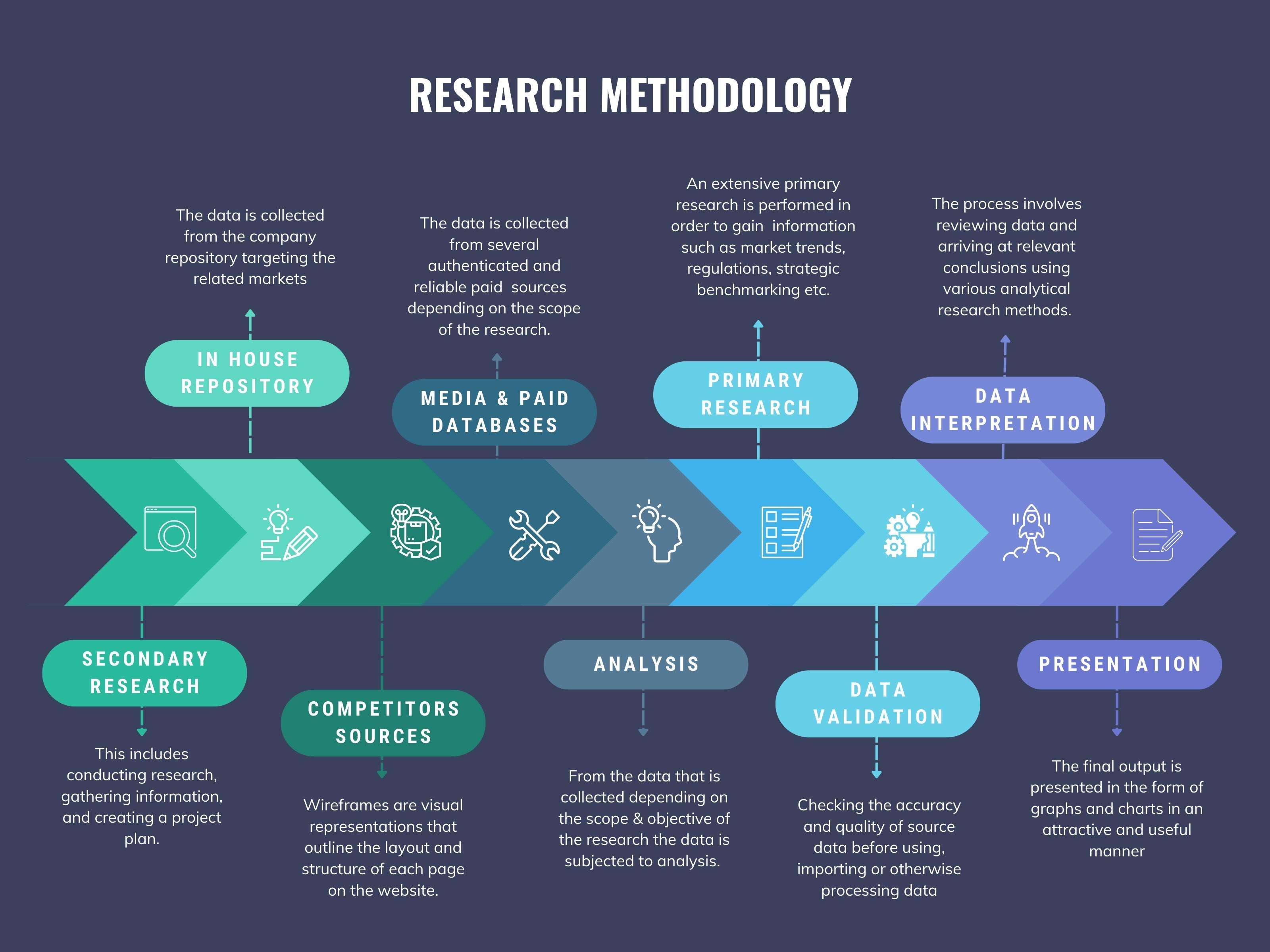
We at ‘Stratistics’ opt for an extensive research approach which involves data mining, data validation, and data analysis. The various research sources include in-house repository, secondary research, competitor’s sources, social media research, client internal data, and primary research.
Our team of analysts prefers the most reliable and authenticated data sources in order to perform the comprehensive literature search. With access to most of the authenticated data bases our team highly considers the best mix of information through various sources to obtain extensive and accurate analysis.
Each report takes an average time of a month and a team of 4 industry analysts. The time may vary depending on the scope and data availability of the desired market report. The various parameters used in the market assessment are standardized in order to enhance the data accuracy.
Data Mining
The data is collected from several authenticated, reliable, paid and unpaid sources and is filtered depending on the scope & objective of the research. Our reports repository acts as an added advantage in this procedure. Data gathering from the raw material suppliers, distributors and the manufacturers is performed on a regular basis, this helps in the comprehensive understanding of the products value chain. Apart from the above mentioned sources the data is also collected from the industry consultants to ensure the objective of the study is in the right direction.
Market trends such as technological advancements, regulatory affairs, market dynamics (Drivers, Restraints, Opportunities and Challenges) are obtained from scientific journals, market related national & international associations and organizations.
Data Analysis
From the data that is collected depending on the scope & objective of the research the data is subjected for the analysis. The critical steps that we follow for the data analysis include:
- Product Lifecycle Analysis
- Competitor analysis
- Risk analysis
- Porters Analysis
- PESTEL Analysis
- SWOT Analysis
The data engineering is performed by the core industry experts considering both the Marketing Mix Modeling and the Demand Forecasting. The marketing mix modeling makes use of multiple-regression techniques to predict the optimal mix of marketing variables. Regression factor is based on a number of variables and how they relate to an outcome such as sales or profits.
Data Validation
The data validation is performed by the exhaustive primary research from the expert interviews. This includes telephonic interviews, focus groups, face to face interviews, and questionnaires to validate our research from all aspects. The industry experts we approach come from the leading firms, involved in the supply chain ranging from the suppliers, distributors to the manufacturers and consumers so as to ensure an unbiased analysis.
We are in touch with more than 15,000 industry experts with the right mix of consultants, CEO's, presidents, vice presidents, managers, experts from both supply side and demand side, executives and so on.
The data validation involves the primary research from the industry experts belonging to:
- Leading Companies
- Suppliers & Distributors
- Manufacturers
- Consumers
- Industry/Strategic Consultants
Apart from the data validation the primary research also helps in performing the fill gap research, i.e. providing solutions for the unmet needs of the research which helps in enhancing the reports quality.
For more details about research methodology, kindly write to us at info@strategymrc.com
Frequently Asked Questions
In case of any queries regarding this report, you can contact the customer service by filing the “Inquiry Before Buy” form available on the right hand side. You may also contact us through email: info@strategymrc.com or phone: +1-301-202-5929
Yes, the samples are available for all the published reports. You can request them by filling the “Request Sample” option available in this page.
Yes, you can request a sample with your specific requirements. All the customized samples will be provided as per the requirement with the real data masked.
All our reports are available in Digital PDF format. In case if you require them in any other formats, such as PPT, Excel etc you can submit a request through “Inquiry Before Buy” form available on the right hand side. You may also contact us through email: info@strategymrc.com or phone: +1-301-202-5929
We offer a free 15% customization with every purchase. This requirement can be fulfilled for both pre and post sale. You may send your customization requirements through email at info@strategymrc.com or call us on +1-301-202-5929.
We have 3 different licensing options available in electronic format.
- Single User Licence: Allows one person, typically the buyer, to have access to the ordered product. The ordered product cannot be distributed to anyone else.
- 2-5 User Licence: Allows the ordered product to be shared among a maximum of 5 people within your organisation.
- Corporate License: Allows the product to be shared among all employees of your organisation regardless of their geographical location.
All our reports are typically be emailed to you as an attachment.
To order any available report you need to register on our website. The payment can be made either through CCAvenue or PayPal payments gateways which accept all international cards.
We extend our support to 6 months post sale. A post sale customization is also provided to cover your unmet needs in the report.
Request Customization
We offer complimentary customization of up to 15% with every purchase. To share your customization requirements, feel free to email us at info@strategymrc.com or call us on +1-301-202-5929. .
Please Note: Customization within the 15% threshold is entirely free of charge. If your request exceeds this limit, we will conduct a feasibility assessment. Following that, a detailed quote and timeline will be provided.
WHY CHOOSE US ?

Assured Quality
Best in class reports with high standard of research integrity

24X7 Research Support
Continuous support to ensure the best customer experience.

Free Customization
Adding more values to your product of interest.

Safe & Secure Access
Providing a secured environment for all online transactions.

Trusted by 600+ Brands
Serving the most reputed brands across the world.