
Nanomaterials Market
Nanomaterials Market Forecasts to 2032 - Global Analysis By Product Type (Nanoparticles, Nanofibers, Nanotubes and Nanowires), Structure Type (Non-polymer Organic Nanomaterials and Polymeric Nanomaterials), Material Type, Application and By Geography

|
Years Covered |
2024-2032 |
|
Estimated Year Value (2025) |
US $17.00 BN |
|
Projected Year Value (2032) |
US $51.03 BN |
|
CAGR (2025 - 2032) |
17.0% |
|
Regions Covered |
North America, Europe, Asia Pacific, South America, and Middle East & Africa |
|
Countries Covered |
US, Canada, Mexico, Germany, UK, Italy, France, Spain, Japan, China, India, Australia, New Zealand, South Korea, Rest of Asia Pacific, South America, Argentina, Brazil, Chile, Middle East & Africa, Saudi Arabia, UAE, Qatar, and South Africa |
|
Largest Market |
Asia Pacific |
|
Highest Growing Market |
Middle East & Africa |
According to Stratistics MRC, the Global Nanomaterials Market is accounted for $17.00 billion in 2025 and is expected to reach $51.03 billion by 2032 growing at a CAGR of 17.0% during the forecast period. Nanomaterials are materials with structural components smaller than 100 nanometers, which exhibit unique physical, chemical, and biological properties compared to their bulk counterparts. Nanomaterials frequently exhibit higher reactivity, improved electrical conductivity, reduced weight, and enhanced strength because of their minuscule size and high surface area-to-volume ratio. Moreover, these characteristics make them useful in a variety of fields, such as coatings, electronics, medicine, energy storage, and environmental cleanup.
According to the U.S. National Nanotechnology Initiative (NNI), through FY?2025 the U.S. federal government has invested over?$45?billion into nanotechnology research, supporting more than 170,000 nanotech related jobs and generating $44.5?billion in revenue from approximately 1,600 companies categorized under nanotechnology R&D.
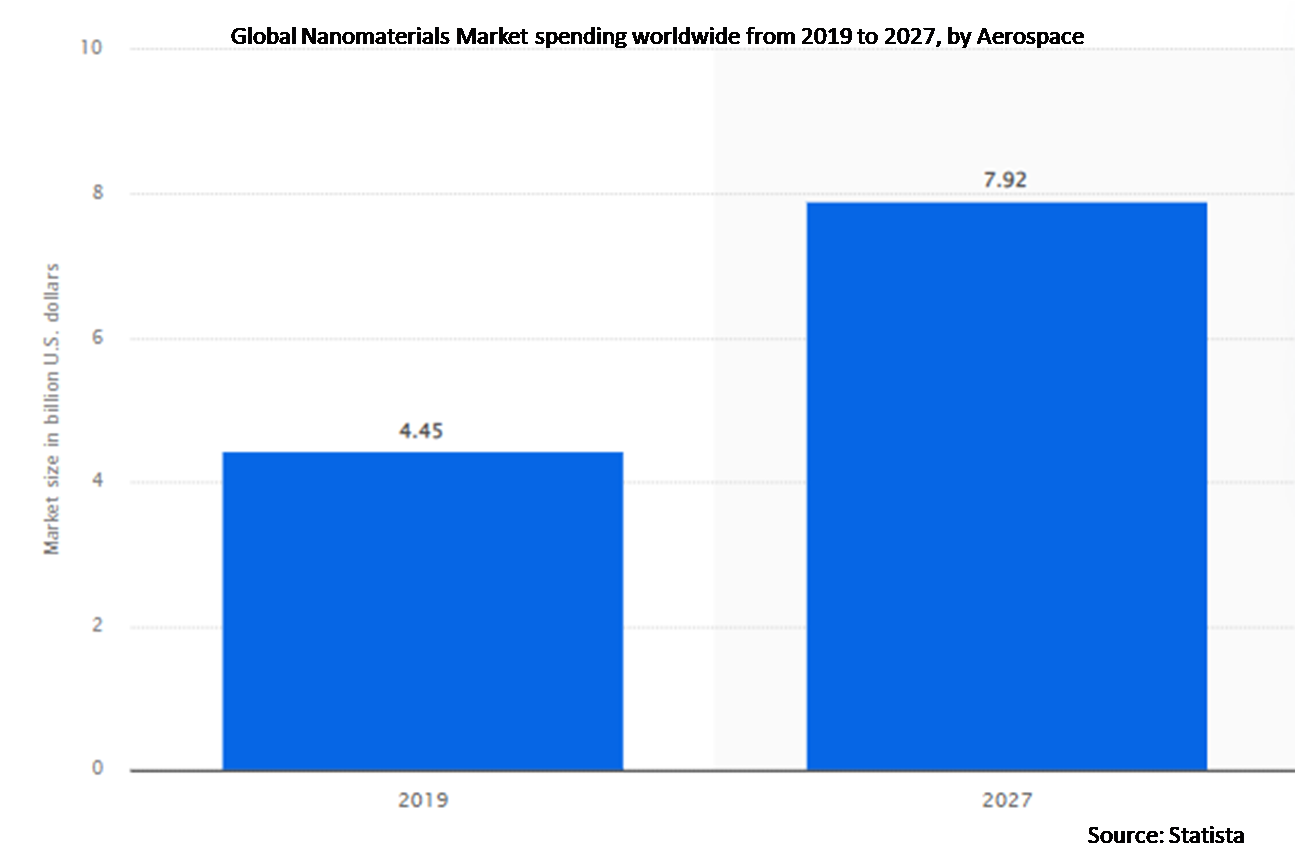
Market Dynamics:
Driver:
Growing demand for semiconductors and electronics
Nanomaterials like graphene, carbon nanotubes, and silver nanowires are transforming the electronics industry by making it possible to create devices that are smaller, faster, and use less energy. They are crucial for printed electronics, flexible displays, and the quantum dots that are utilized in HDTVs. Advanced computing and Internet of Things (IoT) applications depend on semiconductors' improved transistor density and reduced power consumption, which are made possible by nonmaterials. Additionally, the market for nonmaterials is expected to increase in tandem with the recent spike in global electronics output, particularly in Asia-Pacific countries such as China, South Korea, and Taiwan.
Restraint:
Exorbitant costs of production and processing
The production of nanomaterials, especially on a commercial scale, frequently entails intricate, expensive, and energy-intensive procedures despite their excellent qualities. High-precision milling, sol-gel synthesis, and chemical vapor deposition are examples of processes that call for specialized tools, pure materials, and strict environmental regulations. The cost is further increased by preserving particle size homogeneity and avoiding agglomeration during manufacture. Furthermore, wider adoption across price-sensitive industries is restrained by these high capital and operating costs, which restrict the affordability and accessibility of nanomaterials, especially for small and medium-sized businesses (SMEs).
Opportunity:
Growing interest in green and sustainable nanotechnologies
Nanomaterials are finding great use in fields including waste remediation, air filtration, and water purification as a result of the increased emphasis on energy-efficient and ecologically friendly solutions. Heavy metals, pathogens, and organic pollutants are being eliminated from water sources, for instance, using photocatalytic nanoparticles and nanostructured membranes. In the same way, metal oxides and carbon nanoparticles are making sophisticated air filtration systems necessary. Eco-friendly nanomaterial applications are anticipated to attract investment from governments and international organizations that support green technologies and circular economy principles.
Threat:
Rapid innovation leads to technological obsolescence
The field of nanomaterials is developing so quickly that technologies may become outdated before they get broad market acceptance. Within a few years, a better or more affordable nanomaterial might replace one created today. Especially for smaller businesses with tighter R&D budgets, this rapid innovation cycle discourages long-term commitments to certain nanomaterials and raises investment risks. It also implies that if market preferences abruptly change, large capital expenditures in manufacturing infrastructure can become outdated.
Covid-19 Impact:
The COVID-19 epidemic affected the market for nanomaterials in a variety of ways. Research projects and manufacturing were temporarily delayed, especially in industries like aerospace and automotive, due to workforce shortages, worldwide supply chain disruptions, and decreased industrial activity. Nonetheless, the crisis also increased the need for nanomaterials in hygienic and medical applications, such as antiviral coatings, sophisticated personal protective equipment, and diagnostic instruments like biosensors and quick test kits. Nanotechnology was essential in improving the efficacy of COVID-19 vaccinations and medication delivery methods. Nanomaterials are now seen as essential to public health and future pandemic preparedness due to this twofold effect, which caused a brief decline followed by a spike in strategic investments and developments.
The nanoparticles segment is expected to be the largest during the forecast period
The nanoparticles segment is expected to account for the largest market share during the forecast period. Nanoparticles are preferred because of their remarkable versatility: they are used in electronics as printed sensors and conductive inks; in medicine, titanium dioxide and zinc oxide are now commonplace in sunscreens, cosmetics, and antimicrobial coatings; and in catalysis, platinum and silver nanoparticles improve chemical reactions. Moreover, they are essential in many sectors due to their adjustable optical, electrical, and chemical characteristics, which further solidify their market-leading position.
The dendrimers segment is expected to have the highest CAGR during the forecast period
Over the forecast period, the dendrimers segment is predicted to witness the highest growth rate. Dendrimers are tree-like, highly branched macromolecules with remarkable surface functionality, size, and shape accuracy. Because of these special qualities, they are perfect for photodynamic cancer treatment, gene therapy, targeted medication administration, and medical imaging. Strong R&D interest is being generated by their potential to enhance solubility, tissue targeting, and payload control. Additionally, dendrimer applications are anticipated to increase at the quickest rate in the nanomaterials landscape as long as the pharmaceutical and biomedical sectors continue to prioritize advancements in nanomedicine.
Region with largest share:
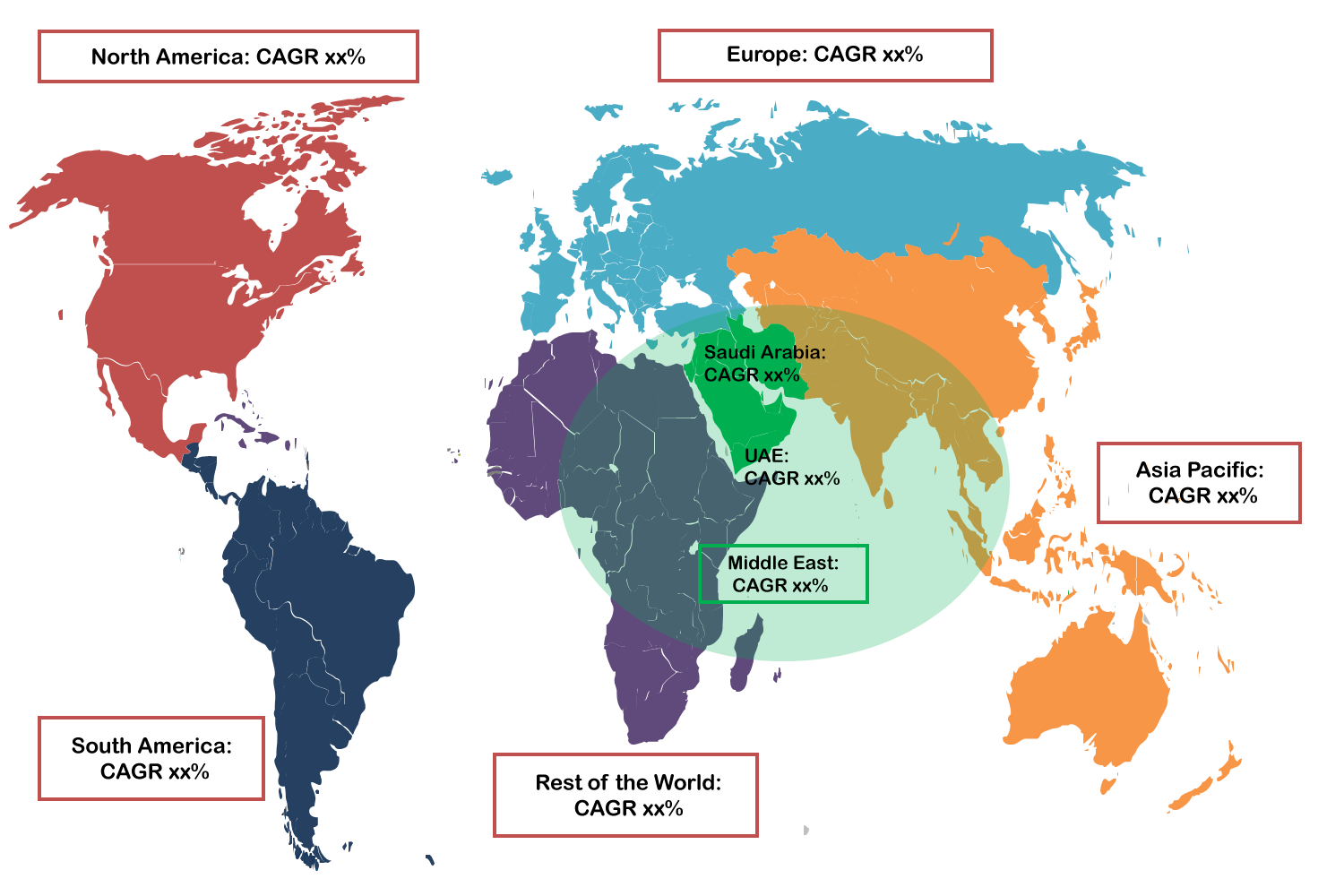
During the forecast period, the Asia Pacific region is expected to hold the largest market share, propelled by substantial R&D investments, robust government backing, and quick industrialization in nations like China, Japan, South Korea, and India. Strong electronics manufacturing, expanding healthcare and pharmaceutical industries, and rising demand for nanomaterials in energy storage, coatings, and environmental applications all benefit the area. Because of its low manufacturing costs, large-scale production capability, and government-sponsored nanotechnology projects under initiatives, China in particular leads the world. Furthermore, Asia-Pacific's dominance in the market for nanomaterials is being cemented by its growing industrial base and increasing use across industries.
Region with highest CAGR:
Over the forecast period, the Middle East & Africa region is anticipated to exhibit the highest CAGR, driven by rising spending on oil and gas applications, water treatment using nanotechnology, and healthcare facilities. Countries like South Africa, Saudi Arabia, and the United Arab Emirates are actively diversifying their economies and incorporating sophisticated materials into industries like medical, energy, and environmental remediation. Demand is increasing as a result of government initiatives, expanding partnerships with foreign research institutions, and the adoption of sustainable technologies. Despite being a smaller market in terms of size at the moment, its quick development trajectory makes it the region with the quickest growth rate.
Key players in the market
Some of the key players in Nanomaterials Market include Bayer AG, Evonik Industries AG, Arkema Group, LG Chem Ltd., American Elements Inc, Nanophase Technologies Corporation, Cabot Corporation, BASF SE, Quantum Materials Corporation , Nanocyl SA, Altair Nanotechnologies Inc., Zyvex Technologies, Frontier Carbon Corporation, Merck KGaA, ACS Material LLC, SkySpring Nanomaterials, Inc., Raymor Industries Inc. and Nanoshel LLC.
Key Developments:
In March 2025, Arkema signs a new biomethane supply agreement with Engie. Arkema continues its transformation towards a more sustainable industrial model with the signing of a new, eight-year contract with ENGIE for the supply of biomethane for several Bostik sites in France. This 25 GWh/year contract will cover some 85% of the annual gas consumption of four Bostik sites in France, a notable step forward in the decarbonization of the company’s energy supply.
In March 2025, Bayer and Suzhou Puhe BioPharma Co.,Ltd announced that they have entered into a global license agreement for Puhe BioPharma’s oral, small molecule PRMT5 inhibitor that selectively targets MTAP-deleted tumors. Under the agreement, Bayer obtains an exclusive worldwide license to develop, manufacture and commercialize the MTA-cooperative PRMT5 inhibitor.
In March 2024, Evonik has entered into an exclusive agreement with the Cleveland-based Sea-Land Chemical Company for the distribution of its cleaning solutions in the U.S. as of March 1, 2025. The agreement builds on a long-standing relationship with the distributor and expands the reach of Evonik’s cleaning solutions to the entire U.S. region. Evonik provides the homecare, vehicle care, and industrial and institutional cleaning markets with innovative cleaning solutions, many of which have a strong sustainability profile.
Product Types Covered:
• Nanoparticles
• Nanofibers
• Nanotubes
• Nanowires
Structure Types Covered:
• Non-polymer Organic Nanomaterials
• Polymeric Nanomaterials
Material Types Covered:
• Carbon-Based Nanomaterials
• Metal & Non-Metal Oxides
• Metal-Based Nanomaterials
• Nanoclays
• Dendrimers
• Nanocellulose
• Engineered Polymers
• Other Material Types
Applications Covered:
• Aerospace
• Automotive
• Medical & Healthcare
• Energy & Power
• Construction
• Rubber
• Electronics & Semiconductors
• Paints & Coatings
• Consumer Goods
• Personal Care
• Other Applications
Regions Covered:
• North America
o US
o Canada
o Mexico
• Europe
o Germany
o UK
o Italy
o France
o Spain
o Rest of Europe
• Asia Pacific
o Japan
o China
o India
o Australia
o New Zealand
o South Korea
o Rest of Asia Pacific
• South America
o Argentina
o Brazil
o Chile
o Rest of South America
• Middle East & Africa
o Saudi Arabia
o UAE
o Qatar
o South Africa
o Rest of Middle East & Africa
What our report offers:
- Market share assessments for the regional and country-level segments
- Strategic recommendations for the new entrants
- Covers Market data for the years 2024, 2025, 2026, 2028, and 2032
- Market Trends (Drivers, Constraints, Opportunities, Threats, Challenges, Investment Opportunities, and recommendations)
- Strategic recommendations in key business segments based on the market estimations
- Competitive landscaping mapping the key common trends
- Company profiling with detailed strategies, financials, and recent developments
- Supply chain trends mapping the latest technological advancements
Free Customization Offerings:
All the customers of this report will be entitled to receive one of the following free customization options:
• Company Profiling
o Comprehensive profiling of additional market players (up to 3)
o SWOT Analysis of key players (up to 3)
• Regional Segmentation
o Market estimations, Forecasts and CAGR of any prominent country as per the client's interest (Note: Depends on feasibility check)
• Competitive Benchmarking
o Benchmarking of key players based on product portfolio, geographical presence, and strategic alliances
Table of Contents
1 Executive Summary
2 Preface
2.1 Abstract
2.2 Stake Holders
2.3 Research Scope
2.4 Research Methodology
2.4.1 Data Mining
2.4.2 Data Analysis
2.4.3 Data Validation
2.4.4 Research Approach
2.5 Research Sources
2.5.1 Primary Research Sources
2.5.2 Secondary Research Sources
2.5.3 Assumptions
3 Market Trend Analysis
3.1 Introduction
3.2 Drivers
3.3 Restraints
3.4 Opportunities
3.5 Threats
3.6 Product Analysis
3.7 Application Analysis
3.8 Emerging Markets
3.9 Impact of Covid-19
4 Porters Five Force Analysis
4.1 Bargaining power of suppliers
4.2 Bargaining power of buyers
4.3 Threat of substitutes
4.4 Threat of new entrants
4.5 Competitive rivalry
5 Global Nanomaterials Market, By Product Type
5.1 Introduction
5.2 Nanoparticles
5.3 Nanofibers
5.4 Nanotubes
5.5 Nanowires
6 Global Nanomaterials Market, By Structure Type
6.1 Introduction
6.2 Non-polymer Organic Nanomaterials
6.3 Polymeric Nanomaterials
7 Global Nanomaterials Market, By Material Type
7.1 Introduction
7.2 Carbon-Based Nanomaterials
7.3 Metal & Non-Metal Oxides
7.4 Metal-Based Nanomaterials
7.5 Nanoclays
7.6 Dendrimers
7.7 Nanocellulose
7.8 Engineered Polymers
7.9 Other Material Types
8 Global Nanomaterials Market, By Application
8.1 Introduction
8.2 Aerospace
8.3 Automotive
8.4 Medical & Healthcare
8.5 Energy & Power
8.6 Construction
8.7 Rubber
8.8 Electronics & Semiconductors
8.9 Paints & Coatings
8.10 Consumer Goods
8.11 Personal Care
8.12 Other Applications
9 Global Nanomaterials Market, By Geography
9.1 Introduction
9.2 North America
9.2.1 US
9.2.2 Canada
9.2.3 Mexico
9.3 Europe
9.3.1 Germany
9.3.2 UK
9.3.3 Italy
9.3.4 France
9.3.5 Spain
9.3.6 Rest of Europe
9.4 Asia Pacific
9.4.1 Japan
9.4.2 China
9.4.3 India
9.4.4 Australia
9.4.5 New Zealand
9.4.6 South Korea
9.4.7 Rest of Asia Pacific
9.5 South America
9.5.1 Argentina
9.5.2 Brazil
9.5.3 Chile
9.5.4 Rest of South America
9.6 Middle East & Africa
9.6.1 Saudi Arabia
9.6.2 UAE
9.6.3 Qatar
9.6.4 South Africa
9.6.5 Rest of Middle East & Africa
10 Key Developments
10.1 Agreements, Partnerships, Collaborations and Joint Ventures
10.2 Acquisitions & Mergers
10.3 New Product Launch
10.4 Expansions
10.5 Other Key Strategies
11 Company Profiling
11.1 Bayer AG
11.2 Evonik Industries AG
11.3 Arkema Group
11.4 LG Chem Ltd.
11.5 American Elements Inc
11.6 Nanophase Technologies Corporation
11.7 Cabot Corporation
11.8 BASF SE
11.9 Quantum Materials Corporation
11.10 Nanocyl SA
11.11 Altair Nanotechnologies Inc.
11.12 Zyvex Technologies
11.13 Frontier Carbon Corporation
11.14 Merck KGaA
11.15 ACS Material LLC
11.16 SkySpring Nanomaterials, Inc.
11.17 Raymor Industries Inc.
11.18 Nanoshel LLC
List of Tables
1 Global Nanomaterials Market Outlook, By Region (2024-2032) ($MN)
2 Global Nanomaterials Market Outlook, By Product Type (2024-2032) ($MN)
3 Global Nanomaterials Market Outlook, By Nanoparticles (2024-2032) ($MN)
4 Global Nanomaterials Market Outlook, By Nanofibers (2024-2032) ($MN)
5 Global Nanomaterials Market Outlook, By Nanotubes (2024-2032) ($MN)
6 Global Nanomaterials Market Outlook, By Nanowires (2024-2032) ($MN)
7 Global Nanomaterials Market Outlook, By Structure Type (2024-2032) ($MN)
8 Global Nanomaterials Market Outlook, By Non-polymer Organic Nanomaterials (2024-2032) ($MN)
9 Global Nanomaterials Market Outlook, By Polymeric Nanomaterials (2024-2032) ($MN)
10 Global Nanomaterials Market Outlook, By Material Type (2024-2032) ($MN)
11 Global Nanomaterials Market Outlook, By Carbon-Based Nanomaterials (2024-2032) ($MN)
12 Global Nanomaterials Market Outlook, By Metal & Non-Metal Oxides (2024-2032) ($MN)
13 Global Nanomaterials Market Outlook, By Metal-Based Nanomaterials (2024-2032) ($MN)
14 Global Nanomaterials Market Outlook, By Nanoclays (2024-2032) ($MN)
15 Global Nanomaterials Market Outlook, By Dendrimers (2024-2032) ($MN)
16 Global Nanomaterials Market Outlook, By Nanocellulose (2024-2032) ($MN)
17 Global Nanomaterials Market Outlook, By Engineered Polymers (2024-2032) ($MN)
18 Global Nanomaterials Market Outlook, By Other Material Types (2024-2032) ($MN)
19 Global Nanomaterials Market Outlook, By Application (2024-2032) ($MN)
20 Global Nanomaterials Market Outlook, By Aerospace (2024-2032) ($MN)
21 Global Nanomaterials Market Outlook, By Automotive (2024-2032) ($MN)
22 Global Nanomaterials Market Outlook, By Medical & Healthcare (2024-2032) ($MN)
23 Global Nanomaterials Market Outlook, By Energy & Power (2024-2032) ($MN)
24 Global Nanomaterials Market Outlook, By Construction (2024-2032) ($MN)
25 Global Nanomaterials Market Outlook, By Rubber (2024-2032) ($MN)
26 Global Nanomaterials Market Outlook, By Electronics & Semiconductors (2024-2032) ($MN)
27 Global Nanomaterials Market Outlook, By Paints & Coatings (2024-2032) ($MN)
28 Global Nanomaterials Market Outlook, By Consumer Goods (2024-2032) ($MN)
29 Global Nanomaterials Market Outlook, By Personal Care (2024-2032) ($MN)
30 Global Nanomaterials Market Outlook, By Other Applications (2024-2032) ($MN)
Note: Tables for North America, Europe, APAC, South America, and Middle East & Africa Regions are also represented in the same manner as above.
List of Figures
RESEARCH METHODOLOGY

We at ‘Stratistics’ opt for an extensive research approach which involves data mining, data validation, and data analysis. The various research sources include in-house repository, secondary research, competitor’s sources, social media research, client internal data, and primary research.
Our team of analysts prefers the most reliable and authenticated data sources in order to perform the comprehensive literature search. With access to most of the authenticated data bases our team highly considers the best mix of information through various sources to obtain extensive and accurate analysis.
Each report takes an average time of a month and a team of 4 industry analysts. The time may vary depending on the scope and data availability of the desired market report. The various parameters used in the market assessment are standardized in order to enhance the data accuracy.
Data Mining
The data is collected from several authenticated, reliable, paid and unpaid sources and is filtered depending on the scope & objective of the research. Our reports repository acts as an added advantage in this procedure. Data gathering from the raw material suppliers, distributors and the manufacturers is performed on a regular basis, this helps in the comprehensive understanding of the products value chain. Apart from the above mentioned sources the data is also collected from the industry consultants to ensure the objective of the study is in the right direction.
Market trends such as technological advancements, regulatory affairs, market dynamics (Drivers, Restraints, Opportunities and Challenges) are obtained from scientific journals, market related national & international associations and organizations.
Data Analysis
From the data that is collected depending on the scope & objective of the research the data is subjected for the analysis. The critical steps that we follow for the data analysis include:
- Product Lifecycle Analysis
- Competitor analysis
- Risk analysis
- Porters Analysis
- PESTEL Analysis
- SWOT Analysis
The data engineering is performed by the core industry experts considering both the Marketing Mix Modeling and the Demand Forecasting. The marketing mix modeling makes use of multiple-regression techniques to predict the optimal mix of marketing variables. Regression factor is based on a number of variables and how they relate to an outcome such as sales or profits.
Data Validation
The data validation is performed by the exhaustive primary research from the expert interviews. This includes telephonic interviews, focus groups, face to face interviews, and questionnaires to validate our research from all aspects. The industry experts we approach come from the leading firms, involved in the supply chain ranging from the suppliers, distributors to the manufacturers and consumers so as to ensure an unbiased analysis.
We are in touch with more than 15,000 industry experts with the right mix of consultants, CEO's, presidents, vice presidents, managers, experts from both supply side and demand side, executives and so on.
The data validation involves the primary research from the industry experts belonging to:
- Leading Companies
- Suppliers & Distributors
- Manufacturers
- Consumers
- Industry/Strategic Consultants
Apart from the data validation the primary research also helps in performing the fill gap research, i.e. providing solutions for the unmet needs of the research which helps in enhancing the reports quality.
For more details about research methodology, kindly write to us at info@strategymrc.com
Frequently Asked Questions
In case of any queries regarding this report, you can contact the customer service by filing the “Inquiry Before Buy” form available on the right hand side. You may also contact us through email: info@strategymrc.com or phone: +1-301-202-5929
Yes, the samples are available for all the published reports. You can request them by filling the “Request Sample” option available in this page.
Yes, you can request a sample with your specific requirements. All the customized samples will be provided as per the requirement with the real data masked.
All our reports are available in Digital PDF format. In case if you require them in any other formats, such as PPT, Excel etc you can submit a request through “Inquiry Before Buy” form available on the right hand side. You may also contact us through email: info@strategymrc.com or phone: +1-301-202-5929
We offer a free 15% customization with every purchase. This requirement can be fulfilled for both pre and post sale. You may send your customization requirements through email at info@strategymrc.com or call us on +1-301-202-5929.
We have 3 different licensing options available in electronic format.
- Single User Licence: Allows one person, typically the buyer, to have access to the ordered product. The ordered product cannot be distributed to anyone else.
- 2-5 User Licence: Allows the ordered product to be shared among a maximum of 5 people within your organisation.
- Corporate License: Allows the product to be shared among all employees of your organisation regardless of their geographical location.
All our reports are typically be emailed to you as an attachment.
To order any available report you need to register on our website. The payment can be made either through CCAvenue or PayPal payments gateways which accept all international cards.
We extend our support to 6 months post sale. A post sale customization is also provided to cover your unmet needs in the report.
Request Customization
We offer complimentary customization of up to 15% with every purchase. To share your customization requirements, feel free to email us at info@strategymrc.com or call us on +1-301-202-5929. .
Please Note: Customization within the 15% threshold is entirely free of charge. If your request exceeds this limit, we will conduct a feasibility assessment. Following that, a detailed quote and timeline will be provided.
WHY CHOOSE US ?

Assured Quality
Best in class reports with high standard of research integrity

24X7 Research Support
Continuous support to ensure the best customer experience.

Free Customization
Adding more values to your product of interest.

Safe & Secure Access
Providing a secured environment for all online transactions.

Trusted by 600+ Brands
Serving the most reputed brands across the world.
